Home > Resources > OEM Knowledge
How to Verify KC Battery Documentation for a Korea-Market Wireless Gaming Headset
A buyer guide to matching KC battery records, headset BOMs, model identities, Korean-market packaging and shipment documents before OEM mass production.
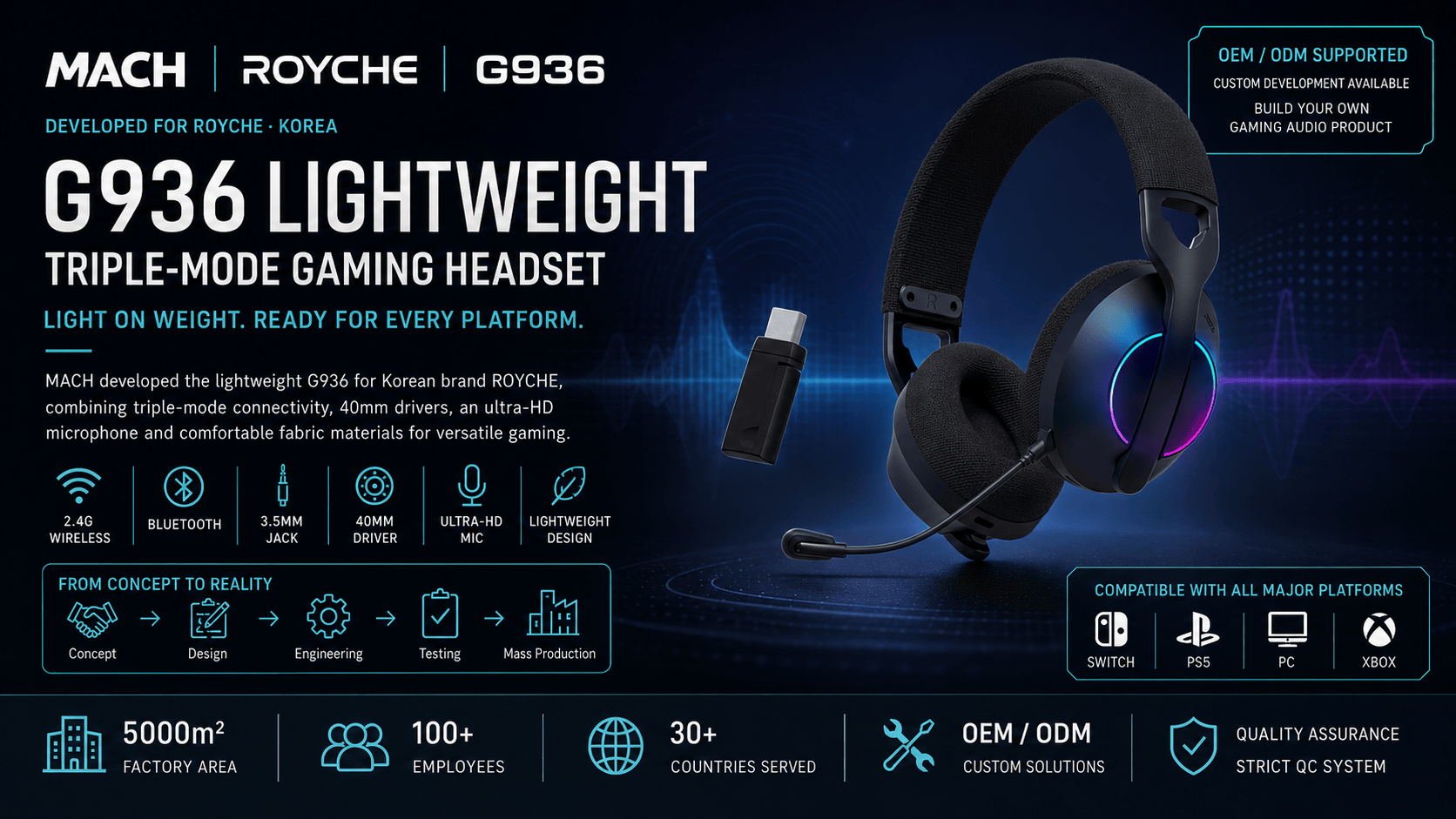
OEM buyers should verify KC battery documentation by matching the documented cell or battery model, electrical rating, protection components, supplier identity and applicable standard to the exact battery released in the final headset BOM. They should then connect that battery identity to the headset model, pairing name, packaging, user information, production records and shipment documents. A battery safety file can support a Korea-market project, but it does not automatically prove that every customized headset configuration or the complete finished product is covered.
The BTH 500 Korea OEM project is a useful sourcing example because its public records contain several identities and configurations that must not be casually merged. The case card records BTH 500, the product specification identifies G936 as the platform model, and BTH-G500 appears as the pairing name. The headset specification records a 500mAh protected battery without NTC, while a KC battery safety document in the project folder records model 103048 at 3.7Vdc and 1500mAh under KC62133-2. That difference is not a basis for claiming an error or certification status. It is a clear reason to perform configuration-level document review before production and market release.
This article turns that lesson into a practical framework for gaming brands, importers, distributors and product managers.
Why Battery Documentation Matters in Korea-Market Headset Projects
Battery documentation becomes useful only when the buyer can trace the documented battery to the exact component installed in the approved headset configuration.
Wireless gaming headsets combine a battery, charging circuit, firmware, enclosure, transmitter and market-facing identity. A battery-component file answers a narrower question than a finished-headset file. Procurement teams should separate component, finished-product and shipment evidence instead of assuming every document has the same scope.
The practical risk is configuration drift. An early engineering sample may use one battery capacity while a later commercial version uses another. A buyer may change the supplier, cable, protection board, charging current, enclosure or model name during development. If the document set is not updated with those decisions, the factory may build the approved product while the importer holds evidence for a different component.
Korea-market preparation also extends beyond the battery. Korean prompts, product naming, retail artwork and shipment records need a controlled relationship to the released SKU. Brands should confirm scope with qualified testing and compliance parties rather than treating a general OEM promise as legal approval.
BTH 500 Korea OEM Project Overview
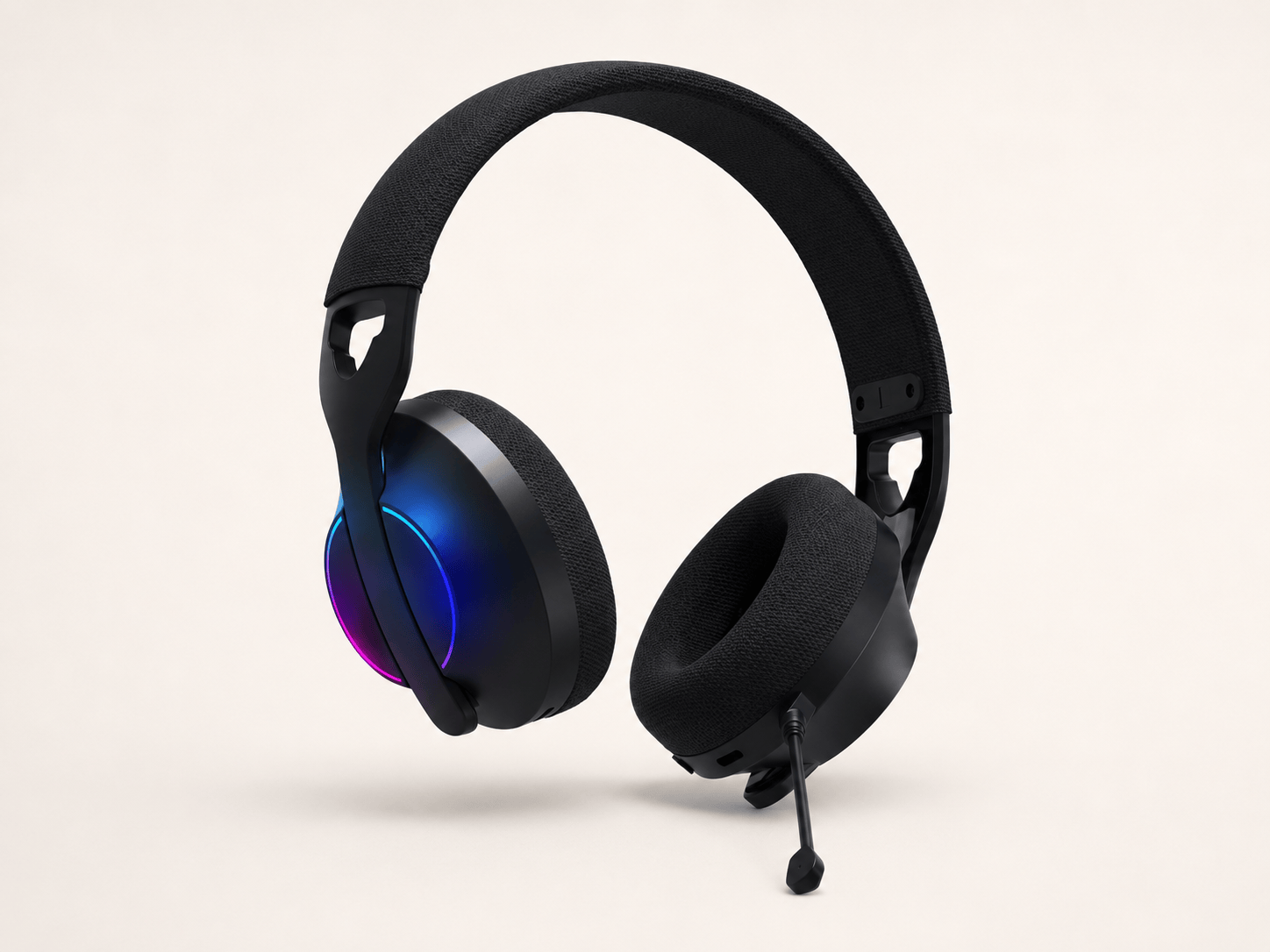
BTH 500 was a Korea-focused lightweight gaming headset project combining 2.4GHz, Bluetooth and USB sound card use with RGB, Korean voice prompts, private-label packaging and battery-document coordination.
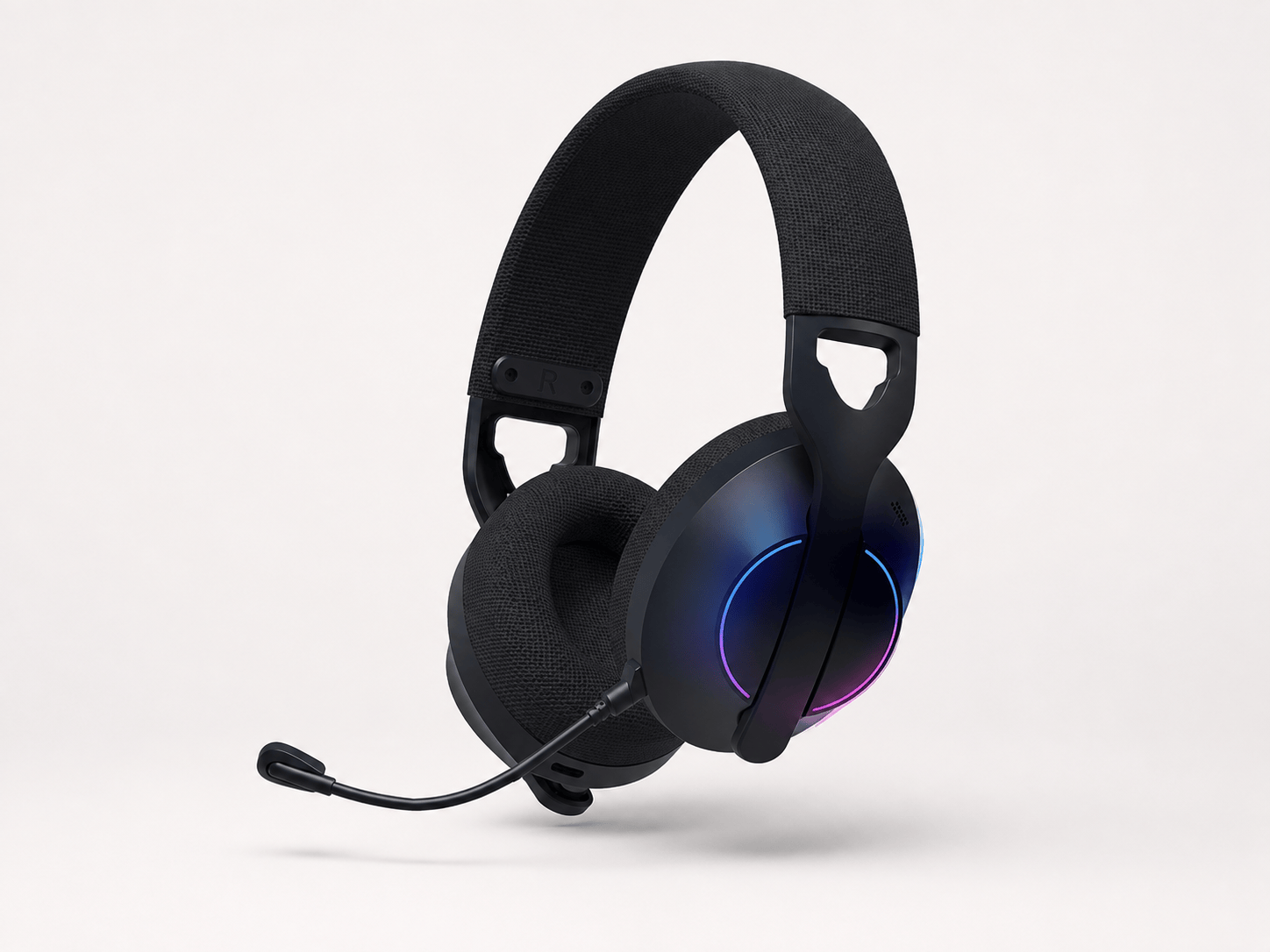
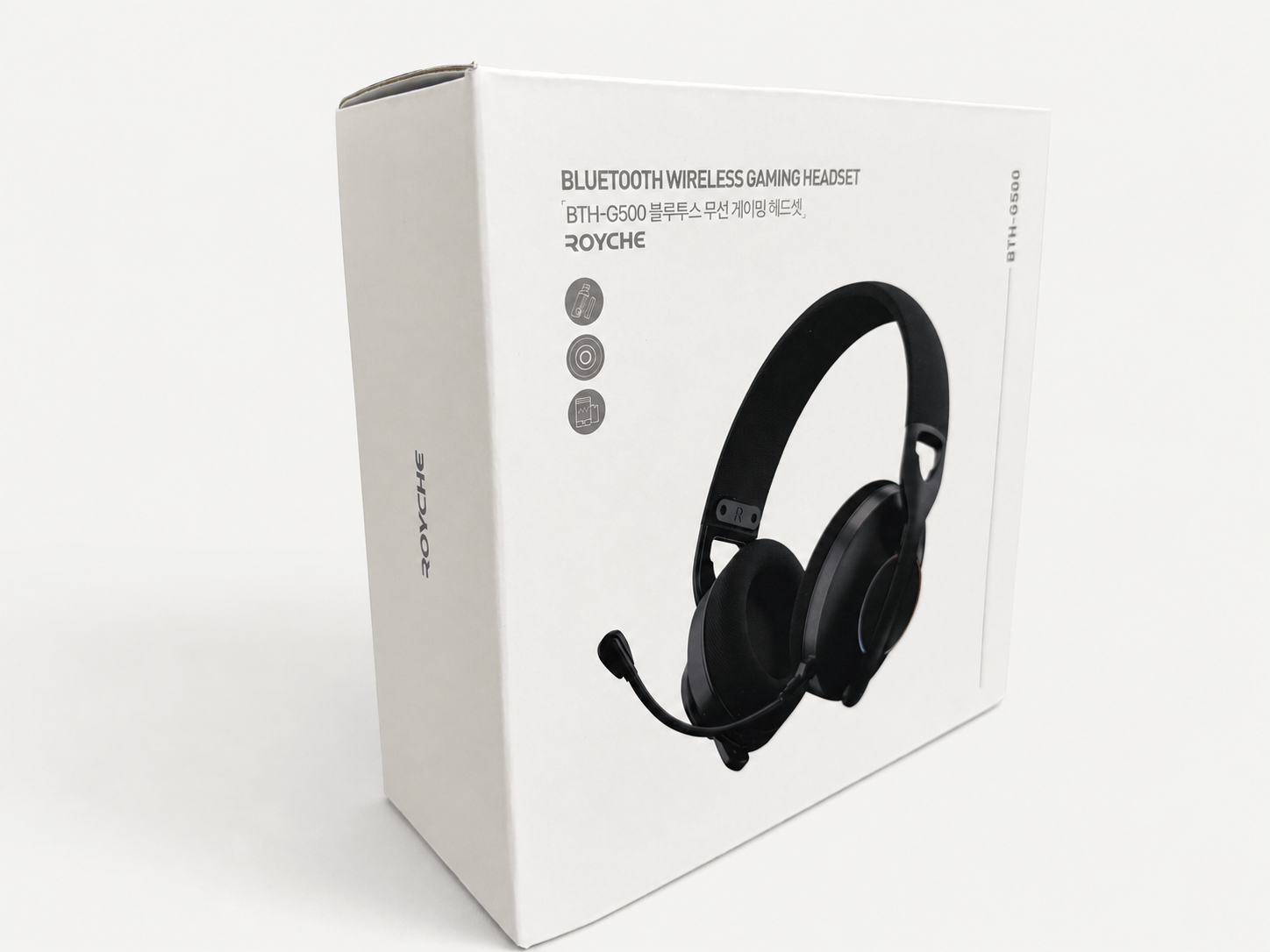
The published case identifies the customer type as a Korea gaming brand, importer and distributor. It records BTH 500 as the case model, G936 as the product model in the specification and BTH-G500 as the pairing name. Preserving those distinctions matters because engineering, software, packaging and customs records may use different identifiers for valid reasons, but the project file must explain their relationship.
Confirmed platform direction includes a JL7018M headset chip with headphone amplifier, a JL7018M plus PA transmitter direction, 2.4GHz wireless, Bluetooth, USB sound card operation through a USB data connection, RGB running lighting, Type-C charging, a 40mm 32-ohm speaker direction and an omnidirectional 6027 microphone. The specification records a 210g weight direction, above-15m working-distance positioning, around-20ms 2.4GHz latency positioning and about 10 hours of use with lighting on under the recorded configuration and conditions.
The user-interface materials include Korean prompts for power, connection, low battery, microphone status and mode switching. They also cover power operation, play and pause, calls, voice assistant access, volume and track control, microphone switching, dual-mode switching, LED control, Bluetooth reset and automatic shutdown after five minutes without use. These details show why market localization is not only translated packaging; it reaches firmware behavior, test cases and operator inspection.
The project folder also includes retail-box views, a battery safety confirmation declaration and certificate-of-origin materials associated with BTH-G500 shipment documentation. This article does not infer complete finished-headset certification from a component file.
Buyer Challenge: One Project Can Contain Several Product Identities
Case names, platform numbers, Bluetooth pairing names, packaging SKUs and shipment descriptions may differ, so buyers need a controlled identity map rather than an assumption that every name is interchangeable.
A development team may call a project BTH 500 while engineering uses G936 and firmware displays BTH-G500. Packaging may add a customer brand, barcode or regional SKU. None of those differences is automatically wrong. The risk appears when a test report, battery declaration, purchase order, inspection sheet or shipment document cannot be connected to the final commercial unit.
An identity map should list the project code, factory model, customer model, pairing name, transmitter, battery, packaging SKU, barcode and document references. When a name changes, the owner can identify which artwork, firmware and records require review.
A common private-label platform may serve several brands, but that does not mean every report covers every logo, battery, firmware, accessory and model variation. Ask for a written scope assessment when the final SKU differs from the supporting evidence.
How MACH Structured the Documentation and Engineering Review
MACH treated the BTH 500 program as a linked engineering, localization, packaging and documentation workflow rather than a standalone certificate request.
Requirement review separated the Korea-market commercial brief from the underlying G936 platform and BTH-G500 pairing identity. The project then connected target weight, wireless modes, USB sound card use, RGB rules, Korean prompts, microphone behavior, charging, logo, packaging and battery-document needs to one development record.
Engineering support covered industrial design, lightweight structure, PCB, RF and antenna review, tooling and production preparation. Functional review included pairing, range, mode switching, Korean prompts, RGB, controls, microphone, charging and USB sound card recognition. This matters because documentation should follow the tested construction, while testing should follow the final user requirements.
Compliance support used document coordination rather than a universal claim. The battery file was reviewed for its model, rating, standard and critical components, while the headset specification was reviewed for its 500mAh direction and charging architecture. Final QC can then verify labels, pairing name, prompts, battery behavior and pack-out.
Why a KC Battery File Is Not Automatically a Finished-Headset Approval
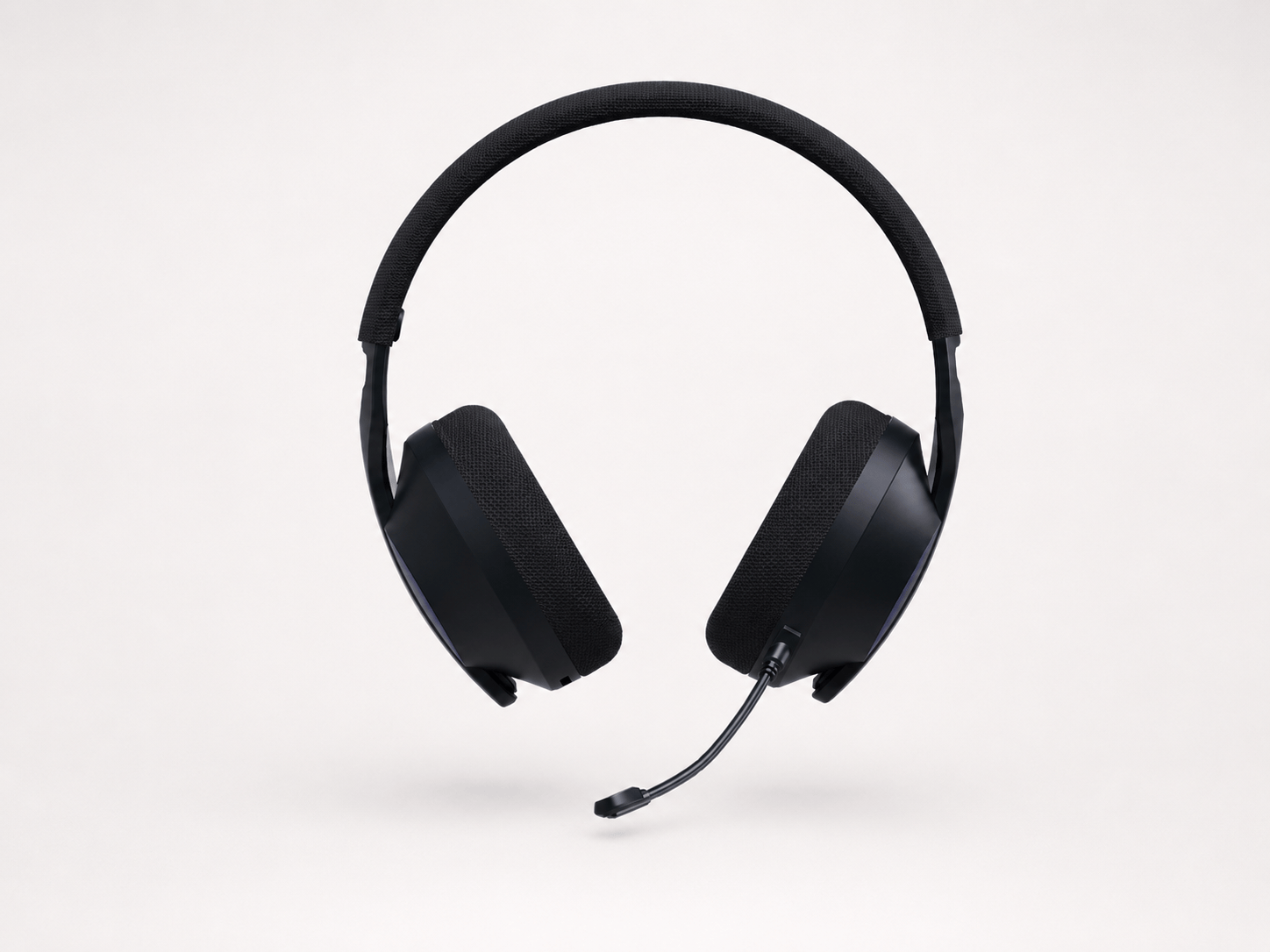
A KC battery file identifies a specific battery and its documented scope; it does not by itself approve every headset, charger, enclosure, firmware version or commercial model that could use a battery.
The first distinction is the object being documented. A battery safety confirmation declaration may name a battery model, voltage, capacity, applicant, manufacturer, standard and critical protection components. A finished wireless headset contains that battery inside a larger electrical and mechanical system. The headset adds a charging IC, protection strategy, PCB, connector, cable, firmware, heat environment, enclosure, radio functions and user instructions. Buyers should not replace a finished-product compliance assessment with a component document.
The second distinction is exact configuration. In the BTH 500 public materials, the headset specification records a 500mAh protected battery without NTC. The separate KC source file records battery model 103048 at 3.7Vdc and 1500mAh under KC62133-2, with listed critical components including a protection IC and MOSFET. Because the recorded capacities differ, a responsible buyer should ask which battery is intended for the final SKU and what evidence applies to it. The correct action is traceability and scope confirmation, not assuming that one number supersedes the other.
The third distinction is model linkage. A document may use a component model that never appears on consumer packaging. The headset may have an engineering model, customer-facing name and Bluetooth pairing name. The buyer needs a controlled record connecting these identities. Without that bridge, an importer or auditor may receive genuine documents but still be unable to determine whether they belong to the goods being sold.
The fourth distinction is change control. Battery capacity, supplier, cell, protection board, wire length, connector, adhesive, foam, charging current or enclosure can change during cost review or sample improvement. Some changes may affect documentation or testing; others may not. That determination should be made by qualified parties using the relevant rules and evidence. Procurement should require notification before substitution and should block unapproved battery changes in the BOM and incoming inspection standard.
The fifth distinction is claims. Packaging and sales teams often want a simple KC statement. Before printing it, confirm what has been approved, which model is covered, whether a mark or identifier is permitted, and which party is responsible for the market claim. Marketing copy should not turn a supplier's support capability or one component file into a broader certification statement.
Finally, store evidence as a release package rather than loose attachments. A practical package includes the final BOM, battery specification, supplier and model, relevant document, scope assessment, product identity map, artwork, manual, sample approval, test plan, change log and shipment reference. This allows engineering, quality, procurement and the importer to answer the same question with the same revision: which battery is in this headset, and what evidence supports its Korea-market use?
| Common assumption | Why it is unsafe | Better buyer action |
|---|---|---|
| Any KC battery file covers the headset | The file may cover only a named component | Confirm component scope and finished-product requirements |
| Similar capacity is close enough | Capacity, model and construction identify different configurations | Match the exact released battery to its evidence |
| Project name and pairing name are interchangeable | Documents may use different controlled identities | Maintain a model and alias cross-reference |
| A supplier change is only commercial | Critical construction or evidence may change | Use formal substitution and reapproval control |
| A component file permits any marketing claim | Claims depend on scope and applicable rules | Approve artwork and claims with qualified review |
Technical Deep Dive: Building a Battery-to-BOM Traceability Matrix
A battery-to-BOM matrix links every market-facing headset SKU to its exact battery, charging design, supporting evidence, approved sample and change history.
Start with the commercial SKU. Record customer brand, model, region, color, barcode, pairing name, packaging revision and target production order. Then identify the factory platform, hardware revision, firmware revision and transmitter configuration. This prevents a valid battery record from being attached to the wrong colorway, regional bundle or electronic revision.
At battery level, record pack supplier, model, cell model where applicable, nominal voltage, rated capacity, protection board, protection IC and MOSFET, NTC status, connector, wire specification and mechanical dimensions. Add the approved drawing, incoming inspection criteria and sample reference. For BTH 500-style review, the matrix must visibly separate the headset's recorded 500mAh direction from the 1500mAh battery described in the separate KC source file until the final relationship is confirmed.
At system level, record charging IC, maximum charging-current direction, USB input, protection design, firmware charge indication, low-battery prompt, shutdown behavior and intended use time. The BTH 500 specification records XT4056 charging, LP5300 over-voltage and over-current protection, charging current up to 400mA, around-two-hour charging time and Korean low-battery prompts. These are engineering inputs to validate against the released battery; they are not universal performance guarantees for a changed configuration.
Add evidence columns for document type, document owner, model named, standard, issue date, report or application reference, scope notes and qualified-review status. Do not mark a row approved merely because a PDF exists. The reviewer should state whether the file exactly matches, supports only a component, requires supplementary evidence or does not apply.
Connect the matrix to production control. The purchase order should call out the approved battery model. Incoming inspection should verify label, dimensions, connector, polarity and agreed critical features. Line records should preserve lot traceability. Final inspection should verify charging, low-battery indication, shutdown, power consumption or use-time checks according to the approved plan, without replacing any required safety or compliance evaluation.
Finally, define change triggers. A new battery supplier, capacity, cell, protection board, NTC design, connector, charging current, enclosure or market model should trigger documented review. The matrix owner updates the BOM and evidence status before procurement releases the substitute. This turns compliance from a final-stage document hunt into an ordinary engineering change-control process.
| Matrix field group | Minimum information | Release purpose |
|---|---|---|
| SKU identity | Brand, model, region, pairing name and packaging revision | Connect documents to the goods being sold |
| Battery identity | Supplier, model, rating, protection and connector | Prevent unapproved substitution |
| System interface | Charging, firmware prompts, enclosure and USB input | Validate the battery inside the actual headset |
| Evidence status | Document reference, named model and scope decision | Avoid unsupported coverage assumptions |
| Change control | Trigger, owner, approval and effective order | Keep production aligned with released evidence |
Lightweight Triple-Mode Engineering and Documentation Interfaces
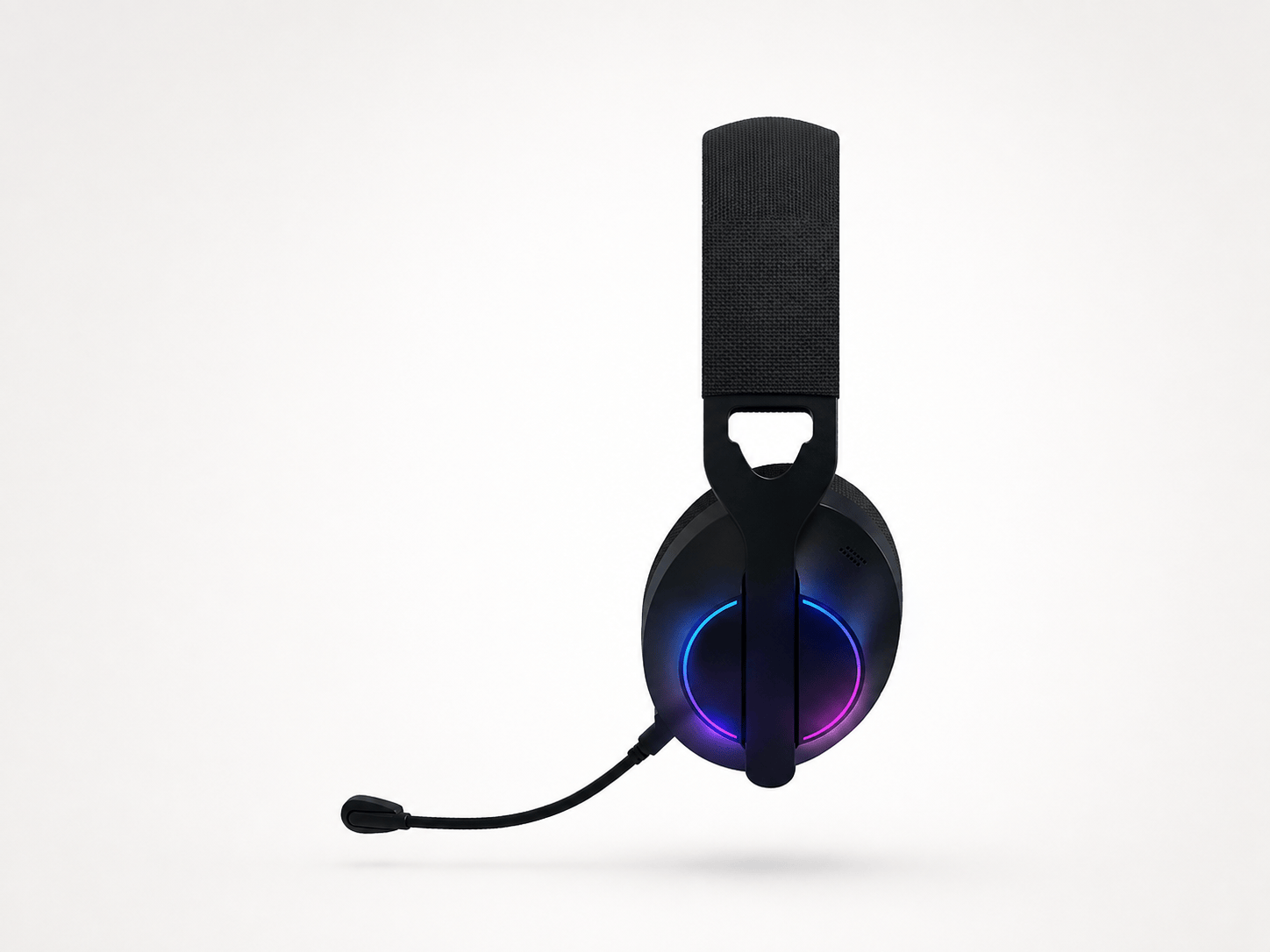
A lightweight triple-mode headset requires battery, radio, charging, controls, language and packaging decisions to be reviewed as one system even when documents are managed separately.
The 210g direction cannot be reviewed independently from battery size, structure, cushions, antenna placement and RGB parts. A battery change may alter mass, internal space, use time, charging time and documentation together.
The recorded 2.4GHz, Bluetooth and USB sound card paths each need controlled buttons, indicators and Korean prompts. Firmware, pairing name and retail artwork should share one revision, while RF, battery and structure changes return to configuration review before release.
OEM/ODM Development Process for Korea-Market Wireless Headsets
A Korea-market wireless headset project should move from requirement and identity definition through platform matching, localized engineering, evidence review, pilot validation and controlled mass production.
At requirement stage, define the customer model, market, channels, target weight, connection modes, audio and microphone direction, RGB, battery objective, Korean prompts, logo, packaging and required documents. Separate mandatory launch requirements from optional features so the supplier can evaluate platform fit and compliance implications before quotation.
During platform matching and engineering, confirm the factory platform, headset and transmitter architecture, battery, charging, antenna, speaker, microphone, controls and firmware behavior. Build the identity map and battery-to-BOM matrix early. If a supporting document names a different battery or model, record the gap and assign a resolution owner instead of waiting for shipment.
Prototype and pilot review should test modes, controls, prompts, microphone, RGB, charging, battery traceability, labels and pack-out under the final configuration. Release the approved BOM, firmware, golden sample, battery-file status, artwork, test plan and change log.
Buyer Checklist Before Sample and Mass-Production Approval
Before approval, the buyer should be able to identify the exact headset SKU, installed battery, supporting document scope, localized firmware, packaging revision and owners of every unresolved gap.
For RFQ, provide market, customer model, connection modes, weight and battery objectives, Korean prompts, artwork, channels, forecast and schedule. Ask the supplier to identify the proposed platform, battery, transmitter, sample stages and document assumptions.
Before golden-sample approval, freeze the model and alias map, BOM, battery drawing, charging configuration, firmware revision, pairing name, language prompts, RGB behavior, accessories and artwork. Review the evidence matrix with a qualified compliance party. Mark every file as exact match, supporting component evidence, pending review or not applicable.
Before mass production, approve battery inspection, functional tests, firmware loading, labels, packaging and shipment description. Block battery or charging-part substitutions without written review. Before shipment, reconcile the order, production lot, battery traceability, SKU and export documents.
Frequently Asked Questions
The following answers address common sourcing questions about KC battery documentation, configuration control and Korea-market wireless gaming headset OEM development.
These answers provide procurement guidance based on the published BTH 500 project. Final regulatory decisions should be confirmed for the exact product, applicant, model and market route with qualified testing and compliance professionals.
Conclusion
Reliable Korea-market preparation depends less on collecting more PDFs than on connecting the right evidence to the exact headset being produced and shipped.
The BTH 500 project shows why a lightweight triple-mode gaming headset is both an engineering program and a document-control program. Model identities, battery configuration, charging behavior, Korean prompts, RF performance, packaging and shipment records must remain aligned as the project moves from concept to production.
Never infer finished-product approval from an unmatched component file. Build an identity map, battery-to-BOM matrix and substitution process. MACH industry supports platform review, RF, localization, packaging, quality planning, documentation coordination and mass-production preparation for OEM/ODM gaming audio projects.
Frequently Asked Questions
Does a KC battery document certify the complete wireless gaming headset?
Not automatically. A battery document may cover a named component only. Buyers should confirm the final headset's applicable requirements and document scope with qualified parties.
How should buyers verify a KC battery file for an OEM gaming headset?
Match the battery model, voltage, capacity, supplier, protection components and standard to the exact battery in the released headset BOM, then document the scope decision.
Why do the BTH 500 project records show both 500mAh and 1500mAh?
The headset specification records a 500mAh battery direction, while a separate KC source file records a 1500mAh battery model. The difference requires configuration and scope confirmation rather than an assumption that the files describe the same battery.
What model names are associated with the BTH 500 project?
The public case records BTH 500 as the case model, G936 as the platform model in the specification and BTH-G500 as the pairing name.
What is a battery-to-BOM traceability matrix?
It is a controlled table linking each headset SKU to its battery supplier, model, electrical rating, protection design, charging interface, evidence, approved sample and change history.
Can a battery supplier be changed after sample approval?
A change may be possible, but it should be blocked until engineering, quality and compliance scope are reviewed and the BOM, evidence and incoming inspection standard are reapproved where necessary.
What Korea-market localization was recorded for BTH 500?
The project records Korean voice prompts for power, connection, low battery, microphone state and mode switching, together with private-label packaging support.
What wireless modes are included in the BTH 500 platform direction?
Public materials record 2.4GHz wireless, Bluetooth and USB sound card operation, with a 210g lightweight direction and RGB running lighting.
What should buyers freeze before Korea-market mass production?
Freeze the model and alias map, BOM, battery, firmware, pairing name, Korean prompts, packaging, evidence status, inspection plan and change-control rules.
What should a brand send MACH for a Korea wireless headset RFQ?
Send the target market, connection modes, weight and battery objectives, Korean prompt list, logo and packaging files, documentation needs, forecast and launch schedule.
Related Resources
Need OEM/ODM gaming audio solutions?
Contact MACH Industry to discuss your gaming headset, gaming earbuds, or private-label audio project.
Contact MACH Industry