Home > Resources > Gaming Headset Guide
How to Validate 2.4GHz Gaming Headset RF Range Before Mass Production
A technical buyer guide to validating 2.4GHz gaming headset RF range across straight-line, office and receiver-position scenarios before sample approval and mass production.
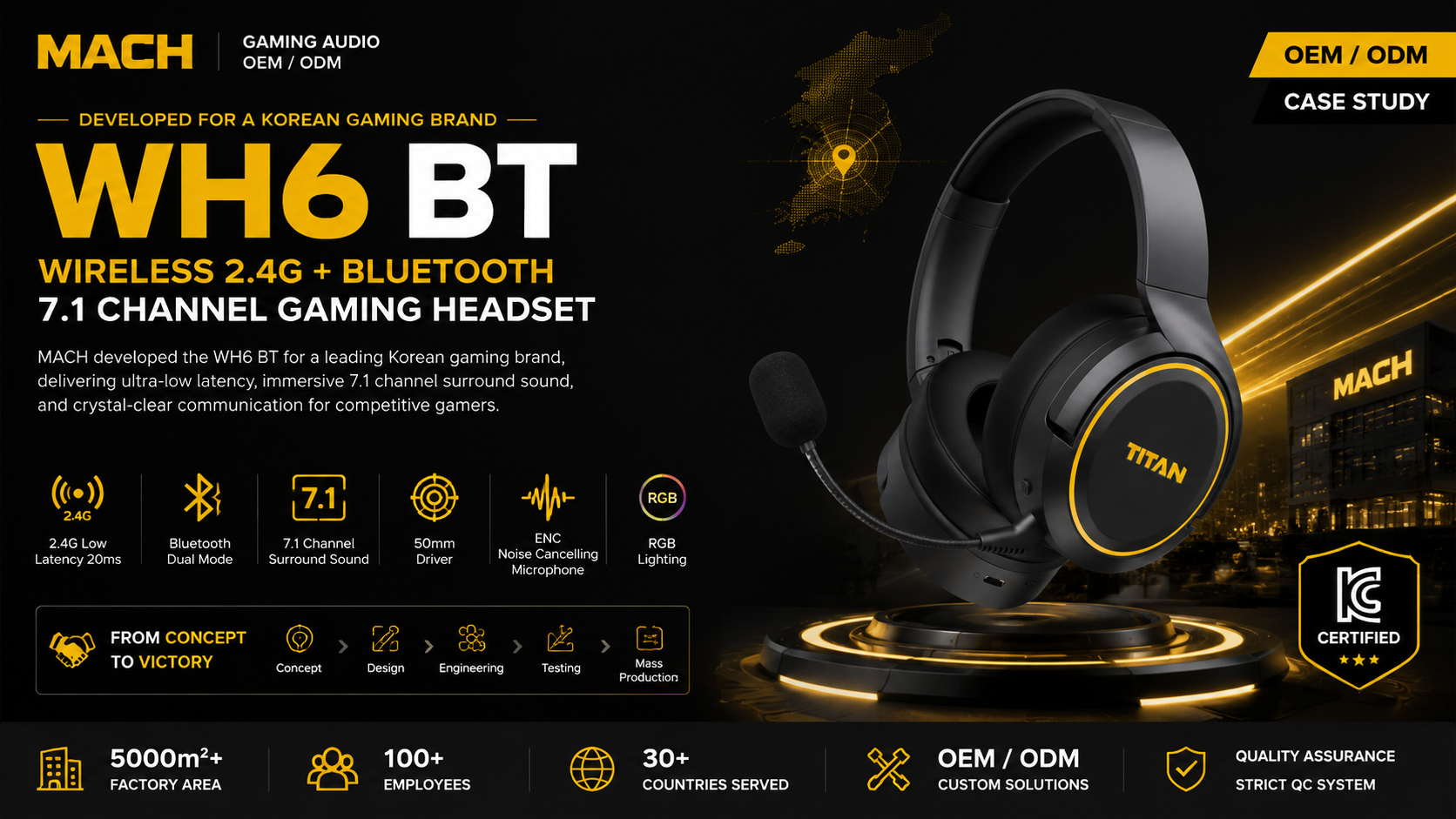
OEM buyers should validate a 2.4GHz gaming headset in at least three RF scenarios before mass production: a controlled straight-line test, a representative office or complex environment, and realistic receiver positions such as a PC rear panel. The test plan must define the headset and receiver revision, distance, obstacles, interference, audio and microphone traffic, pass criteria and recovery behavior. A single range number without those conditions is not a production-ready claim.
The WH6-BT Korea OEM project provides a useful real-world reference. Its sample report recorded straight-line, office-environment and PC rear-panel receiver checks, while later QC records applied straight-line and complex-environment checks to both white and black production batches. This article explains how buyers can turn that evidence pattern into an RF approval and mass-production control plan.
Key Takeaways for OEM Buyers
RF approval is reliable only when the buyer controls the complete headset, receiver, firmware, environment and pass criteria from engineering samples through production inspection.
- Test straight-line range and representative obstructed environments separately.
- Include realistic receiver positions, not only an open USB port on a test bench.
- Exercise audio and microphone traffic during the RF test.
- Record the exact headset, receiver, firmware and host configuration.
- Separate engineering validation from production sampling.
- Repeat the approved checks after changes to structure, electronics, firmware or accessories.
Why a Wireless Range Number Is Not Enough
A stated distance does not explain whether the link remained usable through obstacles, interference, microphone traffic or an unfavorable receiver position.
Wireless range is a system result. Antenna location, PCB layout, receiver design, enclosure materials, nearby metal, the user's head and body, host placement, RF traffic and firmware behavior can all influence the link. A specification that states only 15 meters or 20 meters does not define the conditions under which the number applies.
Gaming headsets also carry two-way traffic. Stable music playback does not prove that microphone return remains clear during multiplayer communication. Buyers should define what is monitored during the test: audible dropout, noise, channel interruption, microphone loss, control delay, disconnection, reconnection or another agreed symptom.
The receiver position matters particularly for desktop products. A transmitter connected at the rear of a PC can be closer to a metal chassis, cables and a desk surface than one placed at the front. The WH6-BT sample record explicitly included operation with the receiver at a PC back panel, which makes the test more relevant than an open-space distance headline alone.
Range claims should therefore be written from evidence. The product team first defines the intended user environment, then approves a repeatable test. Marketing can describe only the scope supported by that plan.
WH6-BT Korea Project Test Context
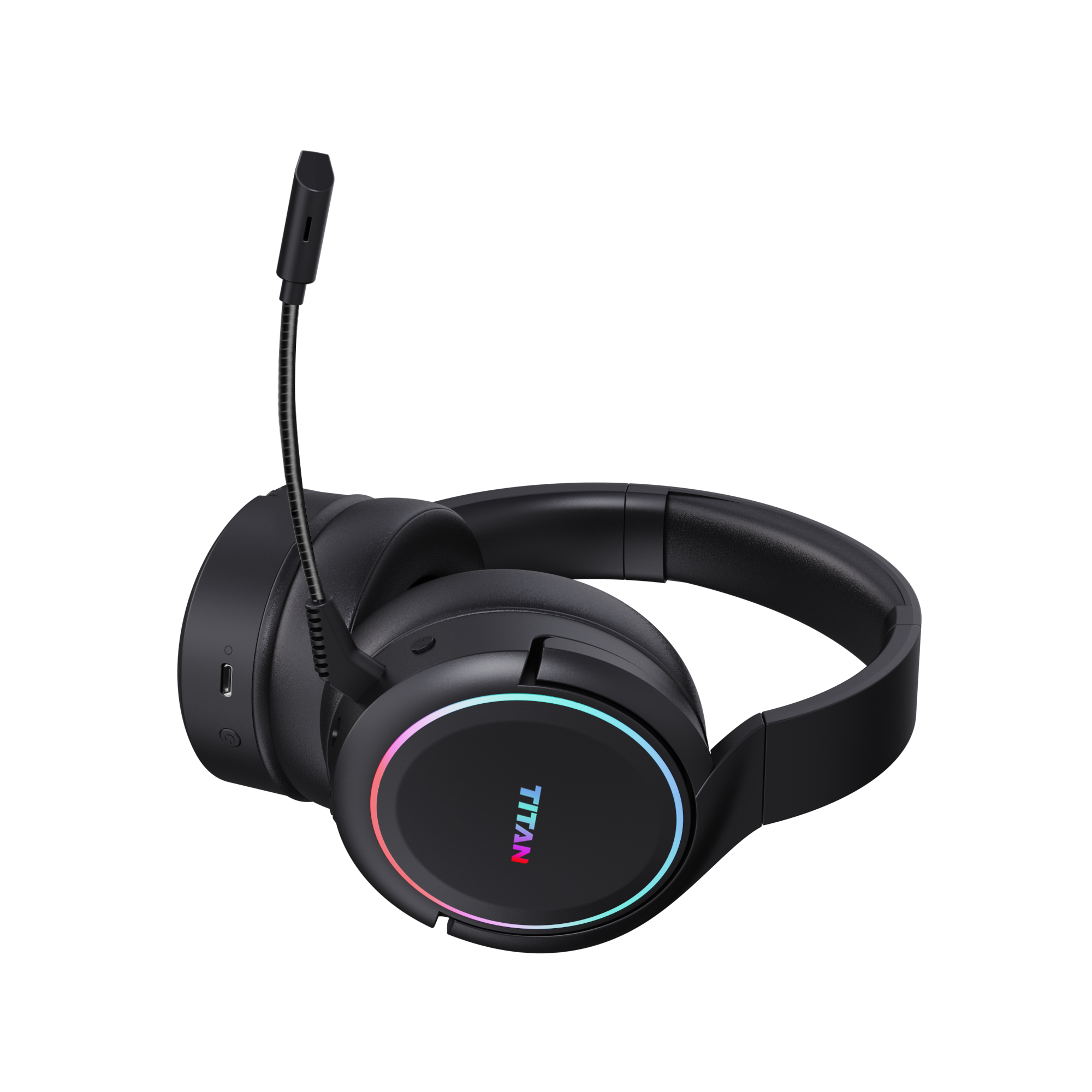
WH6-BT was a Korea-market OEM headset platform with 2.4GHz, Bluetooth and 3.5mm modes, tested through engineering samples and later production QC records.
The project Case Card identifies a Korean gaming brand, importer and distributor and confirms OEM development, RGB, Bluetooth, 2.4GHz, low-latency positioning, logo and packaging customization, and KC, CE and RoHS support. MACH support covered industrial design, structure, PCB, RF, acoustics, tooling, QC and mass production.
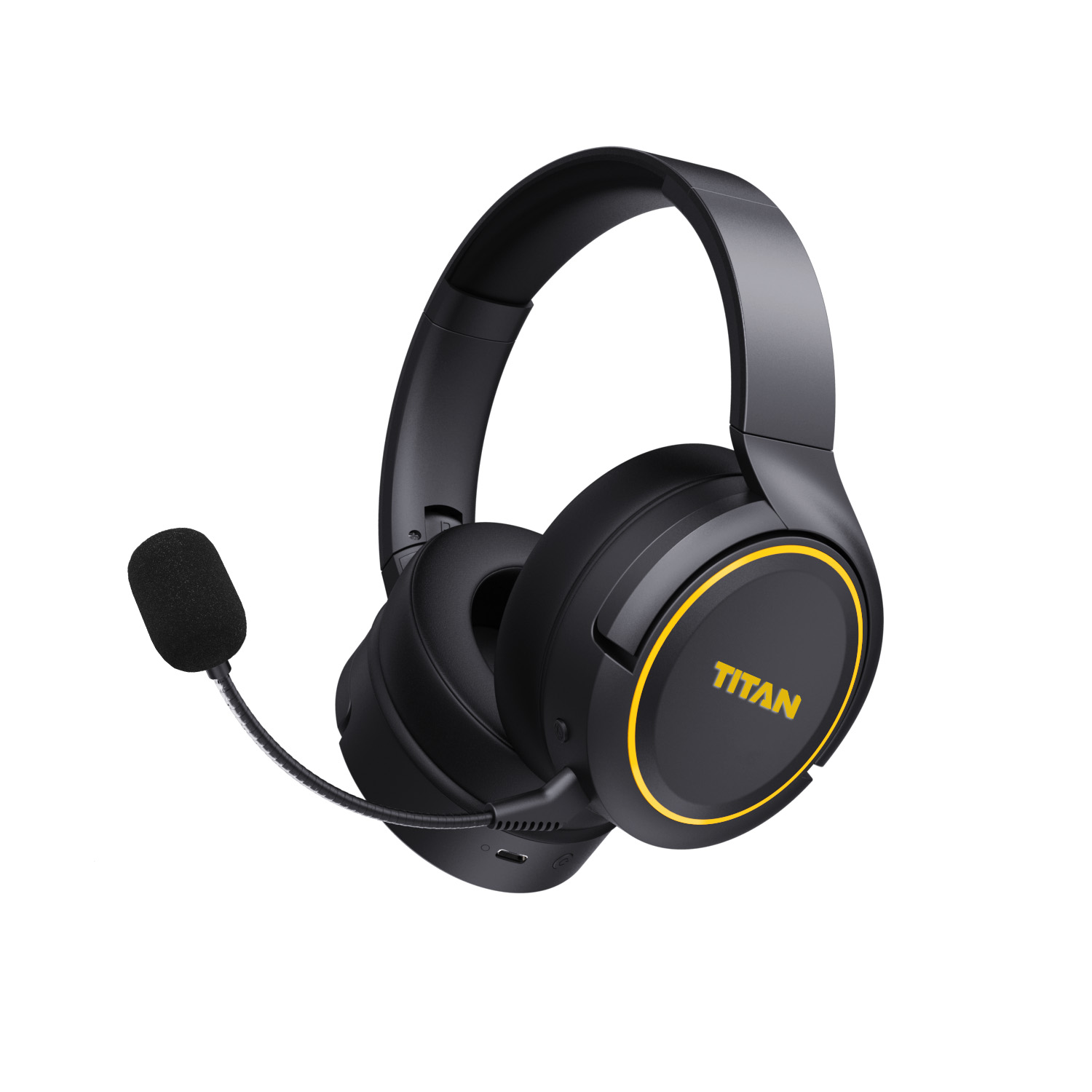
The detailed sample report covered two WH6-BT samples. It recorded a 15-meter straight-line wireless check as pass, an office or complex-environment range check as pass, and operation with the receiver at a PC rear panel as pass. The report also documented connection-mode controls, audio, microphone, charging, RGB and mechanical review. These are project records, not universal results for every WH6-BT private-label version.
The subsequent white and black QC sheets listed 20-meter checks for both straight-line and office or complex environments. Each color report recorded 300 checked units and 300 OK units for the RF items. The combined OQC report also included sound output, left-right balance, microphone, LED, appearance, joint motion, logo and label checks, plus printing of the lithium-battery KC certification number.
The evidence shows a useful stage progression: detailed engineering-sample investigation followed by defined production sampling across both color variants. It does not mean that every future configuration will reach the same distance without repeating the applicable validation.
Technical Deep Dive: Building a Three-Layer RF Validation Plan
A useful RF plan combines controlled range measurement, representative environmental testing and production-level verification rather than treating one distance result as complete evidence.
Layer one is the controlled straight-line test. Define the test area, start point, receiver height and orientation, headset position, host device, distance markers and nearby RF conditions. Freeze the headset sample, receiver, firmware and connection mode. Run continuous audio and microphone traffic, then record the first observable degradation, disconnection behavior and recovery. The WH6-BT sample report recorded a 15-meter straight-line pass, while its later QC sheets used a 20-meter check. Those numbers describe different project records and should not be merged into an unsupported universal range claim.
Layer two is the representative environment. An office or complex environment introduces walls, furniture, people, computers, Wi-Fi activity and less favorable line of sight. The test should describe the route and obstacle pattern rather than using the word office as if it were a standard. A buyer may define a desk-to-door route, a workstation-to-meeting-area route or another scenario that reflects the product brief. The WH6-BT documents included office or complex-environment checks at both sample and QC stages, demonstrating why the obstructed scenario should remain part of production control.
Receiver placement is a separate variable within this layer. Test the transmitter where users will actually connect it. For a desktop use case, compare the approved front or extension position with the PC rear panel when that position is a supported claim. Observe whether the metal chassis, desk, cables or user position changes audio or microphone stability. The WH6-BT sample report explicitly recorded the back-panel test as pass; a different host, receiver revision or antenna arrangement still requires its own evidence.
Layer three is production verification. Engineering samples expose design and firmware issues, but production inspection checks whether the approved behavior is being reproduced. Define the sampling plan, color or SKU coverage, receiver identity, test distance, environment, pass criteria, defect recording and escalation rule. The WH6-BT OQC documentation separated white and black batches and included both straight-line and complex-environment RF checks, reducing the risk that one cosmetic variant or production lot bypassed the wireless gate.
The three layers need a shared configuration record. It should identify hardware revision, PCB and antenna version, receiver part, firmware, battery, enclosure and decoration, microphone, RGB state, host, operating mode and accessories. Changes near the antenna, receiver or power architecture can justify renewed validation even when the retail model name remains unchanged.
Pass criteria should be observable. Examples include no disconnection, no audible dropout above the agreed threshold, intelligible microphone return, successful reconnection after an interruption and stable operation for a defined duration. These are general planning examples, not published WH6-BT thresholds. The buyer and supplier must agree on the final method before quotation and sample approval.
Finally, preserve the records. A test report should show the configuration, date, operator, method, result and open issues. A production QC sheet should point back to the approved method. This creates traceability from the development sample to the shipment release decision.
| Validation layer | Primary question | Typical controlled variables | Release output |
|---|---|---|---|
| Straight-line | What range can the approved configuration sustain in a defined open path? | Distance, orientation, receiver height, host, traffic and interference | Measured result tied to stated conditions |
| Representative environment | Does the link remain usable through expected obstacles and placement? | Route, walls, furniture, people, Wi-Fi activity and receiver location | Use-case evidence and identified weak positions |
| Production OQC | Are production units reproducing the approved wireless behavior? | Sampling plan, SKU, receiver, firmware, distance and defect rule | Lot-level inspection result and escalation record |
How Test Conditions Change the Meaning of Range
Range results are comparable only when the configuration, traffic, environment and observation method are controlled.
An open-path test can isolate basic link capability, but it does not represent every home or office. An obstructed route can be more realistic, yet two offices may differ greatly in walls, floor plan, wireless congestion and equipment. Buyers should store diagrams or photographs with the method when location matters.
Audio-only playback is a lighter functional check than simultaneous game audio and microphone return. Receiver position, host USB noise and nearby wireless devices may also change the result. The test matrix should state whether RGB is on, whether the battery is freshly charged, the selected volume, and whether Bluetooth or 2.4GHz is active.
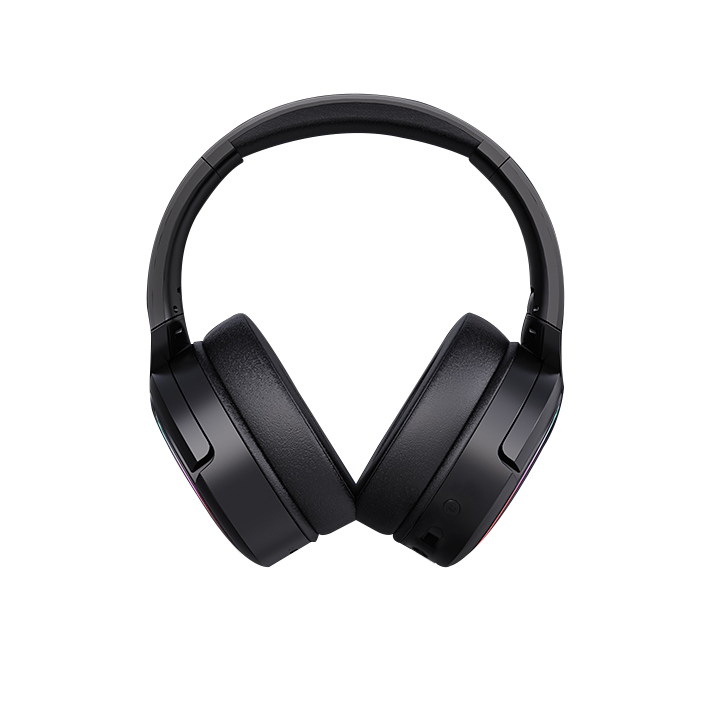
The WH6-BT records should be read in that context. A 15-meter engineering-sample entry and 20-meter OQC check are both traceable project facts, but the documents do not provide enough identical-condition detail to claim that one stage improved range by five meters. The correct conclusion is that each result belongs to its own recorded method and release stage.
| Variable | Why it matters | What the buyer should record |
|---|---|---|
| Environment | Obstacles and RF congestion change link conditions | Route, line of sight, walls and nearby RF activity |
| Receiver position | Host chassis and desk placement can affect the link | Port, orientation, adapter or extension and host model |
| Traffic | Playback alone does not prove two-way gaming communication | Audio source, microphone activity and controls |
| Power state | Battery and RGB conditions may influence current demand | Charge state, RGB state, mode and test duration |
| Revision | Hardware or firmware changes can alter behavior | Headset, PCB, antenna, receiver and firmware identifiers |
Battery and RGB Conditions Belong in the Test Matrix
RF and runtime are separate outcomes, but both depend on the operating mode and power condition selected for the test.
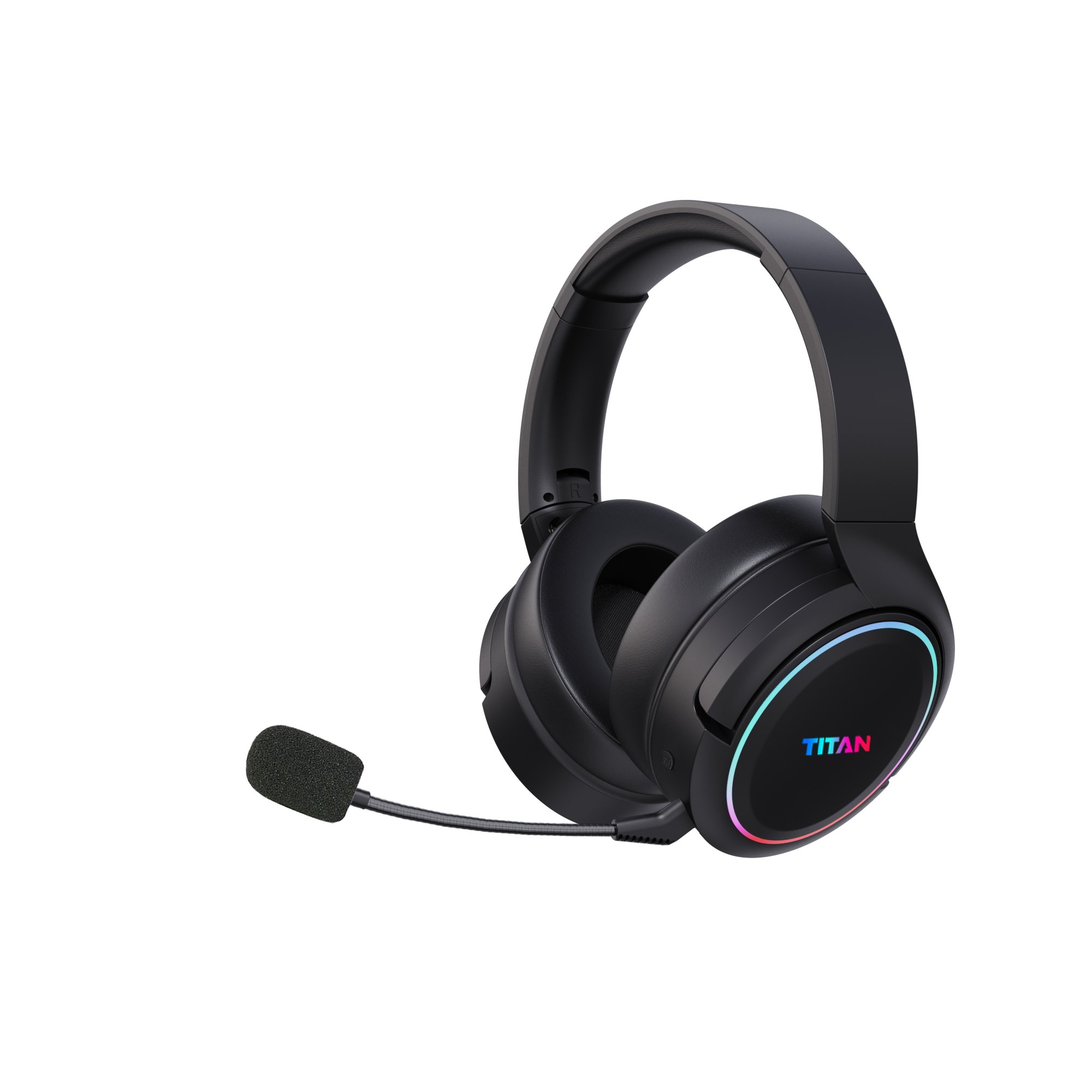
The WH6-BT measurement sheet recorded 2.4GHz working current from 76.4 to 132.8mA with RGB on and 37.6mA with RGB off. Bluetooth working current was recorded from 69.2 to 129.9mA with RGB on and 29.6mA with RGB off. These are measurements from the documented project configuration, not promised values for every version.
The range within the RGB-on readings shows why a single current number needs conditions. Lighting behavior, audio content, volume, wireless traffic and measurement timing can affect observed demand. Buyers should define the operating sequence and calculate or test runtime only from an approved battery specification and repeatable method.
For RF validation, record RGB and battery state even when runtime is not the main objective. A nearly depleted battery, a different power-management revision or a changed lighting program can make two otherwise similar tests less comparable. Battery capacity, charging behavior and KC-related marking should remain configuration-controlled alongside the receiver and firmware.
This article does not publish a WH6-BT runtime claim because the available working-current records do not by themselves establish one universal real-use duration.
From Engineering Sample to Production OQC
The release process should convert sample findings into repeatable inspection items without pretending that a small engineering sample represents the whole production batch.
Engineering samples are for discovery. Teams can examine mode switching, reconnection, receiver placement, wireless range, microphone behavior, RGB, charging, sound and mechanics in detail. Findings should be logged with an owner, revision and closure evidence before the golden sample is approved.
Pilot or trial production then tests reproducibility. Confirm that the production PCB, antenna, receiver, firmware, enclosure, battery, microphone and accessories match the approved configuration. Repeat the highest-risk RF scenarios and verify that work instructions and fixtures are usable.
OQC is a shipment-release control, not a replacement for engineering validation. The WH6-BT white and black reports included RF range, sound, balance, microphone, LED, appearance, joint, logo, label and KC battery-number printing checks. Buyers should define their own sampling and acceptance rules according to product risk, market and contract.
When an RF defect appears, the escalation path should identify whether to contain the lot, expand sampling, review receiver or firmware versions, repeat the environment test or return the issue to engineering. The process should be agreed before mass production, when decisions are less costly.
When to Use a Mature Wireless Platform
A mature platform is appropriate when its connection architecture, mechanics and validated use cases already fit the brand brief with controlled customization.
Using an existing platform can reduce unnecessary engineering when the core 2.4GHz, Bluetooth, 3.5mm, acoustic, microphone and structural direction already match the target SKU. Logo, color, packaging and selected configuration work may then create a differentiated private-label product.
A deeper ODM route is more appropriate when the brand needs a different antenna arrangement, receiver format, PCB, firmware behavior, industrial design, battery architecture, controls or accessory system. Those changes can expand the RF, power, mechanical, compliance and production-validation scope.
The decision should be made from the product brief and risk matrix. A familiar model name does not remove the need to retest the final customized configuration.
How MACH Supports Similar Projects
MACH industry can coordinate platform review, RF and antenna evaluation, sampling, power planning, customization, packaging, trial production, QC and mass-production preparation.
For WH6-BT, the approved case scope included industrial design, structure, PCB, RF, acoustic and microphone review, tooling, logo and packaging customization, battery KC-number marking confirmation, trial production, OQC and production support.
For a new project, the final tests, target range, battery, certification scope, sample plan and commercial terms depend on the selected platform and buyer requirements. MACH can help turn those requirements into a controlled configuration and validation plan.
Buyer Checklist Before RFQ and Sample Approval
A useful RFQ defines the target RF use case and how it will be verified, not only a desired distance.
- List target markets, channels, users and named host devices.
- Define 2.4GHz, Bluetooth and wired-mode priorities.
- Specify the receiver format and realistic host positions.
- Define straight-line distance, route and observation method.
- Describe the representative office or obstructed environment.
- Require simultaneous audio and microphone checks where relevant.
- Record RGB state, battery state, volume and test duration.
- Freeze headset, PCB, antenna, receiver and firmware revisions.
- Define reconnection and interruption-recovery expectations.
- List logo, color, packaging, labels and accessory scope.
- Identify certification and battery-marking requirements by market.
- Set sample, pilot-production and OQC acceptance criteria.
- Define change control and retest triggers.
- Provide estimated quantity and launch schedule for quotation planning.
Conclusion
A credible 2.4GHz gaming-headset range claim comes from a controlled, multi-stage validation plan rather than one open-space distance number.
The WH6-BT project shows the value of combining straight-line testing, office or complex-environment checks, realistic PC receiver placement and later production OQC across color variants.
Gaming brands can use this framework to prepare a clearer RFQ, approve samples with better evidence and carry the same wireless requirements into production. Share your target hosts, range scenarios, customization, market requirements and estimated quantity with MACH industry for an OEM/ODM evaluation.
Share your target devices, RF range scenarios, receiver format, battery and RGB requirements, target markets, packaging scope and expected quantity.
Contact MACH IndustryFrequently Asked Questions
How should buyers test 2.4GHz gaming headset range?
Use a defined straight-line test, a representative obstructed environment and realistic receiver positions while monitoring both audio and microphone traffic.
Is a straight-line wireless range test enough for a gaming headset?
No. It establishes a controlled reference but does not represent walls, furniture, people, RF congestion or an unfavorable host-port position.
Why test a gaming headset receiver at the rear of a PC?
A rear-panel receiver can sit close to the metal chassis, desk and cables. Testing that position helps verify a realistic desktop scenario.
What RF range was recorded for the WH6-BT project?
The engineering-sample report recorded a 15-meter straight-line pass. Later white and black QC sheets used 20-meter straight-line and complex-environment checks. Each result belongs to its documented stage and conditions.
Does RGB lighting affect wireless gaming headset testing?
RGB changes power demand, so its state should be recorded. The WH6-BT project measured different working-current values with RGB on and off in both 2.4GHz and Bluetooth modes.
Should microphone operation be checked during RF testing?
Yes. A gaming headset carries two-way communication, so stable playback alone does not prove that the microphone return remains usable.
When should an RF test be repeated after sample approval?
Repeat relevant tests after changes to the PCB, antenna, receiver, firmware, enclosure, materials, battery, lighting program or nearby structural parts.
What should production OQC check on a wireless gaming headset?
The agreed scope can include RF range, sound, channel balance, microphone, LED, appearance, mechanics, logo, labels, accessories and market-specific marking.
Does certification support mean every headset version is certified?
No. Compliance scope depends on the final configuration and target market. Documents and product markings must match the specific approved version.
What information should a buyer send for a wireless headset RFQ?
Send target devices, connection modes, receiver format, range scenarios, battery and RGB requirements, customization, packaging, markets, quality plan, estimated quantity and schedule.
Related Resources
Need OEM/ODM gaming audio solutions?
Contact MACH Industry to discuss your gaming headset, gaming earbuds, or private-label audio project.
Contact MACH Industry