Home > Resources > OEM Knowledge
How to Specify Mode Memory in Dual-Mode Gaming TWS Earbuds
A buyer guide to defining power-on behavior, Bluetooth and Type-C dongle switching, mode memory, pairing cues and reconnection tests for dual-mode gaming earbuds.
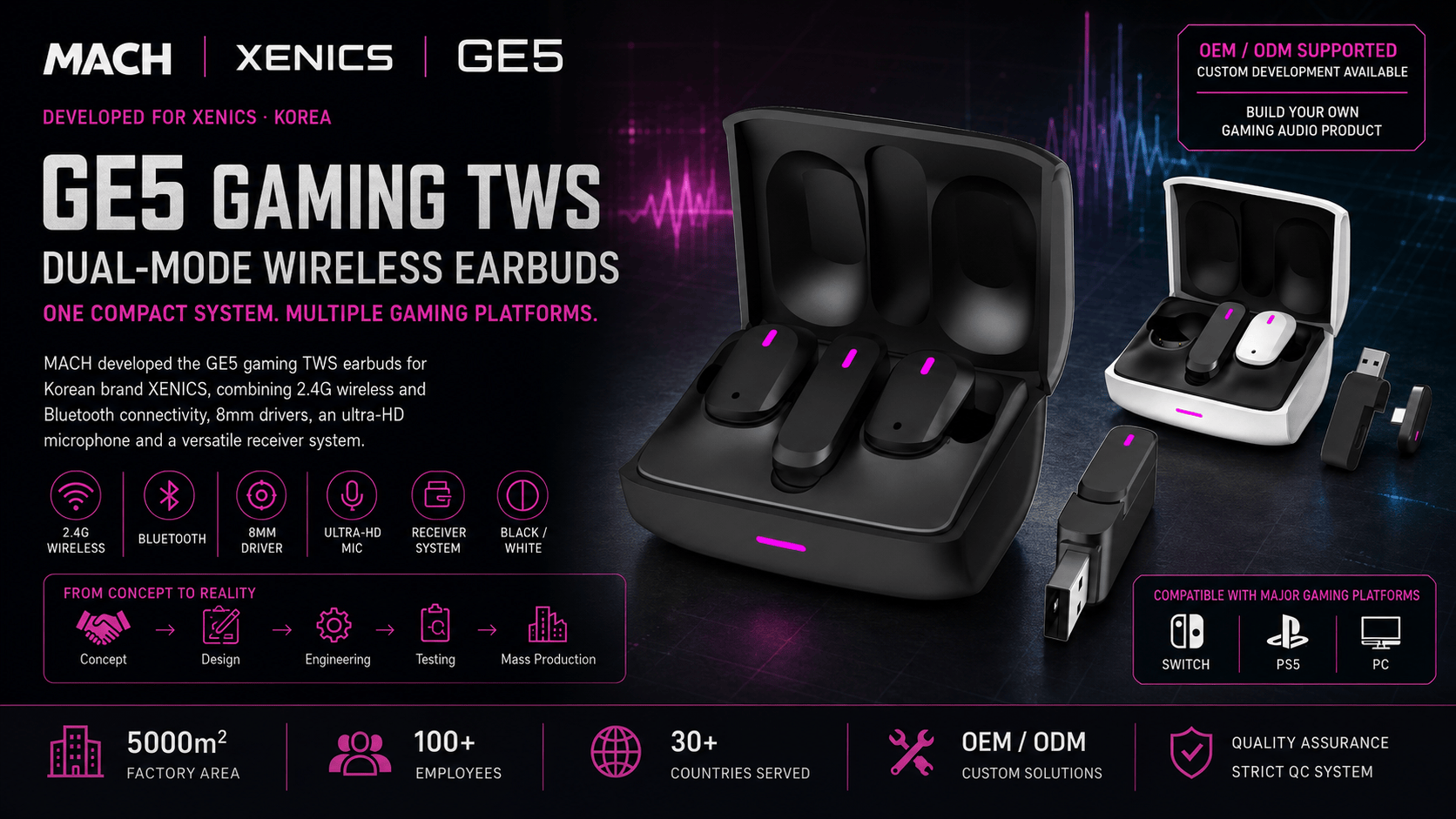
Brands should specify mode memory in dual-mode gaming TWS earbuds as a complete state and user-experience requirement, not as a one-line feature. The specification must define what happens after power-on, case opening, manual switching, dongle insertion, Bluetooth loss, receiver removal, timeout, reset and return to the charging case. It should also define which mode is remembered, when memory is written, how users recognize the active mode and how production inspectors reproduce each transition.
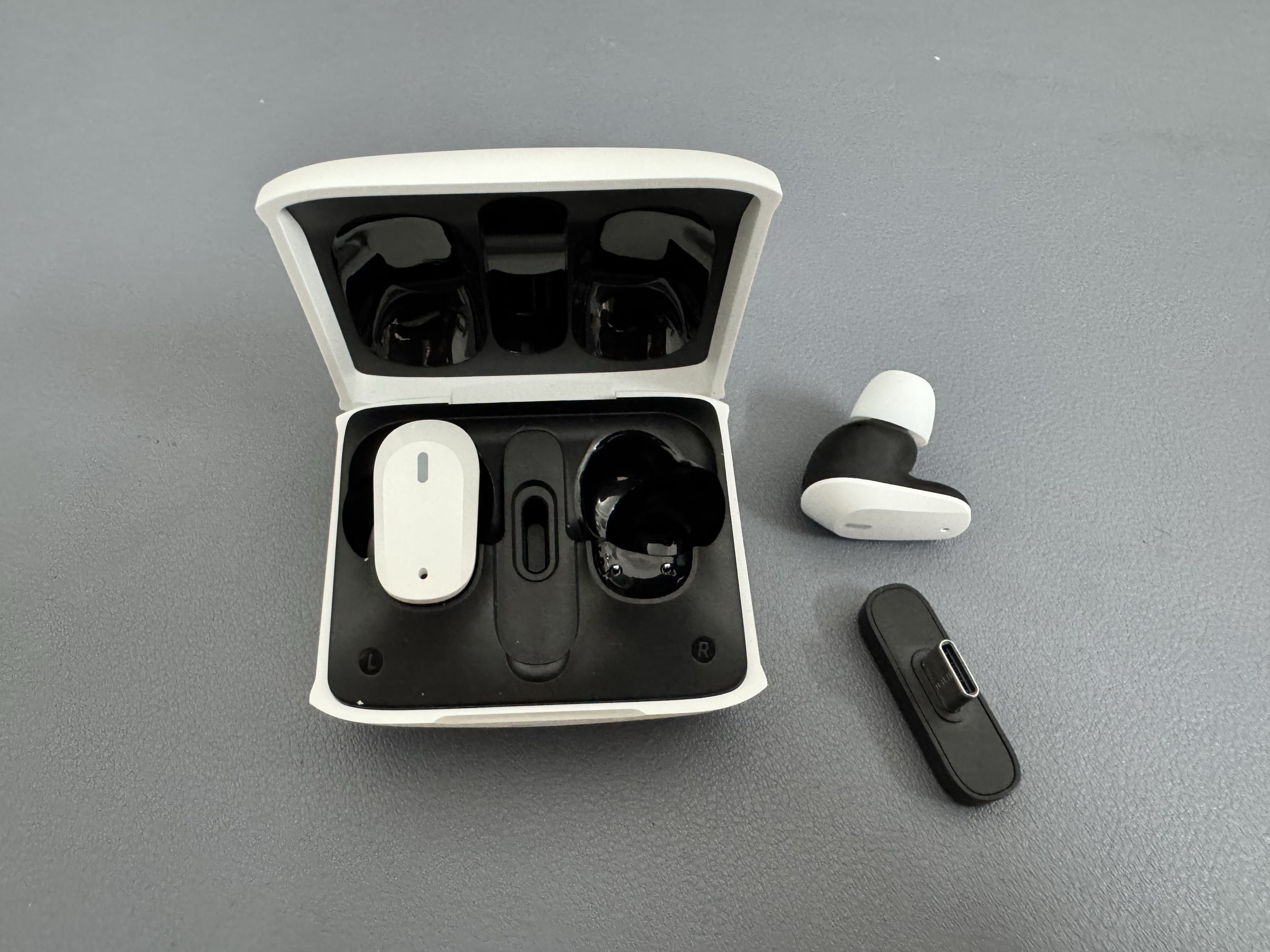
The GE5 Korea OEM project provides a useful engineering example. Public materials describe a G12 gaming TWS platform with Bluetooth 5.3, proprietary 2.4GHz Type-C dongle mode, ATS3031 direction, touch controls and mode memory. The instructions record press-and-hold switching between Bluetooth and USB modes, automatic dongle connection when the receiver is inserted, blue LED breathing during dongle pairing and purple indication after connection. Earbuds are intended to power on according to the last used mode.
This article uses those confirmed behaviors to explain how an OEM buyer can create a decision tree, state table and validation plan. It does not reproduce the case study or claim that one mode-memory design is correct for every product. The right behavior depends on target users, host devices, controls, prompts, receiver workflow, battery strategy and support expectations.
Why Mode Memory Is a Product Requirement, Not a Convenience Feature
Mode memory determines which radio path the earbuds attempt after power-on, so it directly affects connection time, user confidence, test repeatability and support volume.
A user may play on a PC through a Type-C receiver at night and use a phone over Bluetooth the next morning. If the earbuds remember the last mode, they may return to the expected device quickly. If they always default to Bluetooth or dongle mode, that can also be valid, but the product, manual and indicators must make the rule clear.
Ambiguity creates common complaints: the earbuds appear disconnected, the phone cannot find them, the dongle does not seem to work or touch controls appear inconsistent. Often the hardware is operating as designed but the active state is invisible. Product managers should therefore approve the transition logic alongside latency, acoustic and battery requirements.
Mode memory also affects factory testing. Inspectors need a known starting state and reset method. Without them, one sample may begin in Bluetooth while another begins in dongle mode, producing inconsistent results. A revision-controlled state table turns user experience into a testable production requirement.
| Power-on strategy | Buyer advantage | Primary risk |
|---|---|---|
| Remember last mode | Returns to the user's recent workflow | Unexpected mode when the device changes hands |
| Always default to Bluetooth | Predictable phone-first onboarding | Extra switch required for gaming receiver use |
| Always default to dongle | Predictable gaming-first behavior | Confusing when receiver is unavailable |
| Choose mode from detected host | Potentially fewer manual steps | More complex priority and fallback logic |
GE5 Korea OEM Project Overview
GE5 was a Korea-market dual-mode gaming TWS earbuds program combining Bluetooth 5.3, proprietary 2.4GHz dongle operation, mode memory, ENC microphone direction and private-label production controls.
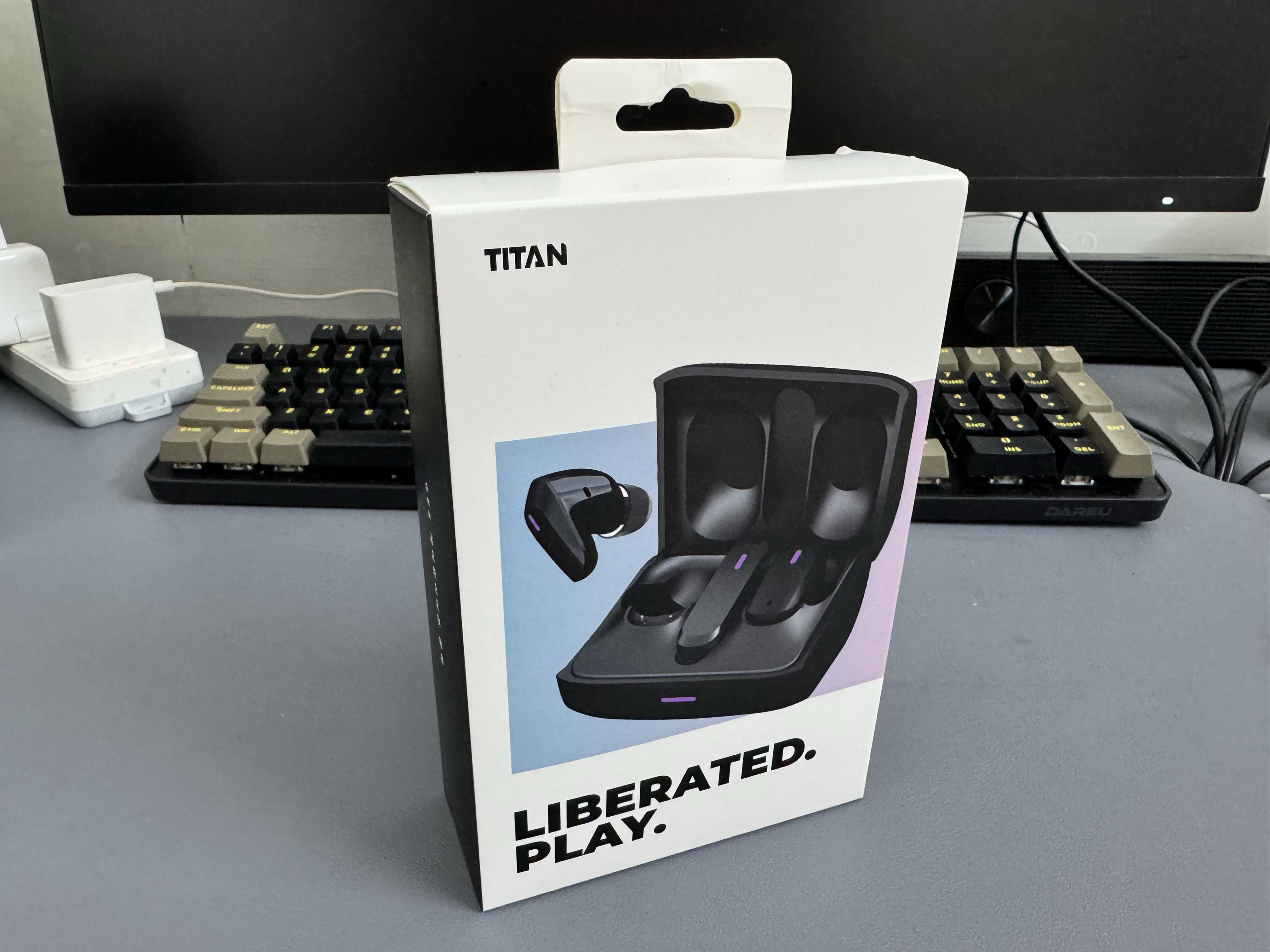
The public case identifies a Korea gaming brand, importer and distributor project. Source materials use GE5 in the case card, G12 in the product instruction and TITAN GE5 in finished-goods records. Keeping these identities mapped is important because firmware, pairing behavior, packaging and inspection documents must point to the intended commercial SKU.
The product instruction records ATS3031 direction, Bluetooth Classic plus LE 5.3, proprietary 2.4GHz wireless, a Type-C receiver, touch operation and mode memory. It also records at least 10m direction for Bluetooth and dongle range under the stated conditions, 45mAh earbud batteries, a 300mAh charging case and around 1.5-hour charging directions for earbuds and case.
Acoustic and communication direction includes an 8mm 32-ohm speaker and ENC dual-microphone positioning. Component files describe the WDC2718AB38S1WL0 bottom-port analog silicon microphone and an 8mm speaker with specified electrical, acoustic and reliability characteristics. These component details support engineering review but do not replace finished-earbud validation.
Black and white products, TITAN retail packaging, logo execution, battery-document coordination and shipment QC were also part of the project. A QC report records 3,000 ordered and shipped units, 125 sampled units, GB/T2828.1-2012 and a final pass judgment for its documented lot.
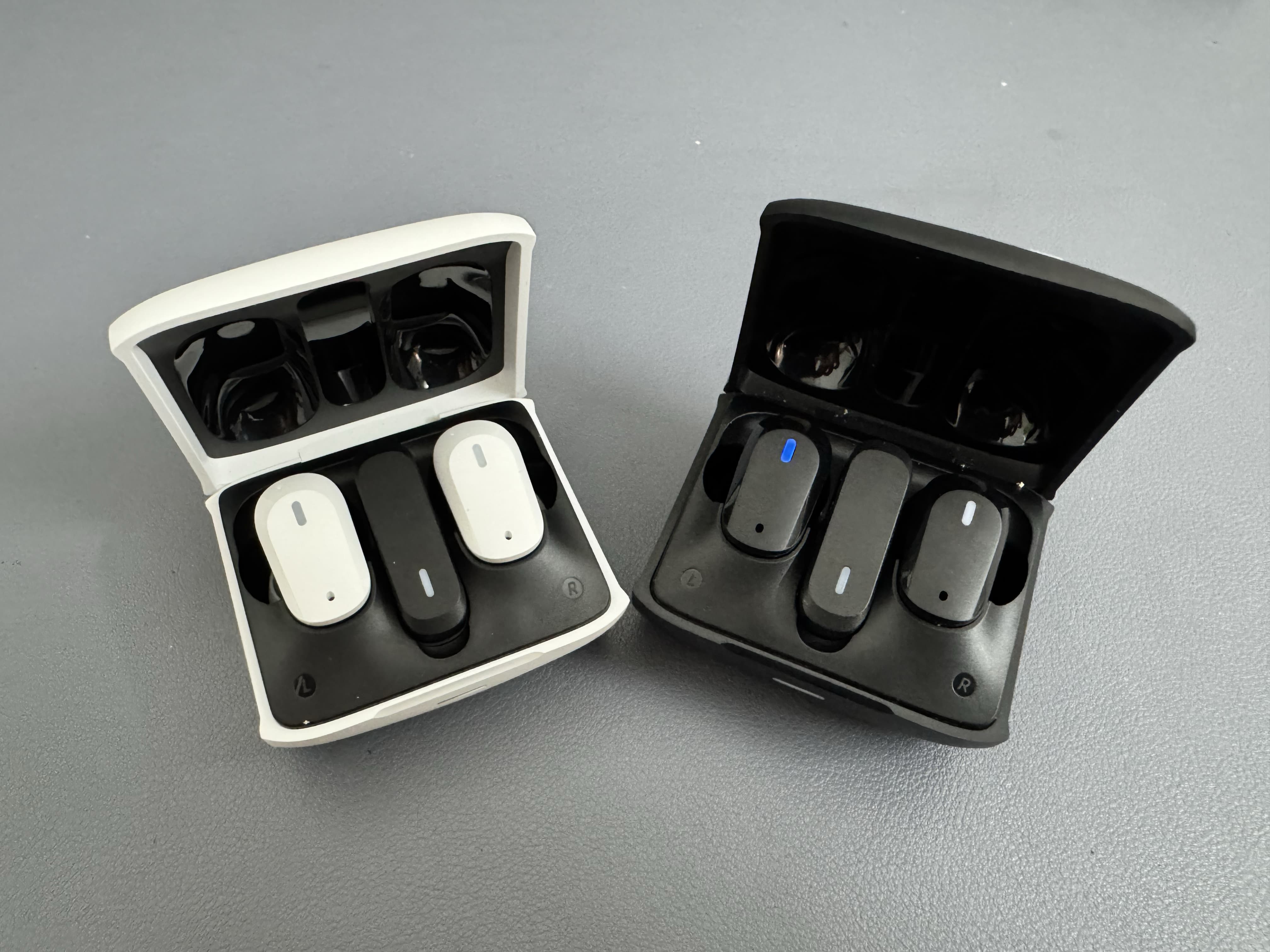
Buyer Challenge: Invisible Connection States Create Visible Support Problems
Dual-mode earbuds can be electrically functional yet feel broken when users cannot tell whether the product is searching, paired, connected, switching, timing out or remembering a previous mode.
Bluetooth and proprietary 2.4GHz links use different hosts and pairing paths. A phone may remember the earbuds while the receiver expects its own paired identity. If firmware prioritizes one path without a visible cue, users may repeatedly open settings, reinsert the receiver or reset the earbuds unnecessarily.
The charging case complicates the start condition. Earbuds may power on when removed, reconnect when the lid opens or remain off until a defined event. The memory decision may be read at boot, after synchronization between left and right, or after another trigger. Buyers do not need to dictate the code implementation, but they must define the observable result.
Support documents often describe controls but omit exceptions. What happens if the last mode was dongle but the receiver is absent? Does the product wait, fall back or require manual switching? What happens if Bluetooth is connected when the receiver appears? These choices should be agreed before firmware freeze and translated into test cases.
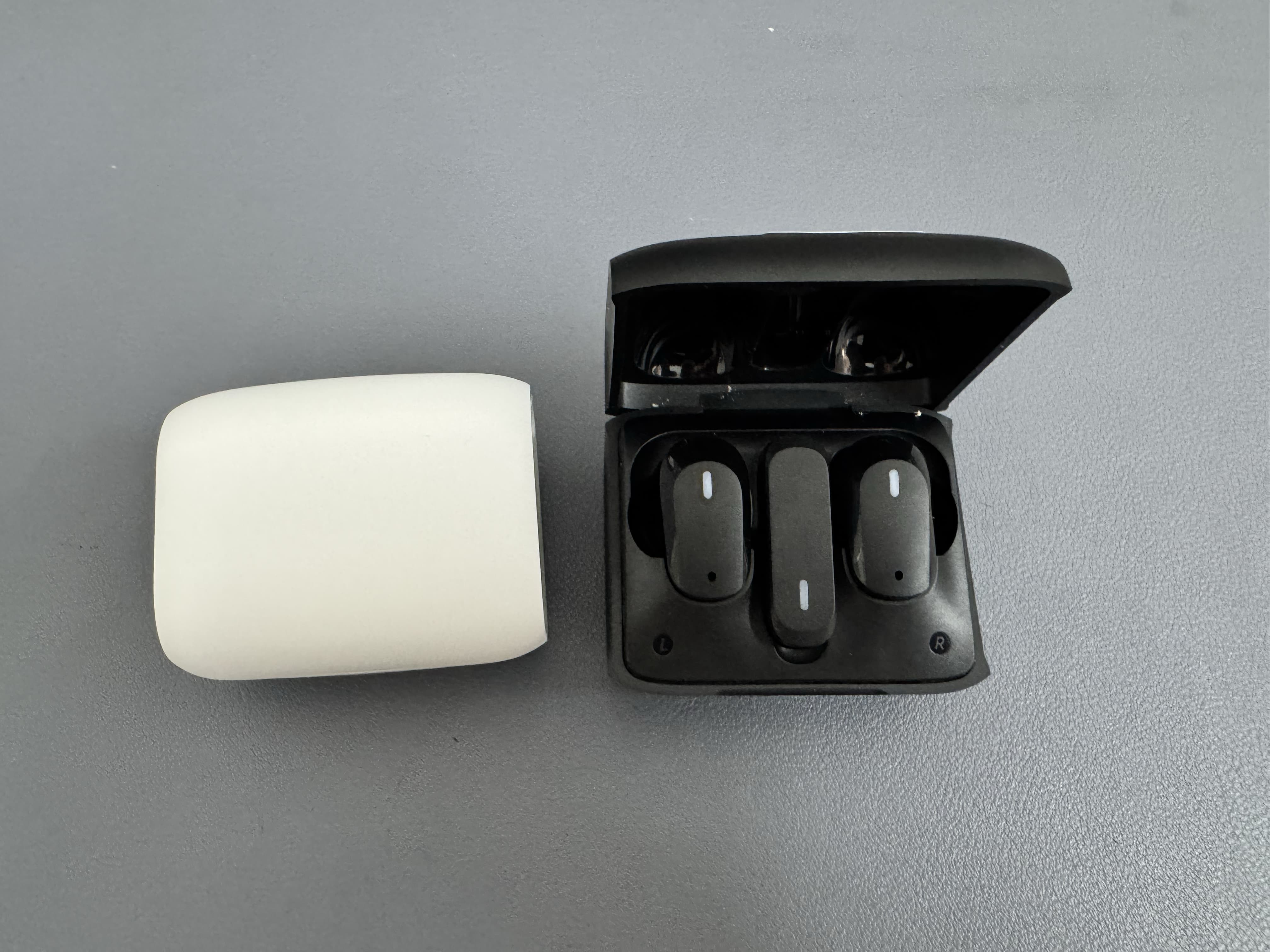
How MACH Connected Product Behavior to OEM Production
MACH organized the GE5 workflow around platform behavior, component validation, private-label execution and production checks so the approved connection logic could be repeated in mass production.
Requirement review separated Bluetooth use, Type-C dongle use, mode switching, mode memory, touch controls and LED feedback. The source instructions provided the observable workflow: press-and-hold mode switching, automatic dongle connection when inserted, blue breathing during pairing and purple indication after connection.
Engineering support included compact TWS structure, PCB, RF and antenna review, acoustic and microphone component review, charging, tooling and sample preparation. State behavior was considered together with the physical product because receiver connection, touch operation, case events and power management all trigger firmware transitions.
For production, QC could verify power-on state, Bluetooth pairing, dongle pairing, manual switching, remembered mode, controls, distance, charging, appearance and packaging against the released firmware and work instruction. Battery and KC-related source files were handled as configuration-specific documents rather than broad finished-product claims.
The result was not merely a feature list. It was a reproducible flow connecting the user instruction, firmware revision, sample approval, functional checklist and retail package. That linkage is what private-label buyers need when software behavior becomes part of product identity.
The Power-On Decision Tree: What Should Happen After Bluetooth or Dongle Mode?
A useful power-on decision tree starts with the stored last mode, checks relevant availability and timeout conditions, then produces one predictable state with clear user feedback.
First define when the last-mode value is written. It may be saved immediately after a successful manual switch, only after a connection succeeds or when the earbuds power down normally. Saving too early can remember a mode the user never completed; saving too late can lose the most recent preference after an unexpected shutdown. The buyer should approve the observable rule and expected behavior after low-battery power-off or reset.
If the stored mode is Bluetooth, specify whether the earbuds reconnect to the last phone, enter a discoverable state or wait for a known device. Define the search time, pairing cue, connection cue and what happens when no device responds. If there is a Bluetooth pairing list, define whether mode switching preserves it and which action clears it.
If the stored mode is dongle, specify behavior when the receiver is available and when it is not. The GE5 instructions describe automatic connection when the dongle is inserted and LED states for pairing and connection. The product brief should add timeout and fallback rules. A gaming-first product may wait for the receiver, while a lifestyle-first product may offer a documented path back to Bluetooth.
Next define priority when both paths are possible. Inserting the receiver may trigger an automatic switch, a prompt or no change until the user commands it. Avoid undocumented automatic switching during a call or active playback. The preferred rule depends on whether the product promises seamless gaming access, uninterrupted mobile use or explicit user control.
Left-right synchronization needs its own branch. Both earbuds should agree on the active mode, remembered state and indicator behavior. Define recovery if only one side wakes, if one side is returned to the case or if a single-ear session ends. A mode-memory function that works only when both sides start together can create intermittent complaints.
Finally define reset. A factory reset may clear Bluetooth records, dongle pairing, mode memory or all three. The manual, customer service script and QC instruction must use the same definition. Inspectors should be able to reset a sample to a known state, execute the decision tree and verify that the stored mode changes only at approved events.
| Starting condition | Required specification decision | Verification evidence |
|---|---|---|
| Last mode Bluetooth | Reconnect, discoverable state and timeout | Boot and reconnect sequence |
| Last mode dongle | Receiver search, cue and fallback | Tests with receiver present and absent |
| Receiver inserted during Bluetooth | Automatic, prompted or manual priority | Active playback and idle transitions |
| One earbud wakes | Single-ear and resynchronization behavior | Left-only, right-only and rejoin cases |
| Reset | Which records and mode values are cleared | Repeatable post-reset baseline |
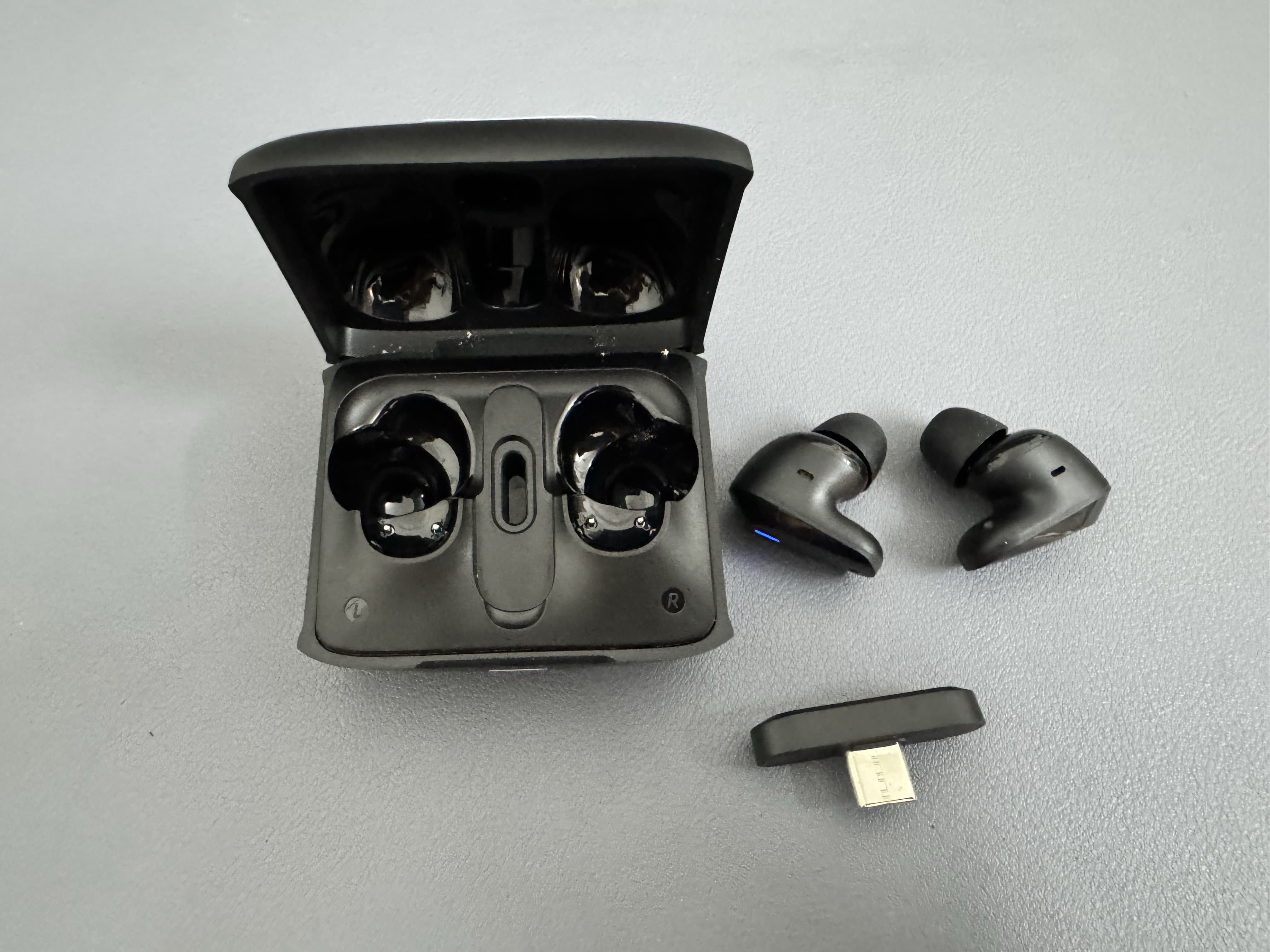
Technical Deep Dive: Engineering the State Machine for Pairing, Switching and Reconnection
A state machine turns dual-mode behavior into named states, allowed events, outputs and error recovery that engineering, quality and customer support can test consistently.
Start by naming observable states such as case charging, power-off, Bluetooth search, Bluetooth paired, Bluetooth connected, dongle search, dongle connected, manual switching, reset and timeout. The exact implementation may include more internal states, but the buyer-facing specification needs enough detail to explain every LED, prompt and control response.
List events that move the product between states: removal from case, power-on, known-device response, receiver insertion, successful link, long press, call start, receiver removal, link loss, timeout, low battery, return to case and reset. For each event, specify the next state, stored-memory action and user feedback. Disallow transitions that should never happen, such as changing away from an active call without an approved rule.
Define timing separately from state names. Long-press duration, search timeout, reconnection window, LED cadence and auto-shutdown delay affect perceived quality. Record tolerances and test conditions where necessary. Avoid vague language such as connects quickly because operators and buyers cannot judge it consistently.
Error recovery should be deliberate. A failed receiver link may remain in dongle search, return to Bluetooth, request manual action or power down. Bluetooth loss may trigger reconnection for a defined period. If left and right earbuds disagree, firmware needs a recovery path that does not require users to guess which side controls the mode.
Version control completes the system. Link the state table to firmware, instruction manual, prompt or LED file, golden sample and QC checklist. When a transition changes, update all affected records. Otherwise a new firmware can pass engineering while production inspectors and customers follow obsolete instructions.
For validation, use a transition matrix rather than repeating only normal startup. Test each allowed transition, priority conflict, timeout, single-ear condition, low-battery event and reset. Record start state, event, expected state, actual result and firmware revision. This creates evidence that mode memory works across a sequence, not only in one demonstration.
| State-machine element | Buyer specification | Production use |
|---|---|---|
| State | Named user-visible condition | Creates a known test starting point |
| Event | Button, case, receiver, link or timer input | Defines the inspector action |
| Output | LED, prompt, connection and memory result | Provides objective pass criteria |
| Recovery | Response to failure or disagreement | Supports repeatable troubleshooting |
| Revision | Firmware and document linkage | Prevents mixed behavior in production |
Designing Touch, LED and Prompt Feedback for Dual-Mode Earbuds
Controls and indicators should tell users which mode is active, what the earbuds are attempting and whether an action succeeded without requiring a phone screen.
Assign gestures carefully because TWS touch surfaces already handle music, calls, voice assistant and mode switching. The GE5 source records pause, play, previous, next, answer, end, decline and press-and-hold mode switching. Buyers should map duration and ear side to avoid accidental mode changes during ordinary adjustment.
LED colors and cadence need a legend. GE5 records blue breathing for dongle pairing and purple after connection. Define brightness, duration, synchronization between earbuds and behavior after successful connection. If packaging or a manual uses color names, approve physical samples so blue and purple remain distinguishable.
Prompts can reduce ambiguity but add language, volume and timing decisions. A prompt should not mask game audio or calls, and localized files should be linked to firmware. If the product relies only on tones or LEDs, customer-service materials should still describe the sequence consistently.
Test feedback under realistic transitions: case removal, phone reconnection, receiver insertion, manual switching, link loss, timeout and reset. An indicator can be technically correct yet too brief or hidden to guide a user, so sample approval should include usability review as well as electrical function.
OEM/ODM Development and Validation Process
Dual-mode earbuds should move from use-case definition through platform review, state specification, prototype validation, pilot production and controlled firmware release.
At concept stage, define target users, hosts, Bluetooth and receiver scenarios, default mode, memory policy, controls, indicators, prompts, acoustic target, ENC direction, batteries, colors, packaging and market requirements. Decide which transitions are mandatory for launch.
During engineering, create the identity map, state diagram, transition matrix, UI table and firmware acceptance criteria. Review RF, antenna, acoustic, microphone, charging and case behavior on the selected platform. Confirm any claimed compatibility or performance under defined configurations and methods.
Prototype validation should include normal and exception paths: both stored modes, receiver present and absent, active playback, calls, one-ear use, timeout, low battery, reset and return to case. Freeze the approved firmware with the manual, prompts, LED file and golden sample.
Pilot and mass production should control firmware loading and verify high-risk transitions, pairing identity, distance, charging, appearance, accessories and packaging. Substitutions or firmware changes that affect state behavior should return to review before shipment release.
Buyer Checklist Before Freezing Mode-Memory Behavior
Before firmware freeze, buyers should approve the default mode, memory-write rule, transition priorities, user feedback, reset scope and production test sequence.
Document target hosts, primary use case, Bluetooth and dongle pairing names, receiver behavior, case events and single-ear requirements. State what should happen after every power-on and connection-loss condition instead of relying on platform defaults.
Approve the state diagram and transition table with product, firmware, RF, quality and customer support. Check touch gestures, LEDs, prompts, timeouts, fallback, active-call priority and reset. Link all decisions to one firmware revision and sample.
Before mass production, verify firmware programming control, post-reset baseline, mode-memory test, receiver pairing, Bluetooth reconnection and variant pack-out. Ensure the retail manual and support script describe the released behavior.
Frequently Asked Questions
These answers address common OEM buyer questions about Bluetooth and dongle mode memory in gaming TWS earbuds.
Final behavior depends on the selected platform, firmware, hosts and product positioning. Buyers should approve a project-specific state table and test plan before mass production.
Conclusion
Mode memory creates value only when users, firmware engineers, inspectors and support teams share the same definition of what the product should do next.
GE5 shows how Bluetooth 5.3, a proprietary 2.4GHz Type-C receiver, touch controls, LED feedback and remembered mode form one product experience. Brands should control that experience with a power-on decision tree, state machine, transition matrix and revision-linked production test.
MACH industry supports OEM/ODM gaming audio projects through platform review, industrial design, PCB, RF, acoustics, firmware coordination, tooling, quality planning, packaging and mass-production support. Share your dual-mode earbuds use cases and expected switching behavior to evaluate a controlled development plan.
Frequently Asked Questions
What is mode memory in dual-mode gaming earbuds?
It is firmware behavior that stores an approved connection mode and uses that value to determine how the earbuds start or reconnect later.
Should gaming earbuds remember Bluetooth or dongle mode after power-off?
They may remember the last mode or use a fixed default. The correct choice depends on product positioning and must be clearly specified and tested.
What should happen if dongle mode is remembered but the receiver is absent?
The specification should define whether the earbuds wait, time out, fall back to Bluetooth or require a manual switch, with clear feedback.
How does the GE5 platform switch between Bluetooth and dongle modes?
Public instructions record press-and-hold switching between Bluetooth and USB modes, automatic receiver connection and last-mode memory.
What LED behavior is recorded for GE5 dongle pairing?
The source instruction records blue LED breathing during dongle pairing and purple indication after connection.
What is a connection-mode state machine?
It is a structured definition of product states, triggering events, expected outputs, stored-memory actions and error recovery.
How should factories test mode memory during production?
Start from a known reset state, verify each stored mode, power cycle, reconnect, test receiver-present and receiver-absent cases and record firmware revision.
Can mode switching occur automatically when a Type-C receiver is inserted?
It can if the product is designed that way, but priority during playback or calls and user feedback should be explicitly approved.
What should a factory reset clear on dual-mode earbuds?
The project must define whether reset clears Bluetooth records, dongle pairing, mode memory or all stored connection data.
What should a buyer send MACH for a dual-mode gaming earbuds RFQ?
Send target hosts, mode priority, receiver requirements, switching behavior, controls, prompts, acoustic targets, colors, packaging, forecast and schedule.
Related Resources
Need OEM/ODM gaming audio solutions?
Contact MACH Industry to discuss your gaming headset, gaming earbuds, or private-label audio project.
Contact MACH Industry