Home > Resources > OEM Knowledge
How to Mass-Produce Distressed Finishes on a Custom Gaming Headset
A buyer guide to translating weathered leather, sword-stroke graphics, scratches, debossing and engraved details into repeatable gaming headset production standards.
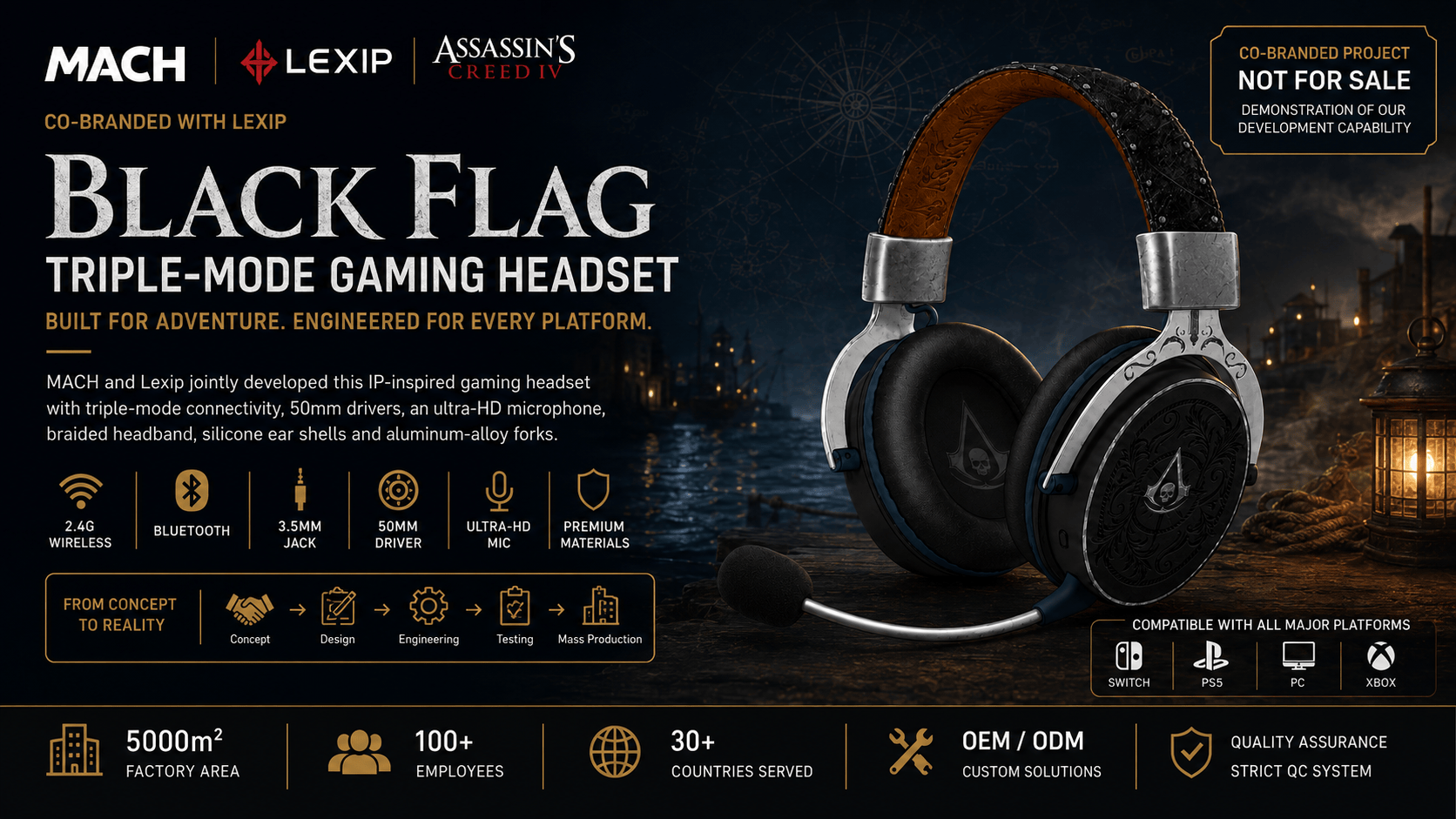
Brands can mass-produce a deliberately distressed gaming headset only when the approved design separates intentional weathering from unacceptable cosmetic defects. Buyers need location maps, process-specific artwork, color and gloss references, edge rules, defect zones, physical limit samples and inspection language that explains which scratches, fading, leather variation and engraving are designed into the product. A concept image that merely says vintage or battle-worn is not enough for repeatable OEM production.
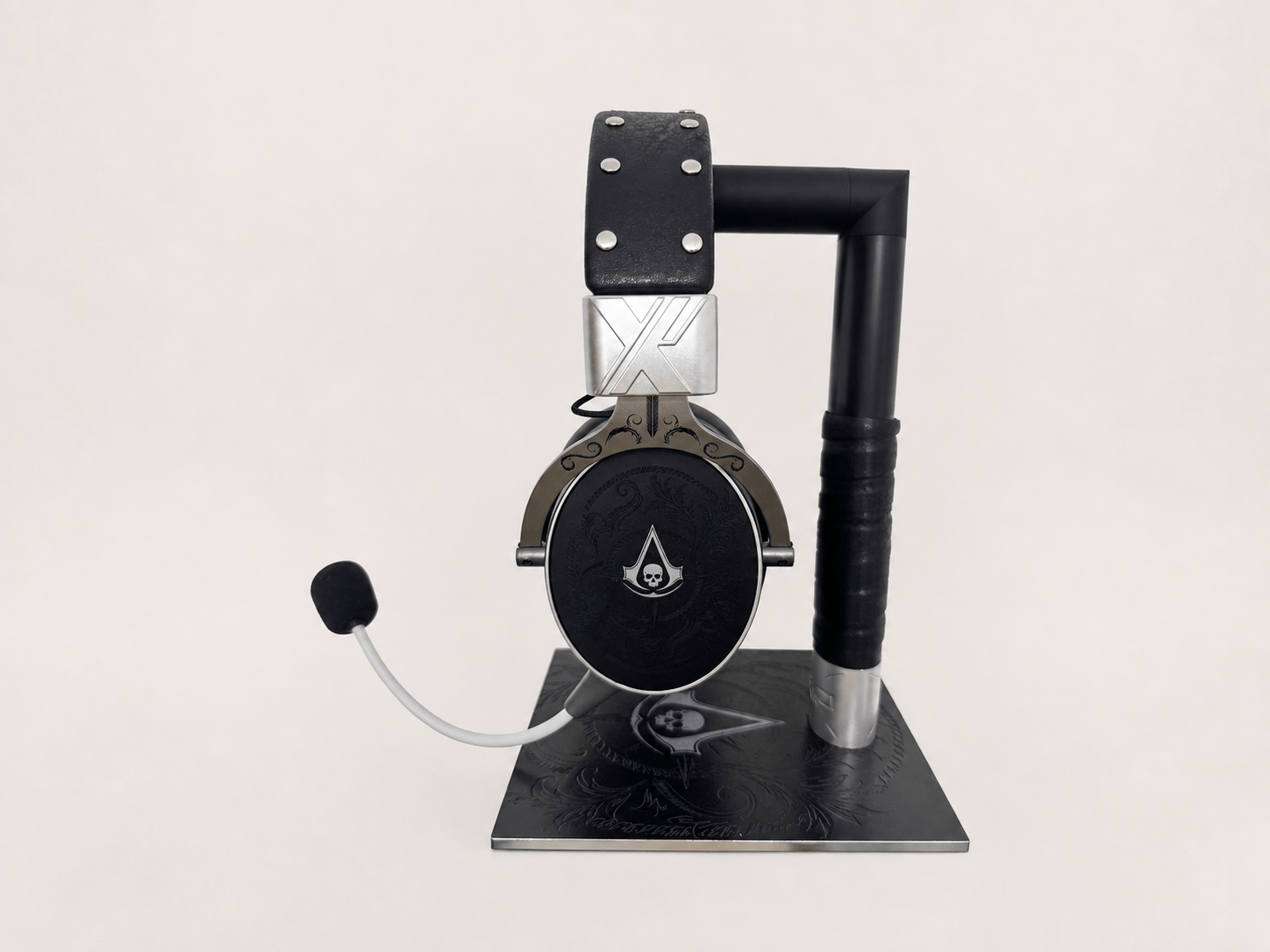
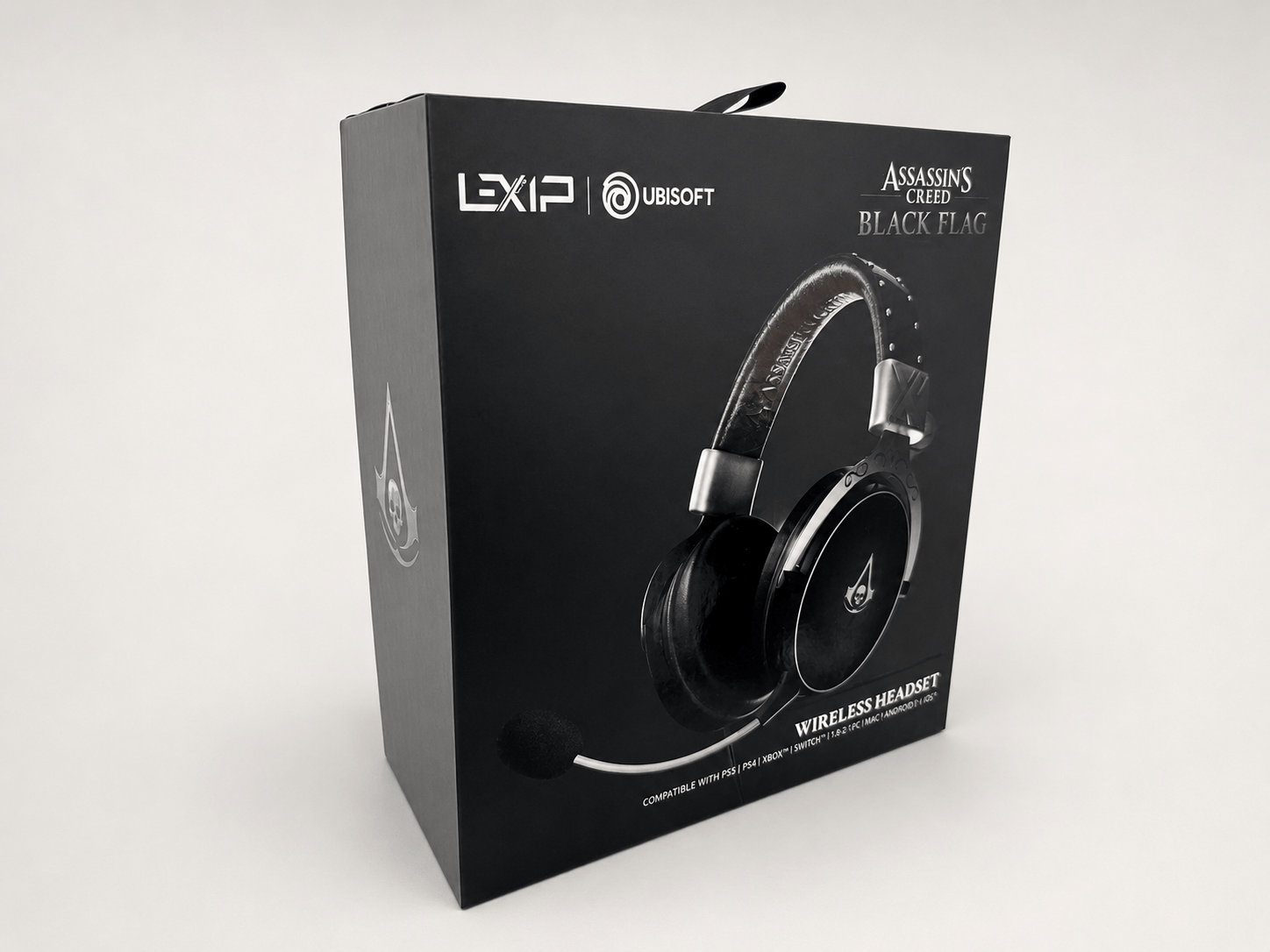
The Black Flag France OEM project provides a practical reference. Its public materials describe a licensed-theme triple-mode headset with Pantone 1545C sword-stroke and scratch effects, old damaged leather direction, black and blue leather, silver markings, deep silicone engraving, debossing and controlled dark neutral colors. The functional platform includes 2.4G wireless, Bluetooth 5.4 planning, 3.5mm AUX audio, an 800mAh protected battery with NTC, 50mm / 16-ohm speaker direction and a detachable unidirectional microphone. This article uses those confirmed details to explain a sourcing method rather than reproducing the case study.
Why Distressed CMF Needs More Control Than a Clean Finish
Intentional weathering appears irregular, but the production rules behind it must be precise enough to preserve brand identity and reject genuine workmanship problems.
A clean-color headset can often be judged against uniform hue, gloss and surface limits. A distressed product deliberately introduces non-uniform graphics, worn edges, darker zones, scratch marks or aged texture. Without a clear standard, operators may remove approved character details as defects or accept accidental damage because the product is supposed to look worn.
The buyer must therefore control both presence and absence. Required marks need a defined location, scale, orientation and visual weight. Other areas may need to remain clean so controls, labels, mating surfaces and premium touch points do not appear damaged. The contrast between designed wear and controlled clean zones makes the theme believable.
This work has commercial consequences. Distressed graphics can improve licensed or story-driven differentiation, but they may add artwork preparation, process panels, masks, printing or coating steps, inspection time and sample rounds. The RFQ should identify these processes early so quotation, tooling and schedule are realistic.
| Finish type | Visual objective | Primary quality question |
|---|---|---|
| Uniform solid finish | Consistent color and gloss | Does the surface stay within the approved range? |
| Printed scratch effect | Controlled narrative wear | Is the artwork complete, registered and correctly weighted? |
| Distressed leather direction | Aged tactile character | Is variation intentional and within approved limits? |
| Debossed or engraved detail | Permanent depth and shadow | Are depth, edge definition and position acceptable? |
Black Flag France OEM Project Overview
Black Flag was a France-market licensed-theme triple-mode gaming headset program combining pirate-inspired distressed CMF with a practical wireless platform, accessories, packaging and production controls.
The published case describes support for a France gaming brand, importer and distributor. The program required artwork and Pantone confirmation, platform matching, PCB and RF review, antenna consideration, structure and tooling support, accessory coordination, testing-document support, assembly and packaging SOPs, quality control and mass-production preparation.
Confirmed technical direction includes a Jieli platform with JL7018M headset chip and JL7018M plus PA transmitter plan, 2.4G wireless, Bluetooth 5.4 planning, 3.5mm analog left/right audio and microphone input, Type-C charging, XT4056 plus NTC charging direction, LP5300 over-voltage and over-current protection, an 800mAh protected battery, 50mm / 16-ohm speaker direction and unidirectional 6027 microphone. The specification records around-20ms 2.4G latency positioning and greater-than-10m working-distance positioning under its stated context.
The pirate-theme CMF used sword-stroke and scratch artwork, old damaged leather, black and blue leather direction, silver marks, deep silicone engraving, debossing and Pantone references including 1545C, Black 6C, 447C and 4276C. A custom transmitter, braided charging and audio cables, retail box, inner card, manual, brochure, labels and carton extended the identity beyond the headset.
| Project layer | Black Flag direction | Buyer implication |
|---|---|---|
| Core platform | 2.4G, Bluetooth and AUX headset | Keep functional performance independent from cosmetic variation |
| Distressed graphics | Sword strokes, scratches and silver marks | Release exact artwork and location standards |
| Textured materials | Old leather, black leather and blue leather direction | Approve physical range and clean interfaces |
| Relief details | Debossing and deep silicone engraving | Control depth, edge and placement |
| Retail bundle | Transmitter, cables and packaging | Maintain one visual and SKU system |
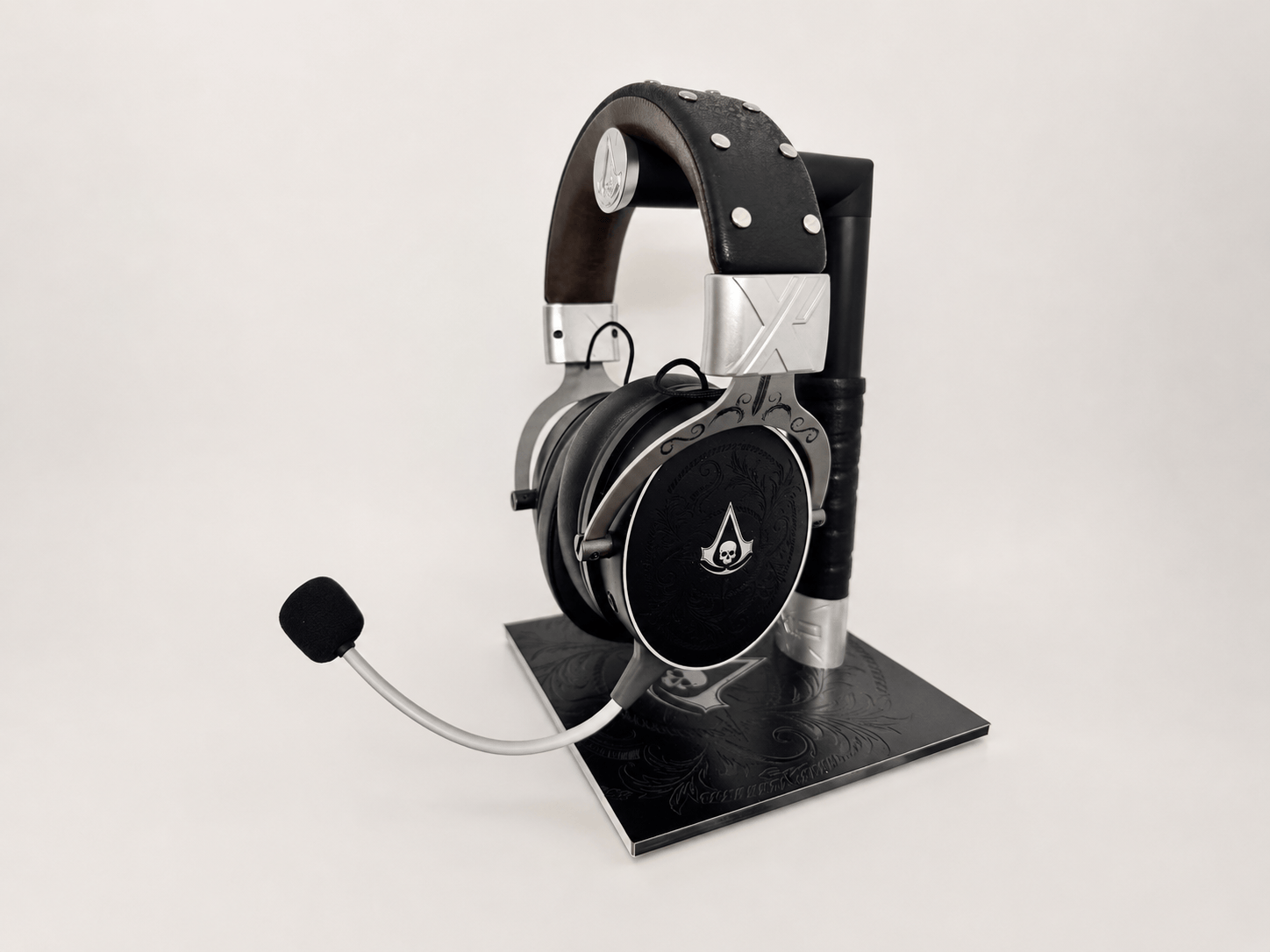
Buyer Challenge: Designed Wear Can Resemble Poor Workmanship
The central inspection problem is deciding whether a visible mark belongs to the approved story or results from uncontrolled printing, coating, handling or assembly.
A sword-stroke graphic may intentionally cross a color field, but an accidental paint drag may look similar. A leather panel may use aged variation, yet a stain, wrinkle or adhesive mark remains unacceptable. A debossed area may have rough visual character, while a torn edge or incomplete fill still indicates a process problem.
Teams cannot solve this with subjective terms such as more vintage or less clean. The buyer, designer and manufacturer need a common vocabulary for designed marks, allowed natural variation and defects. Every important surface should be linked to an artwork revision, material sample, process panel or assembled golden sample.
Licensed artwork adds approval complexity. The creative owner may approve visual storytelling, while engineering must approve manufacturability and quality must approve repeatability. Those approvals should be recorded separately so a visually accepted render is not mistaken for a mass-production standard.
How MACH Connected Pirate-Theme Artwork With Production
MACH translated the Black Flag visual direction into part-level processes and approval points while coordinating the wireless platform, accessories, packaging, assembly and inspection flow.
Requirement review separated fixed product functions from appearance customization. Engineering teams considered structure, PCB, RF, antenna position, acoustics, microphone, battery, connectors and tooling while the CMF plan assigned colors, leather direction, scratch artwork, silver details and relief effects to specific parts.
Prototype work connected flat artwork to curved ear cups, headband surfaces and silicone components. Samples allowed the team to review artwork distortion, edge relationships, paint and molded-color contrast, logo visibility, control access and how weathered elements looked on the complete headset rather than on isolated swatches.
Production preparation covered microphone and transmitter assembly, headband wire routing, sliding and decorative parts, aluminum fork, PCB and 2.4G board work, speaker soldering and final assembly. Finished-product checks, appearance inspection, charging and audio checks, label application, retail box loading and carton packing linked the approved themed exterior to a shipment-ready product.
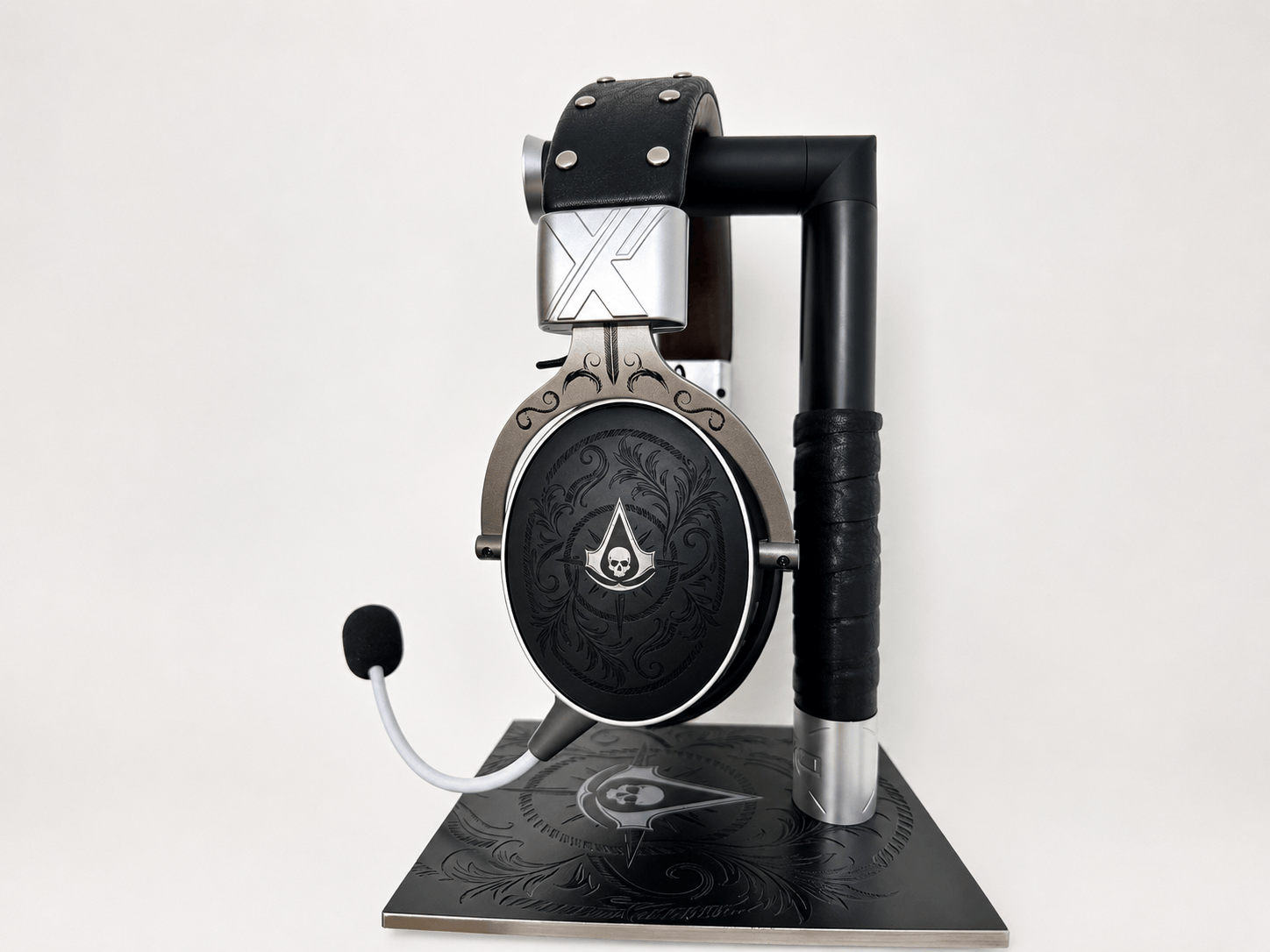
Designed Damage vs Real Defects: Building a Distressed-Finish Boundary Standard
A boundary standard defines where weathering must appear, where variation is allowed, which surfaces must remain clean and what defects are never acceptable.
Start with a surface map. Divide visible parts into narrative zones, controlled variation zones, clean premium zones, functional zones and hidden assembly zones. Narrative zones carry required sword strokes, scratches, silver marks or aged texture. Controlled variation zones may allow a limited natural range. Functional zones around buttons, ports, hinges, labels, acoustic openings and mating features should remain within stricter workmanship limits.
For each designed mark, identify the master artwork file, revision, part number, process, datum, orientation and target scale. State whether position must be exact or may vary within a defined window. If the process is printing, specify registration and completeness. If it is molding or debossing, control geometry and depth. If it is a hand-influenced finish, establish physical upper and lower limit samples.
Next create an intentional-feature register. Each row should contain a photograph or drawing, description and acceptance rule. A required diagonal sword stroke, for example, should not be confused with a random handling scratch. The operator should be able to compare the unit with a released reference rather than remember the creative brief.
Then create a prohibited-defect list that applies even inside distressed zones. Typical categories include contamination, exposed substrate where not designed, poor adhesion, sharp edges, uncontrolled overspray, blocked text, incomplete logo, glue marks, torn leather, open seams, loose threads, cracks and scratches caused after the approved process. Exact limits belong to the project specification and physical samples.
Control transitions between worn and clean areas. A distressed ear-cup graphic may stop before a button or logo to preserve readability. An aged headband surface should not hide a legal line or product label. Mating surfaces, screw bosses and clips should not receive decorative buildup that changes assembly. These boundaries need drawings or photographs because verbal descriptions are easy to interpret differently.
Inspect at multiple distances and stages. Artwork registration and process defects may be easier to catch before assembly. Overall visual balance requires an assembled-unit check at normal viewing distance, followed by close inspection of critical areas. Packaging inspection should ensure that product imagery shows the approved weathering rather than an earlier concept.
Finally, tie standards to revisions and training. When a rights holder or brand changes artwork, color or damage intensity, update the artwork package, golden sample, work instruction and inspection reference together. Keep obsolete samples away from the line. A distressed product can tolerate designed visual complexity, but it cannot tolerate uncontrolled document complexity.
| Boundary category | Meaning | Example control |
|---|---|---|
| Required narrative feature | Must appear on every approved unit | Artwork revision, datum and completeness standard |
| Allowed controlled variation | May vary inside an approved range | Upper and lower physical limit samples |
| Clean zone | Must remain free of weathering | Mapped boundary and cosmetic criteria |
| Functional zone | Appearance process cannot affect use or assembly | Masking, clearance and workmanship control |
| Prohibited defect | Never part of the intended story | Defect catalogue and rejection rule |
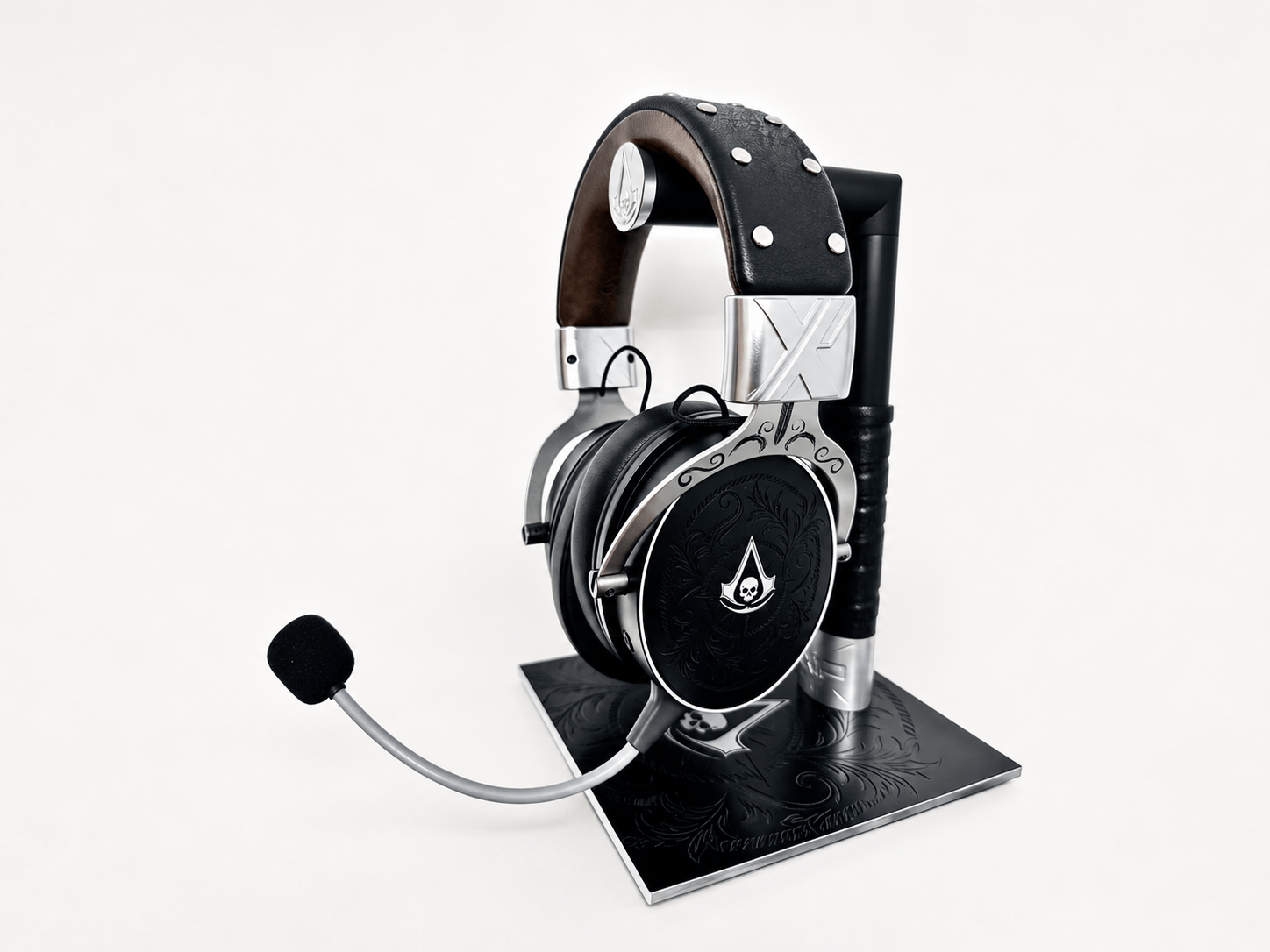
Technical Deep Dive: Scratch Graphics, Debossing and Deep Silicone Engraving
Different weathering effects require different artwork preparation, tooling, material and inspection methods; one generic distressed-finish standard cannot control them all.
Printed scratch graphics begin as controlled artwork. Curved parts can stretch or compress the visual, so the production file should be mapped to actual part geometry. Registration datums, print coverage, edge wrap and neighboring logos need approval on a physical part. A random visual style does not justify incomplete transfer, smearing or uncontrolled color density.
Sword-stroke and worn-paint effects often depend on layered colors. Buyers should define which layer is the substrate, which is the intended wear color and where the effect may expose or simulate the lower layer. If the appearance is produced through printing rather than actual abrasion, the specification should say so; operators should not create uncontrolled wear by manually damaging finished parts unless that method is formally engineered and approved.
Debossing creates a recessed feature through mold geometry, tooling, pressure or soft-goods processing depending on the part. Control location, orientation, depth direction, edge definition and the way surrounding material deforms. On soft materials, pressure and recovery may change the visual result; on molded parts, tooling condition and texture affect clarity.
Deep silicone engraving introduces its own risks. Flexible material can show flash, incomplete fill, deformation or variable edge sharpness. The drawing should define the feature geometry and functional clearance, while a physical sample establishes acceptable visual depth and touch. Engraving near controls or assembly interfaces needs engineering review so decorative relief does not obstruct movement or fit.
Old leather direction should not be treated as permission for uncontrolled material lots. Approve construction, grain family, color range, backing, thickness, seam and edge treatment. If natural or simulated variation is part of the design, identify the acceptable range. Stains, delamination, open seams, adhesive marks and damage caused during assembly remain quality issues.
Cross-process interfaces are a common failure point. Printed scratches must align with debossed geometry; leather edges meet molded parts; silver marks sit near dark coatings; silicone pieces assemble into hard housings. Review tolerance stack, paint buildup, masking, adhesive, handling protection and packaging abrasion. The complete weathered story only works when these interfaces remain precise.
| Process | Critical input | Typical inspection focus |
|---|---|---|
| Scratch or sword-stroke print | Mapped artwork and registration datum | Position, completeness, density and edge behavior |
| Debossing | Geometry, material and pressure or tooling | Depth, clarity, distortion and orientation |
| Silicone engraving | Tool geometry and material flow | Fill, flash, deformation and functional clearance |
| Distressed leather | Approved material range and construction | Grain, color, seam, edge and prohibited damage |
OEM/ODM Development and Approval Process
Distressed CMF should move through controlled creative approval, feasibility, process sampling, assembled prototypes, pilot production and mass-production release.
At concept stage, define the target market, licensed or brand story, product functions, connection modes and desired weathering intensity. Provide authorized artwork, Pantone references, material direction, legal lines and examples of required and prohibited wear. Identify which details are mandatory and which can change for manufacturing feasibility.
During design and engineering, assign every finish to a part and process. Review geometry, controls, acoustic openings, microphone, ports, antenna area, cable and packaging. Create process panels and first-off parts before relying on a complete cosmetic prototype. This allows print, leather, debossing and silicone details to be adjusted without confusing unrelated platform issues.
Prototype approval should cover the complete functional configuration and the assembled visual system. Testing and compliance-document planning must follow the actual product and destination markets; reports from another configuration should not be assumed to cover the final Black Flag-style variant without a scope review.
Pilot production verifies work instructions, fixtures, process stability, line handling, inspection language and packaging protection. Release a golden sample, artwork package, part-level CMF matrix, intentional-feature register, defect catalogue, BOM, accessory matrix and pack-out sample. Mass production then uses controlled sampling, final inspection and change approval for artwork, material, paint, silicone, firmware, battery, transmitter and packaging revisions.
| Development gate | Distressed-finish output | Buyer approval |
|---|---|---|
| Creative brief | Authorized wear language and intensity | Does it express the intended product story? |
| Feasibility | Part and process assignment | Can each effect be repeated without harming function? |
| Prototype | Assembled visual and functional sample | Are designed wear and clean zones balanced? |
| Pilot build | Process range and defect evidence | Can operators distinguish intent from defects? |
| Mass production | QC records and controlled revisions | Does each lot match released standards? |
Buyer Checklist Before Releasing a Distressed Headset
Before RFQ and production release, buyers should define the visual story, functional configuration, weathering zones, physical standards, rights approvals, packaging and change controls.
Prepare the product brief with target audience, retail position, platforms, connection modes, microphone, battery, accessories and markets. Supply authorized artwork and legal usage rules. Mark required scratch, sword-stroke, leather, debossed and engraved elements by part, with revision-controlled files and Pantone or physical color references.
Ask the manufacturer to identify each production process, tooling implication, sample stage, material minimum and schedule risk. Approve process panels before the golden sample. Create clean-zone maps, allowed variation samples and prohibited-defect examples. Confirm how artwork behaves on curved, flexible and moving surfaces.
Before mass production, freeze the BOM, firmware or configuration reference where applicable, artwork, CMF standards, accessories, packaging and test plan. Define inspection conditions, defect classes, rework, record retention and changes requiring reapproval. Provide forecast and launch timing so specialized materials and secondary processes can be planned accurately.
| Buyer input | Why it matters | Release evidence |
|---|---|---|
| Authorized design files | Controls theme and rights usage | Released artwork package |
| Surface-zone map | Separates wear, variation and clean areas | Part-level boundary specification |
| Physical samples | Shows acceptable visual range | Golden and limit samples |
| Functional specification | Protects performance under cosmetic changes | Validated product configuration |
| Markets and forecast | Drives documents, material planning and schedule | Project quotation and production plan |
Frequently Asked Questions
These answers cover common buyer questions about distressed gaming headset CMF, sampling, quality control and OEM production.
Exact customization, minimum order quantity, test methods, sample timing and compliance support depend on the selected platform, processes, final configuration, destination markets and forecast.
Conclusion
The appearance of intentional damage must be engineered more carefully than accidental damage is avoided: every narrative mark needs a standard, and every true defect needs a boundary.
The Black Flag France OEM project shows how sword strokes, scratches, aged leather, debossing, engraved silicone and controlled accessories can differentiate a triple-mode gaming headset. The sourcing lesson is to convert the visual story into part-level artwork, process definitions, clean zones, limit samples and inspection rules before mass production.
MACH industry supports OEM and ODM gaming audio projects from requirement review and platform matching through industrial design, CMF engineering, prototypes, testing coordination, packaging, quality control and mass-production preparation. Share your authorized artwork, target platform, material direction, destination markets and order plan to request an OEM quote and discuss your gaming audio project.
Frequently Asked Questions
What is a distressed-finish gaming headset?
It is a headset whose approved CMF intentionally uses effects such as scratches, worn graphics, aged leather, debossing or engraving to support a product story.
How do factories distinguish intentional scratches from defects?
Use revision-controlled artwork, mapped narrative and clean zones, physical limit samples, an intentional-feature register and a prohibited-defect catalogue.
What distressed details were specified for the Black Flag project?
Public materials describe sword-stroke and scratch effects, old damaged leather, black and blue leather, silver marks, deep silicone engraving and debossing.
Can distressed graphics be applied to curved headset parts?
Yes, but artwork should be mapped to part geometry and approved for registration, distortion, edge behavior and neighboring functional features.
How should aged leather variation be approved?
Approve material construction, grain and color range, backing, thickness, seams, edges, clean zones and physical upper and lower limit samples.
What is the difference between debossing and silicone engraving?
Debossing creates a recessed feature through tooling or pressure, while silicone engraving uses molded geometry in flexible silicone; each needs separate depth and edge controls.
What technical platform is confirmed for the Black Flag project?
Public materials record 2.4G wireless, Bluetooth 5.4 planning, AUX audio, JL7018M direction, 800mAh protected battery, 50mm / 16-ohm speaker and detachable unidirectional microphone.
Does a similar test report automatically cover a customized headset?
No. Certification and report scope must be checked against the final model, construction, configuration and destination markets.
What should buyers approve before distressed-headset production?
Approve the artwork, zone map, process panels, golden and limit samples, BOM, functional configuration, packaging, defect rules and change-control plan.
What should a brand send MACH for a custom headset RFQ?
Send authorized artwork, target functions and platforms, material and color references, required weathering effects, packaging, markets, forecast and schedule.
Related Resources
Need OEM/ODM gaming audio solutions?
Contact MACH Industry to discuss your gaming headset, gaming earbuds, or private-label audio project.
Contact MACH Industry