Home > Resources > OEM Knowledge
How to Build a Gaming Headset CMF Approval Specification
A practical OEM buyer guide to controlling gaming headset color, artwork, surface finish, logo, packaging and golden-sample approval before mass production.
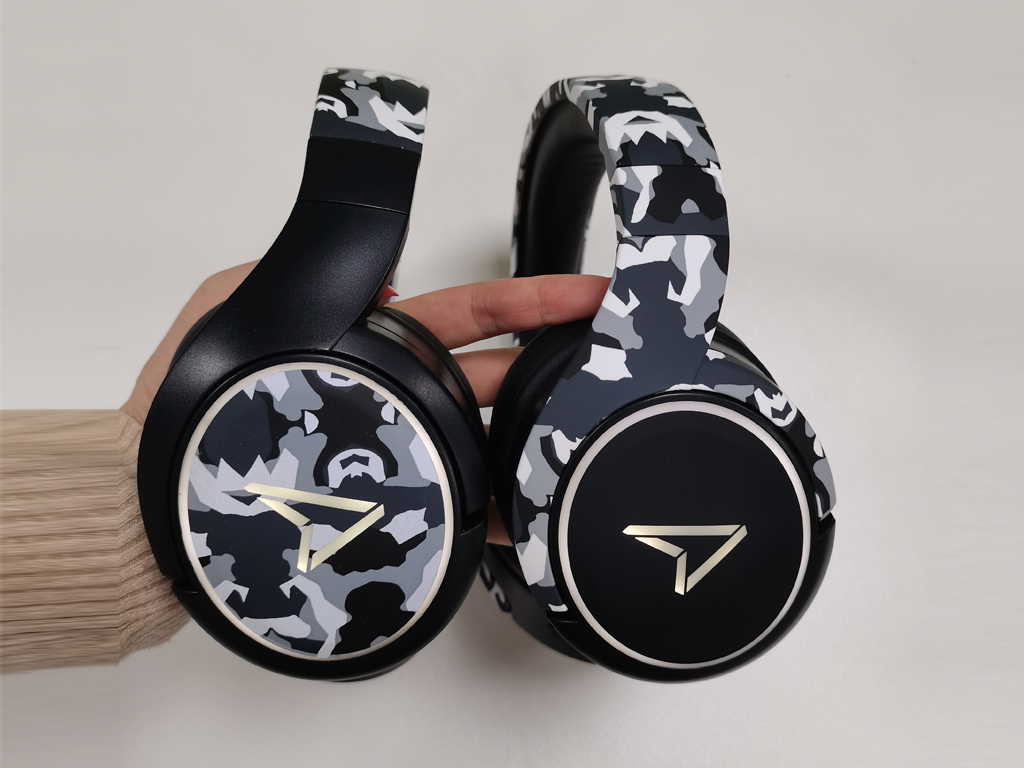
A gaming headset CMF approval specification is the controlled document set that converts a brand's visual idea into measurable production requirements. It should define approved colors, substrates, finish and gloss, artwork scale and position, logo process, protected areas, packaging coordination, sample status, tolerances, inspection method and change responsibility. A mood board or rendering can communicate intent, but it cannot by itself control mass production.
This distinction matters when a private-label headset uses a patterned finish across curved parts. The Impulse France OEM project is a useful public example: a French gaming accessories brand selected a Bluetooth wireless headset platform and differentiated it through a black, white and gray camouflage hydro-dipped appearance, logo treatment and retail packaging. The project shows why CMF approval must connect artwork, geometry, finishing, assembly and packaging instead of treating color as a final decoration step.
Key Takeaways for Private-Label Buyers
A production-ready CMF release defines what is approved, how it will be measured and which physical sample controls future production.
- Separate visual references from controlled production specifications.
- Identify the material and finish for every visible headset part.
- Control pattern scale, orientation, coverage and unavoidable variation on curved geometry.
- Record color standards, gloss or texture expectations and inspection lighting.
- Approve logo process, location, clearance and contrast as part of the complete CMF.
- Coordinate the headset, accessories, packaging, manual and digital product identity.
- Freeze a signed golden sample and a revision-controlled approval pack.
- Define which changes require a new sample or renewed validation.
What a Gaming Headset CMF Approval Specification Controls
The specification translates color, material, finish and artwork into controlled inputs for sourcing, sampling, manufacturing and quality inspection.
CMF stands for color, material and finish. In a gaming headset project, the practical scope also includes printed or transferred artwork, textures, coatings, decorative rings, logo execution and the relationship between adjacent parts. Industrial design defines form, interfaces and user interaction; CMF defines how those parts should look and feel. A logo file alone addresses only one small part of the product identity.
A useful approval specification identifies each visible component with a part name or drawing reference. It states the substrate, molded color or paint color, finish process, gloss or texture target, artwork file and orientation, mask zones, logo process and inspection requirement. It should also state whether a feature is standard on the selected platform, optional or subject to engineering review.
For patterned headsets, the specification must acknowledge process behavior. A transferred pattern may not place every graphic element in exactly the same location on every unit. Buyer and manufacturer should agree which variation is inherent, which areas require tighter control and what counts as a cosmetic defect.
| Approval layer | What it should define | Why it matters |
|---|---|---|
| Color | Reference standard, substrate, matching method and viewing condition | Prevents approval from depending only on screen color |
| Material | Visible substrate and adjacent-part relationship | Different materials can make the same color appear different |
| Finish | Process, gloss, texture, coating and protected zones | Controls appearance, touch and process compatibility |
| Artwork | Master file, scale, orientation, coverage and critical zones | Reduces distortion and unintended cropping |
| Brand marks | Logo file, process, size, position, contrast and clearance | Protects legibility and assembly space |
| Release control | Revision, approver, golden sample and retest triggers | Connects design approval to production inspection |
Impulse France Project Facts Used in This Guide
Impulse is a France-market OEM Bluetooth gaming headset project with a confirmed camouflage hydro-dipped appearance, private-label logo, retail packaging and a defined wireless platform.
The public Impulse France case identifies the customer as a French gaming brand, importer and distributor. The selected platform used Bluetooth 5.1 wireless information, a 50mm speaker and a retractable noise-canceling microphone. These hardware facts provide project context; the guide remains focused on CMF release control.
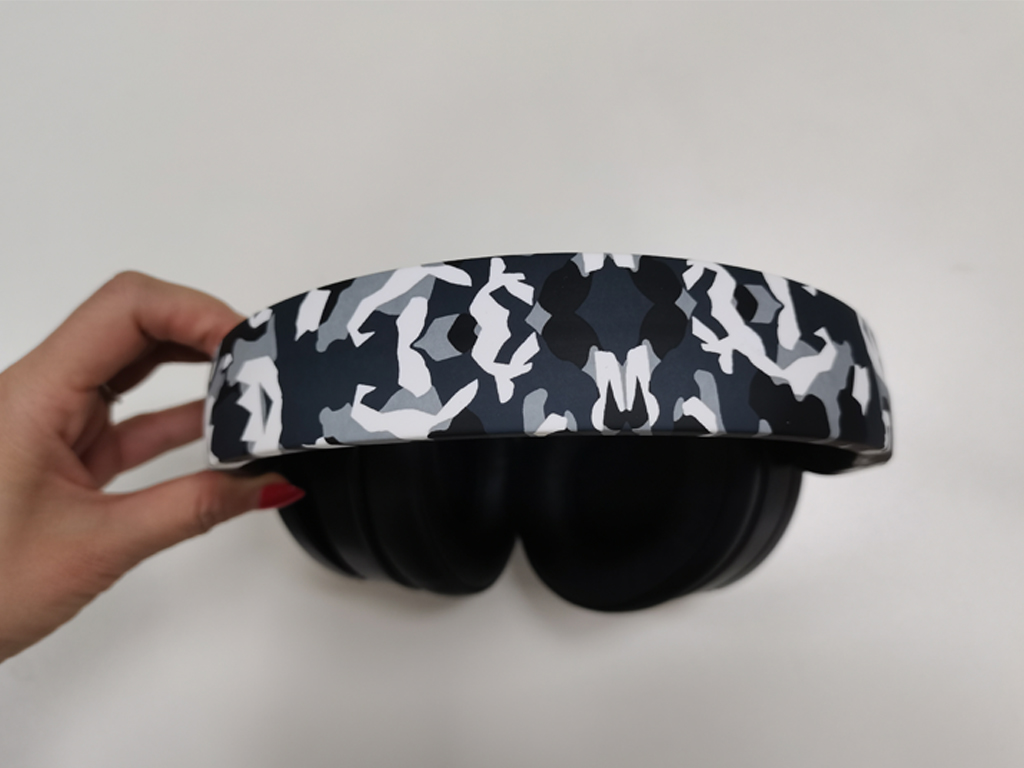
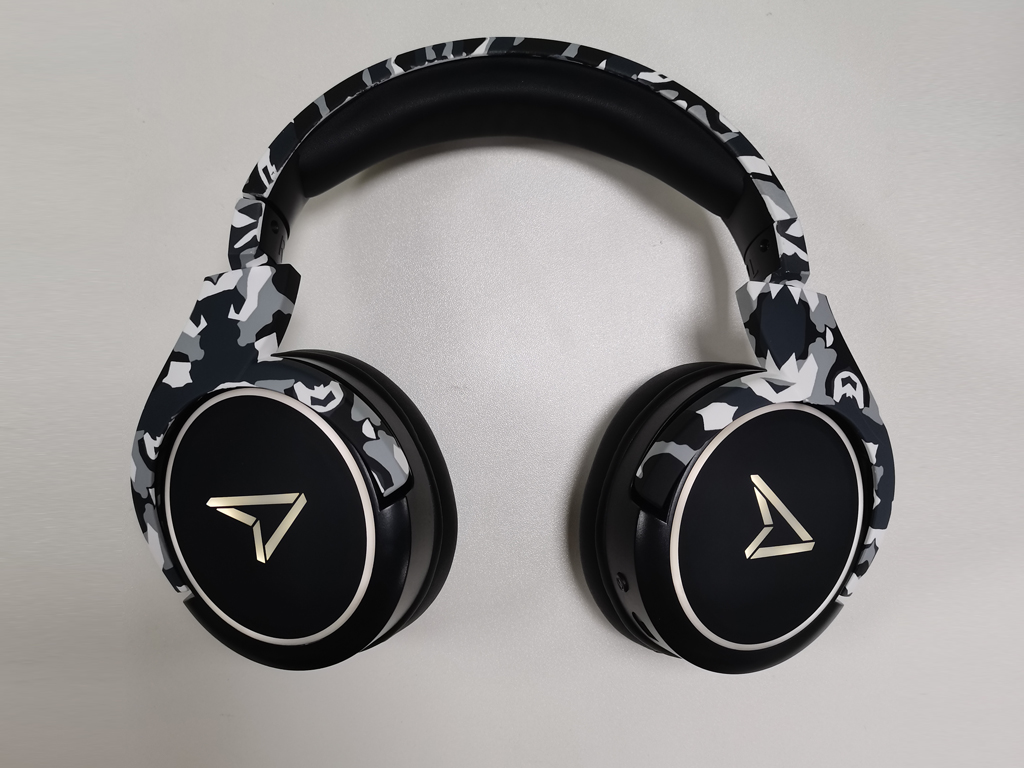
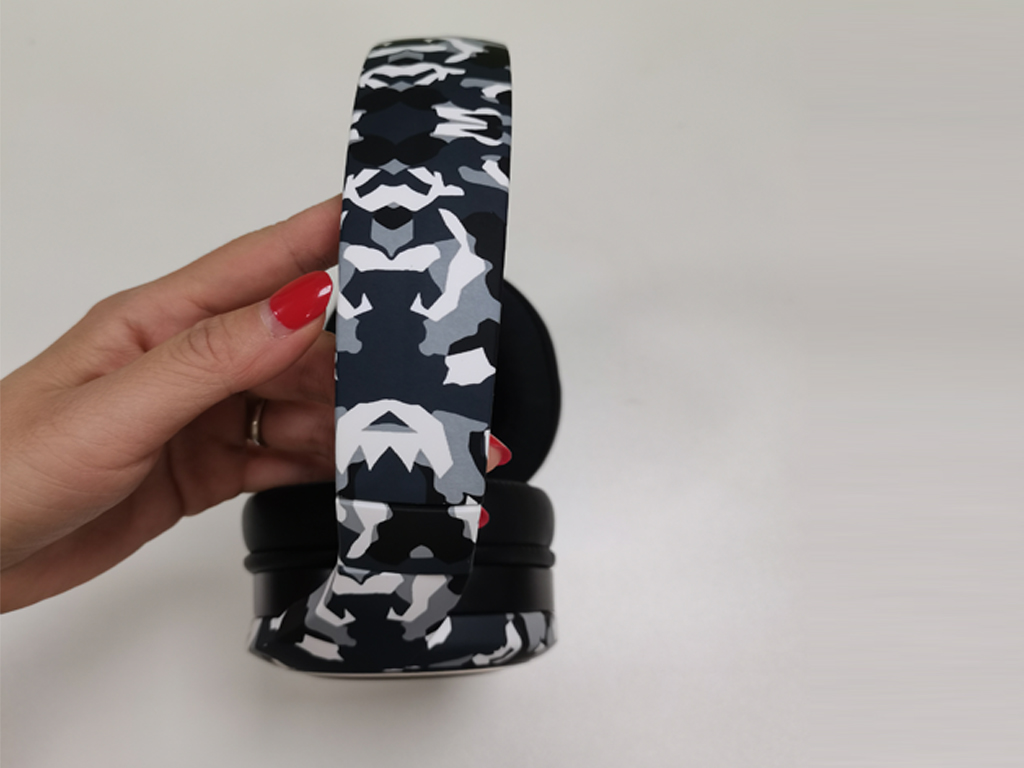
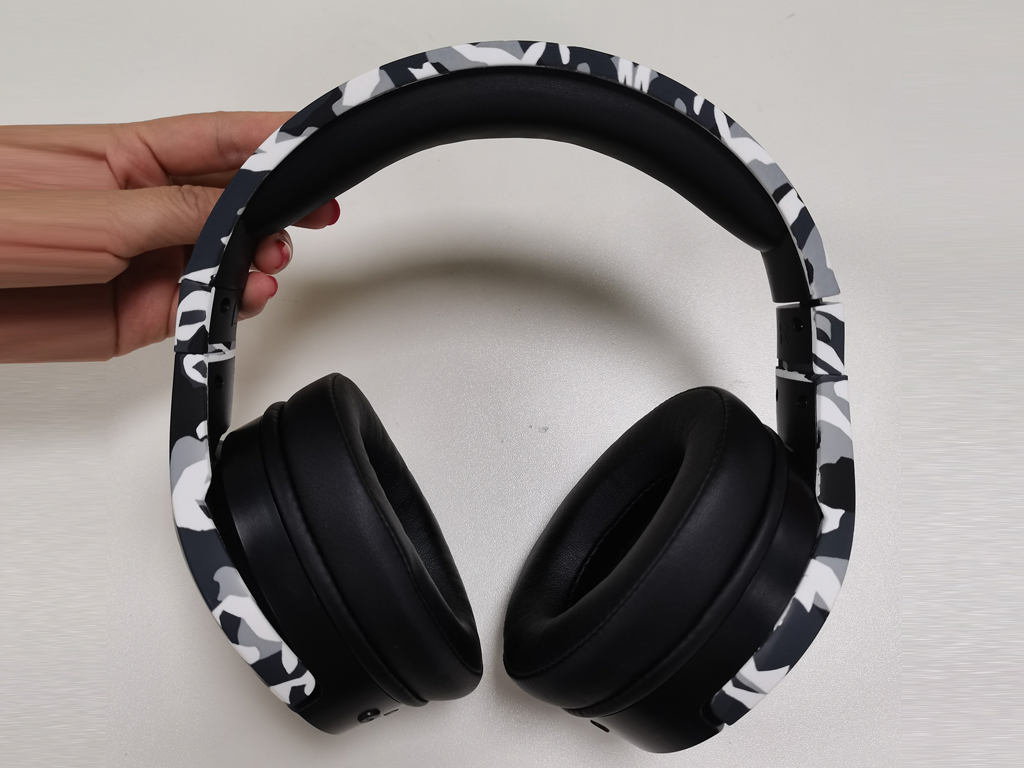
The visual differentiation was a black, white and gray camouflage direction applied through hydro dipping, together with a private-label logo and customized retail packaging. Public images show the pattern continuing across the outer headband, yokes and selected earcup surfaces while black cushions and housings create contrast. The logo and decorative rings remain visually separate from patterned surfaces.
MACH industry coordinated design, structure review, logo and packaging customization, quality control, trial-production support and mass-production preparation. Other processes in this guide are general options, not Impulse claims. Certification planning must be verified for each destination and final configuration.
From Reference Artwork to a Controlled CMF Approval Pack
The approval pack should turn each design decision into a named file, measurable requirement, physical reference and responsible sign-off.
Start with a product map. List the outer headband, yokes, earcup covers, housings, buttons, microphone parts, decorative rings, cushions, cables, labels and packaging components the customer will see. Assign a drawing or part reference to each item. A statement such as custom camouflage is too broad because parts may use molded color, hydro dipping, painting, printing, plating or an unchanged standard finish.
Build a color and material schedule. For each part, record the color reference, base material, whether color is molded or applied and the finish target. Screen renderings can guide direction but should not be the only authority. State the physical reference or agreed color standard, viewing light and comparison distance. Adjacent parts deserve explicit review because black plastic, black paint and black synthetic leather can look different even when their names match.
Use production artwork rather than presentation screenshots. Include vector files where required, color separations, pattern repeat, scale, orientation, bleed, protected zones and a named revision. On curved parts, the two-dimensional file must be evaluated against the three-dimensional surface. Mark motifs that cannot be stretched, cropped by an edge, covered by a screw, interrupted by a hinge or placed under a logo.
Define the process. Hydro dipping is confirmed for Impulse, so its pack should identify the parts using that process and the physical result being approved. Another project may use spray painting, UV printing, pad printing, laser engraving, molded texture or another validated method. Those are alternatives, not Impulse claims. Review substrate preparation, masking, adhesion, protective coating, assembly sequence and expected variation.
Control the logo separately. Specify master artwork, process, dimensions, position from defined datums, orientation, color or metallic effect, contrast and keep-out zones. A logo can be correct in isolation but conflict with a busy pattern, decorative ring or moving joint. Approval should be based on the complete assembled CMF under normal viewing conditions.
Connect the headset to its retail system. Packaging color name, model name, render, included accessories, manual and labels should describe the same approved configuration. If a platform supports a custom Bluetooth name, voice prompt, lighting behavior or firmware identity, treat each as a versioned item. Impulse confirms remote software-upgrade support but not custom Bluetooth names or voice prompts, so future buyers must verify those options.
Finish with release records. Identify sample stage, date, revision, deviations, approvers and the physical golden sample. Photos help traceability but do not fully replace a retained reference for color, gloss, texture and touch. Define who controls the sample, how production inspectors use it and which changes trigger reapproval.
A useful pack is concise enough for production teams and complete enough to prevent assumptions. The objective is a shared definition of what the brand purchased and what the manufacturer must reproduce.
| Brand identity element | Engineering question | Production risk | Buyer confirmation required |
|---|---|---|---|
| Color palette | Which substrate and process create each color? | Adjacent parts do not match | Reference, tolerance and viewing condition |
| Earcup artwork | How does the file map to curved surfaces? | Stretching, cropping or inconsistent orientation | Master file, scale, critical zones and sample |
| Surface finish | What preparation, coating and masking are required? | Poor adhesion, gloss shift or contamination | Process stack and cosmetic criteria |
| Logo | Which process and datum control location? | Low contrast, misalignment or interference | Artwork, size, position and finish |
| Firmware identity | Which names, prompts or lighting behaviors are supported? | Retail promise differs from configuration | Feature matrix and firmware revision |
| Packaging | Does every printed claim match the product? | Wrong color, accessory or function shown | Final artwork, pack-out and label release |
Engineering Artwork for Curved Headset Parts
Artwork must be evaluated on actual headset geometry because curvature, edges, hinges, buttons and seams change the visible result.
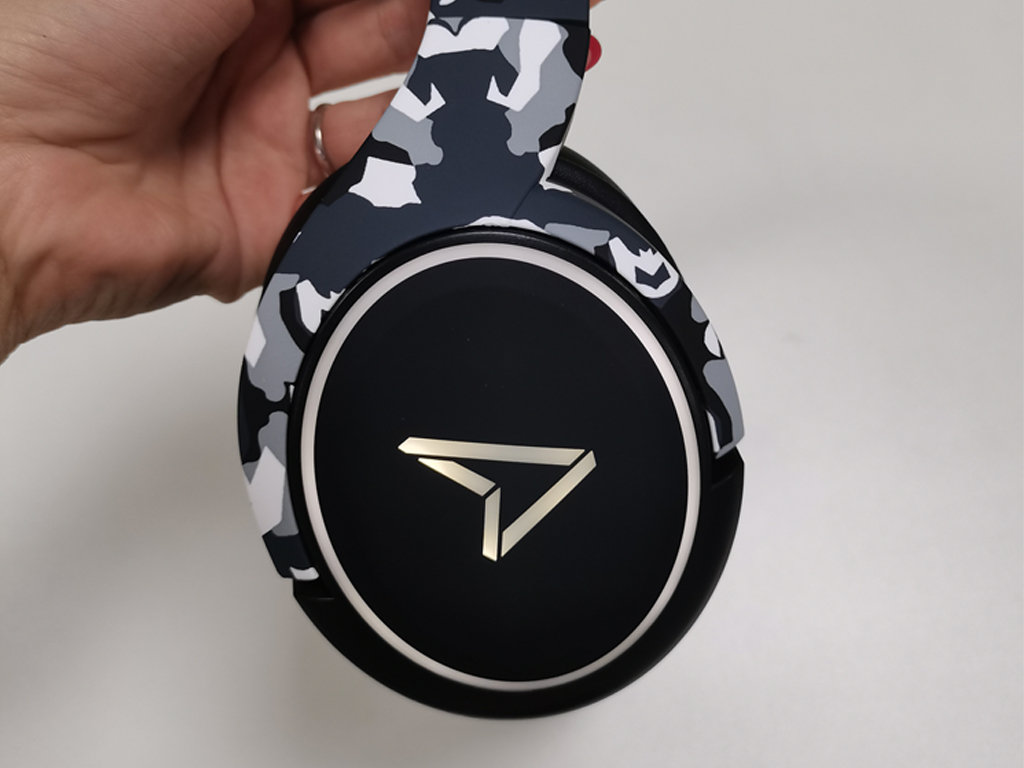
Headset surfaces are rarely flat. The headband curves in two directions, yokes narrow toward joints and earcups may combine domed covers with decorative rings. Flat artwork can compress or stretch when transferred. Review part drawings, surface templates, physical samples or another supplier-approved mapping method.
Pattern direction affects balance. Buyers should define whether left and right sides should mirror, share a general visual language or intentionally vary. Hydro dipping naturally creates placement variation, so acceptance should focus on critical areas, overall coverage and prohibited defects instead of impossible pixel-for-pixel identity.
Keep artwork away from functional zones unless the process is validated there. Buttons, ports, microphone openings, vents, screws, telescoping rails, hinges and adhesive surfaces may require masking. Coating buildup can affect fit. Impulse photos show deliberate separation between patterned structures, black functional housings and the logo zone.
Approve the assembled headset from front, side, top and rotated views because assembly can change alignment and expose edges.
Surface-Finishing Options and Process Trade-Offs
The right process depends on geometry, visual intent, substrate, durability target, volume plan and acceptable variation.
Hydro dipping, or water-transfer printing, can carry an all-over graphic across complex 3D parts. It suits organic camouflage where some placement variation is acceptable. Buyers should review film scale, transfer distortion, base color, masking, topcoat and cosmetic acceptance. Impulse publicly confirms a hydro-dipped camouflage direction.
Spray painting supports compatible solid-color or gloss targets. UV and pad printing place localized graphics, laser engraving creates marks on suitable surfaces, and molded color or texture can reduce secondary decoration. Geometry and substrate determine feasibility.
Compare consistency, edge behavior, masking, assembly, abrasion expectations and inspection method. Define durability or adhesion tests for the final finish stack; this guide assigns no unverified test result to Impulse.
| Process | Typical visual use | Key engineering question | Variation to control |
|---|---|---|---|
| Hydro dipping | All-over patterns on complex 3D parts | Can film transfer cleanly across geometry? | Placement, stretching, edge coverage and coating |
| Spray painting | Solid color, gradient or gloss control | Is the paint compatible with the substrate? | Color, dust, orange peel, edges and adhesion |
| UV or pad printing | Localized artwork, labels or logos | Is the print area accessible and stable? | Registration, opacity, curvature and abrasion |
| Laser engraving | Permanent marks on suitable surfaces | Does material create the intended contrast? | Depth, color, heat effect and position |
| Molded color or texture | Base-part identity with fewer operations | Do material and tooling support the target? | Resin color, lot consistency and texture |
Coordinating Product Identity With Firmware and Packaging
A private-label identity is complete only when the physical product, supported digital behavior and retail presentation describe the same SKU.
Use a configuration matrix tying model and color names to finish, logo, cables, charging accessory, manual, labels and retail box. Impulse confirms a 2.2m 3.5mm cable, Type-C charging cable, manual and package configuration, so those elements belong in its release record.
Digital identity needs separate confirmation. Some wireless platforms may allow Bluetooth naming, voice prompts, lighting sequences or other firmware behavior; others may not. Record each supported item, approved text or behavior, language, firmware revision and test method. Do not infer an option from a generic OEM capability statement.
Release packaging after the product configuration can support every claim. Renders must show the approved pattern. Feature icons must match the exact wireless, microphone, battery and accessory configuration. Color names, model numbers, barcodes, manuals and carton labels should use one master SKU record.
Cross-check the golden product sample, packaging proof and accessory list before printing and pack-out.
Buyer Checklist Before Approving the Golden Sample
Approve the golden sample only after visual, functional, packaging and configuration evidence refer to the same revision.
- Confirm SKU, model name, target market and revision.
- List every visible part, substrate, color and finish process.
- Approve physical color references and viewing conditions.
- Confirm artwork files, pattern scale, direction and coverage.
- Mark protected zones around controls, ports, hinges, vents and labels.
- Approve logo process, size, position, contrast and orientation.
- Inspect left-right balance and the assembled product from key views.
- Define inherent process variation and rejectable defects.
- Confirm required finish adhesion or durability methods.
- Confirm accessories, manual, labels, packaging and pack-out.
- Verify only supported firmware names, prompts or lighting behavior.
- Identify compliance planning for exact destination and configuration.
- Record deviations and required closure evidence.
- Sign and retain the physical golden sample.
- Define pilot-production and mass-production inspection criteria.
- Define which changes require reapproval.
Common CMF Development Risks
Most CMF failures come from uncontrolled translation between design intent, process limits and production inspection.
The table describes general engineering and sourcing issues, not problems reported in the Impulse project. Brands normally own artwork accuracy and legal rights, while the supplier confirms manufacturability and agreed production controls. Both parties need documented change control.
| Risk | Why it happens | How buyers can reduce it |
|---|---|---|
| Screen color differs from sample | Displays do not define physical production color | Approve a physical reference and viewing method |
| Pattern distorts on curves | Flat artwork was not mapped to geometry | Review templates and samples; protect critical motifs |
| Logo loses contrast | Logo was approved separately from final pattern | Approve assembled CMF and logo together |
| Finish affects assembly | Masking, thickness or process order was undefined | Mark functional zones and validate assembly |
| Packaging shows wrong version | Product and artwork use different source data | Use one SKU matrix and cross-check |
| Production drifts from sample | No golden sample or inspection rule exists | Freeze references, sampling and escalation |
| Unapproved change reaches production | Revision ownership is unclear | Use signed change control and reapproval |
Existing Platform, Decorative Parts or New Tooling?
Select the least complex route that still delivers the required identity and functional differentiation.
An existing platform with controlled CMF can produce meaningful differentiation when its hardware fits the brief. Impulse shows how camouflage, logo and packaging create a distinct identity without this guide claiming its structure was newly tooled.
New decorative parts may suit a unique cover or badge. Full tooling is better reserved for projects requiring material changes to silhouette, fit, controls or architecture.
No fixed cost, MOQ or lead-time claim is provided. Terms depend on platform, process, artwork complexity, packaging, test scope, order plan and engineering review.
| Development route | Differentiation level | Cost impact | Lead-time impact | Best for |
|---|---|---|---|---|
| Existing platform plus CMF | Visual identity on proven geometry | Generally lowest of three routes | Generally shortest, subject to sampling | Brands whose required hardware already matches |
| New decorative or selected parts | Distinctive visible details | Moderate and project-dependent | Additional engineering and validation | Brands needing signature components |
| Full new tooling | Highest control over form and architecture | Highest and project-dependent | Longest due to tooling and validation | Substantially unique products |
| Standard platform with logo only | Limited visual differentiation | Generally lowest | Usually shortest | Programs prioritizing speed |
Conclusion
A gaming headset CMF approval specification protects brand intent by making color, artwork, finish, logo, packaging and release control measurable.
The Impulse France project demonstrates why a patterned private-label headset needs more than an attractive rendering. Its hydro-dipped camouflage, logo, black functional surfaces and retail configuration work as one system because geometry, finishing and production preparation were coordinated.
For a new project, begin with a part-by-part CMF map, production artwork, process definition, sample criteria and golden-sample release. Keep unsupported firmware options and compliance claims out until the selected platform and destination requirements are confirmed.
Share your target market, headset platform, color direction, artwork, functions, packaging scope and estimated quantity with MACH industry for an OEM/ODM manufacturability review.
Send your product brief, color references, artwork, logo files, target market, packaging requirements and estimated quantity for evaluation.
Contact MACH IndustryFrequently Asked Questions
What is a gaming headset CMF approval specification?
It is a controlled set of requirements for headset color, material, finish, artwork, logo, sample status, inspection and change approval before production.
How is a CMF specification different from a concept rendering?
A rendering communicates visual intent. A CMF specification identifies physical references, materials, processes, artwork files, tolerances, inspection conditions and an approved sample.
What files should a buyer prepare for gaming headset CMF development?
Prepare vector logos, production artwork, color references, pattern direction, product renders, packaging requirements, SKU names and a list of critical visual zones.
How should brands control color consistency on a private-label headset?
Define the substrate, color reference, application process, physical approval sample, viewing light, acceptable tolerance and production inspection method for each part.
How is artwork controlled on curved headset parts?
Map artwork to actual part geometry, identify critical motifs and protected zones, review distortion and edge coverage, then approve the assembled physical sample.
What is the difference between hydro dipping and UV printing for headsets?
Hydro dipping can transfer an all-over pattern across complex 3D parts, while UV printing usually applies controlled graphics to accessible areas. Suitability depends on geometry, substrate and visual requirements.
Should packaging and firmware be included in the same approval process?
They should be coordinated through one SKU matrix. Any supported Bluetooth name, voice prompt or lighting behavior needs its own approved configuration and must match packaging claims.
What is a golden sample for a gaming headset?
A golden sample is the signed physical reference for the approved product configuration and cosmetic result. Production inspection criteria should point to that sample and revision.
Is new tooling required for a unique private-label gaming headset?
Not always. A mature platform can be differentiated through controlled CMF, logo and packaging. New parts or full tooling are needed only when identity or function requires structural change.
How can a buyer start a gaming headset CMF project with MACH industry?
Send the target market, headset platform or functional brief, color references, artwork, logo, packaging scope, compliance needs and estimated quantity for review.
Related Resources
Need OEM/ODM gaming audio solutions?
Contact MACH Industry to discuss your gaming headset, gaming earbuds, or private-label audio project.
Contact MACH Industry