Home > Resources > OEM Knowledge
How Should Brands Combine Surface Decoration Processes on One Gaming Headset?
A buyer-focused guide to mapping water-transfer graphics, printing, painting, laser details, molded color and transparent LED parts across one co-branded gaming headset.
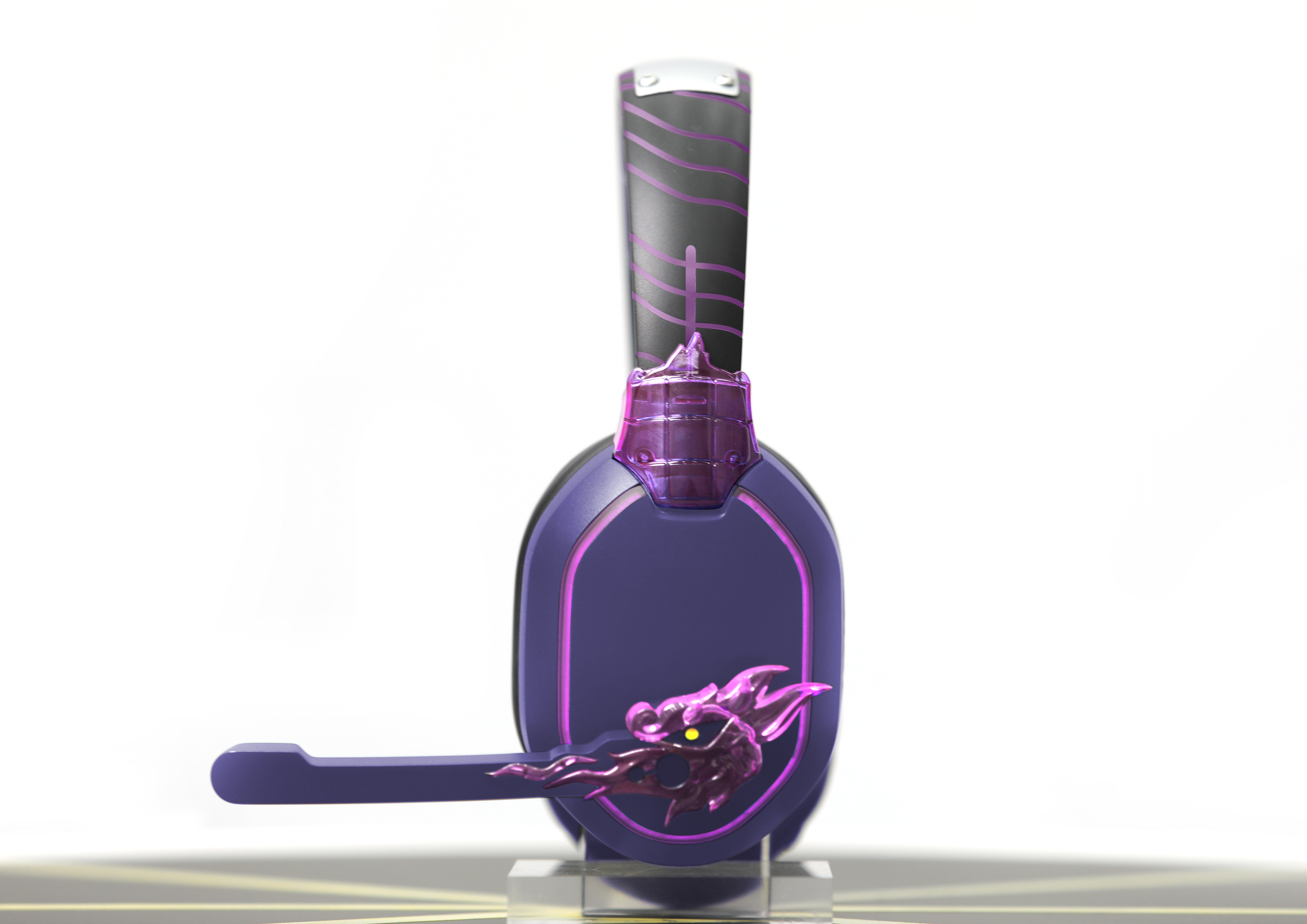
Brands should combine gaming headset surface-decoration processes by assigning one validated process to each part, then controlling the interfaces between adjacent finishes. Water-transfer graphics, pad or silk printing, matte paint, molded color, laser-treated light details and transparent components solve different visual and manufacturing problems. The correct plan is a part-by-process matrix, not one decoration instruction applied to the whole headset.
The SASUKE France OEM project provides a practical reference. Its public project data confirms several decoration methods within one Bluetooth gaming headset program, including water-transfer graphics, silk printing, pad printing, matte painting, a laser-engraved light ring, molded-color material and transparent PC decorative parts. This guide explains how buyers can coordinate such a multi-process finish system without turning the article into another case-study summary.
Key Takeaways for Co-Branded Hardware Buyers
A multi-process headset succeeds when each visible part has a defined substrate, decoration method, artwork file, acceptance rule and approved physical reference.
- Map every visible component before choosing decoration methods.
- Select a process according to geometry, substrate and visual job rather than trend.
- Separate all-over graphics from localized marks and functional light features.
- Review process order, masking and assembly interfaces before prototype release.
- Approve decorated parts and the complete assembled headset.
- Freeze artwork, color references, process specifications and golden samples.
- Carry the same visual configuration into packaging, labels and production inspection.
Why One Gaming Headset May Need Several Decoration Processes
A co-branded headset contains different geometries and materials, so no single decoration method can efficiently control every visual element.
A headband may need a repeating graphic across a curved surface. An earcup may require a small, sharply positioned symbol. A decorative ring may need to transmit light, while a structural housing may need a low-gloss base finish. These jobs involve different substrates, curvature, tolerances, assembly steps and wear exposure.
Trying to force one process onto every part can reduce quality or increase unnecessary complexity. Water-transfer printing can cover irregular three-dimensional shapes but has natural placement variation. Pad or silk printing can position localized marks but depends on access, curvature and registration. Paint controls color and gloss but requires substrate compatibility and masking. Molded color can simplify a base component but is less suited to detailed graphics.
The buyer should therefore define the visual hierarchy first. Decide which elements carry character recognition, which establish the background color system, which guide the eye toward controls or lighting, and which remain visually quiet. Process selection follows that hierarchy.
A useful RFQ states which part carries each artwork element, the proposed process, acceptable variation and required approval evidence.
SASUKE Project Facts Used in This Guide
The SASUKE France project combined a themed Bluetooth gaming headset platform with several confirmed CMF and decoration processes.
The public case identifies a France gaming brand, importer and distributor and describes a co-branded, anime-inspired project direction. MACH industry supported industrial design, structure review, tooling, CMF process control, logo and packaging customization, quality control and mass-production preparation.
Confirmed product information includes Bluetooth wireless audio, a 50mm speaker, a detachable 120-degree microphone, USB-C charging and audio integration, decorative LED control, and a headband with up to 33mm adjustment.
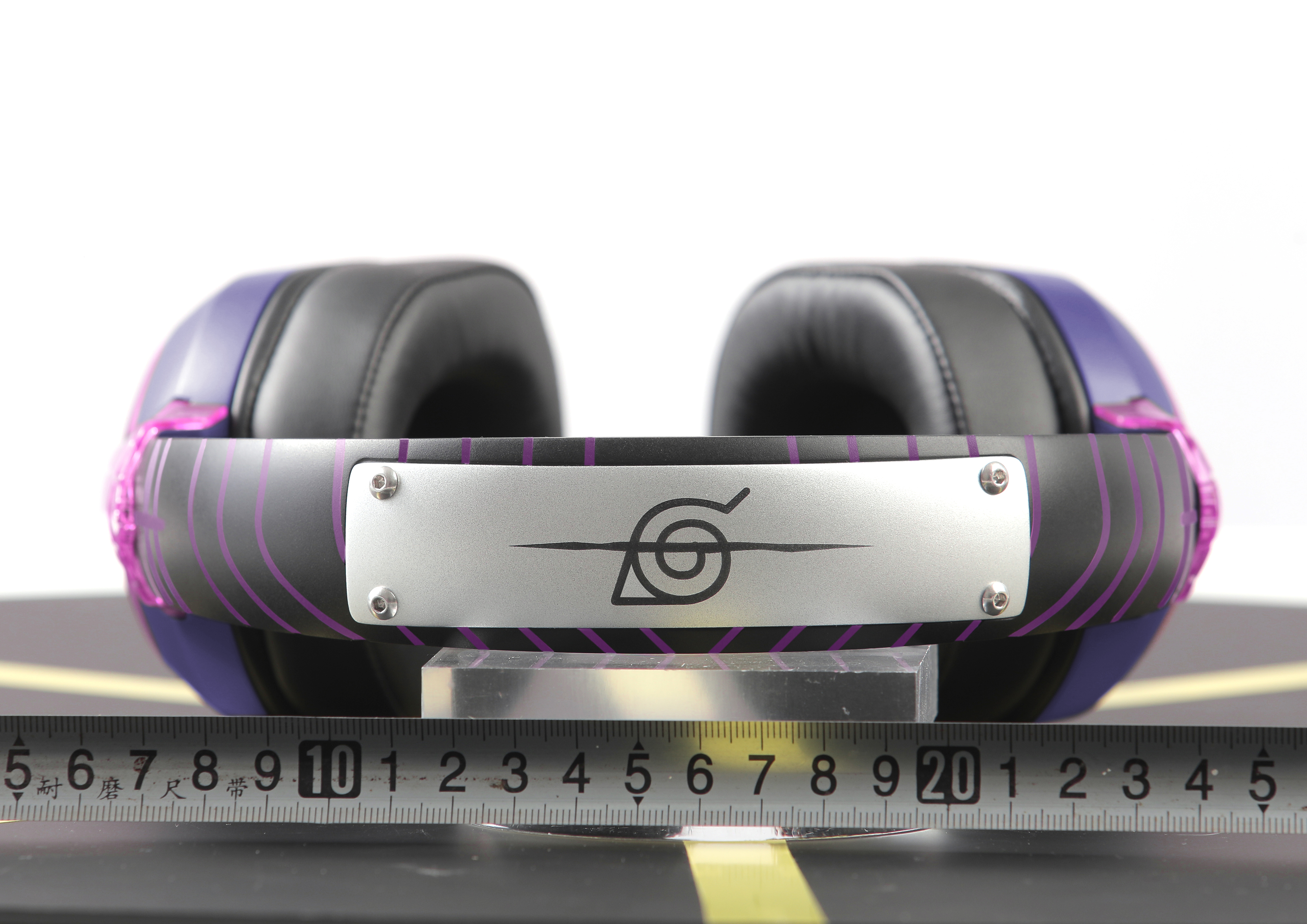
The confirmed appearance and process list is unusually useful for sourcing analysis: water-transfer headband graphics, silk printing, pad printing, matte painting, a laser-engraved decorative light ring, transparent PC material, molded-color parts and themed decorative components. Public photographs show the patterned headband, transparent purple structural detail, illuminated earcup ring and decorative earcup element.
This guide does not claim that MACH owns the underlying character or entertainment rights, does not disclose licensing terms and does not infer exclusive authorization. Buyers remain responsible for confirming artwork rights, approvals and market-specific claims with the relevant parties.
Build the Part-by-Process Matrix Before Sampling
The matrix converts one creative direction into separate, manufacturable instructions for every visible component.
Begin with an exploded visual map or annotated product image. Name each visible component: headband, telescoping parts, yokes, earcup covers, rings, transparent details, controls, microphone, cushions, plates, cables, labels and packaging. Every design element needs a clear destination.
For each part, record the substrate and geometry. A process that works on a flat ABS cover may not work the same way on a curved headband, transparent PC part or flexible cable. Mark visible surfaces, edges, assembly datums, moving zones, adhesive areas, screw bosses, ports, light paths and regions that require masking.
Next, state the design job. Use categories such as base color, all-over graphic, localized logo, fine symbol, illuminated detail, transparent accent or tactile surface. This prevents teams from choosing a process only because it appeared in a previous product. The same character artwork may need to be separated into a large water-transfer pattern, a printed mark and a lighting-related motif.
Assign a proposed process and a backup route. For SASUKE, the public materials confirm water transfer, silk printing, pad printing, matte painting, laser engraving, molded color and transparent PC. A new project may use a different combination. Each proposal should be reviewed by the supplier for substrate preparation, artwork separation, color reproduction, masking, coating stack, assembly sequence and inspection feasibility.
Control artwork at process level. The water-transfer file needs pattern scale, repeat, orientation and critical zones. A pad-print or silk-print file needs dimensions, color separation, position references and registration tolerance. A laser-treated light detail needs geometry, line width and illumination review. A molded-color part needs material and color reference. Do not release one flattened presentation image as the production master for every process.
Define acceptance in terms the quality team can use. Examples include approved physical color, coverage, logo position, print registration, visible edge limits, light uniformity, surface contamination and prohibited defects. The exact tolerance and test method are project-dependent; this article does not assign unpublished limits to SASUKE.
Finally, add ownership and revision. Identify who supplies artwork, who converts it into process files, who approves the sample and what changes trigger renewed review. Retain decorated-part references as well as an assembled golden sample. A part may pass by itself but appear misaligned, too bright or visually unbalanced after assembly.
The matrix should remain linked to the bill of materials and packaging SKU. If a color, graphic or transparent part changes, the team can identify affected artwork, process, sample, label and retail image rather than reopening the entire project without control.
| Headset element | Design job | Process question | Required buyer approval |
|---|---|---|---|
| Curved headband | Continuous themed graphic | Can the pattern transfer across curvature and adjustment zones? | Scale, direction, critical motifs and edge coverage |
| Earcup mark | Localized symbol or logo | Which printing method fits access, curvature and color count? | Master artwork, position, opacity and registration |
| Housing | Background color and gloss | Should color be molded or painted? | Physical color, texture, gloss and adjacent-part match |
| Light ring | Illuminated decorative line | How do engraving, light path and surface finish interact? | Daylight appearance, illuminated appearance and uniformity |
| Transparent component | Colored visual depth | Does the material, tint and wall geometry support the effect? | Color, transparency, cosmetic criteria and assembly fit |
| Themed attachment | Character-recognition detail | How is it made, attached and protected? | Geometry, finish, attachment, clearance and assembled sample |
Technical Deep Dive: Control the Interfaces Between Finishes
The highest multi-process risk often sits where two finishes, materials or assembly operations meet rather than within either process alone.
A headset may combine a water-transferred headband next to a transparent molded yoke, a painted housing beside an illuminated ring, and a printed logo close to a decorative attachment. Each individual part can match its drawing while the assembled boundary still looks inconsistent. Interface review asks how colors, gloss, edges, gaps, light leakage and alignment behave together.
Process order matters. Decoration may occur before or after drilling, fastening, adhesive application or subassembly. Coating buildup near a telescoping rail or rotating joint can affect fit. A printed mark may lose alignment if its datum changes after assembly. A transparent part can reveal adhesive, gate marks or internal features that an opaque part hides. The process map should therefore state masking and assembly sequence, not only appearance.
Color matching across substrates requires physical review. The same nominal purple can look different in molded resin, matte paint, transferred film, printed ink and illuminated transparent PC. The correct objective may be coordinated contrast rather than an impossible identical match. Buyers should approve the complete color relationship under defined unlit and lit viewing conditions.
Mechanical and optical systems also interact. The SASUKE project confirms a laser-engraved decorative light ring and transparent PC details. In general, line geometry, surface treatment, LED location, diffusion, wall thickness and assembly gap can influence visible brightness and uniformity. This is an engineering principle, not an unpublished SASUKE test result.
Moving and contact areas need protection. The headband adjusts, the microphone rotates and the earcups include controls and interfaces. Artwork and coating should be kept away from friction paths, electrical contacts, port openings and dimensional datums unless the process is specifically validated there.
Pilot production should verify repeatability across the complete process chain. The quality plan can sample decorated-part appearance, assembly fit, lighting, function, packaging and SKU identity. Any material, process, artwork or tooling revision should be assessed for its effect on neighboring components, not treated as an isolated cosmetic change.
| Interface risk | Why it occurs | Control approach |
|---|---|---|
| Color mismatch | Different substrates and processes reflect light differently | Approve assembled relationships under defined lighting |
| Visible process edge | Mask line or film termination sits in a prominent area | Move or define edge zones during engineering review |
| Assembly interference | Coating or decoration enters a fit or motion surface | Use masks, datums and assembled sample checks |
| Light leakage or unevenness | Transparent parts, gaps and finishes alter the light path | Review unlit and lit samples with optical acceptance criteria |
| Logo misalignment | Print datum does not match final assembly datum | Dimension from stable part features and inspect after assembly |
| SKU confusion | Artwork, parts and packaging use different revisions | Link the matrix to BOM, packaging and change control |
How the Confirmed SASUKE Processes Serve Different Design Jobs
The SASUKE process list illustrates why decoration methods should be divided by function instead of treated as interchangeable.
Water-transfer graphics suit the curved headband because the process can carry a repeating pattern across a three-dimensional surface. The buyer should expect controlled variation and approve critical pattern zones rather than demand identical placement on every unit.
Silk printing and pad printing are both confirmed in the project data. As general process guidance, printing methods support localized graphics, marks or color details where tooling access and geometry allow. The production file should define color separation, location and registration for the selected method.
Matte painting establishes controlled color and surface character on compatible components. Molded-color material can provide a base color without a separate coating step. The correct choice depends on material, target appearance, geometry and consistency requirements.
The laser-engraved decorative light ring and transparent PC parts connect surface design with lighting. They should be approved both powered off and illuminated. The themed decorative components add three-dimensional recognition, so their geometry, attachment, clearance and finish belong in the mechanical review as well as the CMF review.
Coordinating Transparent Parts and LED Lighting
Transparent decorative parts must be specified as optical and mechanical components, not only as a color swatch.
Transparent PC can create depth and carry colored light, but tint, polish, texture, wall thickness and internal geometry affect the result. Marks that are hidden in opaque plastic may become visible. The approved sample should define acceptable appearance in daylight and under the intended LED state.
Lighting should support the visual hierarchy. A bright ring can overpower printed artwork, while a weak or uneven line can make a premium decorative feature appear unfinished. Buyers should state the intended lit color or behavior only when the selected platform supports it, then validate the final assembled configuration.
Mechanical review remains essential. Transparent yoke or decorative structures still carry fastening, alignment or clearance requirements. Cosmetic improvements must not compromise adjustment, microphone movement, controls, charging or acoustic openings.
Development Workflow From Artwork to Production Release
A controlled workflow moves from rights-approved creative assets to a part map, process trials, assembled approval and production inspection.
| Stage | Primary output | Buyer decision |
|---|---|---|
| Project brief | Target market, platform, visual hierarchy and approved asset scope | Confirm business and rights boundaries |
| Part map | Named visible components, substrates and functional zones | Confirm where each design element belongs |
| Process matrix | Proposed decoration method and production file per part | Approve route for sampling |
| Engineering review | Masking, datums, interfaces, attachment and assembly sequence | Close manufacturability issues |
| Process samples | Color, graphic, print, paint, transparent and light references | Approve or request controlled revision |
| Assembled prototype | Complete CMF, function and packaging configuration | Freeze golden sample direction |
| Pilot production | Repeatability, assembly, lighting and cosmetic inspection evidence | Authorize mass-production preparation |
| Production control | Revision-controlled BOM, artwork, inspection and packaging records | Release shipment under agreed criteria |
Buyer Checklist for a Multi-Process Headset
A useful RFQ gives the supplier enough information to separate creative intent into controllable manufacturing tasks.
- Target market, sales channel and product positioning
- Evidence that the buyer can use the supplied brand and artwork assets
- Selected headset platform or required connection modes
- Approved style guide, vector artwork and color references
- Visual priority for headband, earcups, lighting and decorative parts
- Desired materials, gloss, texture and transparency direction
- Packaging, manual, label and accessory requirements
- Functional, cosmetic, durability and lighting validation expectations
- Destination-market certification and documentation needs
- Estimated volume, launch target and variant plan
- Confidentiality, file ownership and approval responsibilities
- Named approvers and change-control process
Common Surface-Decoration Risks
The risks below are general planning issues for multi-process projects and are not reported SASUKE defects.
| Risk | Typical cause | Buyer control |
|---|---|---|
| Artwork cannot map to geometry | Creative file ignores curvature, seams or moving zones | Review part templates and physical process samples |
| Adjacent colors conflict | The same color is produced on different substrates | Approve assembled color relationships |
| Print is covered or misaligned | Artwork datum differs from assembly datum | Dimension from stable features and inspect assembled parts |
| Lighting changes perceived color | Transparent material and LED alter appearance | Approve powered-off and powered-on states |
| Finish affects movement | Coating reaches rails, joints or interfaces | Define masks and functional keep-out zones |
| Packaging shows another revision | Product and retail files are released separately | Use one SKU and revision matrix |
| Production variation is disputed | No golden sample or defect criteria exist | Freeze physical references and inspection rules |
Conclusion
Multi-process headset decoration becomes manageable when the brand approves a part-by-process system rather than one undivided visual concept.
The SASUKE France OEM project shows how water-transfer graphics, localized printing, matte paint, molded color, laser-treated lighting details and transparent decorative parts can coexist within one themed Bluetooth headset program.
For a similar project, begin with a rights-approved asset set and a product-part map. Convert each visual element into a proposed manufacturing route, review interfaces, approve physical process samples and freeze the assembled configuration before production.
MACH industry can evaluate the platform, industrial design, tooling, CMF process, logo, packaging, quality and production scope for a co-branded gaming audio project. Commercial terms, sample timing and certification requirements depend on the final design and target market.
Share your product brief, target market, approved artwork, CMF direction, lighting concept, packaging scope and estimated volume for an OEM/ODM evaluation.
Contact MACH IndustryFrequently Asked Questions
Why does one co-branded gaming headset need several decoration processes?
Headband, earcup, housing, light ring and transparent parts have different geometries, materials and visual jobs. One process rarely controls all of them efficiently.
What is a gaming headset surface-decoration process matrix?
It is a part-by-part record of substrate, visual requirement, proposed process, artwork file, masking, acceptance criteria, sample and revision ownership.
Is water-transfer printing suitable for every gaming headset part?
No. It is useful for certain complex 3D patterned surfaces, but ports, joints, friction zones, transparent parts and small localized marks may need other processes.
What is the difference between pad printing and silk printing on a headset?
Both can apply localized graphics, but their suitability depends on geometry, access, artwork, color count and registration needs. The supplier should validate the chosen method on the actual part.
Can molded color and matte paint be used in the same headset?
Yes, when each is assigned to suitable parts. Buyers should approve how the colors and gloss levels relate on the assembled product.
How should a laser-engraved headset light ring be approved?
Review line geometry, surface appearance and alignment while powered off, then assess brightness, uniformity and leakage on the final assembled LED configuration.
What should buyers check on transparent PC headset parts?
Check tint, transparency, cosmetic marks, internal visibility, molding condition, fit, attachment and appearance under both daylight and LED illumination.
What artwork files are needed for a multi-process headset?
Provide approved vector logos, production-resolution graphics, color references, style-guide assets and usage rights. Each process may then require its own separated production file.
Do multi-process decorations change MOQ or sample timing?
They can. Terms depend on platform, number of processes, material, artwork complexity, tooling, process trials, packaging and approval cycles. No universal figure applies.
Does MACH industry own the rights to the SASUKE character artwork?
This article makes no claim that MACH industry owns the underlying entertainment or character rights. Buyers must confirm authorization and artwork approvals with the relevant rights holders.
How should certification be planned for a decorated wireless headset?
Evaluate the final wireless, electrical, battery, material, labeling and market configuration. Certification support does not automatically certify every cosmetic or hardware version.
Related Resources
Need OEM/ODM gaming audio solutions?
Contact MACH Industry to discuss your gaming headset, gaming earbuds, or private-label audio project.
Contact MACH Industry