Home > Resources > Gaming Headset Guide
How to Engineer a Camouflage Gaming Headset for OEM Mass Production
A buyer-focused guide to translating camouflage artwork, color variants, logos, packaging and wired headset requirements into controlled samples and repeatable OEM production, using the G9000pro-CC Belgium project as a practical reference.
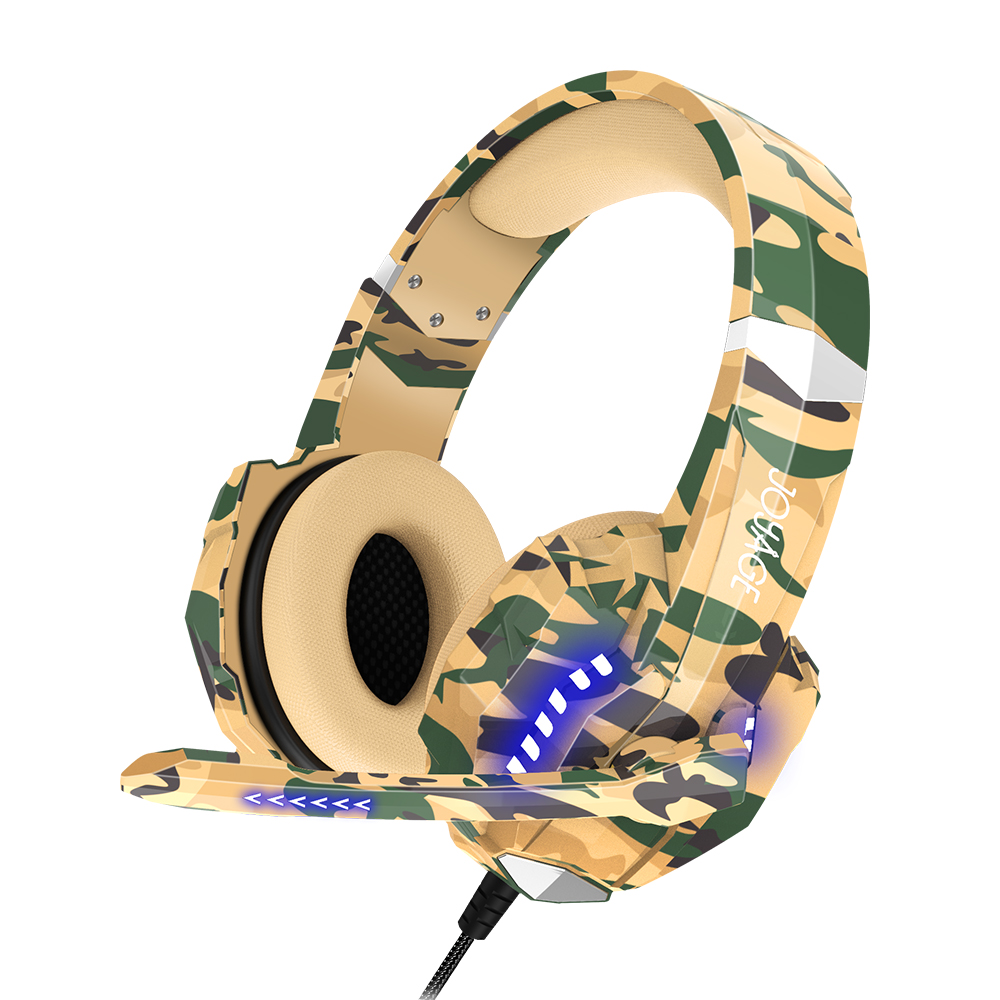
A camouflage gaming headset can be manufactured consistently only when the visual concept is converted into a controlled appearance specification before mass production. The buyer and manufacturer must define which parts carry the camouflage artwork, how the pattern crosses curved surfaces and assembly boundaries, which color and gloss standards apply, where the logo sits, what the acceptable variation looks like, and how every retail SKU connects to its approved sample, packaging and bill of materials.
The G9000pro-CC Belgium OEM project is a useful development reference because it combined a camouflage-led visual identity with practical private-label controls: logo application on both earcups, red, blue and orange versions, custom retail packaging, customer insert cards, a wired 3.5mm plus USB configuration, braided cable, Y splitter and pre-production sample approval. This guide does not repeat the case study. It explains the sourcing and engineering decisions behind turning a distinctive headset appearance into a repeatable retail program.
Buyer Answer: Define the Appearance Architecture Before Sampling
Choose the visual architecture first: either a full-coverage pattern, localized decorated parts, or a shared black platform with controlled color accents. Then freeze artwork zones, references, tolerances, logo position, SKU coding and packaging links before asking for production samples.
The most important purchasing decision is not the camouflage file itself. It is the relationship between visual ambition and manufacturing control. A pattern that looks convincing on a flat rendering may distort around an earcup edge, split at a seam, disappear under a cushion or conflict with a logo. The approved design must therefore be evaluated on real three-dimensional parts.
Visual approval must remain connected to the wired configuration, accessories and packaging so the approved appearance does not become the wrong retail SKU.
Why Gaming Brands Need a Custom Development Partner
A development partner must translate brand artwork into manufacturable specifications while coordinating structure, electronics, samples, packaging, testing and production records.
Custom gaming hardware involves more than placing a logo on an existing shell. The industrial design team must identify surfaces that can accept decoration without interfering with fit, moving joints, acoustic openings, switches or assembly. Engineering must confirm that the chosen base platform supports the requested cable and lighting architecture. Procurement and production teams must keep material, color and accessory versions traceable. Quality staff need inspection criteria that are objective enough to use during incoming inspection, assembly and final shipment checks.
For importers and distributors, the brief should also cover target markets, packaging, connections, documents and timing. Sample gates and a released variant matrix reduce mismatched product and packaging.
G9000pro-CC Belgium OEM Project Overview
The confirmed project scope combined a wired RGB headset platform with private-label appearance, packaging, accessories and production controls for an importer and distributor program.
The G9000pro-CC was developed as a wired RGB gaming headset project. Confirmed project records specify a 3.5mm jack plus USB interface, braided cable, Y splitter accessory, logo silkscreen in matching positions on both polished earcups, custom retail box, customer insert card and red, blue and orange product versions. One pre-production sample per color was required before full production.
MACH supported industrial-design review, structure and PCB coordination, tooling follow-up, mold and cost review, sample approval, quality control and mass-production preparation. The project file also requested support for CE, FCC, RoHS and KC documentation. An FCC report in the project records lists G9000 pro CC within the tested model family and records a pass against FCC Part 15 Subpart B Class B conducted and radiated emissions for the submitted sample. Buyers should still verify the exact evidence, model relationship and target-market requirements for each current order rather than treating one historical report as blanket approval.
This article uses those facts as a manufacturing reference. It does not disclose a customer name, claim sales performance or turn a sample result into a general certification claim. The source case remains available in the internal links for readers who want the concise project summary.
From Visual Identity to Mass Production: Engineering a Custom Gaming Headset Design
The conversion from artwork to production should follow a controlled chain: design intent, part zoning, process trial, assembled sample, golden sample, SKU release and inspection plan.
Start with design intent. The brand should explain what must remain recognizable when the headset is viewed from the front, side and retail shelf. For camouflage, this means more than supplying a repeating graphic. Identify important motifs, orientation, scale, contrast and any areas where pattern interruption is unacceptable. Also state whether every unit should look nearly identical or whether controlled pattern-position variation is acceptable. That decision affects process selection and inspection language.
Next, divide the headset into appearance zones. Typical zones include outer earcup covers, inner frames, yokes, headband, cushion interface, microphone, cable and controls. Each zone needs a declared base material, color, texture, gloss and decorative treatment. Moving or high-contact parts require special attention because rubbing, bending and assembly fixtures may damage a finish that performs well on a static cosmetic cover. The manufacturer should review parting lines, screw points, acoustic vents and assembly clearances before committing to full coverage.
A process trial should then test the artwork on production-representative parts. The goal is not simply to make one attractive photo sample. The trial should reveal edge behavior, registration, color shift, adhesion, protective topcoat appearance and repeatability. Curved earcups can stretch a motif, and two nominally matching sides can show different visual balance. The buyer should evaluate left and right parts as a pair and define which differences are acceptable.
The assembled engineering sample connects appearance with function. Confirm that decoration does not block openings, interfere with buttons, reduce joint clearance or obscure required markings. Check logo readability at normal viewing distance, headset symmetry, cushion fit, cable routing and RGB visibility. For G9000pro-CC-type retail programs, the wired configuration, splitter, packaging insert and color identity should be reviewed at the same gate rather than in separate approval chains.
After correction, create a golden sample and a release pack. The pack should include approved artwork revision, color references, gloss or texture references, logo dimensions, acceptable boundary examples, approved accessory list, box artwork, insert artwork, SKU code and photographs under defined lighting. A physical sample is valuable, but it should not be the only authority; visual memories change and physical samples can age or become unavailable.
Finally, convert the release pack into production checks. Incoming inspection can verify decorated parts and color. In-process checks can monitor orientation, scratches, mixed components and logo placement. Final inspection can confirm assembled appearance, channel balance, microphone operation, lighting, controls, cable continuity, accessories and package-to-product matching. The result is not perfect visual uniformity at any cost. It is a documented, commercially acceptable range that production teams and buyers interpret consistently.
| Control gate | Question to close | Typical evidence |
|---|---|---|
| Design intent | What must the customer recognize? | Reference views and artwork brief |
| Part zoning | Where can each finish be applied safely? | Marked part map and material list |
| Process trial | Can the finish repeat on real geometry? | Decorated part set and defect notes |
| Engineering sample | Does the complete headset remain functional? | Assembled sample and test record |
| Golden sample | What is the approved commercial standard? | Signed sample and revision-controlled pack |
| Mass production | How will conformity be checked? | Inspection plan, limits and traceable SKU records |
Full-Coverage Camouflage or Color-Accent SKUs?
Full-coverage camouflage maximizes visual distinction; a shared dark body with controlled color accents usually simplifies SKU management. Brands should select the architecture using channel value, process risk and forecast concentration.
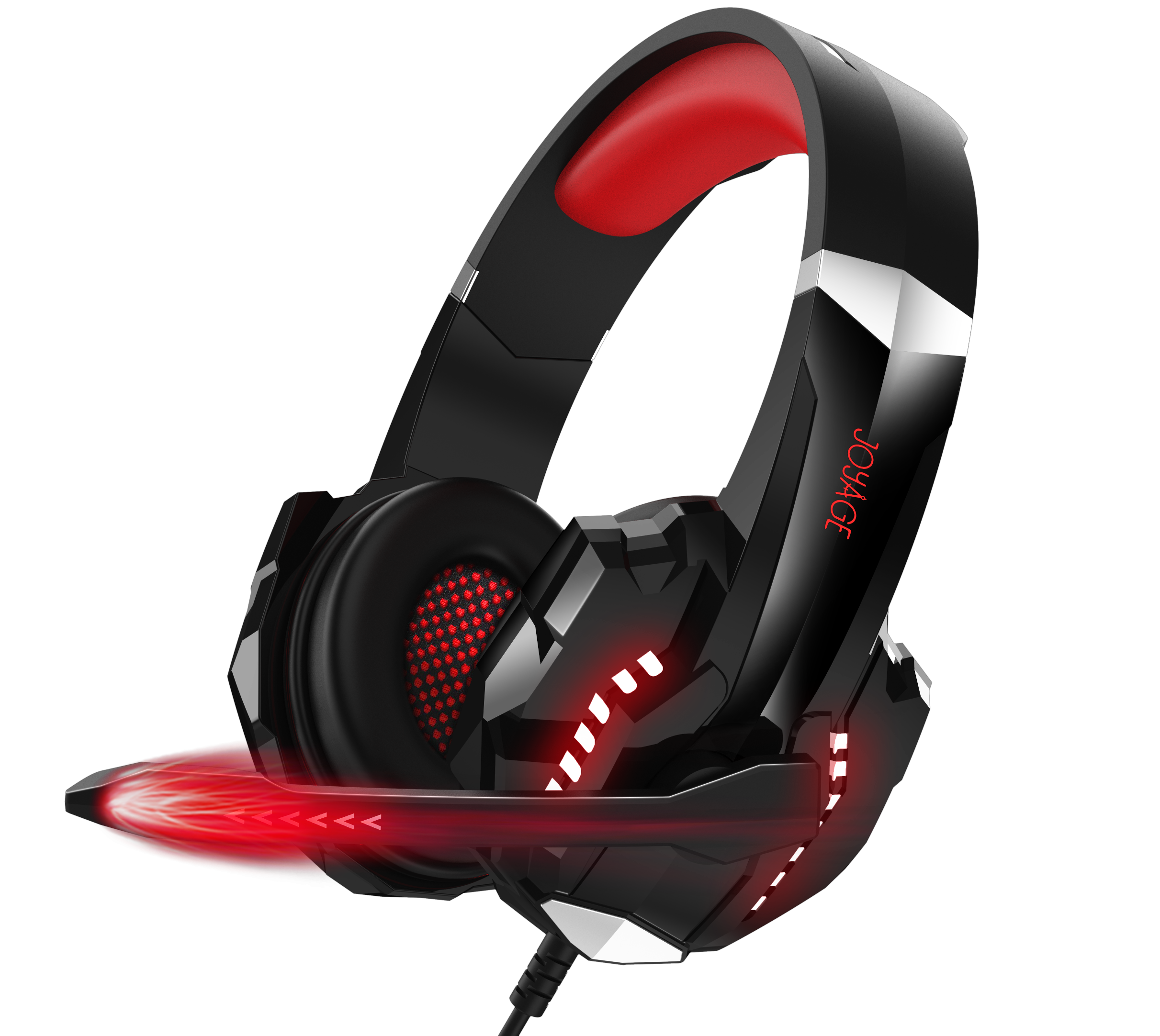
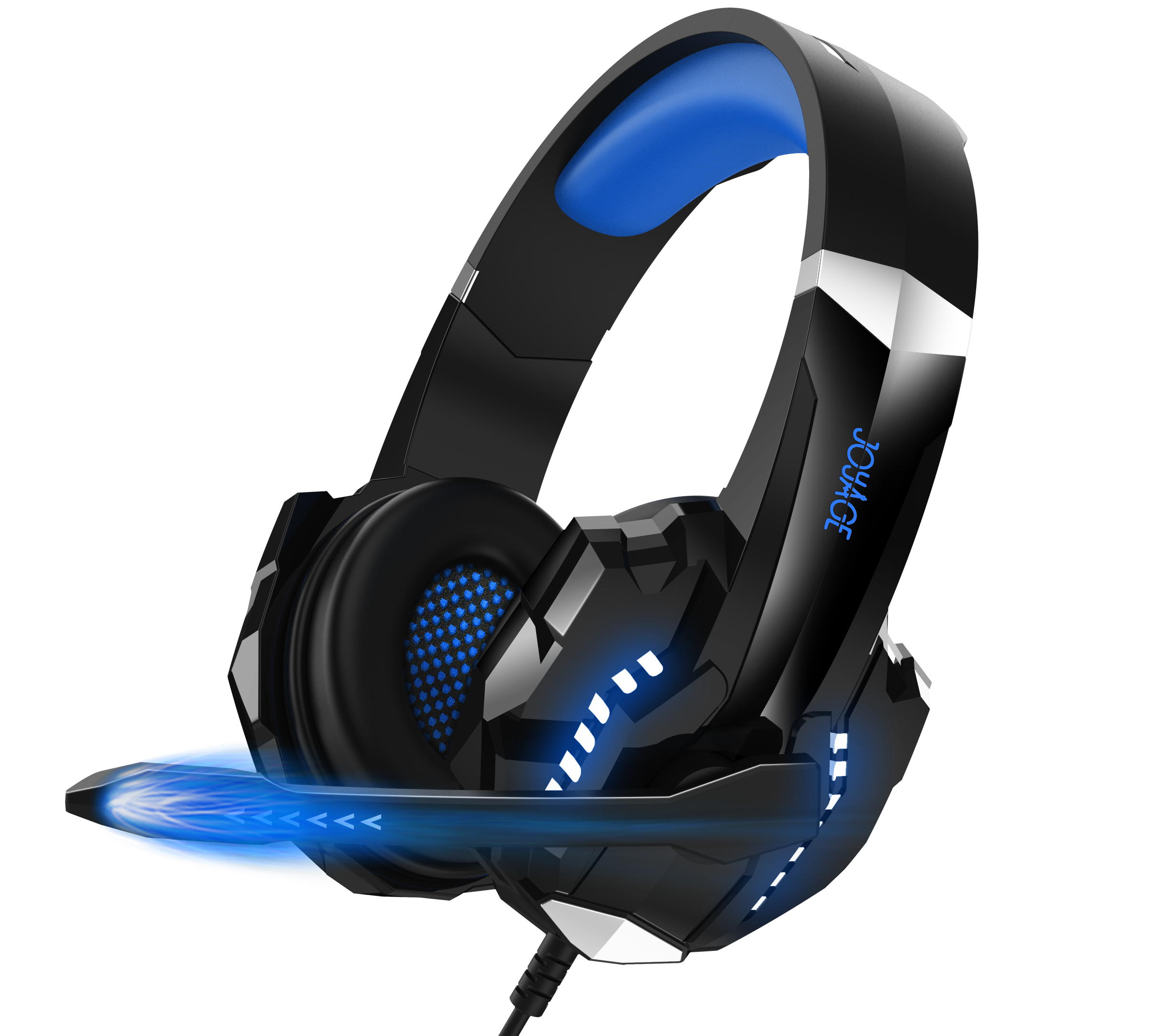
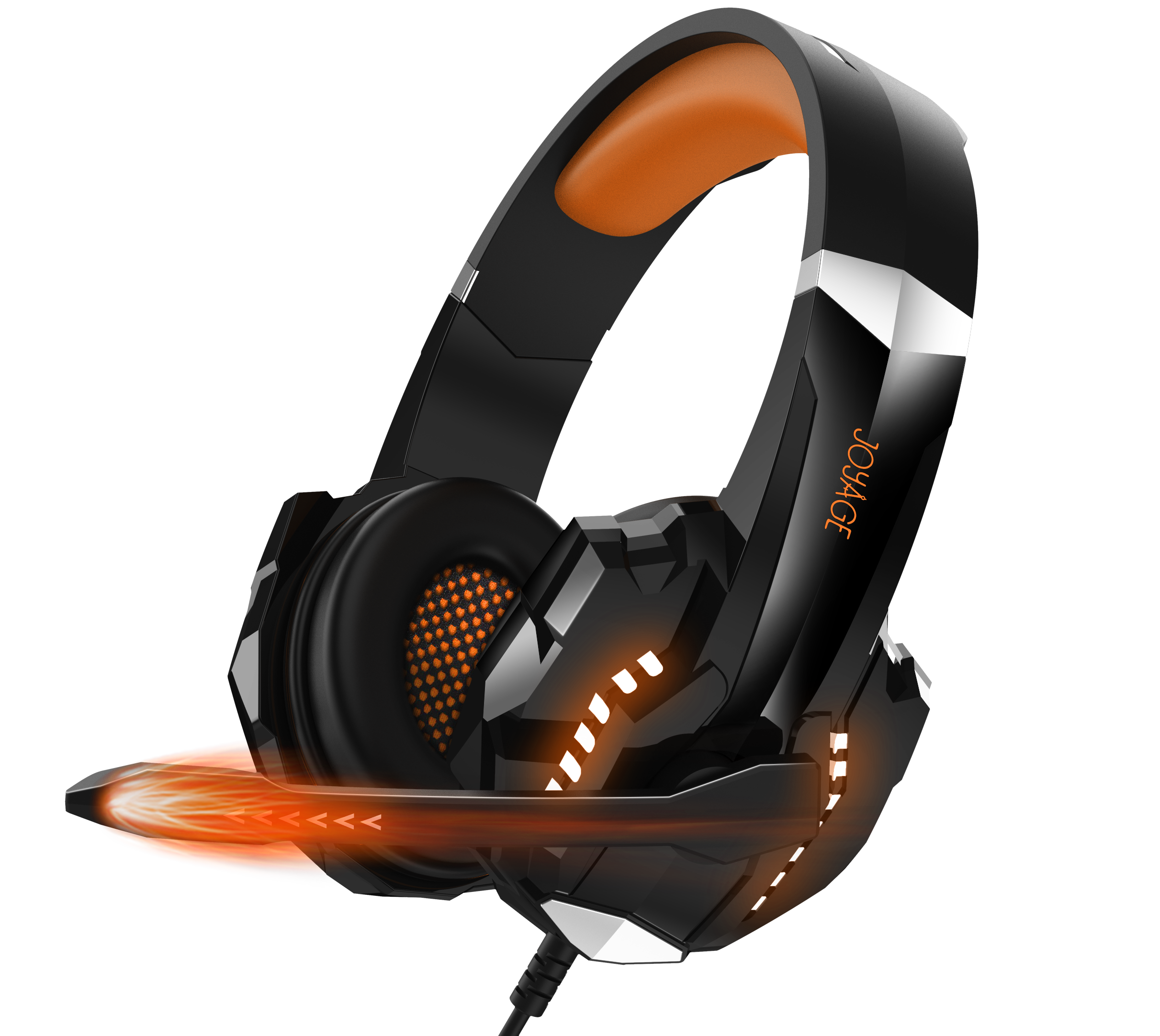
The G9000pro-CC visual materials illustrate two useful product-line approaches: a strongly patterned camouflage presentation and black headsets differentiated by red, blue or orange elements. For buyers, the lesson is not to assume that every visual idea belongs in one production method. A full camouflage treatment may support a special edition or recognizable hero SKU. Accent variants can broaden the range while retaining common structural parts.
Forecast quality matters. Every additional color can create separate decorated-part inventory, packaging artwork, labels and approval samples. If demand is uncertain, too many variants may fragment purchasing volume and increase the chance of slow-moving components. A buyer can reduce that risk by sharing core black parts and changing only designated accent components, but the exact feasibility depends on the headset structure and production process.
Retail thumbnails, carton labels, barcodes and product names should distinguish every variant without relying only on subtle visual differences.
| Decision factor | Full-coverage camouflage | Shared body with color accents |
|---|---|---|
| Brand impact | Strong signature appearance | Consistent family with clear options |
| Decorated surface area | Higher and more complex | Usually localized to selected parts |
| Appearance inspection | Pattern, edge and color controls | Color match and mixed-part prevention |
| SKU planning | Useful as a hero or special variant | Suitable for a coordinated multi-color range |
| Inventory exposure | Specific decorated components | Shared platform may reduce unique part count |
| Best buyer question | Can the pattern repeat acceptably? | Which parts should remain common? |
Surface Design and Logo Control on Curved Headset Parts
Curved headset surfaces need dimensioned artwork, real-part trials and objective defect limits; a screen image alone is not an approval standard.
Logo placement should be specified from stable reference features on the part, not from the edge of a marketing rendering. Define width, height, orientation, centerline, color and permitted position deviation. When the same logo appears on both earcups, confirm whether the graphics should mirror, face the same direction or follow a brand-specific orientation rule. G9000pro-CC project records explicitly required the logo at the same position on both polished earcup surfaces, making paired inspection important.
A camouflage pattern requires similar discipline. Establish the artwork revision, scale and intended direction. Mark protected areas around joints, openings and legal labels. Define acceptable examples for stretching, seam visibility, small particles, edge coverage and color difference. Inspection limits should reflect what is visible under agreed lighting and viewing distance, not microscopic perfection that cannot be sustained economically.
Durability checks should correspond to the actual material, finish and use area; a generic test condition may not represent the selected construction.
Driver Size Planning: Confirm 40mm or 50mm Before Tooling
Driver diameter is a platform decision, not a stand-alone quality score. The G9000pro-CC visual identifies a 40mm driver; buyers considering a 50mm architecture must treat that as a separate, verified configuration rather than assume interchangeability.
A larger nominal driver does not automatically create better gaming audio. Perceived performance also depends on diaphragm and motor design, enclosure volume, damping, cushion seal, acoustic tuning, electrical source and unit-to-unit control. A well-integrated 40mm system can be more appropriate than a poorly tuned 50mm system. Procurement comparisons should therefore request frequency-response targets, listening references and sample consistency instead of ranking platforms by diameter alone.
Mechanical consequences matter. Moving from 40mm to 50mm may change the earcup cavity, driver mount, grille clearance, weight distribution, wiring and tooling. It can also affect the available cosmetic surface and therefore the camouflage layout. If a brand wants a 50mm driver gaming headset, the manufacturer should confirm whether the existing structure was designed for it, whether a compatible acoustic chamber exists and which validations must be repeated.
For this guide, use 40mm only as the publicly identified G9000pro-CC configuration and discuss 50mm as an alternative engineering decision. Do not publish, package or order a 50mm claim until the signed specification, approved sample and production BOM all agree.
OEM Development Process for a Custom Wired Gaming Headset
A controlled project moves through requirement review, platform confirmation, appearance engineering, samples, retail-package approval, validation, pilot production and mass-production release.
Requirement review should define users, target price position, sales countries, visual architecture, connection method, microphone expectation, lighting, logo, packaging, accessories, forecast and compliance plan. For a 3.5mm plus USB headset, specify whether the 3.5mm plug carries audio and microphone, what the USB connection powers or controls, and which devices require a Y splitter. This prevents ambiguous compatibility claims.
Platform confirmation connects the commercial brief to a real structure and electronics set. The team should compare the requested decoration zones with material and assembly constraints, then decide whether existing tooling is sufficient. Appearance trials and engineering samples follow. Each round should have a written purpose, revision number, open-issue list and responsible approver.
The retail configuration is then frozen. Product, cable, splitter, manuals, insert cards, labels and box must match one SKU record. Validation should cover functional checks appropriate to the configuration, appearance evaluation, packaging review and required regulatory evidence. Pilot production tests whether instructions and inspection limits work at line scale. Only after pilot issues close should the approved BOM, samples and documents be released for mass production.
After launch, substitutions affecting decoration, cable, driver, microphone, PCB or packaging should require documented impact review and the agreed level of reapproval.
Quality Control for Appearance, Audio and Retail Configuration
QC should verify three connected layers: cosmetic conformity, headset function and complete retail-SKU identity.
Appearance inspection should use the released sample and written limits together. Inspect pattern coverage, color, gloss, left-right balance, logo placement, scratches, contamination and damage near assembly points. Sampling plans and acceptance criteria should be agreed for the order and risk level; this article does not prescribe one universal AQL.
Functional checks should match the confirmed product architecture. A wired headset program may include left and right audio, microphone pickup, cable continuity, plug behavior, mute or volume controls where present, USB-powered lighting, and accessory fit. Acoustic checks should use defined fixtures or reference methods when quantitative limits are required. Listening alone is useful for obvious faults but is not a complete control for channel balance or production drift.
Retail configuration checks are equally important. Compare the product color and logo with the label, carton, manual, insert and barcode. Confirm cable and splitter presence, packing orientation and protective materials. Variant mixing is a frequent operational risk because every component may be acceptable individually while the final combination is wrong.
Compliance evidence should be checked against the exact model and configuration; shared internal construction across appearance variants should be documented rather than assumed.
How to Choose a Custom Gaming Headset Manufacturer
Evaluate the supplier's evidence and control process, not only its sample appearance or quotation.
Ask how the manufacturer converts artwork into part-level instructions. A useful answer should address material compatibility, curved geometry, process trials, boundary examples, golden samples and inspection criteria. For multiple color variants, ask to see the proposed SKU matrix and how line operators prevent mixed parts and packaging.
Review engineering boundaries. The supplier should distinguish confirmed platform specifications from options that require redevelopment. A transparent answer about 40mm versus 50mm, USB purpose, microphone construction or tooling is more valuable than an attractive but unsupported feature list. Request a revision-controlled specification and confirm what triggers a new sample or test.
Examine project management and production evidence. Buyers need named approval gates, sample records, packaging control, incoming and final inspection, change notification and corrective-action handling. Regulatory support should involve traceable documents rather than logo collections on a sales page. The manufacturer should help define evidence requirements while recognizing that the brand or importer remains responsible for confirming obligations in each market.
Compare total project fit, including MOQ, timing, decoration, tooling, packaging and validation. The best decision supports the intended position and a repeatable reorder, not merely the first prototype.
Conclusion
A premium-looking camouflage headset becomes a viable private-label product when appearance, function, packaging and evidence are released as one controlled production system.
The G9000pro-CC Belgium project shows why visual differentiation and operational discipline belong in the same development process. Camouflage, logo placement and color variants create the brand-facing value; platform confirmation, sample gates, accessories, packaging, quality control and document review make that value repeatable.
Before requesting a quote, prepare target markets, visual references, preferred appearance architecture, required wired connections, driver and microphone questions, SKU forecast, logo files, packaging scope, compliance expectations and launch timing. MACH industry can then evaluate whether an existing wired gaming headset platform fits the brief or whether additional engineering and tooling are required.
Launch Faster With a Reliable OEM Partner.
Send MACH industry your camouflage concept, target market, connection requirements, color plan, packaging scope and forecast for an evidence-based OEM/ODM project review. Email: hardy.hu@mach-industry.com | WhatsApp: +86 18038083785
Request OEM ConsultationFrequently Asked Questions
How do brands develop a camouflage gaming headset for OEM production?
Start by defining artwork zones, pattern scale and direction, base materials, colors, gloss, logo placement and acceptable variation. Confirm the design on production-representative parts, approve a complete golden sample and convert it into part, SKU and inspection records before mass production.
Is a full camouflage finish better than colored headset accents?
Not always. Full camouflage creates stronger visual differentiation but adds decorated surfaces and inspection points. Shared dark parts with controlled color accents can simplify a multi-SKU range. The right choice depends on product positioning, forecast and acceptable process complexity.
How should logos be controlled on both gaming headset earcups?
Use stable part datums to define size, position, orientation and color. Approve left and right earcups together, document whether artwork mirrors, and set practical limits for position, adhesion and visible defects.
Does the G9000pro-CC case use a 40mm or 50mm driver?
The current public G9000pro-CC visual identifies a 40mm driver. A 50mm driver should be treated as a separate platform or engineering option unless a signed specification, approved sample and production BOM confirm it for a specific order.
Is a 50mm gaming headset driver always better than a 40mm driver?
No. Driver diameter alone does not determine sound quality. Diaphragm and motor design, enclosure, damping, cushion seal, tuning, electrical source and production consistency also matter. Buyers should compare validated samples and measurable targets.
What does 3.5mm plus USB mean on a wired gaming headset?
The functions must be confirmed for the specific platform. In many wired designs, 3.5mm carries audio and microphone while USB supplies lighting or another defined function, but buyers should approve the exact connection diagram, device use and accessory requirements.
What quality checks are important for a custom camouflage headset?
Check pattern coverage, color, gloss, edge condition, left-right balance, logo placement, scratches, headset function, microphone, cable, lighting, accessories and product-to-package identity against released standards.
What should buyers verify in gaming headset compliance documents?
Verify the applicant, manufacturer, model list, tested sample, standard, report date and relationship to the exact production configuration. Confirm current target-market requirements for every project rather than relying on certification icons alone.
Related Resources
Need OEM/ODM gaming audio solutions?
Contact MACH Industry to discuss your gaming headset, gaming earbuds, or private-label audio project.
Contact MACH Industry