Home > Resources > OEM Knowledge
How to Build a Final Test and Pack-Out SOP for a Tri-Mode Gaming Headset
A buyer-focused guide to defining mode-by-mode final testing, accessory verification and retail pack-out controls for a 2.4G, Bluetooth and 3.5mm gaming headset.

A tri-mode gaming headset should not pass final inspection after a single audio check. Buyers need a documented sequence that verifies 2.4G wireless, Bluetooth, 3.5mm analog audio, microphone behavior, charging, indicators, accessories and retail pack-out as separate but connected user journeys. The SOP should state the test equipment, approved reference sample, pass criteria, failure handling and evidence required at each station. That is how a feature list becomes a repeatable shipment standard.
The AC France OEM project is a useful production reference because its public materials connect a tri-mode product specification with assembly instructions, packaging controls and CE RED documentation. The project confirms 2.4G wireless, Bluetooth 5.3, 3.5mm AUX input, a 50mm / 16-ohm speaker configuration, detachable microphone support, red LED behavior, greater-than-10m working-distance positioning and around-20ms 2.4G latency positioning. This article does not repeat the case study. It uses those confirmed elements to explain how an OEM buyer can structure final testing and pack-out release for a comparable headset program.
Why Tri-Mode Products Need a Dedicated Final-Test Strategy
A tri-mode headset contains three connection journeys, and each can fail independently even when the other two work. Final inspection must therefore test modes, transitions and the accessories that make those modes usable.
A Bluetooth listening test cannot prove that a 2.4G receiver pairs correctly. A successful dongle test cannot prove that analog left, right and microphone channels are mapped correctly. An AUX check does not confirm charging current, status indication or automatic shutdown. Treating the headset as one audio device leaves important gaps between engineering approval and customer use.
The buyer should define a product-level control plan before trial production. It maps each customer claim to a test point, method and accountable station. Some checks belong in subassembly, such as soldering polarity or transmitter assembly. Others belong at finished-unit test, including listening, microphone pickup, mode switching and charging. Packaging checks then confirm that the tested functionality can actually be accessed with the receiver, cable, microphone and instructions supplied in the box.
Final testing is not the same as certification. Regulatory testing evaluates specified legal and technical requirements on submitted samples. Production inspection checks whether shipped units match the approved design and work as intended. Buyers need both, with consistent model names, hardware configurations and documents.
| Control layer | Main purpose | Typical evidence |
|---|---|---|
| Subassembly control | Prevent hidden build defects | Station record, fixture result, visual standard |
| Finished-unit test | Verify user-facing functions | Mode-by-mode test record and defect code |
| Pack-out control | Confirm complete retail SKU | Accessory checklist, label and carton record |
| Compliance file | Support destination-market release | Applicable reports, certificates and model scope |
AC France OEM Project Overview
AC was a France-market OEM tri-mode gaming headset project that combined low-latency 2.4G positioning, Bluetooth 5.3, 3.5mm wired fallback, customized appearance, retail packaging and production documentation.
The public case materials describe a co-branded demonstration program for a France gaming audio buyer, importer and distributor. MACH industry coordinated platform review, structure, PCB and RF support, acoustic checking, tooling, CMF execution, packaging, CE RED documentation support, quality control and preparation for mass production.
Confirmed product information includes a JL7018M platform, default 2.4G mode after power-on, Bluetooth mode switching, a steady blue indicator after 2.4G pairing, red LED backlight, wired analog left and right audio with microphone input, charging current not exceeding 450mA, greater-than-10m working-distance positioning, around-20ms 2.4G latency positioning and automatic shutdown after five minutes without use. The specification also records a 50mm / 16-ohm speaker arrangement.
The project's packaging SOP connects these specifications to operational checks. It records listening tests, pairing-name confirmation, charging-current inspection, 3.5mm audio checking, appearance review and retail box handling. Its assembly SOP covers the microphone boom, transmitter, headband wiring, decorative components, aluminum fork, light boards, PCB, 2.4G main board and speaker soldering. These records show why final quality cannot be separated from assembly and pack-out design.
| AC project element | Confirmed direction | SOP implication |
|---|---|---|
| Connectivity | 2.4G, Bluetooth 5.3 and 3.5mm AUX | Test each signal path and transition |
| Wireless accessory | Dedicated transmitter | Pair, identify and pack the correct receiver |
| Audio and voice | 50mm speaker and detachable microphone support | Verify channels, output and microphone path |
| Retail release | Customized headset, accessories and packaging | Control SKU identity and box completeness |
Buyer Challenge: A Working Headset Can Still Be an Incomplete SKU
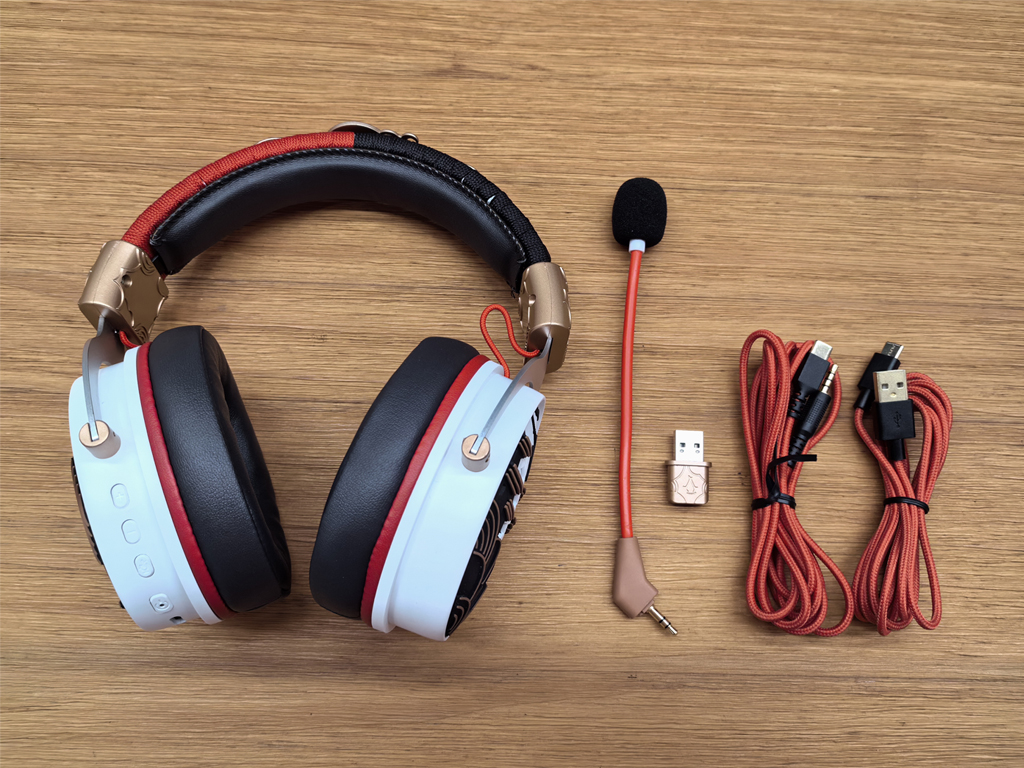
Functional approval is only one part of shipment readiness. The headset, receiver, cable, microphone, labels, instructions and retail packaging must form one verified configuration.
Tri-mode products create dependency on accessories. The 2.4G experience depends on the correct transmitter; analog use depends on the specified cable and connector arrangement; voice communication may depend on a detachable microphone. If an accessory is absent, mismatched or packed in the wrong position, the customer experiences a product failure even if the headset electronics passed inspection.
Co-branded programs add visual and legal controls. Artwork, colors, product name, model, barcode, destination markings and manual content must correspond to the approved SKU. A line can assemble a technically correct headset and still create a nonconforming shipment through the wrong receiver, box sleeve, language manual or carton label.
The solution is a linked release system: the engineering BOM defines the configuration, the final-test SOP verifies the functions, the packaging BOM defines box contents, and the approved pack-out sample shows placement. Revision numbers and effective dates must agree across all four.
One Headset, Three Signal Paths: Designing a Mode-by-Mode Final Test Sequence
The most reliable sequence begins with product identity and power condition, tests each connection mode against explicit criteria, checks mode transitions, and only then authorizes pack-out.
Start with traceability. The operator confirms model, color, firmware or configuration identifier where controlled, receiver identity and physical condition. The battery or power state must fall within the SOP's test window. Testing random modes without a known starting state makes failures difficult to reproduce and can hide pairing-memory issues.
For 2.4G mode, the procedure should reproduce the intended first-use journey: power on, confirm the expected default mode, connect the approved transmitter, observe pairing status, play left/right reference audio and check microphone transmission. The AC specification records default 2.4G operation and a steady blue indicator after pairing, so indicator behavior is part of the test rather than decoration. Working distance and latency claims require separate validated methods; a brief factory listening check should not be presented as proof of a numerical claim.
For Bluetooth, clear or control previous pairing records, enter the specified mode, confirm the approved pairing name, connect to the designated test device and check stereo audio, microphone behavior and basic controls relevant to the released configuration. The AC packaging material specifically records a pairing-name check. This matters because an incorrect broadcast name can reveal a firmware or configuration mix-up even when audio plays.
For 3.5mm analog mode, verify connector insertion, left and right channels, channel balance by reference, microphone path and mechanical contact stability. Analog mode should be tested with the approved cable and fixture because pole arrangement, adapter choice and source wiring can change the result. The AC project records analog left/right audio and microphone input, so the procedure should not collapse this into a generic sound check.
After isolated mode checks, test transitions that customers will use: 2.4G to Bluetooth, Bluetooth to wired operation, return to the default mode, power cycling and automatic shutdown where applicable. Define expected priority behavior when a cable is inserted or a wireless link is active. The SOP should describe the intended response; operators should not infer it from memory.
Each step needs an observable pass criterion. Use terms such as correct pairing name, stable specified indicator, left and right channels present, microphone signal present, no intermittent contact during the defined movement, and charging current within the approved test range. Avoid subjective instructions such as sounds good or connection normal unless an approved reference and comparison method explain what normal means.
Finally, assign defect codes by signal path. A 2.4G no-pair failure, Bluetooth-name mismatch, AUX right-channel failure and missing microphone are different problems with different containment actions. Useful defect data helps engineering identify whether the source is firmware, transmitter, soldering, cable, connector, assembly or packaging.
| Test stage | What to verify | Common release risk |
|---|---|---|
| 2.4G | Default mode, transmitter pairing, audio, mic and indicator | Wrong receiver or unstable pairing |
| Bluetooth | Pairing name, connection, audio, mic and controls | Configuration or pairing-memory mix-up |
| 3.5mm AUX | Connector, left/right audio and microphone path | Cable or pole-assignment mismatch |
| Mode transition | Priority, switching, power cycle and shutdown behavior | Functions pass alone but conflict together |
| Pack-out release | Correct tested unit, accessories, labels and box | Complete electronics but incomplete retail SKU |
Technical Deep Dive: Transmitter, Antenna, Charging and Indicator Checks Before Pack-Out
Final inspection should connect visible user behavior to upstream RF, power and assembly controls without pretending that one end-of-line check replaces engineering validation.
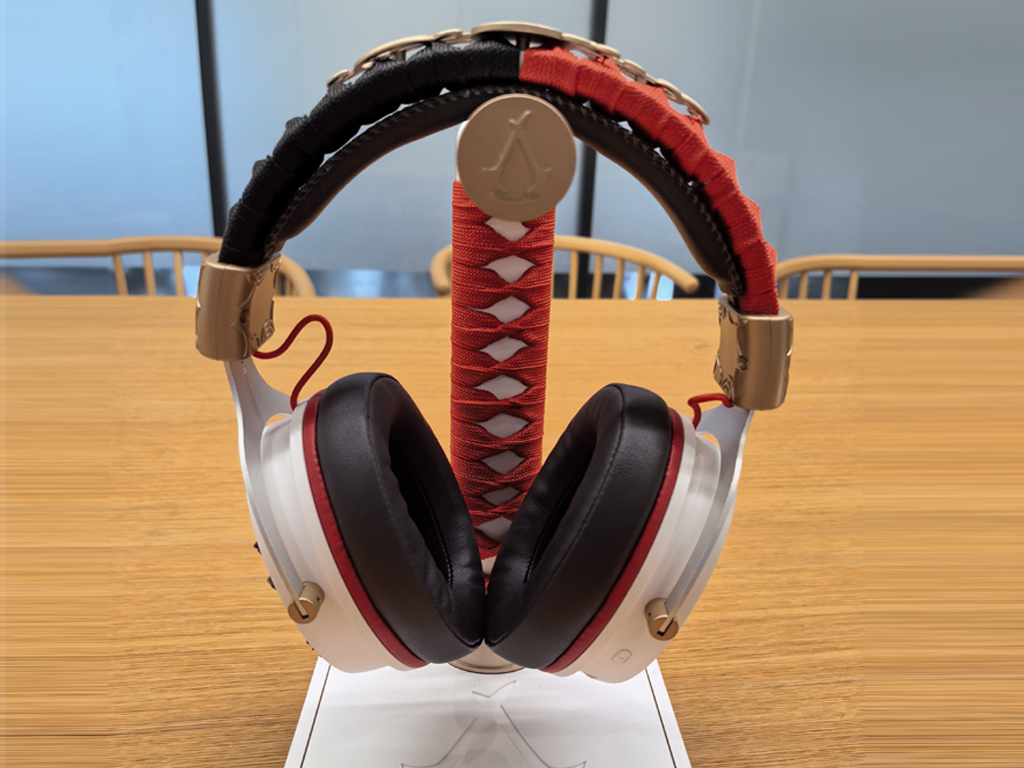
The transmitter is both an electronic component and a SKU accessory. Its PCB, housing, light guide and connector must match the released configuration. Pairing confirmation proves basic communication, but receiver identity and physical inspection prevent a compatible-looking transmitter from another variant entering the box. Where serialized or coded matching is required, the control method belongs in both test and packaging records.
Antenna performance cannot be fully evaluated by a few seconds of audio at one workstation. RF validation should define the setup, distance, orientation, interference conditions and acceptance method. Production may then use an approved screening method linked to that validation. The AC project included antenna and RF review and greater-than-10m working-distance positioning; buyers should preserve the distinction between engineering evidence and routine line screening.
Charging checks protect both usability and configuration. Confirm connector fit, charging indication and current against the approved range and fixture conditions. The AC product specification records charging current not exceeding 450mA, while its packaging procedure records a narrower inspection check under defined production conditions. A buyer should not combine figures from different methods without confirming the applicable station standard.
Indicators communicate operating state. The test plan should map color, steady or flashing behavior, mode, pairing, charging and fault states. If LED decoration and status indication share visual space, the operator must distinguish cosmetic illumination from functional feedback. The separate MACH guide on control and indicator specifications is a useful companion when requirements are still being written.
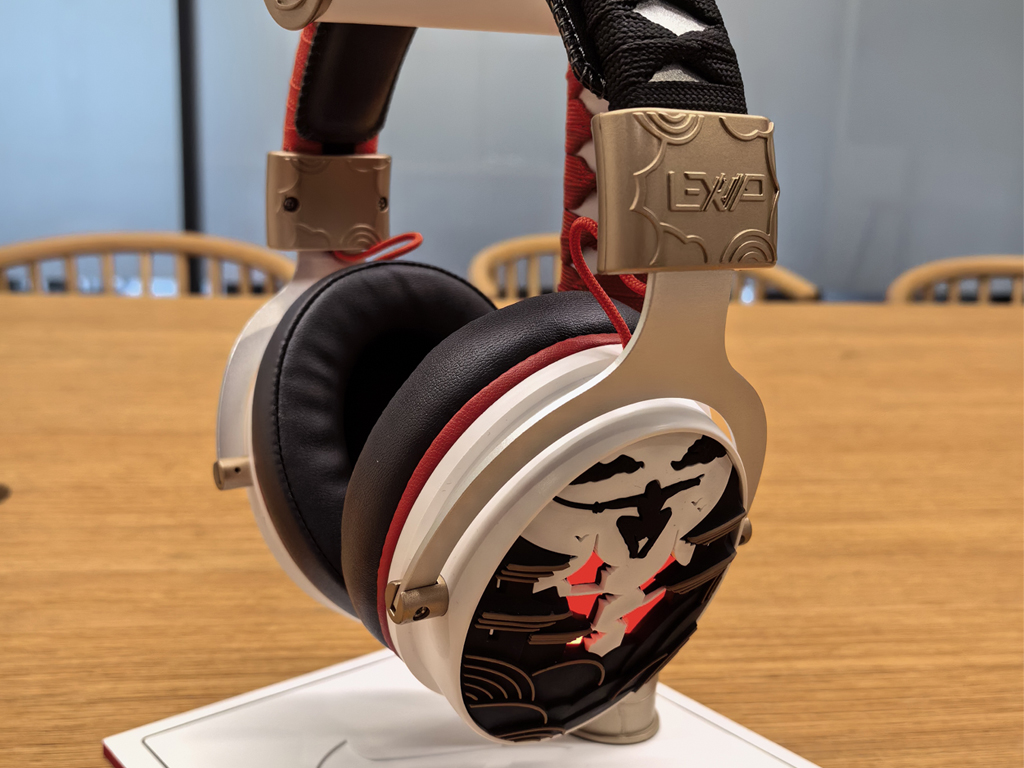
End-of-line testing also depends on mechanical consistency. A detachable microphone must seat correctly; cables and connectors must not produce intermittent contact during the defined check; ear-cup and headband assemblies must not obstruct controls or light guides. These checks should reference approved limit samples for gaps, scratches, print alignment and color, especially on a co-branded product.
When a unit fails, quarantine the unit and associated accessory set, record the defect code and follow the approved rework route. A repaired unit should repeat all affected tests, not only the step that originally failed. Trend review by lot, station and defect type is more valuable than a final pass percentage without context.
From Assembly SOP to Retail Pack-Out
A pack-out SOP should be the final configuration check, not merely instructions for folding a box.
The assembly flow establishes the conditions that final inspection later verifies. Speaker soldering affects audio channels, board and antenna placement affect wireless behavior, light-board assembly affects indicators, and microphone-boom assembly affects voice communication. Critical stations need controlled work instructions, fixtures, workmanship criteria and traceable inspections before the housing hides the work.
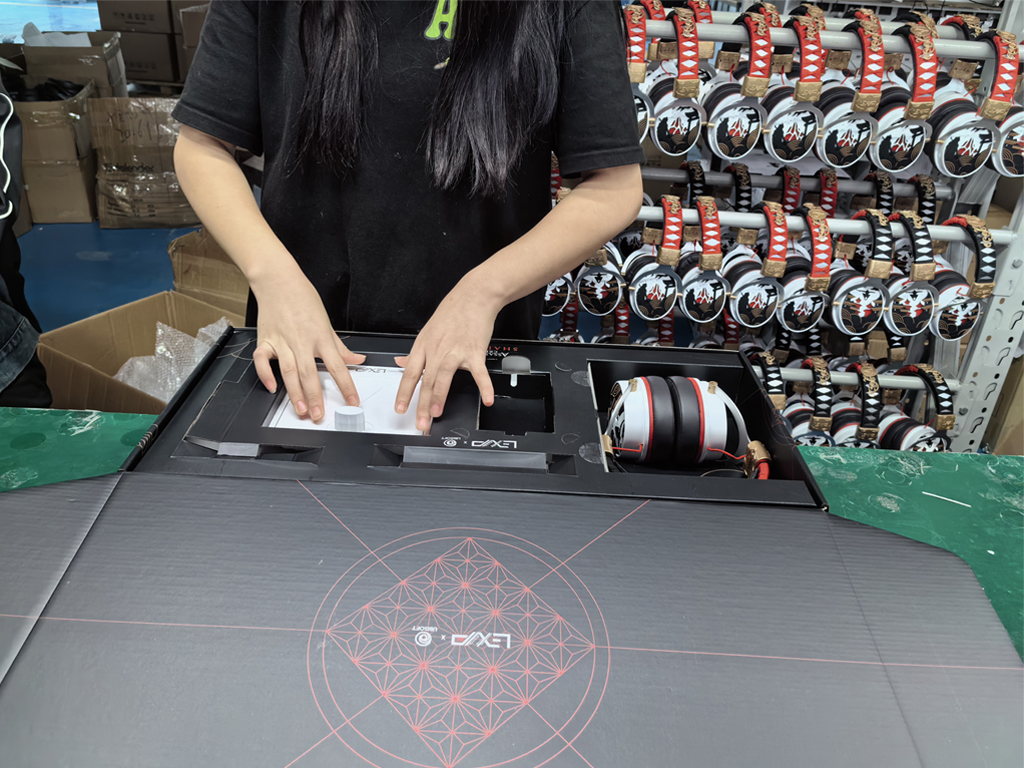
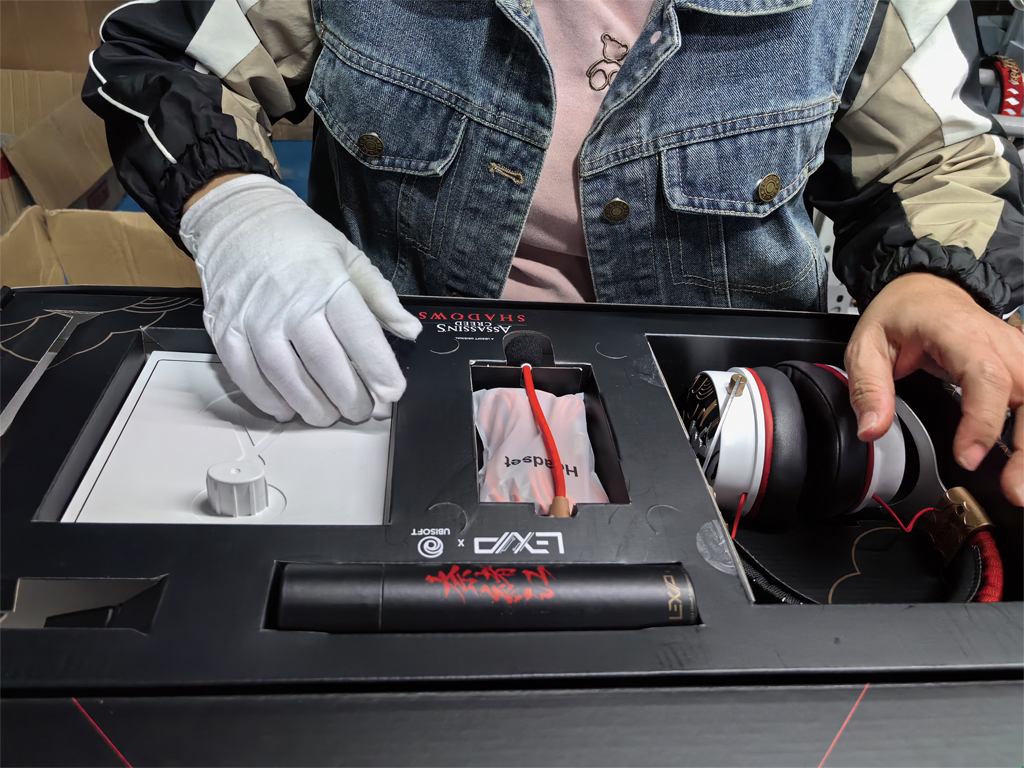
At pack-out, use a packaging BOM and an approved packed sample. Verify the headset model and appearance, receiver, cable, detachable microphone, manual and other approved contents; then confirm protective materials, accessory location, barcode, model label, destination markings and carton quantity. The AC packaging SOP documents listening and appearance inspection before transparent-label application, retail-box loading, closing, seal placement and carton sealing, illustrating a deliberate quality gate before the product becomes inaccessible inside the box.
Sampling level should be risk-based and agreed before production. Some characteristics may require 100 percent functional checks, while dimensional, cosmetic or carton inspections may follow an agreed sampling plan. The buyer should specify the inspection standard, lot definition, defect classes and acceptance criteria instead of using the phrase standard QC without detail.
| Pack-out checkpoint | Buyer document | Question to answer |
|---|---|---|
| Configuration | Released BOM and SKU matrix | Is this the correct model and market version? |
| Accessories | Packaging BOM | Can the customer use all advertised modes? |
| Placement | Approved pack-out sample | Are parts protected and consistently located? |
| Labels | Artwork and barcode approval | Do product, box and carton identities agree? |
| Shipment | OQC and carton record | Has the released lot met agreed acceptance rules? |
OEM/ODM Development and Approval Process
Final-test planning should begin during requirement review and mature with the product, rather than being written after mass production starts.
Requirement review defines target platforms, connection modes, user journeys, accessories, claims, destination markets and customization. Platform confirmation then identifies which functions are established and which require engineering work. For an AC-style program, this includes the 2.4G receiver, Bluetooth behavior, AUX path, microphone, charging and indicators.
During design and engineering, MACH industry can coordinate structure, PCB and RF review, acoustic direction, CMF, logo and packaging requirements. Prototype evaluation should record both performance results and the exact configuration. Tooling and pilot builds expose assembly variation, fixture needs and steps that are too subjective for stable production.
Before mass production, approve a golden sample, released BOM, firmware or configuration reference where applicable, final-test SOP, packaging BOM, pack-out sample, defect standard and compliance-document scope. Trial production should run the proposed stations at realistic pace and capture failure data. Only after corrective actions are closed should the same controlled documents govern mass production and OQC.
| Phase | Main output | Buyer approval focus |
|---|---|---|
| Concept | Use cases and mode requirements | Target platforms and product claims |
| Engineering | Validated configuration | Audio, RF, power, controls and structure |
| Prototype | Reference sample and issue list | User journey and customization |
| Trial production | Station SOP and capability evidence | Repeatability and failure containment |
| Mass production | Inspection and shipment records | Lot conformance and change control |
Buyer Checklist Before Final SOP Approval
Approve the test and pack-out plan only after every marketed mode, accessory, label and destination requirement has an owner and an objective acceptance method.
Confirm the exact product model, color and market configuration. List the target devices and connection use cases without assuming universal compatibility. Freeze the receiver, cables, detachable microphone, charging interface and package contents. Provide approved names, logos, artwork, barcode data, manual languages and compliance markings.
For each mode, specify the starting state, test source, fixture, reference audio, microphone method, indicator response and pass criteria. Define mode-switching and power-cycle expectations. Separate numerical RF or latency validation from routine listening inspection, and agree how production screening relates to engineering evidence.
Define defect classes, sampling or 100 percent checks, rework rules, retest scope, record retention and change approval. Ask for a trial pack-out and carton review before full production. Finally, make sure the RFQ and purchase documents identify destination markets so certification and labeling support can be evaluated for the actual project rather than assumed from a similar model.
| Buyer input | Why it matters | Release evidence |
|---|---|---|
| Mode and platform matrix | Defines intended user journeys | Approved functional specification |
| Accessory list | Makes each mode usable | Packaging BOM and packed sample |
| Claims and markets | Sets validation and document scope | Test plan and compliance matrix |
| Quality criteria | Removes subjective acceptance | SOP, limit samples and defect standard |
| Forecast and schedule | Supports fixtures and line planning | Trial and mass-production plan |
Frequently Asked Questions
These answers address common sourcing questions about final testing and packaging control for private-label tri-mode gaming headsets.
The answers below are general procurement guidance. Exact tests, certification support, minimum order quantity, sample plan and lead time depend on the selected platform, customization, destination market and approved project scope.
Conclusion
A strong tri-mode headset SOP proves that every connection path works and that the customer receives the exact accessories and retail configuration needed to use it.
The AC France OEM project demonstrates the value of linking product specifications, RF and acoustic review, assembly instructions, finished-unit checks, packaging controls and compliance documentation. For buyers, the key lesson is simple: do not approve final quality through one listening test or one golden sample. Convert every important user journey and shipment requirement into a controlled, repeatable check.
MACH industry supports OEM and ODM gaming audio projects from requirement review and platform evaluation through engineering, prototyping, testing coordination, packaging, quality control and mass-production preparation. Share your target platforms, connection modes, customization, accessories, markets and quality requirements to request an OEM quote and discuss your gaming audio project.
Frequently Asked Questions
What should a tri-mode gaming headset final test include?
It should separately verify 2.4G pairing and audio, Bluetooth pairing name and functions, 3.5mm left/right audio and microphone path, mode transitions, charging, indicators, controls, appearance and required accessories.
Why is one listening test not enough for a tri-mode headset?
Each signal path can fail independently. Bluetooth audio can work while the 2.4G receiver, analog microphone path, charging circuit or mode switching is incorrect.
Should every gaming headset be function-tested before packing?
The required 100 percent checks and sampled checks should be agreed according to product and process risk. Buyers should define this before production instead of assuming a universal factory standard.
How should a factory test the 2.4G receiver?
Use the approved transmitter and test device to verify the intended pairing journey, connection indication, left/right audio and microphone path. Numerical RF and latency claims need separate validated methods.
What must be checked in Bluetooth mode?
Confirm the approved pairing name, connection, stereo audio, microphone behavior, relevant controls and expected switching or power-cycle behavior for the released configuration.
How is 3.5mm AUX functionality inspected?
Test with the approved cable and source or fixture, checking connector engagement, left and right channels, microphone path and intermittent contact under the defined handling method.
What is a gaming headset pack-out SOP?
It is a controlled instruction that verifies the tested headset, receiver, cable, microphone, manual, labels, protective materials, retail box and carton configuration before shipment.
Does CE RED testing replace factory final inspection?
No. Regulatory testing and production inspection serve different purposes. The compliance file supports applicable legal requirements, while factory inspection checks shipped-unit conformance.
What should buyers approve before tri-mode headset mass production?
Approve the configuration, golden sample, BOM, test SOP, packaging BOM, pack-out sample, defect criteria, compliance scope and change-control process after trial-production review.
What information should a buyer send MACH for an OEM headset project?
Send target platforms, required modes, product claims, design and branding files, accessories, destination markets, packaging, quality expectations, forecast and launch schedule.
Related Resources
Need OEM/ODM gaming audio solutions?
Contact MACH Industry to discuss your gaming headset, gaming earbuds, or private-label audio project.
Contact MACH Industry