Home > Resources > OEM Knowledge
How Should Brands Validate Play-While-Charging in a Wireless Gaming Headset?
A buyer guide to validating charging, active audio, wireless modes, indicators, thermal safeguards and user behavior when a gaming headset operates while connected to power.
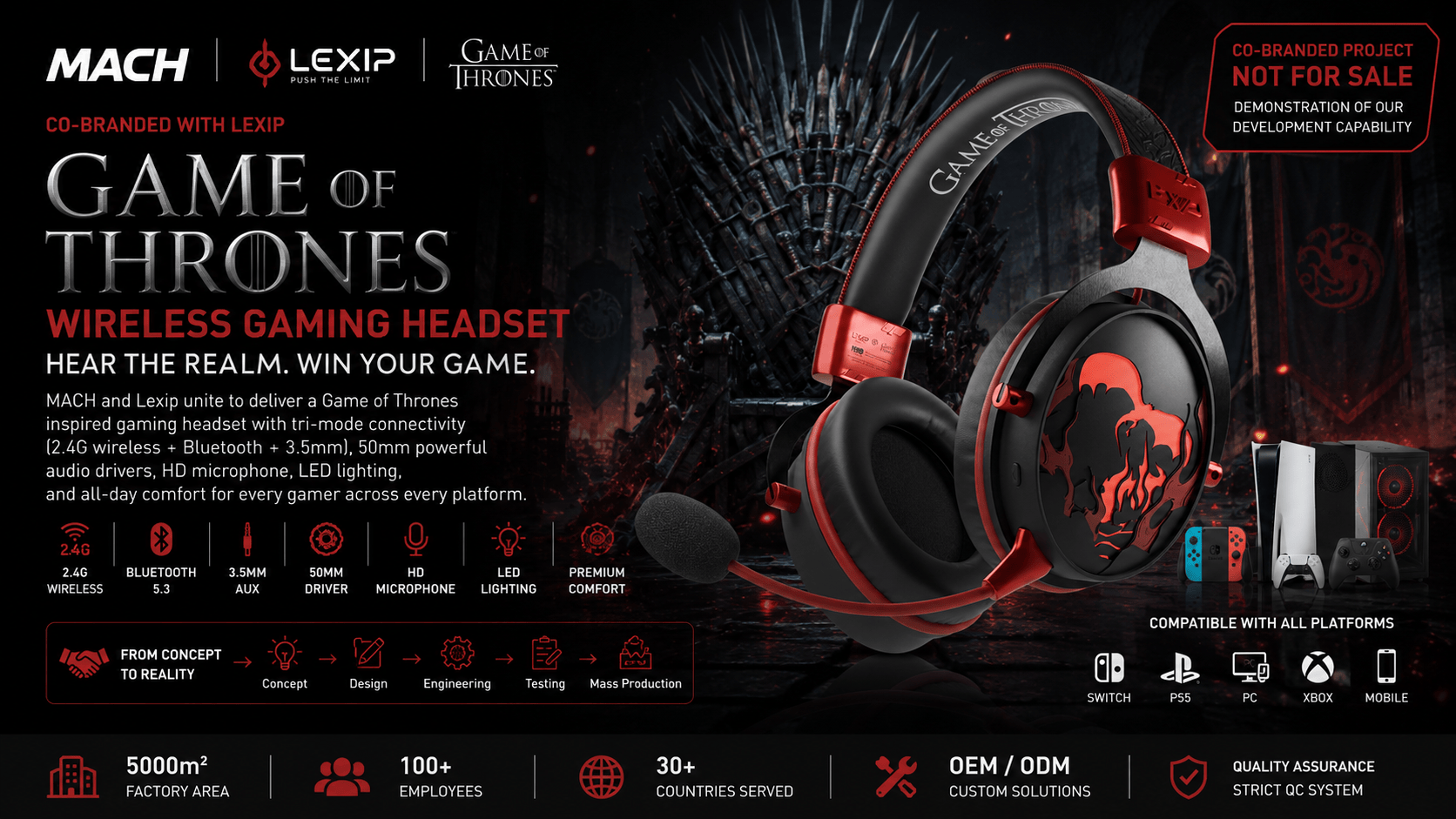
Brands should validate play-while-charging as a defined power state, not accept it as a simple yes-or-no feature. The approval plan must specify which audio modes remain available during charging, what happens to lighting and controls, how charging current is measured, how temperature protection is observed, which cable and power source are used, and what the headset should do when power is connected or removed. A repeatable state matrix is more useful than an unsupported claim that the product can charge while playing.
The GOT France OEM project provides a practical reference. Its public project materials identify a tri-mode wireless gaming headset with 2.4G, Bluetooth 5.4 and AUX audio, Type-C charging, play-while-charging support, an 800mAh protected battery with NTC, a 50mm / 16-ohm speaker configuration, detachable unidirectional microphone, single-color lighting and around 18 hours of use with backlight on under the recorded condition. This article uses those confirmed facts to explain buyer approval and production validation; it does not duplicate the published case study or extend the figures into unverified performance claims.
Why Play-While-Charging Matters to Gaming Headset Buyers
Play-while-charging affects user continuity, power behavior, temperature management, indicators, cable ergonomics and the accuracy of retail claims, so it must be engineered and approved as a complete use case.
Wireless headset buyers often evaluate battery capacity and runtime first. Those figures matter, but they do not answer what happens when the battery becomes low during a long gaming session. A product that supports active use while connected to power may reduce interruption, provided the supported modes and user experience are clearly defined.
The phrase can hide several different implementations. A headset may continue Bluetooth audio while charging but handle 2.4G differently. Lighting may remain active, dim or switch off. The microphone may continue working, and controls may retain or change their behavior. A Type-C connector may support charging only, while another product may also support audio or firmware functions. Buyers should approve the exact behavior of the selected platform rather than infer it from the connector shape.
The feature also creates a physical-use condition. Cable routing, connector retention and control access matter when a user wears the headset while it is connected. Product documentation should explain the intended scenario without encouraging use outside the approved charging conditions.
| Buyer question | Why it matters | Required approval |
|---|---|---|
| Which audio modes continue? | Modes may not share identical power behavior | Mode-by-power state matrix |
| What happens to lighting? | Lighting changes current draw and user feedback | Defined indicator and decorative-light behavior |
| How is temperature controlled? | Charging and active operation occur together | Approved thermal and protection test plan |
| Which cable and source apply? | Test results depend on the charging setup | Released accessory and fixture specification |
GOT France OEM Project Overview
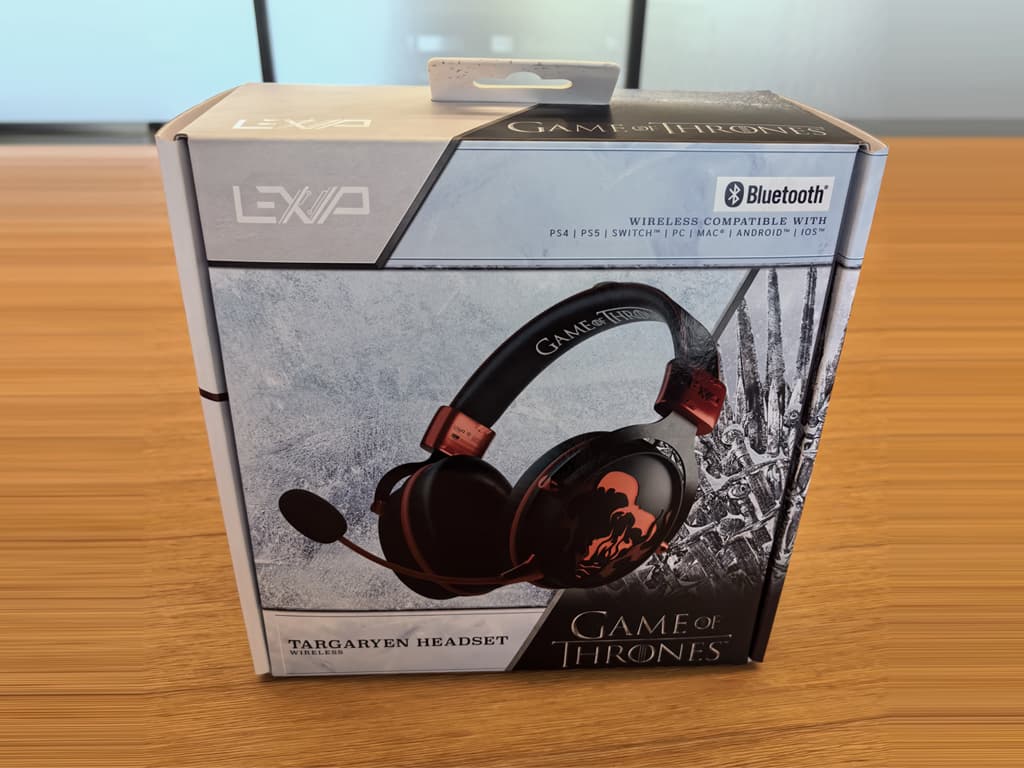
GOT was a France-market licensed-theme tri-mode gaming headset OEM program combining a defined wireless platform, customized CMF, accessories, packaging and production-control requirements.
The published case describes support for a France gaming brand, importer and distributor. The project combined a licensed visual direction with 2.4G wireless, Bluetooth 5.4 and AUX audio, requiring product engineering, RF and antenna review, artwork and CMF execution, accessory planning, packaging, testing documentation, quality checkpoints and mass-production preparation.
Confirmed specifications include an ATS3031 architecture for headset and transmitter planning, default 2.4G mode after power-on, Bluetooth mode switching, a steady blue indication after 2.4G pairing, Type-C charging, USB firmware-upgrade support, an 800mAh protected battery with NTC, around-20ms 2.4G latency positioning, greater-than-10m working-distance positioning and automatic shutdown after five minutes without use. The recorded around-18-hour use figure applies with backlight on under the stated project condition and should not be generalized to every mode or test method.
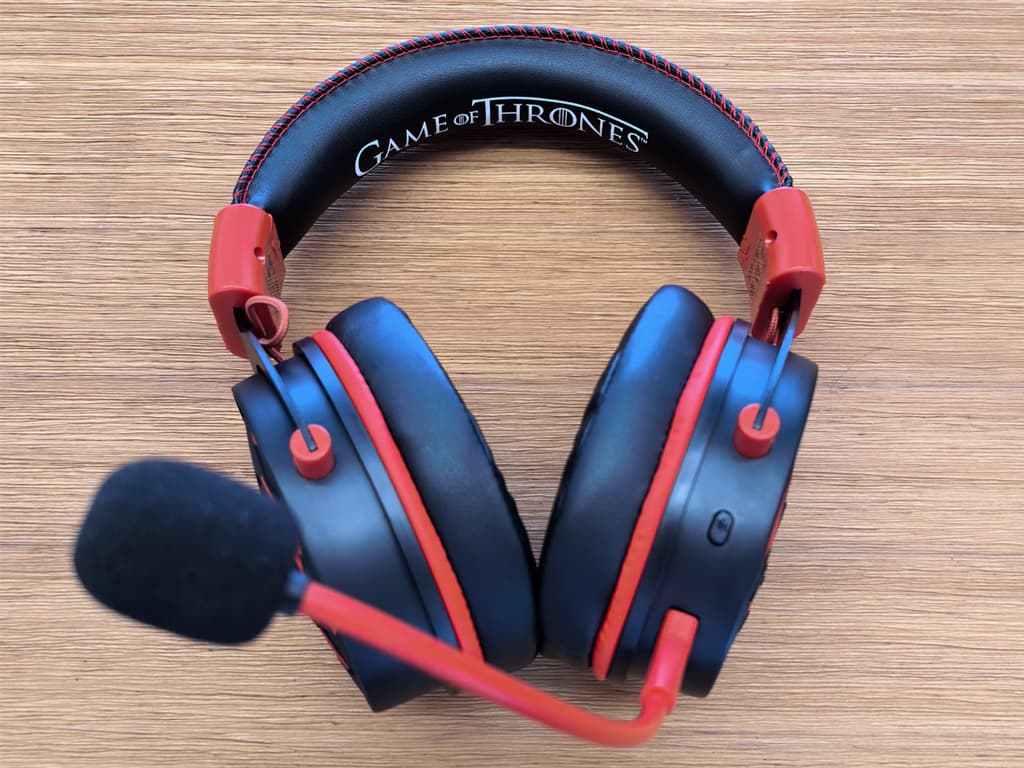
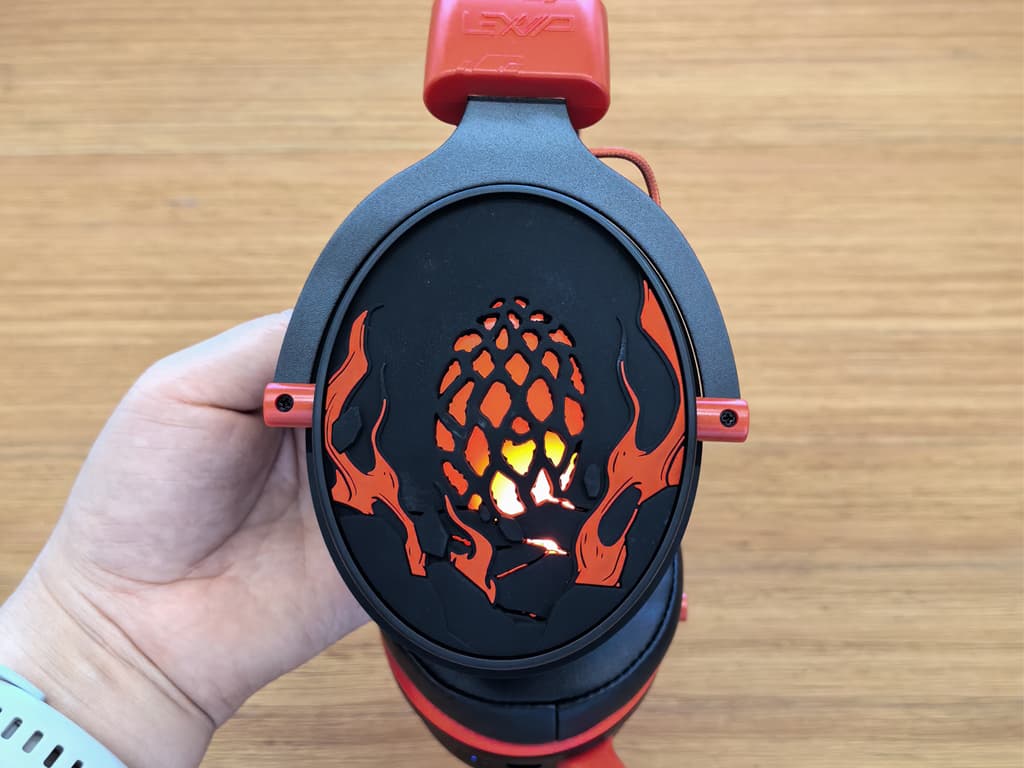
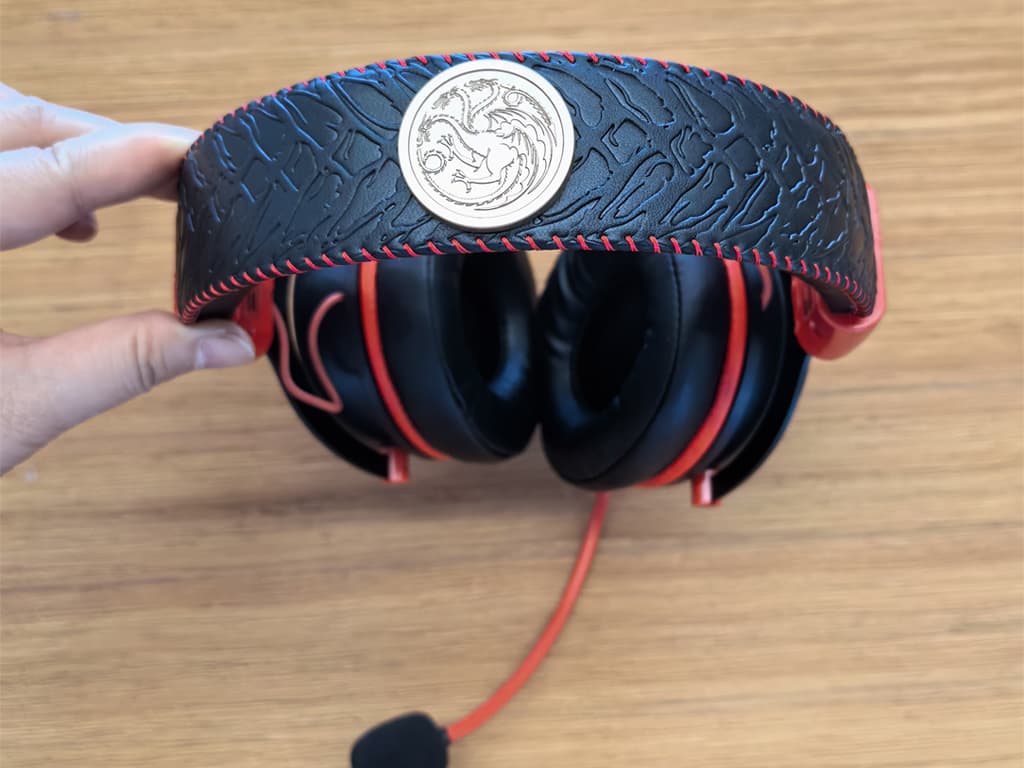
The visual program used a dragon-scale embossed headband, a themed center medal, controlled red and orange references, ear-cup lighting, logo and copyright placement, customized cable details and retail packaging. Those appearance elements are relevant to power-state validation because lighting, cable choice, connector access and packaging instructions affect the real customer experience.
| Project layer | GOT direction | Validation implication |
|---|---|---|
| Connectivity | 2.4G, Bluetooth 5.4 and AUX | Check charging behavior by supported mode |
| Power system | 800mAh protected battery with NTC | Verify approved charging and protection conditions |
| Lighting | Locked single-color themed lighting | Record whether lighting remains active during charging |
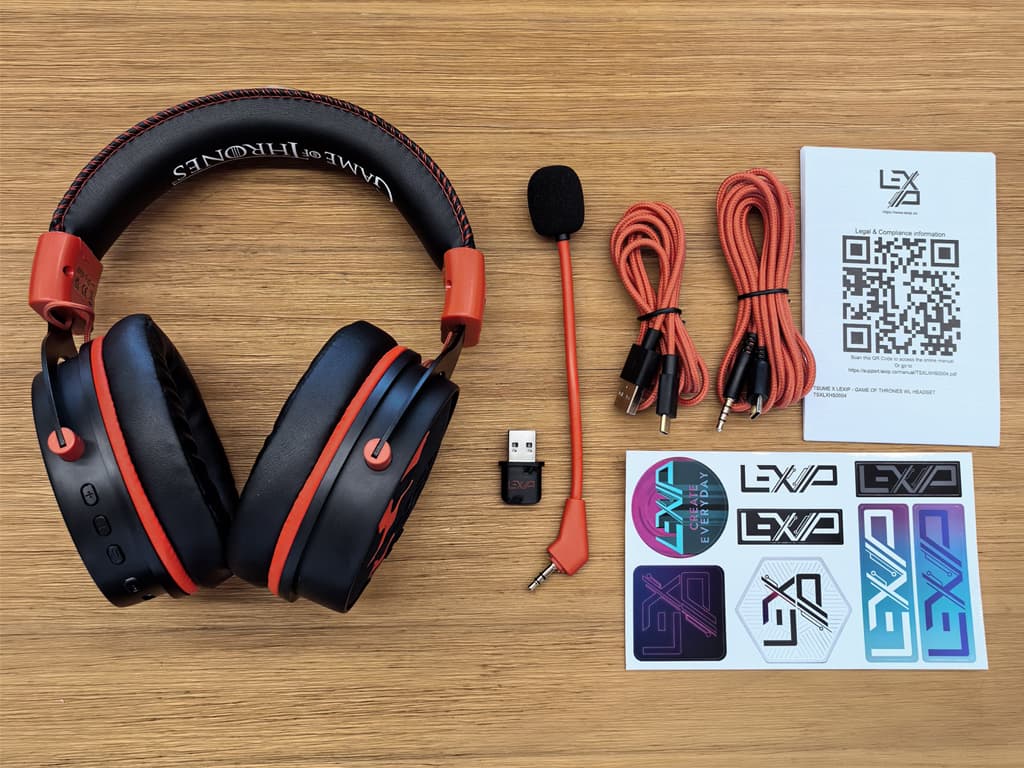
| Accessories | Receiver, detachable mic and cables | Test with the released retail configuration |
Buyer Challenge: One Feature Creates Several Power States
A tri-mode headset can behave differently when battery-powered, charging, fully charged, connected by AUX or changing between sources, so a single runtime test cannot approve the full experience.
The first sourcing risk is ambiguity. If an RFQ says play while charging without identifying modes, a supplier may demonstrate one working combination while the buyer assumes all combinations are supported. The same ambiguity can reach packaging, customer support and marketplace copy.
The second risk is using one result to support multiple claims. Battery capacity, charging time, playtime, charging current and temperature response are related but separate measurements. An 800mAh marking does not by itself prove 18 hours of use, and a successful listening check while plugged in does not prove long-duration thermal stability.
The third risk is inconsistent user feedback. If an indicator changes meaning between pairing, low battery and charging, users may misread the state. If the charging cable obstructs a control or microphone connector, the electrical feature may pass while the wearing experience fails. Approval must therefore include electrical behavior, controls, mechanics and communication.
How MACH Structured the Project for Engineering and Production
MACH connected platform confirmation, power and RF review, customized structure, accessory planning, production SOPs and final inspection so the approved user states could be manufactured consistently.
The GOT project began with requirement and licensed-artwork review, then matched the visual program to a tri-mode platform. Engineering support covered industrial design, structure, PCB, RF stability, antenna position, acoustics, microphone behavior, tooling and molded-part coordination. The power architecture and Type-C functions had to remain consistent with the selected hardware while the exterior design introduced themed headband, medal, lighting and color details.
Prototype review provided the first opportunity to verify mode switching, charging access, cable routing, microphone use and lighting behavior together. Testing documentation then translated approved behavior into repeatable checks. The project materials record assembly controls for microphone boom, transmitter, headband wiring, speakers and 2.4G board handling, followed by listening, Bluetooth, charging-current, 3.5mm audio and appearance checks.
For mass-production preparation, the relevant outputs are not only a sample and specification sheet. Buyers need a released BOM, approved accessories, power-state test method, indicator reference, packaging BOM, user instructions, defect criteria and change-control route. MACH industry can coordinate these items according to the selected platform and project scope.
Charging Is Not a Fourth Connection Mode: Build the Power-State Matrix
Charging overlays the headset's existing connection modes. Buyers should map every intended combination of connection, battery state, cable state, lighting and microphone use before approving the feature.
Start with rows for the connection states: 2.4G connected, Bluetooth connected, AUX connected, wireless idle and powered off. Add columns for battery operation, charging from the approved source, fully charged while connected and cable removal. For each cell, record whether audio, microphone, controls, lighting and indicators should operate. Unsupported combinations should be marked explicitly rather than left blank.
The matrix must distinguish the charging cable from the AUX cable and from any USB data or firmware-use condition. A Type-C connector does not automatically imply USB audio, and a firmware-upgrade function does not mean that every consumer USB connection should be marketed as an audio mode. The GOT project confirms Type-C charging and USB firmware-upgrade support; buyer-facing claims should remain within the approved implementation.
For 2.4G operation, define whether the receiver stays paired when charging begins, whether audio is interrupted, what the pairing indicator shows and whether the microphone continues. For Bluetooth, define whether the existing connection is retained and how charging status is displayed alongside Bluetooth state. For AUX, confirm whether the wired signal path depends on headset power and how microphone behavior is handled. These decisions should follow the actual platform, not a generic tri-mode assumption.
Lighting deserves its own field. Decorative lighting can materially change current draw and the visible interpretation of charging indicators. The GOT runtime statement was recorded with backlight on under a specific condition, so an approval plan should separately identify lighting state, volume level, connection mode, test content, starting battery condition and endpoint. This prevents one measured result from being reused for a different operating state.
Next define transitions. Connect power during active audio, remove power during active audio, reach full charge, enter low-battery state, switch wireless modes while charging and power cycle with the cable attached. Record any permitted interruption and the expected indicator sequence. A product may pass steady-state tests yet behave poorly at the moment the user connects a cable.
Add mechanical and usability observations. The approved charging cable should fit without excessive force, maintain contact under the defined movement check and route without obstructing the microphone, controls or normal wearing position. The cable and connector are part of the tested configuration; substituting a different cable at mass production can change fit and charging behavior.
Finally, link each matrix cell to a test level. Basic function may be checked on every finished unit, while extended thermal, runtime, charging-time and transition testing may follow qualification, pilot-run and periodic-audit plans. A matrix is not a test report, but it prevents gaps by showing which report, station or inspection owns every promised state.
| State combination | Buyer must define | Typical evidence |
|---|---|---|
| 2.4G plus charging | Pairing retention, audio, mic, indicator and lighting | Functional sequence and extended validation |
| Bluetooth plus charging | Connection retention, controls and charging feedback | Mode-specific test record |
| AUX plus charging | Power dependency, channels, mic and cable routing | Approved cable and source test |
| Full charge while connected | Indicator and power-management response | Charging-cycle observation |
| Power cable removal | Audio continuity and state transition | Transition test |
Technical Deep Dive: NTC Protection, Charging Current and Thermal Validation Boundaries
NTC sensing and battery protection are important design elements, but buyers still need a defined validation plan for the complete headset under approved charging and operating conditions.
An NTC is a temperature-sensitive component used by the power system to help monitor thermal conditions. Its presence is not a standalone guarantee that every charger, ambient temperature or use pattern is acceptable. The protection circuit, battery cell, charging IC, firmware behavior, enclosure, current draw and heat path work as a system.
The buyer should request the approved battery identity and protection information, then ensure the production BOM and samples use the same configuration. Charging-current measurements need a stated power source, cable, battery starting condition, product mode, lighting state, measurement point and tolerance. Without those conditions, two legitimate measurements can appear inconsistent.
Thermal validation should cover the intended play-while-charging combinations and relevant ambient conditions defined by the project team. Observation points may include the battery area, charging components, connector region and user-contact surfaces. Exact limits and test duration must come from the approved engineering and compliance plan; they should not be invented in marketing copy or copied from another headset.
Protection behavior also needs verification. The team should understand what the product is expected to do when the monitored condition moves outside the permitted range, how the state is communicated, and how recovery is handled. Destructive safety testing, battery compliance and regulatory assessment belong to qualified procedures and laboratories where applicable, not ordinary line inspection.
Production controls then protect the validated design. Check battery and protection-component identity, connector soldering, cable condition, board assembly and charging indication at appropriate stations. Finished-unit screening can confirm basic charging and active-audio behavior, while periodic or lot-based audits monitor longer tests according to the quality plan.
Change control is essential. A battery, cable, charging component, PCB revision, enclosure material or firmware change can affect the approved power-state behavior. Buyers should define which changes require document review, sample revalidation or renewed compliance evaluation before the updated configuration enters production.
| Evidence type | What it can support | What it does not prove alone |
|---|---|---|
| Battery specification | Identity, capacity and protection details | Complete headset runtime or temperature behavior |
| Charging-current check | Conformance under stated setup | All chargers and operating states |
| Functional listening test | Audio continues in the tested state | Long-duration thermal stability |
| Qualification test | Defined performance under controlled conditions | Uncontrolled future component changes |
OEM/ODM Development and Approval Process
Play-while-charging should be specified during requirement review, verified through prototypes and pilot production, then protected by released documents and change control.
At concept stage, define target users, platforms, connection modes, expected session length, lighting, microphone use, retail claims and destination markets. During platform matching, confirm the actual Type-C functions, charging architecture, battery configuration and supported simultaneous states. This is also the time to identify any customization that could affect connector access or thermal behavior.
Engineering samples should be evaluated against the power-state matrix. Record configuration, firmware where applicable, battery, cable, power source and test conditions. Review audio continuity, microphone, controls, indicators, lighting, charging response, connector ergonomics and the transitions customers will perform.
Before pilot production, release the BOM, golden sample, accessory specification, test procedures, appearance standard, packaging content and instructions. Pilot units reveal variation that one engineering sample cannot show. Close failures, update work instructions and confirm that final inspection can identify incorrect battery, cable, indicator or functional behavior.
Mass production uses the approved station controls, sampling plan and shipment inspection. Any proposed material, battery, PCB, cable or firmware substitution should pass the defined change-review process. The development flow remains concept, design, engineering, prototype, testing, trial production and mass production, but each gate should carry explicit power-state deliverables.
| Development gate | Power-state deliverable | Buyer decision |
|---|---|---|
| Requirements | Supported-state definition | Is the feature commercially necessary? |
| Platform selection | Confirmed charging architecture | Does the platform support the intended behavior? |
| Prototype | Completed state-matrix test | Is user behavior acceptable? |
| Pilot build | Repeatability and station controls | Can production detect deviations? |
| Mass production | QC records and change control | Does the lot match the approved configuration? |
Buyer Checklist Before Approving Play-While-Charging
Approve the claim only after the supported modes, charging setup, indicators, thermal plan, accessories, test evidence and production controls are unambiguous.
Confirm which 2.4G, Bluetooth and AUX states are supported during charging. Define lighting, microphone, controls, pairing retention, audio interruption and behavior at full charge. Record the supplied cable, approved power-source conditions and connector requirements. Do not assume that Type-C means USB audio or unrestricted charger compatibility.
Request the approved battery and protection information, charging method, runtime method and power-state test plan. Ensure numerical claims state the relevant mode, lighting, volume, content, battery start and endpoint. Confirm that temperature and protection validation are handled by appropriate engineering or laboratory procedures for the project.
Review cable ergonomics, connector retention, instructions, warnings, packaging content and customer-support wording. Freeze the BOM and golden sample, then define final inspection, audit frequency, defect handling and changes that trigger reapproval. Share target markets early so certification and documentation support can be evaluated against the actual configuration.
| Checklist item | Minimum buyer input | Approval output |
|---|---|---|
| Use case | Modes and simultaneous functions | Power-state matrix |
| Charging setup | Cable, source and connector conditions | Controlled test method |
| Claims | Runtime and charging wording | Evidence-linked specification |
| Safety and compliance | Markets and final configuration | Project-specific document plan |
| Production | Forecast, QC and change requirements | Released control plan |
Frequently Asked Questions
These answers address common OEM sourcing questions about charging a wireless gaming headset during active use.
Exact support, sample timing, minimum order quantity, compliance work and validation methods depend on the selected platform, customization, target market and approved project scope.
Conclusion
Play-while-charging is a system behavior that should be defined, tested and controlled across product modes, accessories and production, not a checkbox added to a specification sheet.
The GOT France OEM project illustrates how a themed tri-mode headset combines wireless architecture, battery and charging design, lighting, accessories, CMF, testing and packaging. For buyers, the valuable lesson is to build a power-state matrix and connect every marketed behavior to controlled evidence and production checks.
MACH industry supports OEM and ODM gaming audio programs from requirement review and platform evaluation through industrial design, engineering, prototyping, testing coordination, packaging, quality control and mass-production preparation. Share your target modes, charging scenario, product claims, artwork, accessories, markets and order plan to request an OEM quote and discuss your gaming audio project.
Frequently Asked Questions
What does play-while-charging mean for a wireless gaming headset?
It means the headset can continue an approved audio-use state while connected to its defined charging setup. Buyers must confirm which modes, microphone, controls and lighting functions remain available.
Does play-while-charging work in every connection mode?
Not necessarily. Support can differ across 2.4G, Bluetooth and AUX implementations, so the approved platform must be tested with a mode-by-power state matrix.
Does a Type-C port mean a gaming headset supports USB audio?
No. Type-C describes the connector, not every implemented function. Charging, data, firmware upgrade and USB audio support must each be confirmed.
Why is NTC protection used in a wireless headset battery system?
An NTC helps the power system monitor temperature conditions. It is one part of the complete battery, charging, firmware, enclosure and protection design.
How should charging current be tested on an OEM gaming headset?
Define the power source, cable, battery starting state, operating mode, lighting state, measurement point and tolerance so results are repeatable.
Can one listening test prove play-while-charging safety?
No. A listening check confirms basic function only. Thermal, protection, charging-cycle and compliance validation require separately defined engineering or laboratory methods.
What battery information is confirmed for the GOT headset project?
The public project materials record an 800mAh protected battery with NTC and around 18 hours of use with backlight on under the stated project condition.
Should RGB or LED lighting be included in headset runtime testing?
Yes. Lighting state should be recorded because it affects current draw and makes runtime results easier to interpret and compare.
What should buyers approve before mass production?
Approve the power-state matrix, BOM, battery and cable configuration, golden sample, test methods, indicators, instructions, QC plan and change-control rules.
What should a brand send MACH for a wireless gaming headset RFQ?
Send target modes and platforms, charging-use expectations, claims, artwork, accessories, destination markets, quality requirements, forecast and schedule.
Related Resources
Need OEM/ODM gaming audio solutions?
Contact MACH Industry to discuss your gaming headset, gaming earbuds, or private-label audio project.
Contact MACH Industry