Home > Resources > OEM Knowledge
What Quality Evidence Should Gaming Audio Buyers Review Before Mass Production?
A buyer-focused framework for connecting acoustic, RF, charging, reliability and pack-out evidence to one approved wireless gaming audio configuration.
Gaming audio buyers should approve mass production only after acoustic, wireless and RF behavior, charging functions, reliability evidence, assembly controls and final pack-out are connected to the same released product configuration. A collection of unrelated test photos is not enough. Every record should identify the model, hardware, firmware, battery, receiver or dongle, charging case, sample stage, test method, acceptance reference and result.
This evidence-first approach matters for wireless gaming earbuds because the retail product is a system: left earbud, right earbud, charging case and, where applicable, a 2.4GHz receiver. The G12 product platform and GE5 Korea OEM case provide a useful public reference for dual-mode 2.4GHz plus Bluetooth gaming earbuds. The five real manufacturing images in this guide illustrate acoustic measurement, RF verification, charging inspection, reliability capability and production packaging without claiming numerical limits that the images cannot prove.
What Quality Evidence Actually Proves
Quality evidence proves that a defined product configuration was checked against a defined requirement under recorded conditions; it does not prove that every future unit or variant is automatically compliant.
Buyers often receive a polished sample, a test screenshot and a factory checklist, but those items may describe different revisions. The sample may use engineering firmware, the RF result may come from a previous antenna layout, and the packaging may show a receiver that is not in the approved bill of materials. A useful evidence file removes that ambiguity by identifying exactly what was tested.
Each record should include the product identity, hardware and firmware revision, relevant components, sample stage, test date, method or work instruction, acceptance criteria, result and disposition. Photographs can support traceability, but a photograph alone does not reveal limits, calibration, test setup or whether a failed result was corrected. Buyers should ask for the record behind the image when a decision depends on it.
The evidence file should also distinguish development validation from production inspection. Engineering validation answers whether the design and selected components can meet the requirement. Process checks answer whether assembly can reproduce the released design. OQC or pre-shipment inspection evaluates a defined production lot. These controls are connected, but one cannot substitute for another.
| Evidence item | What it can support | What it cannot prove alone |
|---|---|---|
| Acoustic curve | Output compared with an approved target or reference | Wireless stability, charging or packaging accuracy |
| RF test record | Defined wireless behavior on a recorded configuration | Acoustic consistency or battery safety |
| Charging check | Specified charging function and indication | All reliability conditions or runtime claims |
| Reliability report | Performance under the listed method and conditions | Every unlisted product variant |
| Pack-out inspection | Correct contents and presentation for a shipment sample | Unrecorded design validation |
G12 and GE5 as a Real-World Reference
The G12 platform and GE5 Korea OEM case show why dual-mode gaming earbuds need coordinated product, receiver, charging-case and production evidence.
The published G12 product page identifies a gaming earbud platform with 2.4GHz wireless, Bluetooth 5.3, an 8mm driver, dual-microphone ENC and LC3 support. Its value for this article is the system architecture, not a single performance claim. A buyer reviewing such a platform has to consider the earbuds, wireless mode switching, receiver behavior, microphone path and charging case together.
The GE5 Korea OEM case publicly connects the G12 platform direction with a Type-C 2.4GHz dongle, Bluetooth 5.3, mode memory, touch control, black and white product execution, packaging, battery documentation and finished-goods inspection. It also records quality-control areas including function, appearance, distance, reliability and packaging checks. Those facts make GE5 a practical context for explaining evidence traceability without reproducing the case study.
The buyer lesson is that evidence must follow the sellable configuration. A black and a white SKU may share electronics but still need controlled appearance and pack-out references. A receiver change can affect wireless verification and package contents. A charging-case or battery change can affect charging records and documentation. The evidence file should make these dependencies visible before production approval.
Acoustic and Frequency-Response Verification
Frequency-response testing helps compare acoustic output and left-right consistency with an approved project target, provided the fixture, seating method, software and limits are controlled.
For gaming earbuds, acoustic quality is not established by driver diameter or a nominal frequency range alone. The enclosure, acoustic mesh, venting, ear tip, assembly and tuning all influence measured output. Buyers should approve a target or controlled reference and ask how production measurements are compared with it.
A useful acoustic record identifies the sample, channel, fixture, coupler or test setup, earbud seating method, software version and acceptance boundaries. Repeated seating may be necessary when fit in the fixture can change the curve. Left and right channels should be traceable rather than averaged into one result that hides imbalance.
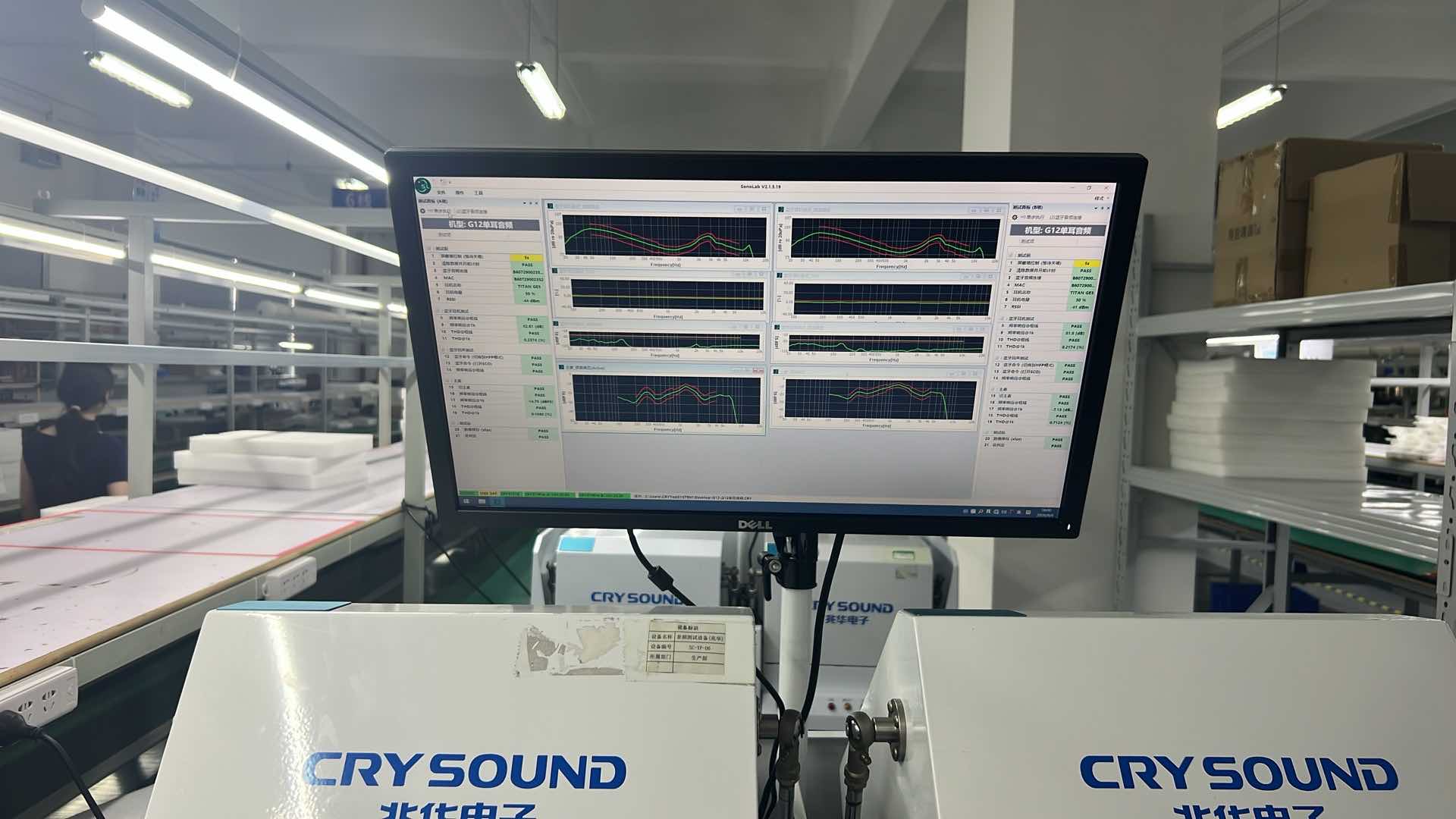
The supplied production photograph shows a CRYSOUND acoustic test station displaying multiple curves and result fields. It supports discussion of production acoustic measurement, but the photograph does not establish specific frequency-response values or pass limits for G12, GE5 or another product. Those limits belong in the approved project specification and work instruction.
Wireless and RF Verification
RF evidence should show that the released antenna, hardware, firmware and receiver configuration was checked under defined conditions, not merely that a test screen displayed a pass message.
Dual-mode gaming audio creates more than one wireless path. Bluetooth behavior and a proprietary 2.4GHz dongle path can have different pairing, reconnection, microphone, indication and host requirements. A buyer should define which functions are checked in each mode and which receiver or host is part of the test setup.
Production RF checks may help detect assembly or component issues, while engineering validation can address broader antenna and use-condition questions. The evidence file should state which level a record represents. It should also identify the tested sample and revision so an RF result from an earlier PCB or antenna layout is not carried into a changed configuration without review.
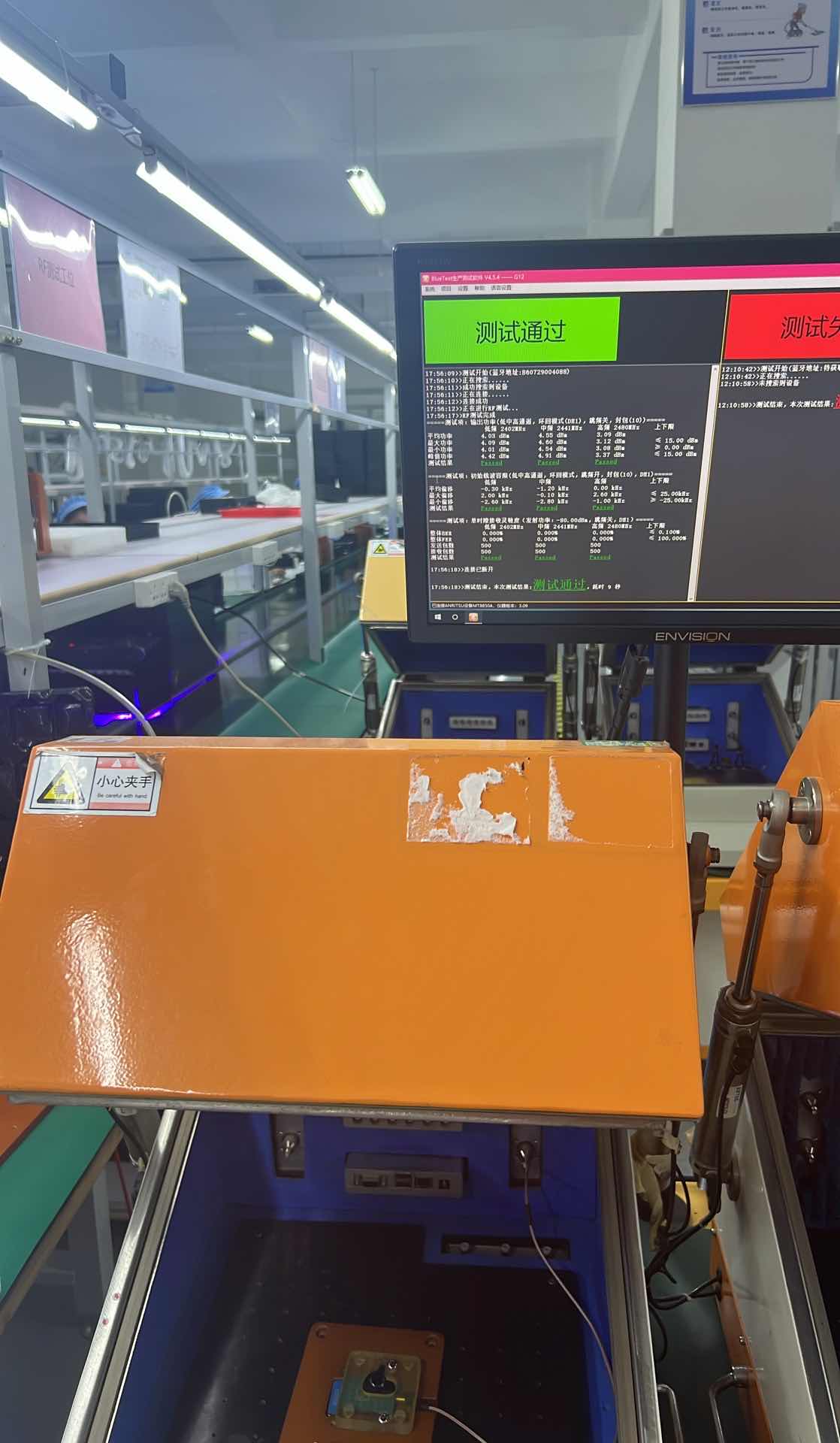
The supplied RF photograph shows a production test screen and fixture. It can document the presence of RF verification capability, but it does not disclose power, sensitivity, range, latency or pass thresholds. Buyers should request the applicable specification, method and recorded result rather than infer technical values from the image.
Charging and Electrical Functional Checks
Charging inspection should verify the approved earbud, case, contacts, connector, indication and control behavior as one power system, using project-defined electrical requirements.
TWS gaming earbuds add charging interactions that over-ear headsets do not have. Each earbud must interface with the case, the case must accept its intended input, and indicators or status behavior must match the user instructions. A sample that plays audio correctly can still fail as a retail product if contact alignment, case detection or charging indication is inconsistent.
The buyer's evidence plan should identify which checks occur during engineering validation, pilot production and routine inspection. It should also separate functional confirmation from electrical safety or compliance evidence. A manual inspection can show that a function was checked, but it does not replace an approved electrical specification or any applicable laboratory documentation.
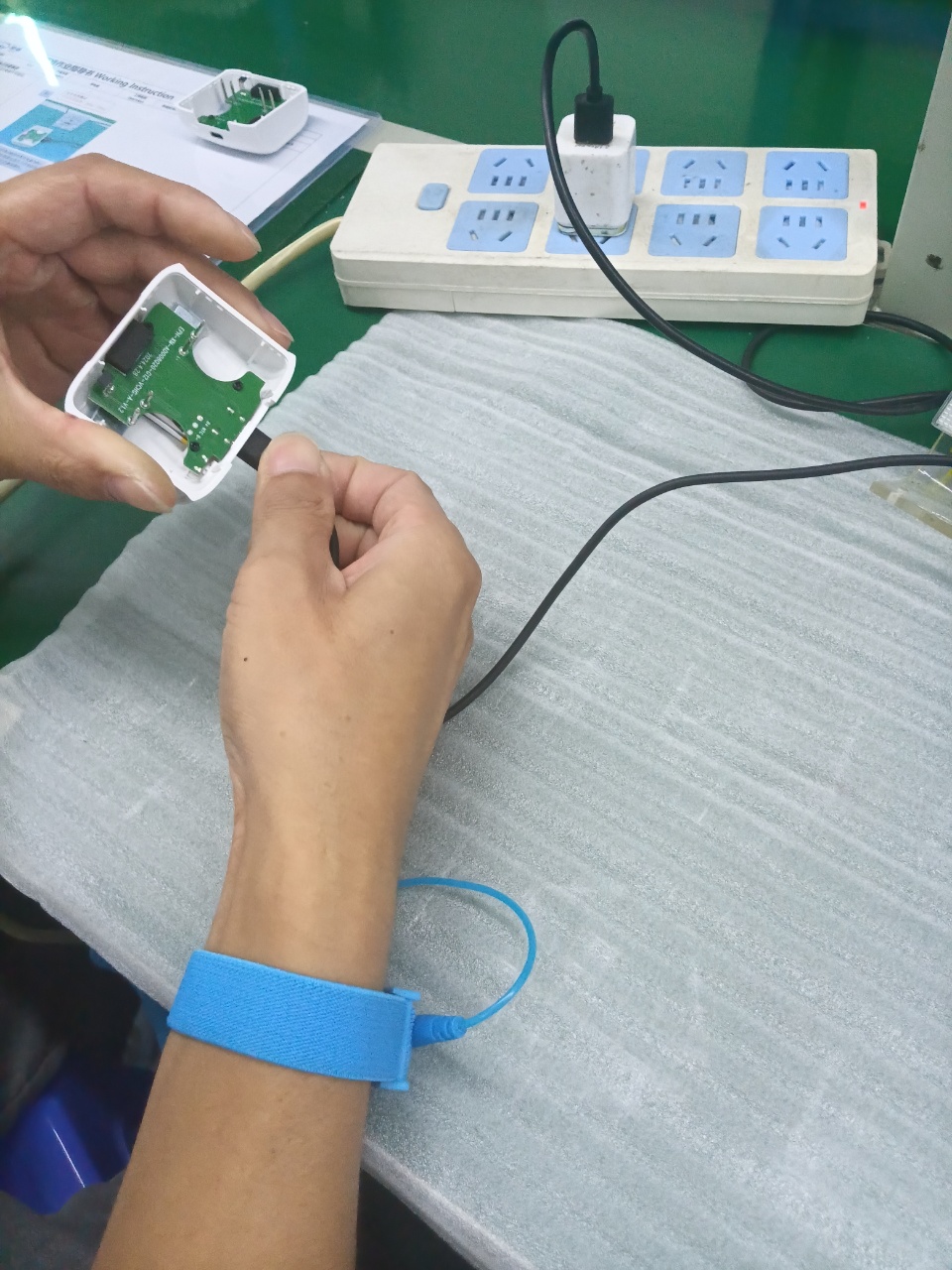
The supplied image shows a person inspecting a small electronic charging-related subassembly at a workbench. It supports a discussion of charging-function verification. It does not reveal the current, voltage, charging time, battery capacity or acceptance standard, so this article makes no claim about those values from the photograph.
Why Acoustic, RF and Charging Evidence Must Reference the Same Sample Baseline
Cross-domain evidence is trustworthy only when acoustic, RF and charging records point to the same controlled product baseline or clearly document why a different sample was used.
Acoustic, wireless and charging tests are often managed by different engineers or stations. That division is practical, but it creates a buyer risk: each team may test a different revision. A tuning sample might use one acoustic mesh, the RF sample another antenna revision, and the charging sample a different case PCB. All three records may pass while no single sellable configuration has been verified as a whole.
The solution is a sample-baseline table. Give the release candidate a model and build identifier, then record hardware revision, firmware version, driver and microphone identity, acoustic materials, antenna or PCB revision, receiver version, battery and charging-case configuration, CMF variant and packaging revision. Every test record should reference this table. If a test legitimately uses a specialist sample, the deviation and its effect must be documented.
Changes should trigger an impact review rather than an automatic full retest or an automatic waiver. A new acoustic mesh clearly reopens acoustic evidence and may also affect microphone or vent behavior. A PCB or antenna change reopens wireless evidence and may affect charging-current paths or firmware. A battery or charging-case change reopens electrical and charging evidence and may affect labels, packaging and transport documentation. A new color alone may not require RF retesting, but a metallic coating or material change near an antenna could warrant engineering review.
This traceability is especially important for dual-mode earbuds. The 2.4GHz receiver, Bluetooth firmware, left and right earbuds and charging case form a linked system. Mode memory, pairing cues, touch controls and package instructions must match the validated build. The evidence file should therefore include a configuration matrix, test index, open-issue log and approval status, not just separate screenshots.
For buyers, the goal is not to demand every possible test on every unit. It is to ensure that the chosen evidence is relevant, attributable and current. A smaller set of well-controlled records can be more useful than a large folder of untraceable reports. Before approving mass production, ask whether the evidence collectively describes the exact SKU that will be manufactured and packed.
| Baseline field | Why it matters | Evidence potentially affected by change |
|---|---|---|
| Firmware and mode logic | Controls pairing and indication | RF, function, charging behavior and manual |
| Driver, mesh and ear tip | Influence acoustic output and fit | Frequency response and channel consistency |
| PCB and antenna revision | Define wireless implementation | RF, pairing, receiver and functional records |
| Battery and charging case | Define the power system | Charging, indication, documentation and pack-out |
| Receiver and accessories | Complete the retail system | 2.4GHz operation, compatibility, manual and packaging |
Reliability Validation Before Production Release
Reliability evidence should identify the applicable method, tested configuration, conditions, sample stage, acceptance criteria and result; laboratory capability alone is not a product-specific conclusion.
An approved appearance or functional prototype does not establish repeatable production quality. Materials, soldering, contacts, hinges, connectors, batteries and assembly interfaces may respond differently to use, storage or environmental conditions. Reliability validation is used to investigate those risks before a design and process are released.
The GE5 public case refers to reliability checks and component documentation, while the supplied laboratory image shows equipment used for environmental or mechanical validation capability. This article does not assign a specific test method to the pictured equipment because the photograph alone cannot prove the exact procedure. Buyers should ask which methods apply to their product and why.
A useful reliability record includes the sample identity and stage, preconditioning where applicable, test method, condition, duration or cycle information when documented, acceptance criteria, observations, failures and corrective action. If a component or structure changes after the test, the project team should review whether the earlier result remains representative.

From Production Control to Final Packaging
Quality control continues through assembly, functional inspection, SKU identification, accessory verification, packaging and shipment preparation.
The final retail unit is more than the earbuds. It may include a charging case, Type-C receiver, cable, ear tips, inserts, labels and market-specific packaging. A functional product can still be an unacceptable shipment if an accessory is missing, the wrong color is packed, the receiver does not match the SKU or the manual describes another firmware behavior.
The supplied production image shows audio units, work areas and shipping cartons in a manufacturing and packaging environment. It supports discussion of production flow and pack-out context, but it does not prove a particular inspection standard or certification. Those requirements must be established through the buyer's approved packing specification and quality plan.
Before production release, connect the bill of materials, approved sample, firmware, color variants, packaging artwork and pack-out list. During production, record process checks and failure handling. Before shipment, use the agreed OQC or inspection plan to evaluate the defined lot. Buyers needing shipment-sampling detail can consult MACH's separate Gaming TWS Earbuds OQC Sampling Guide; this article focuses on the evidence baseline that should exist before that release activity begins.

Building a Buyer-Readable Quality Evidence File
A buyer-readable evidence file uses an index, configuration baseline, requirement-to-test matrix, records, deviations and release approvals so decisions can be audited without relying on informal messages.
Begin the file before the first sample, not after production starts. Define the target markets, product modes, key components, user behaviors and evidence expected at each gate. During sample review, attach results to the exact build and record open issues. Before pilot or mass production, freeze the configuration and confirm that every critical requirement has current evidence or an approved disposition.
The workflow below is procurement guidance. It is not a claim that every stage or test applies identically to every MACH project. The supplier and buyer should select methods according to product architecture, risk, target market and final configuration.
| Stage | Recommended evidence output | Buyer release question |
|---|---|---|
| Requirement review | Quality plan and evidence matrix | Are acceptance criteria defined before sampling? |
| Engineering validation | Acoustic, RF, charging and functional records | Does the selected design meet the intended requirements? |
| Reliability review | Applicable reports and issue dispositions | Are known design and component risks addressed? |
| Pilot build | Process checks and production-representative samples | Can the released design be reproduced? |
| Shipment inspection | Lot sampling and pack-out evidence | Does the defined lot meet the released inspection plan? |
- Identify the exact model, SKU, color and sales market
- Freeze hardware, firmware, receiver and charging-case revisions
- Define acoustic targets and measurement conditions
- Define Bluetooth and 2.4GHz mode test responsibilities
- Specify charging behavior and electrical acceptance references
- List applicable reliability methods and sample stages
- Connect failures to corrective action and retest evidence
- Control accessory, label, manual and packaging revisions
- Separate pre-production validation from shipment OQC
- Approve one indexed evidence package before production release
Conclusion: Approve Evidence, Not Just a Sample
A reliable gaming audio approval decision is based on traceable evidence for the released system, not the appearance of one prototype or a folder of unrelated test images.
For dual-mode gaming earbuds, acoustic output, RF behavior, charging, reliability, assembly and packaging are interdependent. Buyers should define the evidence plan early, require every record to identify the tested configuration and reopen affected evidence when a meaningful component, firmware or process change occurs.
MACH industry can review product requirements, testing scope, sample stages, packaging and production-quality evidence for qualified OEM/ODM gaming audio projects. Share the target market, product architecture, receiver requirements, quality criteria and expected production plan for an engineering and sourcing evaluation.
Discuss Your Gaming Audio Quality Plan
Share your product configuration, target markets, test requirements, packaging scope and production plan. MACH industry can help evaluate an evidence framework for your OEM/ODM gaming audio project.
Request OEM/ODM EvaluationFrequently Asked Questions
What quality evidence should buyers request before gaming earbuds enter mass production?
Buyers should request evidence tied to the approved configuration, including acoustic or channel-consistency records, wireless and RF functional results, charging checks, reliability records where applicable, appearance criteria, packaging approval and a clear disposition of failures or open issues.
How is frequency response used in gaming audio quality control?
Frequency-response measurement helps compare acoustic output with an approved target or reference and can reveal channel or unit variation. The limits, fixture, seating method, software and sample stage must be defined for the project.
Why is RF testing important for 2.4GHz gaming earbuds?
A dedicated dongle path adds pairing, link and antenna-related requirements that a simple Bluetooth listening check does not cover. Buyers should define the intended test conditions and preserve results for the released hardware and firmware configuration.
What should a charging-function inspection verify?
The inspection should verify the project-defined charging behavior, contact or connector operation, indication, case-to-earbud interaction and fault handling. Electrical limits should come from approved specifications rather than being inferred from a photograph.
Does one approved prototype prove mass-production quality?
No. A prototype can confirm direction, but production quality also depends on component variation, assembly consistency, firmware control, process inspection, reliability evidence and the final retail pack-out.
How should acoustic, RF and charging evidence be connected?
Each record should identify the same model, hardware, firmware, battery, receiver, charging case, sample stage and test date. If one of those elements changes, affected evidence should be reviewed again.
What is the difference between pre-production validation and OQC sampling?
Pre-production validation establishes whether the released design and process meet approved requirements. OQC sampling evaluates a defined shipment lot against a released inspection plan. One does not replace the other.
What reliability records should a gaming audio buyer ask for?
Ask which reliability methods apply to the product, which configuration was tested, the sample stage, conditions, acceptance criteria, results and disposition. Do not treat the presence of laboratory equipment as proof that every test applies to every product.
Should packaging be part of the quality evidence file?
Yes. Packaging approval should connect the product identity, color, receiver, cables, charging case, inserts, labels and carton information to the same released configuration used for functional review.
When should quality requirements be agreed with a gaming audio OEM supplier?
Define the evidence plan before sampling, refine it during engineering and pilot builds, and freeze the release criteria before mass production. Waiting until final inspection makes missing evidence harder and more expensive to correct.
Related Resources
Need OEM/ODM gaming audio solutions?
Contact MACH Industry to discuss your gaming headset, gaming earbuds, or private-label audio project.
Contact MACH Industry