Home > Resources > OEM Knowledge
How Private-Label Brands Should Evaluate Bluetooth and 2.4GHz Hybrid ANC Headphones
A B2B sourcing guide to evaluating Bluetooth, 2.4GHz wireless, hybrid ANC, power, microphones, firmware and validation for private-label headphone programs.
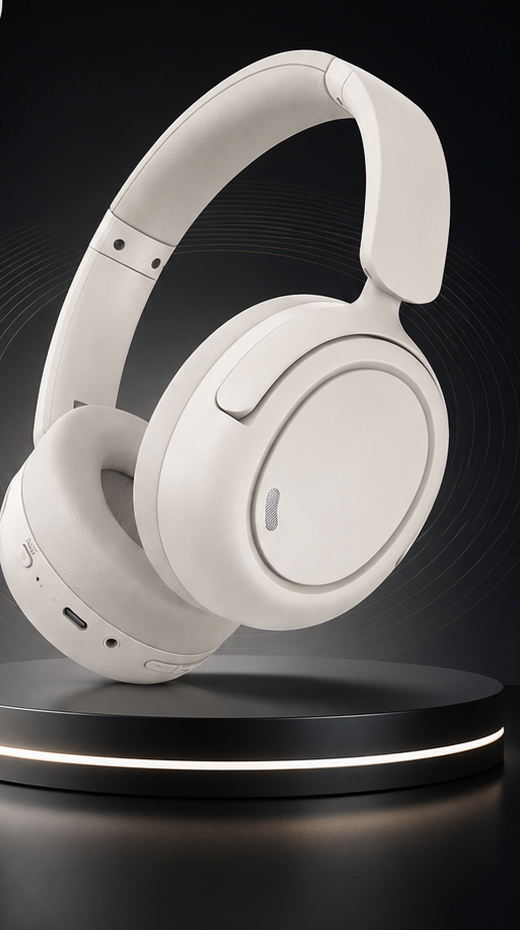
Private-label brands evaluating Bluetooth and 2.4GHz hybrid ANC headphones should not compare only ANC depth, Bluetooth version or playback time. They need to evaluate the complete system: intended use cases, wireless architecture, mode switching, RF and antenna design, ANC and call microphones, acoustic sealing, battery allocation, wired backup, dongle behavior, firmware, accessories and mass-production validation.
Bluetooth, dedicated 2.4GHz wireless and wired audio solve different user problems. Hybrid ANC adds external and internal microphone paths that interact with ear-cup structure, cushions, tuning and power. Combining them can create a versatile product, but every added mode increases the number of states, interfaces and claims a buyer must define before sampling.
This guide separates general engineering principles from confirmed P200 product facts. P200 is used as a real dual-mode hybrid ANC platform example, not as proof that one configuration suits every brand or market.
Key Takeaways for OEM and Private-Label Buyers
A successful dual-mode hybrid ANC project begins with a mode-by-mode product brief, not a list of maximum specifications.
- Assign Bluetooth, 2.4GHz and wired audio to specific users, devices and claims.
- Evaluate hybrid ANC as a microphone, acoustic, structural and algorithm system.
- Define switching priorities, microphone paths, controls and indicators before sampling.
- Budget battery and internal space across RF, ANC, audio, calls and optional features.
- Treat the dongle, cables, firmware, packaging and instructions as product components.
- Validate every advertised mode on representative devices using the final configuration.
Why Brands Are Combining Hybrid ANC with Dual-Mode Wireless
Brands combine hybrid ANC with Bluetooth and 2.4GHz wireless when one headphone line must cover everyday mobile audio, focused listening, calls and dedicated PC or gaming use.
Bluetooth is familiar for phones, tablets and laptops and supports daily listening and calling without a dedicated receiver. Dedicated 2.4GHz wireless gives a brand a controlled transmitter-to-headphone path for compatible PC or gaming scenarios. Wired audio provides a fallback for selected devices or situations where wireless operation is not preferred.
Hybrid active noise cancellation addresses a different need. It uses feedforward and feedback microphone paths to detect environmental and residual sound so the system can reduce selected noise. Transparency mode can provide surrounding awareness when full isolation is not wanted. These functions help a brand position one over-ear platform across commuting, travel, office, music and gaming-oriented scenarios.
The commercial logic is product-line efficiency, but the engineering cost is complexity. A dual-mode ANC headphone contains more operating states than a Bluetooth-only lifestyle model. Pairing, receiver connection, ANC, transparency, calls, audio routing, battery reporting, wired insertion, power-off behavior and controls must work together predictably.
Buyers should decide whether the product is primarily a lifestyle ANC headphone with an added PC mode, a gaming headset with ANC and mobile use, or a balanced crossover product. That decision controls priorities for appearance, microphone configuration, dongle, tuning, cushions, battery, packaging and retail language.
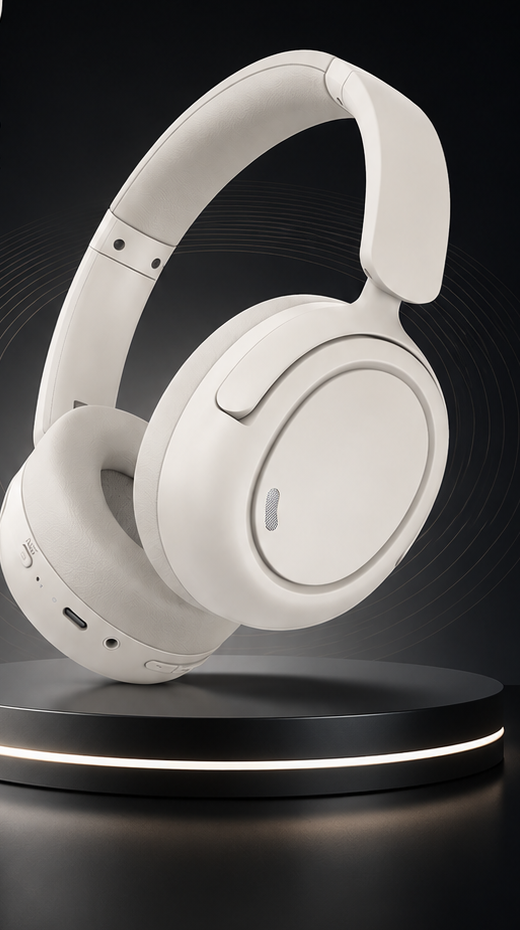
Bluetooth vs 2.4GHz vs Wired Audio
Bluetooth favors broad everyday wireless use, dedicated 2.4GHz favors a controlled receiver-based link, and wired audio provides a physical backup; the right architecture assigns each mode a clear responsibility.
The comparison below describes general product-development direction, not universal performance. Actual latency, range, audio routing, microphone support and power behavior depend on chipset, firmware, transmitter, host and final implementation. P200 does not publish a numeric latency value, so no fixed latency claim is made here.
A buyer should create a device-and-mode matrix before the first customized sample. Each row should identify the host, connection method, audio and microphone requirements, ANC availability, controls, switching behavior and included accessory. This matrix later controls testing, packaging and customer-support content.
| Evaluation area | Bluetooth | Dedicated 2.4GHz | Wired audio |
|---|---|---|---|
| Typical use case | Mobile audio, commuting, office and calls | Compatible PC or gaming-oriented wireless use | Backup or direct compatible-device listening |
| Connection method | Host Bluetooth radio and pairing | Dedicated transmitter or dongle | Physical audio cable |
| Latency direction | Implementation and codec dependent | Can be designed for responsive dedicated use; must be measured | Avoids a wireless transmission path |
| Power direction | Uses headphone wireless and processing power | Uses headphone RF plus transmitter power | May support listening when wireless is off, depending on design |
| Audio and microphone | Profiles and host behavior must be defined | Audio and microphone paths require receiver validation | Cable wiring and host input determine available functions |
| Buyer consideration | Profiles, codecs, multipoint and pairing UX | Dongle type, pairing, compatibility, replacement and RF tests | Cable, connector, mode transition and passive behavior |
How Hybrid ANC Works in a Product Development Context
Hybrid ANC combines feedforward and feedback sensing, but final performance depends on microphone placement, ear-cup acoustics, cushion seal, algorithms, materials and production consistency.
In general engineering terms, a feedforward microphone is positioned to sense environmental sound before it reaches the listener. A feedback microphone monitors sound inside the ear cup near the driver and ear. A hybrid ANC system uses both paths, giving the control system more information than a single-path design. This does not mean it cancels every sound or performs equally on every user.
Microphone location and port geometry affect what each ANC path detects. Ear-cup volume, venting, driver behavior, damping and cushion seal affect the acoustic plant that the algorithm controls. A material, cushion or structural change can therefore alter ANC and sound even when the chipset and microphone count stay unchanged.
Call microphones and ANC microphones have different jobs, although a platform may coordinate their processing. Buyers should define voice scenarios separately from noise-cancellation scenarios. AI ENC refers to environmental-noise reduction for communication; it should not be presented as the same function as listener-side ANC.
P200-specific confirmed facts are narrower and clearly documented: the platform uses feedforward plus feedback hybrid ANC, lists 30dB plus or minus 3dB ANC depth over a 20Hz-1800Hz effective range, supports transparency mode and includes AI algorithm ENC. These published values are platform specifications, not an independent laboratory review by this article.
Sampling should compare ANC off, ANC on and transparency mode using a defined fit and representative noise conditions. Buyers should also listen for tonal changes, pressure sensation, instability, wind sensitivity, leakage effects and unit variation. Acceptance criteria should be tied to the final cushions, housing, firmware and production-representative hardware.
| System element | General role | Buyer validation |
|---|---|---|
| Feedforward path | Senses environmental sound outside the cup | Port placement, wind behavior and consistency |
| Feedback path | Monitors residual sound inside the cup | Fit, seal, driver interaction and stability |
| Cushions and structure | Create passive seal and acoustic boundary | Material, compression, comfort and user variation |
| ANC algorithm | Controls cancellation response | Final firmware, modes and sample comparison |
| Call microphone / ENC | Supports outgoing voice communication | Speech quality by mode, host and environment |
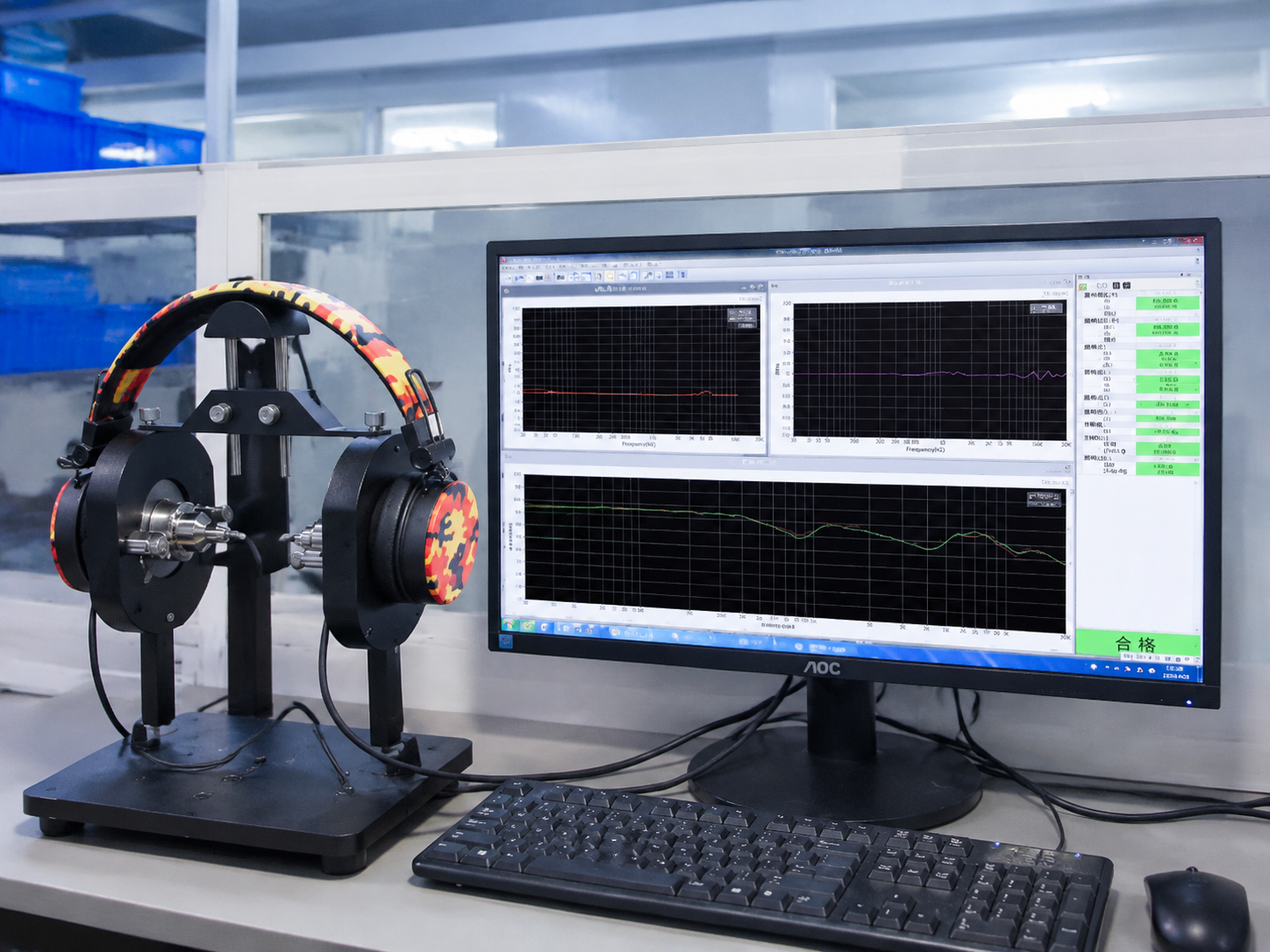
The Engineering Trade-Offs Buyers Should Evaluate
Dual-mode hybrid ANC buyers must balance RF, acoustics, microphones, power, internal space, comfort, firmware and accessories rather than maximize each specification independently.
RF architecture and antenna placement influence both Bluetooth and dedicated 2.4GHz operation. Antennas need appropriate location and clearance from batteries, metal parts, user proximity and noisy electronics. Final performance should be validated in realistic wearing and device conditions, not inferred only from chipset capability.
ANC microphones, call microphones, driver, battery, PCB, charging circuit, controls and antennas compete for ear-cup space. Layout changes can affect acoustic volume, cable routing, thermal concentration, weight distribution, assembly access and serviceability. A larger battery may extend a target runtime but can add mass and reduce space for other systems.
Power planning should define which functions operate together: Bluetooth audio with ANC, 2.4GHz audio with ANC, calls with ENC, transparency, multipoint, battery display and standby. Runtime claims need stated conditions because volume, ANC, RF mode, call use and firmware all affect consumption.
Firmware determines much of the user experience. Buyers should specify button mapping, prompts, LEDs, pairing, reconnection, mode priority, multipoint behavior, dongle pairing, wired insertion, automatic shutdown and battery reporting. An unclear state machine can create more returns than a modest component specification.
Comfort remains a product requirement. Headband force, cushion material, ear-cup depth, total mass, center of gravity and heat buildup should be reviewed over the intended usage period. Hybrid ANC also depends on fit and seal, so comfort and acoustic performance cannot be approved separately.
Why Adding 2.4GHz Wireless Changes a Hybrid ANC Headphone Project
Adding dedicated 2.4GHz wireless changes RF design, PCB and antenna planning, power budgets, firmware states, microphone routing, compatibility, accessories and production tests; it is not simply adding a dongle to a Bluetooth ANC headphone.
A Bluetooth ANC product already coordinates wireless audio, calls, ANC microphones, transparency, controls, charging and battery management. A dedicated 2.4GHz path introduces another radio relationship and usually a dedicated transmitter. The project now has to define how the headset finds that transmitter, how it switches away from or back to Bluetooth, which mode has priority and what the user sees or hears during each transition.
The hardware architecture may need RF, antenna, PCB and internal-layout decisions that differ from a Bluetooth-only platform. Antenna location must be reviewed with the final battery, housing, driver, microphones and user-worn orientation. The transmitter also becomes engineered hardware with its own connector, enclosure, pairing behavior, host interface, labeling and production identity. Chip capability alone does not validate the complete link.
Power behavior changes because the 2.4GHz receiver path, ANC processing, audio output and microphone transmission may operate together. Buyers should define expected scenarios before setting battery targets: long Bluetooth travel use, shorter PC sessions with ANC, voice communication through the dongle, or mixed daily operation. One headline runtime cannot accurately describe every combination unless its test condition is stated.
Microphone routing needs explicit decisions. The brand should confirm whether the call microphone or optional boom microphone works in Bluetooth, 2.4GHz and wired modes, how mute operates, and whether ENC is available through each electronic path. Headphone audio may work while microphone input behaves differently on a particular host, so both directions require validation.
Firmware has to manage connection priority and user expectations. Questions include whether inserting a cable turns wireless off, whether a 2.4GHz link interrupts Bluetooth, how multipoint behaves, what happens after the dongle is removed, how pairing is recovered and whether ANC remains active across modes. Prompts, LED codes and the manual should describe the same state machine.
Compatibility must be claimed device by device. A USB transmitter that works on one PC does not prove universal console, mobile or USB-C compatibility. Buyers should identify target operating systems and ports, adapter policy, audio and microphone requirements, controls and firmware versions. No numeric latency should be printed until the final transmitter-headphone-host chain is measured with an agreed method.
Accessories and service also expand. The dongle needs a protected package location, clear model matching and a replacement or re-pairing policy. Cable and wired-backup behavior need their own instructions. Final inspection should verify the correct transmitter, pairing, audio, microphone, ANC states, accessories and labels for each SKU.
The practical benefit of an existing dual-mode platform is that these relationships have a defined starting point. The buyer still must freeze the intended modes, optional features, firmware, hosts, package and acceptance plan. A mature platform reduces unknowns; it does not remove the need for project-specific engineering approval.
| 2.4GHz project layer | Decision before sampling | Evidence before launch |
|---|---|---|
| RF and antenna | Final housing, PCB, battery and antenna relationship | Worn-position and target-environment RF checks |
| Firmware | Mode priority, pairing, prompts and recovery | State-by-state functional test |
| Voice path | Microphone and mute behavior by mode | Two-way communication on approved hosts |
| Compatibility | Named hosts, ports and adapters | Device matrix with recorded results |
| Dongle service | Packaging, identity and replacement policy | Pack-out and re-pairing verification |

P200 as a Dual-Mode Hybrid ANC Platform Example
P200 is a confirmed Bluetooth 5.4, dedicated 2.4GHz and wired-audio hybrid ANC platform that private-label buyers can use as a starting point for a crossover lifestyle, office and gaming-oriented product.
The published P200 configuration uses the Bluetrum BT8931H main chipset, Bluetooth 5.4, Bluetooth plus 2.4GHz dual-mode wireless and wired audio backup. It supports HSP, HFP, A2DP and AVRCP profiles with SBC and AAC, multipoint connection and iOS battery display. The specification does not publish a numeric latency result.
Its noise and voice system includes feedforward plus feedback hybrid ANC, transparency mode and AI algorithm ENC. The published ANC specification is 30dB plus or minus 3dB over a 20Hz-1800Hz effective range. Final buyer approval should still use the customized sample and intended fit, firmware and use conditions.
The acoustic baseline is a 40mm titanium-diaphragm driver with 32-ohm impedance, 115dB sensitivity and a listed 20Hz-20kHz response. Those values do not independently establish tonal balance or consistency; controlled listening and measurement remain necessary.
P200 lists a 400mAh battery, approximately 1.5-hour charging, approximately 26 hours of calls and approximately 26 hours of music at 70 percent volume. NTC, over-voltage and over-current protection are supported. Runtime for a final SKU should be communicated with its test condition and selected functions.
Wired audio is supported, and the specification states that Bluetooth turns off when an audio cable is inserted. Optional 6D head tracking, detachable Type-C microphone and charging-port ESD protection are not standard claims; they require project evaluation and additional engineering scope. Buyers can review the confirmed configuration on the P200 product page before preparing an RFQ.
Buyer Specification Checklist
A complete RFQ converts target users and modes into a controlled wireless, ANC, voice, power, accessory and validation specification.
Begin with product positioning and target hosts. A lifestyle-first model, gaming-first model and balanced crossover model can use the same platform differently. State which modes and claims matter most instead of asking for every optional feature.
Separate required specifications from targets to validate and options to quote. This makes sample decisions traceable and prevents optional functions from appearing on packaging before engineering approval.
| RFQ field | Buyer information to provide | Approval output |
|---|---|---|
| Target use case | Mobile, travel, office, PC, gaming and wired priorities | Product positioning and mode hierarchy |
| Bluetooth | Version, profiles, codecs, multipoint, pairing name and hosts | Bluetooth function matrix |
| 2.4GHz | Target hosts, dongle connector, audio, microphone and latency test need | Receiver and compatibility specification |
| Wired backup | Connector, cable, passive behavior and mode transition | Wired function definition |
| ANC and voice | ANC, transparency, call mic, ENC and optional boom priorities | Mode-specific acceptance plan |
| Battery and comfort | Runtime condition, charging, materials, cushions and fit direction | Power and ergonomic targets |
| Firmware | Controls, priorities, prompts, LEDs, naming and shutdown | Released state machine |
| Commercial release | Logo, CMF, package, accessories, market and forecast | Quotation, sample and compliance scope |
- Target users, channel, price tier and main listening scenarios
- Bluetooth device, profile, codec and multipoint requirements
- 2.4GHz dongle type, hosts, voice path and performance test
- Wired cable, connector and wireless-off behavior
- Hybrid ANC, transparency and AI ENC priorities
- Battery target with stated operating conditions
- Comfort, cushion, CMF and surface-finish direction
- Firmware controls, prompts, pairing name and mode priority
- Accessories, retail packaging, labels and documentation
- Destination markets, compliance plan and sample-validation matrix
Standard Platform vs Deeper Customization
Private-label scope should be divided into branding, CMF, software, acoustic, accessory and structural changes because each level carries different cost, timing and validation impact.
The published P200 customization direction includes logo, product color, CMF and surface finish, ear-cushion material review, retail packaging, manuals and accessories. These changes still require sample approval because materials and finishes can influence appearance, comfort, seal and ANC behavior.
Bluetooth pairing name and voice prompts can be evaluated, as can firmware adjustment, ANC and transparency tuning, AI ENC adjustment, 2.4GHz transmitter configuration, battery configuration, driver and acoustic tuning. Software or tuning changes should be documented by revision and retested across affected modes.
Optional detachable Type-C microphone and 6D head tracking require additional engineering review and cost. Structural or tooling work is not automatically required for every private-label project and should not be promised before feasibility review. Buyers should ask which requests use the standard platform and which create a new validation or tooling path.
MOQ, price and lead time depend on final configuration, customization, accessories and certification requirements. They should be quoted after the RFQ scope is clear rather than presented as universal values.
Sampling and Validation Questions
A production-relevant sample review should test every advertised mode, transition, microphone path and accessory on named target devices.
Review Bluetooth pairing, reconnection, multipoint, calls and media behavior. Test the dedicated 2.4GHz transmitter for pairing, audio, voice, controls and recovery on representative hosts. Confirm cable insertion, wired audio and the specified wireless-off behavior.
Compare ANC off, hybrid ANC on and transparency mode with the final cushions and fit. Check sound and microphone behavior in each required connection mode. Evaluate battery reporting, charging, prompts, indicators and shutdown under the released firmware.
Inspect logo, CMF, cushions, controls, dongle, cables, package cavities, manuals, labels and barcode. Confirm that optional functions appear only on the correct SKU. Define destination-market certification coordination from the final hardware, firmware and accessory set; support availability is not the same as a completed certificate.
Record sample version, test device, firmware, result and unresolved issue. A change to antenna, microphone, cushions, battery, transmitter, firmware or package should return the affected acceptance items to review before mass production.
- Are Bluetooth, 2.4GHz and wired modes stable on named hosts?
- Are switching priority, prompts, LEDs and recovery understandable?
- Do ANC, transparency and audio remain consistent with the approved target?
- Does the required microphone path work in every claimed mode?
- Does the dongle meet connector, pairing, packaging and replacement needs?
- Are comfort, cushion seal and fit acceptable for intended use?
- Do package contents and claims match the exact SKU?
- Is the compliance plan based on final configuration and market?

Conclusion
Private-label brands should evaluate dual-mode hybrid ANC headphones as one coordinated product system, with each wireless mode, ANC path, microphone, power state and accessory tied to a defined use case and validation record.
P200 offers a documented starting point with Bluetooth 5.4, BT8931H, dedicated 2.4GHz wireless, wired backup, feedforward plus feedback hybrid ANC, transparency, AI ENC, multipoint, a 40mm titanium-diaphragm driver and a 400mAh battery. Its final suitability depends on the brand's positioning, target devices, optional scope, sample results and market requirements.
MACH industry can review the mode matrix, ANC and voice priorities, transmitter, firmware, acoustics, branding, package and compliance plan for a private-label project. A structured evaluation helps the buyer choose a platform for verified user value rather than an uncontrolled feature list.
Frequently Asked Questions
What is a dual-mode hybrid ANC headphone?
It is a headphone platform that combines hybrid active noise cancellation with two wireless connection paths, typically Bluetooth and dedicated 2.4GHz. A platform may also include wired audio, but every mode and function must be confirmed for the selected configuration.
Why add 2.4GHz wireless to a Bluetooth ANC headphone?
Dedicated 2.4GHz can provide a controlled transmitter-based path for compatible PC or gaming use. It also adds RF, firmware, power, compatibility, dongle and production-validation requirements, so it is not simply an extra accessory.
Is Bluetooth or 2.4GHz better for PC use?
Neither is universally better. Bluetooth may be convenient for general PC audio, while a dedicated 2.4GHz link can be designed for a specific audio, voice and responsiveness target. Buyers should test the final implementation on intended computers.
Does hybrid ANC require multiple microphone paths?
Hybrid ANC generally combines feedforward and feedback sensing. Performance also depends on microphone placement, ear-cup structure, cushions, driver integration, algorithm and production consistency.
Can P200 support wired audio as a backup?
Yes. P200 confirms wired audio support, and its specification states that Bluetooth turns off when an audio cable is inserted. Cable and host behavior should be validated for the final project.
What should buyers confirm before sampling dual-mode ANC headphones?
Confirm target users and hosts, Bluetooth and 2.4GHz roles, dongle type, wired behavior, ANC and transparency targets, voice paths, battery conditions, firmware states, accessories, packaging and market requirements.
Can the P200 logo, color and packaging be customized?
MACH can evaluate custom logo, color, CMF, surface finish, ear-cushion material, packaging, manuals and accessories according to project scope and sample approval.
Can Bluetooth pairing names and voice prompts be customized?
P200 product data lists Bluetooth pairing-name and voice-prompt customization support. Firmware scope, language, behavior, cost and validation should be confirmed for the project.
Is new tooling always required for a private-label P200 project?
No. Branding, CMF, packaging or software work may use the existing platform, while deeper structural changes may require engineering or tooling. Feasibility should be reviewed before quotation.
How are MOQ, price and lead time determined?
They depend on final product configuration, customization level, optional functions, accessories, packaging, certification requirements, sample scope and quantity. P200 does not use one universal MOQ, price or lead time for every project.
What certification support may a dual-mode ANC headphone require?
Requirements depend on destination market and final wireless, battery, materials and accessory configuration. MACH can coordinate applicable support, but support availability does not mean every certificate is already completed for every P200 SKU.
How should a brand prepare a P200 RFQ?
Provide target market, users, hosts, Bluetooth and 2.4GHz requirements, ANC and voice priorities, optional features, color and logo direction, package and accessories, compliance needs, forecast and launch schedule.
Related Resources
Need OEM/ODM gaming audio solutions?
Contact MACH Industry to discuss your gaming headset, gaming earbuds, or private-label audio project.
Contact MACH Industry