Home > Resources > Gaming Headset Guide
How Can Brands Balance Long Battery Life and Low Weight in a Gaming Headset?
A buyer guide to balancing battery capacity, structural materials, weight distribution, tri-mode connectivity, RGB, microphone design, validation, and production control in wireless gaming headset OEM projects.
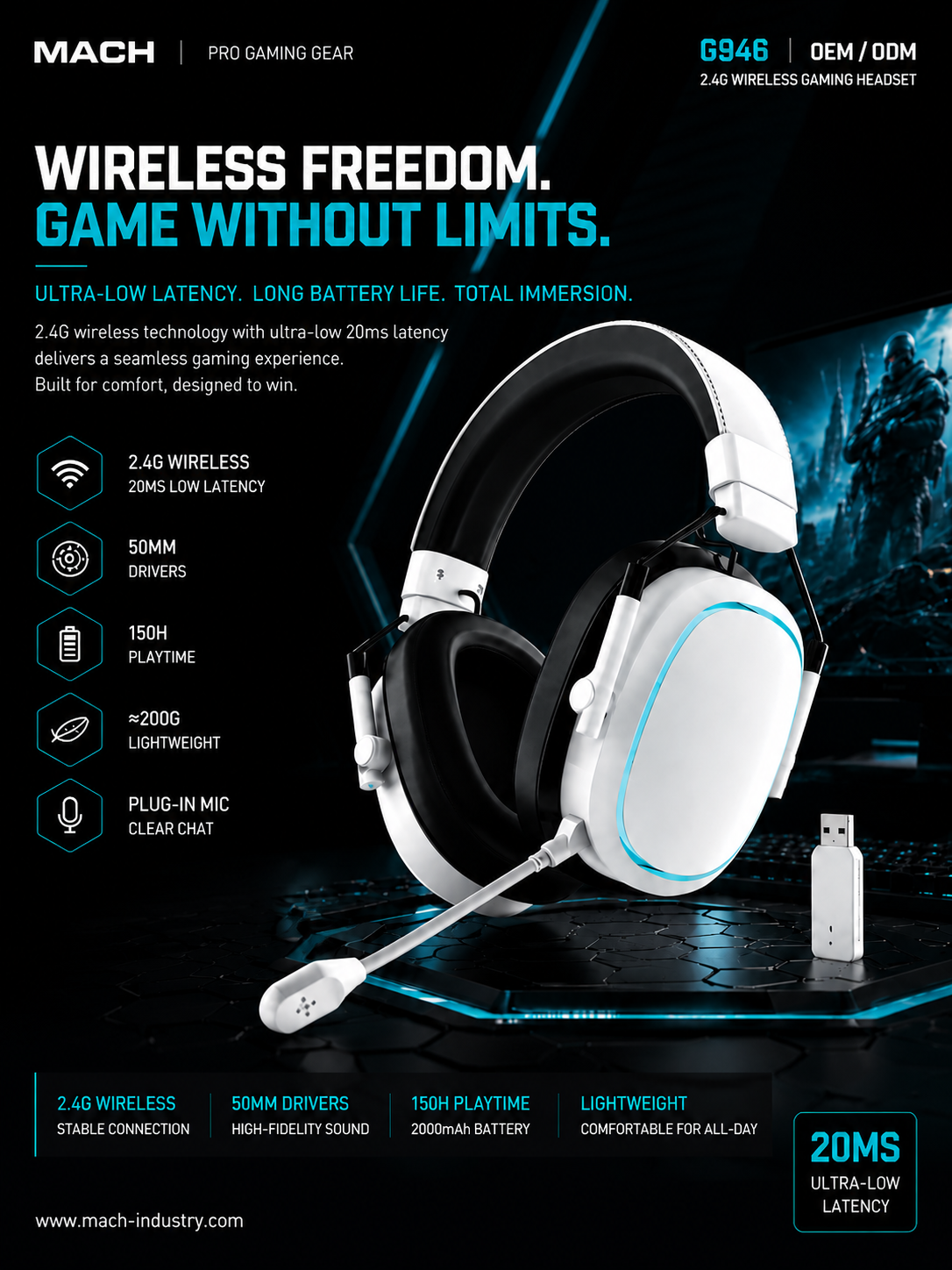
Gaming brands should balance long battery life and low headset weight by treating the battery, frame, drivers, wireless electronics, microphone, RGB, cushions, and mechanical structure as one system. A larger battery can extend runtime, but total mass, center of gravity, clamp, headband load, charging time, thermal behavior, structural strength, and production consistency still need defined targets and sample validation.
This matters because buyers often compare battery capacity and weight as separate specification-table numbers. Users experience them together. A product can be light but poorly balanced, or have a large battery but create crown pressure, front-back imbalance, longer charging, or inconsistent runtime. The OEM brief should therefore connect power requirements with mechanical and ergonomic acceptance.
G946 WH provides a documented reference. It combines an approximately 200g white headset structure with a 2000mAh battery specified for approximately 150 hours of playback with lighting off. Its confirmed construction includes a built-in stainless steel bar, anodized aluminum frame, extendable arm, 50mm driver, plug-in microphone, RGB, dedicated 2.4GHz wireless, Bluetooth, and 3.5mm audio. This guide uses those facts to explain a buyer decision rather than repeating the product page.
What Makes a Modern Gaming Headset Platform Competitive?
A competitive gaming headset platform combines useful device coverage, defined gaming performance, credible runtime, comfortable mass distribution, differentiated design, feasible customization, and repeatable manufacturing.
Multi-device use begins with clear connection roles. Dedicated 2.4GHz can serve an approved low-latency gaming route, Bluetooth can support compatible everyday devices, and 3.5mm can provide a wired alternative. The value is not the number of icons on the box; it is a tested host-and-mode matrix that tells buyers which audio, microphone, controls, lighting, charging, and accessories belong to each route.
Battery positioning must be credible. Capacity in milliamp-hours identifies the battery reference but does not by itself prove runtime. Radio mode, volume, RGB, microphone use, amplifier load, firmware, temperature, battery condition, test endpoint, and sample variation affect the result. Brands should define the test conditions behind any claim.
Weight is also incomplete without ergonomics. Total grams do not describe front-back balance, left-right balance, clamp, crown load, cushion pressure, adjustment, movement, heat, or glasses interaction. Procurement teams should combine mass measurement with timed wear trials across representative users.
Brand differentiation should fit the engineering platform. G946 WH supports a white CMF direction, RGB, plug-in microphone, logo, packaging, dongle branding, accessories, firmware evaluation, device naming, and voice-prompt evaluation. Each requested change should be classified as cosmetic, packaging, firmware, acoustic, electrical, RF, or mechanical work because the validation and production impact differs.
Manufacturing repeatability completes the platform. The approved sample should be linked to a locked BOM, firmware, mechanical version, battery, materials, colors, receiver, microphone, packaging, performance limits, inspection plan, traceability, and engineering-change process.
| Competitive factor | Simple specification | Buyer-ready definition |
|---|---|---|
| Battery | 2000mAh | Capacity plus runtime conditions, charging, indicators, aging, cell control, and production limits |
| Weight | Approximately 200g | Mass tolerance plus balance, clamp, cushions, adjustment, timed wear, and durability |
| Connectivity | 2.4GHz, Bluetooth, 3.5mm | Tested hosts, mode-specific features, receiver or cable, microphone, controls, and limitations |
| Customization | Logo and color available | Defined scope, samples, artwork, engineering impact, packaging, tests, and approval standards |
G946 Product Platform Overview
G946 WH is a white tri-mode wireless gaming headset platform combining defined 2.4GHz gaming performance, Bluetooth, wired audio, lightweight metal-supported construction, a plug-in microphone, RGB, and extended battery positioning.
The dedicated 2.4GHz route is specified at 20ms latency with a 10m transmission distance and uses an included dongle for the documented PC gaming direction. Bluetooth provides a separate wireless route for compatible daily devices. The 3.5mm connection provides a wired audio alternative. No exact Bluetooth version or chipset suffix is published, so neither should be invented in an OEM specification.
The acoustic platform uses a 50mm driver specified at 32 ohms, 110dB sensitivity, and a listed 20Hz-20kHz frequency response. Driver diameter and component values do not independently establish tuning, positional detail, maximum clean level, channel match, or production consistency. Buyers should approve the finished acoustic result.
The plug-in microphone is specified at -42dB plus or minus 3dB sensitivity, up to 2.3k ohms impedance, and a 50-16000Hz frequency range. Its removable format allows the headset to be configured without the boom when it is not required. Connector fit, voice quality, routing, positioning, insertion durability, and replacement handling should be part of sample approval.
The structure uses a built-in stainless steel bar, anodized aluminum frame, and extendable arm at approximately 200g. RGB and the white finish support a gaming retail identity. The 2000mAh battery is specified for approximately 150 hours of playback with lighting off, 1200 hours standby, and approximately three to four hours charging.
Confirmed OEM/ODM evaluation areas include logo and private-label branding, product color and CMF, packaging, labels and manuals, dongle branding and accessory configuration, firmware, Bluetooth device name, voice prompts, microphone and RGB presentation, barcodes, and market-specific packaging.
Why Battery Capacity and Weight Must Be Engineered Together
Battery capacity and headset weight must be engineered together because cell size and placement affect total mass, balance, structure, comfort, charging, electronics, packaging, reliability, and the claims a brand can support.
The first decision is the use case behind the runtime target. Brands should define typical connection mode, session length, charging opportunity, RGB behavior, microphone use, volume, and sales position. A capacity target without this context can add cost or mass without creating a meaningful user benefit. Conversely, reducing battery size solely to lower weight can weaken the intended product promise.
Placement matters as much as capacity. A battery located in one ear cup can influence left-right balance; other components can be arranged to manage the finished center of gravity. The user feels torque and pressure distribution rather than a battery number. Buyers should evaluate balance with the final drivers, PCBs, controls, microphone interface, frame, cushions, and cosmetic parts installed.
Structure must support the complete mass without becoming unnecessarily heavy. G946 WH confirms a stainless steel bar and anodized aluminum frame within an approximately 200g platform. These facts show the selected construction direction, but they do not replace mechanical validation. Extension, clamp, torsion, joints, fasteners, surface wear, and post-test fit should be checked on production-representative assemblies.
Runtime needs a reproducible method. The approximately 150-hour reference is specified with lighting off. A buyer-ready protocol states the wireless or wired mode, volume, source content, microphone activity, firmware, lighting state, battery conditioning, temperature, test endpoint, charging method, and sample quantity. RGB-on use should be evaluated separately rather than estimated from the lighting-off result.
Charging time and charging behavior are part of the trade-off. The listed three-to-four-hour charging reference should be linked to the approved charger or source condition, cable, battery state, indicator behavior, protection, and production configuration. Buyers should review low-battery prompts, shutdown behavior, charge completion, standby, and the relationship between firmware and displayed battery status.
Thermal and aging behavior also influence long-term performance. The project should define relevant charging, operating, storage, aging, and protection checks for the final battery and electronics. No unsupported lifetime or cycle claim should be added. Cell supplier, capacity, dimensions, protection, date or lot traceability, and approved substitutions belong in the BOM and quality plan.
Mechanical or electrical customization can disturb the balance. A new ear-cup part, larger logo plate, different cushion, microphone change, RGB component, PCB revision, receiver change, or battery substitution can alter mass, center of gravity, power consumption, RF, acoustics, reliability, and packaging. Engineering review should decide which validations need repeating.
Production control makes the design repeatable. Approve weight and balance tolerances, battery identity, firmware, charging behavior, current consumption, runtime sampling, mechanical assembly, cosmetics, and final function. Change control should prevent an apparently equivalent battery or material from entering production without impact review.
The practical buyer conclusion is that long battery life and low weight are not opposing marketing labels. They are a system optimization problem. A platform is commercially useful when the approved battery, structure, electronics, comfort, performance, and quality controls work together in the final retail configuration.
| Engineering decision | Buyer question | Approval evidence |
|---|---|---|
| Runtime target | Under which real use conditions should the claim apply? | Mode, volume, RGB, microphone, firmware, temperature, endpoint, and sample record |
| Mass distribution | Does the product feel balanced across intended users? | Final-component samples, weight and balance limits, fit checks, and timed wear trials |
| Structure | Can the lightweight frame retain fit and function? | Mechanical specification, reliability checks, post-test fit, cosmetics, and production tolerances |
| Production | Can battery and weight performance remain consistent? | Locked BOM, firmware, cell traceability, inspection, runtime sampling, and change control |
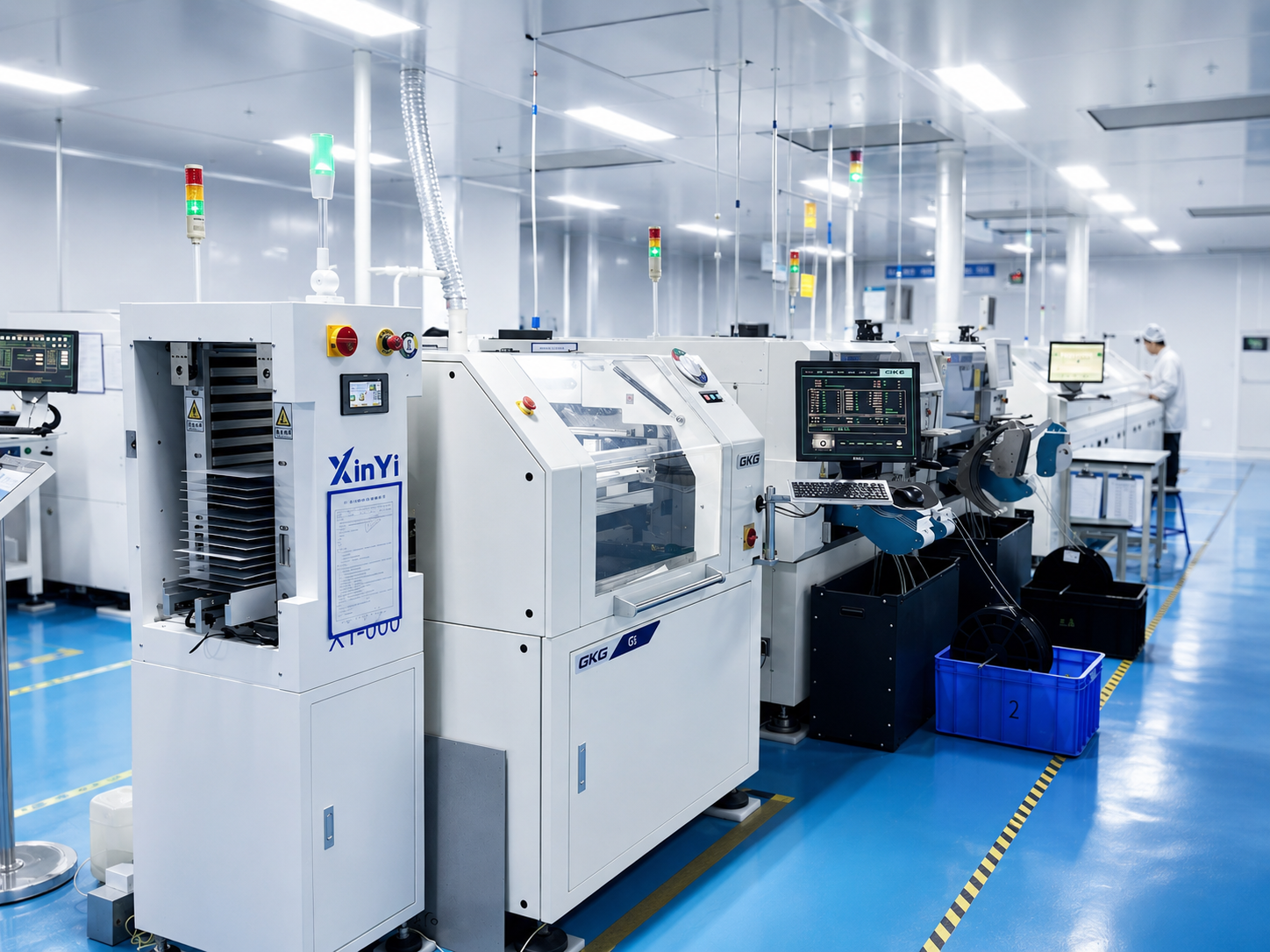
Technical Deep Dive: Structure, Audio, Microphone, and Connection Modes
The G946 WH platform must be evaluated as an integrated mechanical, acoustic, electrical, and wireless product rather than as a battery-and-weight specification alone.
The stainless steel bar, anodized aluminum frame, and extendable arm should be assessed for adjustment range, retention, clamp, symmetry, torsion, interfaces, fasteners, cosmetic wear, and fit after reliability checks. Aluminum helps define the structure and finish direction, but exact performance depends on geometry, material condition, connected parts, and assembly.
The 50mm driver needs finished-product acoustic approval. Review frequency response against the brand target, useful-level distortion, channel matching, seal variation, amplifier headroom, wireless and wired paths, and production sample spread. A larger driver diameter is not automatically better than a smaller driver.
The plug-in microphone adds connector and accessory decisions. Define insertion and removal experience, mechanical fit, orientation, voice target, movement noise, storage, packaging, labeling, wired and wireless routing, and replacement policy. If voice prompts, device names, or firmware are customized, verify their effect on controls, connection states, battery reporting, and instructions.
Each connection route should have a separate matrix. The 20ms value belongs to the specified 2.4GHz mode. Bluetooth behavior depends on the final supported implementation and host; no precise Bluetooth version is published. The 3.5mm path depends on compatible ports and final cable configuration. Packaging claims should follow tested combinations rather than broad platform icons.
What Gaming Brands Should Consider Before Developing a Wireless Headset
Before development, brands should define target users, hosts, connection roles, runtime and weight targets, acoustics, microphone, customization, packaging, compliance, and mass-production evidence.
Begin with a written product brief that separates required, preferred, and optional features. Include target market, sales channel, user profile, device list, connection modes, runtime conditions, weight and comfort target, acoustic reference, microphone use, white CMF, RGB, accessories, packaging, quantity, schedule, and compliance responsibilities.
Build a host-and-mode table. For every device, record whether the approved route is 2.4GHz, Bluetooth, or 3.5mm; which receiver, cable, or adapter is required; and which audio, microphone, control, RGB, battery, and prompt functions are available. This reduces support risk and prevents one mode's result from being applied to another.
Agree on sample stages and acceptance. Appearance samples may confirm white CMF and RGB, while engineering samples verify wireless, audio, microphone, battery, charging, structure, weight, firmware, device name, and prompts. Production-representative samples should confirm BOM, tooling, materials, packaging, reliability, and inspection limits.
Certification support should follow the final market and configuration. The product source lists coordination support but includes no product-specific completed certificates. Buyers should determine applicable radio, EMC, battery, materials, labels, documentation, and testing requirements with qualified parties.
Before mass production, approve the golden sample, BOM, firmware, receiver, battery, structural parts, colors, logo, accessories, packaging, manuals, labels, barcodes, performance limits, QC plan, traceability, corrective action, and engineering-change process.
- Define target users, markets, sales channels, typical sessions, devices, quantity, schedule, and product position.
- Assign 2.4GHz, Bluetooth, or 3.5mm to each host and document mode-specific functions and accessories.
- Set runtime conditions, battery identity, charging behavior, RGB state, indicators, aging, and traceability.
- Define total weight, balance, clamp, cushions, adjustment, fit, timed wear, and structural reliability.
- Approve 50mm acoustic tuning, channel match, useful output, microphone voice, connector, and sample variation.
- Specify logo, white CMF, RGB, dongle branding, accessories, firmware, device name, and voice prompts.
- Approve packaging protection, accessory placement, manuals, labels, barcodes, claims, and transport checks.
- Confirm market-specific compliance, documentation, testing, and certification responsibilities.
- Freeze BOM, firmware, golden sample, tolerances, QC plan, traceability, and change control.
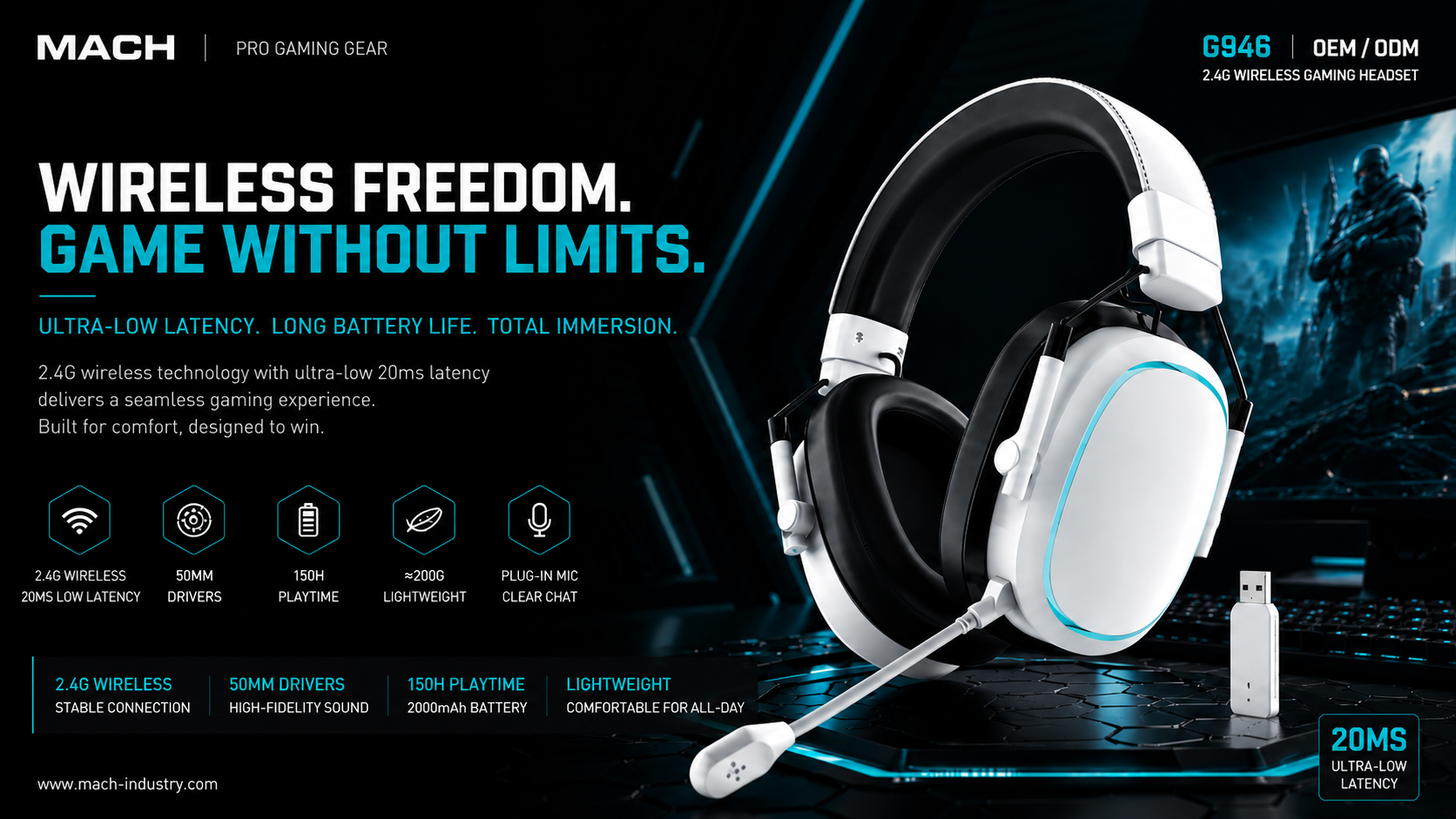
OEM/ODM Customization Opportunities
MACH can evaluate G946 WH logo, private-label branding, white CMF, packaging, manuals, dongle branding, accessories, firmware, device name, voice prompts, microphone, RGB, barcodes, and market documentation.
Logo and CMF requirements should define artwork, placement, method, dimensions, color masters, finish, durability, and cosmetic acceptance. The white housing, aluminum elements, cushions, microphone, cable, dongle, RGB, and packaging should be reviewed as one visual system.
Packaging work should identify the headset, plug-in microphone, dongle, cable, and final accessories; protect white and anodized surfaces; avoid storing the headband under unintended load; and explain all three connection modes, charging, microphone installation, RGB, device naming, prompts, and limitations.
Firmware, Bluetooth device-name, voice-prompt, receiver, microphone, RGB, battery, acoustic, or mechanical changes can alter testing, schedule, compliance, and production risk. MACH can evaluate feasibility after the buyer defines the target behavior and device scope.
The project can proceed through specification review, samples, wireless and latency checks, microphone and audio inspection, battery and charging evaluation, reliability and aging coordination, packaging approval, final inspection, and mass-production planning for the approved configuration.
Conclusion
The best lightweight long-battery gaming headset platform is the one that validates capacity, runtime, charging, mass distribution, structure, comfort, tri-mode functions, customization, and production consistency together.
G946 WH offers a documented reference with approximately 200g weight, a 2000mAh battery, approximately 150 hours playback with lighting off, stainless steel and anodized aluminum structure, a 50mm driver, plug-in microphone, RGB, 2.4GHz, Bluetooth, and 3.5mm audio. Final suitability depends on the buyer's users, hosts, claims, CMF, firmware, accessories, packaging, compliance, and quality plan.
Brands that define the complete system before sampling can make better trade-offs and give engineering, marketing, quality, and customer support one approved product specification.
Discuss your gaming headset project with MACH. Share your target users, runtime and weight goals, devices, connection modes, branding, packaging, quantity, and market.
Contact MACH IndustryFrequently Asked Questions
How can brands balance gaming headset battery capacity and weight?
Define the real runtime target, then evaluate battery capacity and placement with the final frame, drivers, PCBs, microphone, RGB, cushions, controls, and housing. Approve total mass, balance, fit, runtime conditions, charging, and production tolerances together.
Is a larger gaming headset battery always better?
No. More capacity may extend runtime but can affect mass, balance, space, charging time, cost, and structure. The correct capacity depends on the intended mode, session, lighting, microphone, charging opportunity, and product position.
What battery and weight specifications are confirmed for G946 WH?
G946 WH is listed at approximately 200g with a 2000mAh battery, approximately 150 hours playback with lighting off, 1200 hours standby, and approximately three to four hours charging.
What connection modes does G946 WH support?
The confirmed modes are dedicated 2.4GHz wireless through the included dongle, Bluetooth, and 3.5mm wired audio. Exact host compatibility and functions should be validated for each route.
What is the specified 2.4GHz latency of G946 WH?
The product source lists 20ms latency and 10m transmission distance for the dedicated 2.4GHz route. Final claims should follow an agreed host, firmware, test method, RF environment, and production configuration.
Can MACH customize the G946 WH logo and packaging?
MACH can evaluate logo and private-label branding, product color and CMF, packaging, labels, manuals, dongle branding, accessories, barcodes, and market-specific packaging.
Can the Bluetooth device name or voice prompts be customized?
Firmware, Bluetooth device name, and voice prompts can be evaluated after the buyer defines the required behavior, languages, connection states, target devices, and project scope.
How does OEM gaming headset sampling work?
Sampling follows an approved brief covering connections, runtime, weight, structure, acoustics, microphone, RGB, CMF, firmware, accessories, packaging, tests, and compliance. Production-representative samples should be linked to the final BOM and limits.
What MOQ applies to a G946 WH private-label project?
MOQ is project based and depends on configuration, branding, CMF, firmware, accessories, packaging, engineering work, and order planning. Buyers should provide the intended scope for evaluation.
Which certifications are required for a tri-mode wireless gaming headset?
Requirements depend on the target market and final radio, EMC, battery, materials, labels, accessories, and documentation. MACH can coordinate support, but completed G946 WH certifications are not claimed without product-specific documents.
Related Resources
Need OEM/ODM gaming audio solutions?
Contact MACH Industry to discuss your gaming headset, gaming earbuds, or private-label audio project.
Contact MACH Industry