Home > Resources > OEM Knowledge
How Brands Scope Custom Industrial Design for Wireless Gaming Earbuds
A B2B guide to defining, validating and freezing custom gaming earbud industrial design before tooling, packaging and OEM mass production.
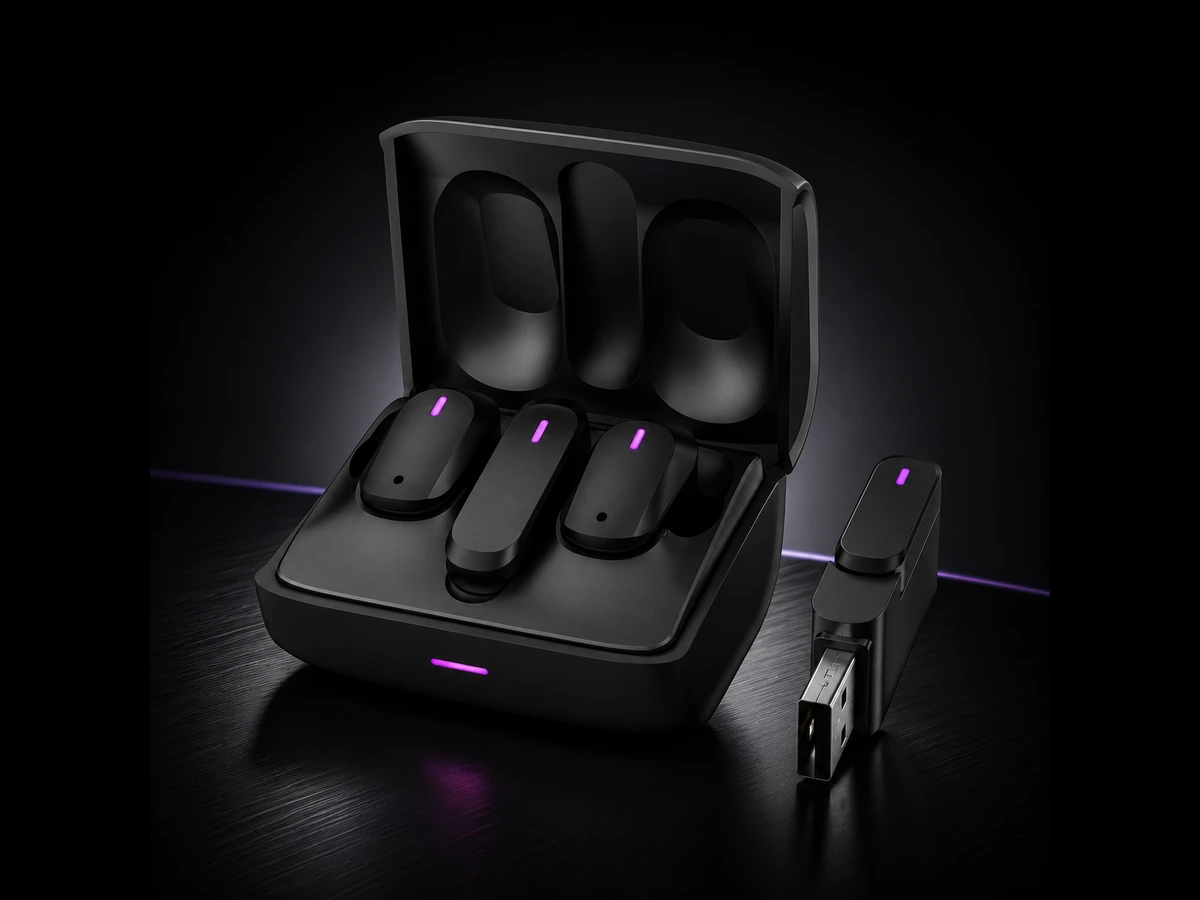
Brands developing custom gaming earbuds should define industrial-design scope before requesting tooling or final quotations. The key decision is whether the project needs branding and color changes, a modified external shell, or a deeper mechanical redesign that can affect antennas, controls, charging, fit and assembly.
A good OEM brief separates visible differentiation from engineering-sensitive changes, then assigns an approval method to each item. This gives designers room to create a recognizable product while helping engineering protect wireless, charging, voice and production requirements.
MACH GE8 provides a relevant development reference. Its published data confirms an ATS3031 wireless platform, 2.4G wireless plus Bluetooth 5.3, ENC voice communication, a 500mAh charging case and project-specific industrial design. Logo, packaging, firmware, color and industrial design are listed customization areas. No latency, driver, runtime, compatibility or certification result is published, so this guide treats them as project decisions rather than product claims.
Understanding Custom Gaming Earbud Industrial Design
Custom gaming earbud industrial design is the controlled development of appearance, ergonomics, controls, charging interfaces and brand details around a verified electronic and mechanical architecture.
For a buyer, custom design is not one level of work. A logo and color program may preserve the existing parts and manufacturing process. A new decorative cover can require additional tooling but leave core interfaces unchanged. A new earbud or charging-case shell can affect antenna clearance, acoustic volume, microphone openings, charging contacts, fit, sealing, assembly and quality control.
The correct scope depends on product positioning. A private-label launch may prioritize fast branding, clear packaging and a controlled color system. A gaming brand seeking stronger differentiation may require a recognizable case silhouette, earbud geometry or control layout. Neither approach is automatically better; the business case must support the engineering and tooling depth.
Procurement teams should translate design language into deliverables. Terms such as premium, futuristic or gaming-inspired are useful creative directions but cannot be inspected. The project also needs surface references, dimensions, texture, gloss, logo process, color standards, fit criteria, button behavior, indicator visibility and acceptable cosmetic limits.
Early scope definition improves quotation accuracy. It allows the supplier to separate existing-platform work, new industrial design, mechanical engineering, prototypes, tooling, firmware changes, packaging and validation. It also reduces the risk of approving attractive renderings that cannot be manufactured around the selected internal architecture.
| Customization level | Typical scope | Engineering impact |
|---|---|---|
| Branding | Logo, artwork and packaging | Low when existing surfaces and processes are retained |
| Cosmetic | Color, texture and decorative treatment | Requires material, color and finish approval |
| Partial industrial design | Selected covers, case details or visible parts | Tooling and interface review may be required |
| Full external redesign | Earbud and/or charging-case shell | Mechanical, radio, charging, fit and production revalidation |
GE8 Product Development Overview
GE8 is a custom gaming earbuds project platform combining ATS3031, dual-mode wireless connectivity, ENC communication and project-specific industrial design.
The platform is positioned for international gaming brand projects, custom gaming earbuds, private-label audio brands and gaming accessory brands. Its published connectivity is 2.4G wireless plus Bluetooth 5.3. The two routes can support different product scenarios, but the public source does not define the receiver, host list, mode behavior or performance figures.
ATS3031 is confirmed as the wireless platform. The chipset identifies an important engineering base, but the finished product still depends on antenna implementation, firmware, receiver configuration, mechanical design and target devices. Custom housing work should therefore be reviewed against the released hardware rather than treated as an isolated styling exercise.
GE8 also confirms ENC voice communication. The public data does not state microphone count, placement, sensitivity or test conditions. If industrial design changes microphone openings or the relationship between the microphone and the user's mouth, the final design needs project-specific voice validation.
The charging case is listed at 500mAh. This does not establish earbud runtime, total playback time or charging time. A custom case design must preserve the required internal space, charging contacts, indicators, hinges and assembly conditions for the selected configuration.
Confirmed customization includes logo, packaging, firmware, color and industrial design. MOQ requires contact and lead time is project dependent. These facts make GE8 suitable for a custom-development discussion without implying that every requested geometry or feature is automatically feasible.
Technical Deep Dive: Separating Cosmetic, Mechanical and Radio-Sensitive Customization
The safest custom earbud brief classifies every design change by engineering impact before visual approval, tooling or market claims are released.
Cosmetic customization changes appearance without intentionally changing geometry. Color, gloss, texture, printing and logo treatments belong in this group when the base parts remain unchanged. Buyers still need physical limit samples because digital color values do not show how a pigment behaves on the selected material, how a logo contrasts with the housing, or how a finish reveals molding marks and scratches.
Mechanical customization changes a part, interface or user interaction. A new decorative panel may alter clips, wall thickness or assembly order. A new case shell can affect the hinge, magnet position, charging contacts, indicator windows and how earbuds are removed. A new earbud shell can affect fit, acoustic volume, controls, microphone openings and charging alignment. These changes require drawings, prototypes and manufacturability review, not only renderings.
Radio-sensitive customization touches areas that can influence 2.4G or Bluetooth behavior. Housing materials, metal decoration, coating, wall thickness, antenna distance and component placement can change the final result. GE8 confirms dual-mode wireless connectivity but does not publish antenna details or performance figures. Engineering should therefore identify keep-out zones and repeat relevant connection tests when the external design changes them.
Acoustic and voice-sensitive customization needs similar control. Earbud geometry and openings can influence the driver enclosure and user fit even though GE8 does not publish a driver specification. Microphone-port geometry can influence ENC voice behavior. Designers should receive controlled zones and interface requirements before styling reaches a late stage.
Charging-sensitive customization covers earbud contacts, case pogo pins, magnets, battery space, lid movement, indicators and cable access. GE8 confirms a 500mAh charging case, but not case dimensions, charging time or internal arrangement. A case redesign should begin with the approved internal stack and safety clearances, then verify charging alignment and repeated insertion with production-representative parts.
Firmware-related customization may coordinate controls, prompts, indicators or mode behavior when technically feasible. Because firmware is a confirmed GE8 customization area, the brief should list each requested behavior, trigger, feedback and exception. A visual design that changes buttons or indicators must remain consistent with the released firmware and instructions.
The project team should build a design-impact matrix. Each row names the proposed change, affected part, expected benefit, engineering owner, required sample and retest scope. Logo color may need a cosmetic sample; a modified lid may need mechanical cycle and charging checks; a metal decoration near the antenna may require wireless revalidation.
Design freeze occurs when industrial-design files, controlled dimensions, materials, color, finish, logo process, firmware behavior and interface requirements have named revisions. Changes after freeze are still possible, but they should trigger cost, schedule and validation review. This is more reliable than treating tooling approval as the only point of no return.
| Change type | Example | Evidence before release |
|---|---|---|
| Cosmetic | Color, texture, logo or print | Physical color and appearance limit samples |
| Mechanical | Shell, lid, hinge, button or charging interface | Drawings, prototypes, fit and assembly verification |
| Radio-sensitive | Material, metal decoration or antenna-zone geometry | Mode-specific wireless validation |
| Acoustic/voice-sensitive | Earbud volume, vents or microphone openings | Audio, fit and voice acceptance tests |
| Firmware-linked | Controls, prompts, indicators or mode selection | Released firmware and regression checklist |
Key Considerations Before Developing Custom Gaming Earbuds
Before development, buyers should align product positioning, wireless scenarios, audio and voice requirements, charging, industrial design, packaging and destination-market needs.
Product positioning determines the right level of customization. Define the target customer, channel, price segment and reason to choose the product. A distinctive case may matter for retail presentation, while ergonomic earbud work may matter more for a performance-focused brand. The design brief should rank priorities rather than asking every element to be unique.
Wireless requirements need a device-and-mode matrix. For 2.4G and Bluetooth 5.3, list target hosts, accessories, pairing, reconnect, controls, voice and any performance target. GE8 does not publish latency or compatibility, so these cannot be assumed from the connection labels.
Audio requirements need a reference and acceptance process. GE8 does not publish driver size, frequency response or tuning. Buyers should provide intended sound direction and listening references, then approve the final mechanical configuration. Industrial-design changes that affect fit or acoustic spaces should return to evaluation.
Microphone requirements should define game-chat or call scenarios, background noise, speaking distance and host devices. ENC is confirmed, but its implementation and results require testing with the final microphone openings and firmware.
Battery and charging planning should distinguish the confirmed 500mAh case from unconfirmed earbud capacity, runtime and charging time. Packaging should contain only verified figures and the final accessories.
Certification planning depends on the customized finished product and destination market. No GE8 certification is published. Buyers should identify markets early and obtain a project-specific plan rather than reusing an unrelated report or assuming the platform name establishes compliance.
- Define target customer, channel and product differentiation.
- Rank cosmetic, mechanical and firmware customization priorities.
- List target devices and required behavior for each wireless mode.
- Provide audio and ENC voice acceptance scenarios.
- Confirm charging-case and accessory requirements.
- Identify destination markets and certification needs.
- Set sample stages, decision owners and launch schedule.
- Define change control after industrial-design freeze.
OEM/ODM Development Process
A custom gaming earbud project moves from a buyer brief and platform fit review through industrial design, engineering, prototypes, validation and controlled mass production.
Concept definition captures the user, channel, target devices, brand direction, customization depth and commercial constraints. The platform review compares those requirements with the confirmed GE8 architecture and separates supported customization from new engineering.
Industrial design develops form, color, finish, logo and user interaction around controlled internal interfaces. Engineering then evaluates mechanics, antennas, charging, microphone paths, assembly and firmware implications. High-risk zones should be resolved before tooling.
Prototype stages should have named purposes. Appearance models can validate form and brand language. Engineering samples can validate fit, interfaces and function. Later samples should represent the final housing, color, logo, firmware, receiver, packaging and accessories.
Testing is based on the released configuration and buyer requirements. It may cover connection behavior, audio, voice, charging, fit, controls, cosmetics, reliability, packaging and destination-market needs. This general workflow does not imply specific GE8 test results.
Mass production begins after drawings, materials, colors, firmware, artwork, bill-of-material revision, test plan and golden sample agree. Production QC should cover both functional behavior and design-critical appearance. Any subsequent change receives an impact review.
| Stage | Buyer approval |
|---|---|
| Concept | Product brief and customization priorities |
| Platform review | GE8 fit-gap and engineering scope |
| Industrial design | Form, controlled zones, color, finish and logo |
| Engineering | Drawings, interfaces and firmware requirements |
| Prototype | Appearance, function and final-sample approvals |
| Validation | Requirement-based evidence and packaging claims |
| Mass production | Golden sample and quality-control release |
Technical Specifications Explained
GE8's confirmed specifications define the starting architecture, while the buyer's project document defines how that architecture becomes a branded, verifiable product.
ATS3031 identifies the wireless platform used by GE8. It should be recorded together with the final earbud, receiver and firmware revisions. A chipset name alone does not define latency, range, audio quality or compatibility.
2.4G wireless and Bluetooth 5.3 provide two connection routes. Buyers should define the purpose, target devices and acceptance tests for each route. One mode's behavior should not be transferred to the other without evidence.
ENC voice communication establishes the product's communication direction, but final performance depends on microphones, openings, firmware, fit and test conditions. Custom industrial design must protect the approved voice path.
The 500mAh figure applies to the charging case. It should not be presented as earbud capacity or converted into runtime without validated system data. Case redesign must preserve charging and assembly requirements.
Industrial design, logo, packaging, firmware and color customization are confirmed. Their exact scope, tooling, MOQ, lead time and validation are project dependent and should be documented before quotation approval.
Buyer Checklist
A complete RFQ lets the supplier evaluate design ambition, platform fit, engineering work, validation and production requirements without guessing.
Include the target user, sales channel, price positioning, destination markets and planned launch. Provide visual references while explaining which attributes matter and which should not be copied.
Mark every requested change on the earbud, charging case, receiver, packaging and firmware. Classify it as required, preferred or optional. State whether the project accepts the existing internal architecture.
Provide logo files, color standards, finish references, packaging languages, accessories and claim requirements. List target devices and define how connection, audio and voice will be approved.
State forecast quantity, sample needs, tooling expectations, schedule and decision owners. Ask the supplier to identify assumptions, exclusions, long-lead items and tests affected by later design changes.
- Product positioning and differentiation statement
- Target devices and 2.4G/Bluetooth role matrix
- Annotated industrial-design customization map
- Logo, color, finish and packaging references
- Audio, voice, charging and control requirements
- Destination-market and certification plan
- Sample, tooling, quantity and schedule expectations
- Golden-sample and change-control requirements
Conclusion
A successful custom gaming earbud project gives design teams a clear creative space and gives engineering measurable boundaries for wireless, voice, charging and production.
GE8 offers a confirmed starting point with ATS3031, 2.4G wireless plus Bluetooth 5.3, ENC communication, a 500mAh charging case and customization for logo, packaging, firmware, color and industrial design. The platform is most useful when those facts match the buyer's product strategy and every new design element has an impact review.
MACH industry can evaluate your industrial-design brief, target devices, customization map, firmware needs, packaging and destination markets. A structured RFQ helps determine which elements can use the GE8 platform and which require additional engineering, tooling or validation.
Frequently Asked Questions
What are custom gaming earbuds?
Custom gaming earbuds are wireless audio products developed with brand-specific elements such as industrial design, color, logo, packaging or firmware around an approved technical platform.
What is confirmed for MACH GE8 custom gaming earbuds?
GE8 confirms an ATS3031 wireless platform, 2.4G wireless plus Bluetooth 5.3, ENC voice communication, a 500mAh charging case and customization for logo, packaging, firmware, color and industrial design.
How much of a gaming earbud can a brand redesign?
The feasible scope depends on internal architecture, antennas, acoustics, charging, controls, tooling and validation. Buyers should separate branding, cosmetic, partial mechanical and full external redesign requests for engineering review.
Can changing an earbud shell affect wireless performance?
Yes. Material, metal decoration, wall thickness, antenna distance and internal geometry can influence 2.4G and Bluetooth behavior, so radio-sensitive changes require evaluation and relevant retesting.
Can brands customize GE8 firmware and packaging?
Firmware and packaging are listed GE8 customization areas. Exact functions, artwork, feasibility, cost, schedule and validation are defined during the project review.
Does the GE8 500mAh charging case confirm playback time?
No. The 500mAh figure applies to the charging case. Public GE8 data does not publish earbud capacity, playback time, charging time or test conditions.
What should an industrial-design freeze include?
It should include revision-controlled 3D data and drawings, controlled dimensions, materials, color, finish, logo process, firmware-linked controls, interfaces, packaging references and approved limit samples.
What should buyers include in a custom gaming earbuds RFQ?
Include target users, channels, devices, wireless modes, design references, customization priorities, logo, color, firmware, packaging, markets, quantity, sample stages and launch schedule.
Does GE8 have published latency, compatibility or certification results?
The public GE8 data does not publish numerical latency, a device compatibility list or certifications. These require project-specific specification, testing and documentation.
How does a custom gaming earbuds project reach mass production?
The project moves through concept definition, platform review, industrial design, engineering, prototypes, validation and release of drawings, firmware, artwork, test plans and a golden sample before production.
Related Resources
Need OEM/ODM gaming audio solutions?
Contact MACH Industry to discuss your gaming headset, gaming earbuds, or private-label audio project.
Contact MACH Industry