Home > Resources > OEM Knowledge
How Brands Evaluate RGB Gaming Earbuds for Private-Label Development
A B2B guide to defining RGB effects, ENC voice requirements, branding and production acceptance criteria for private-label wireless gaming earbuds.
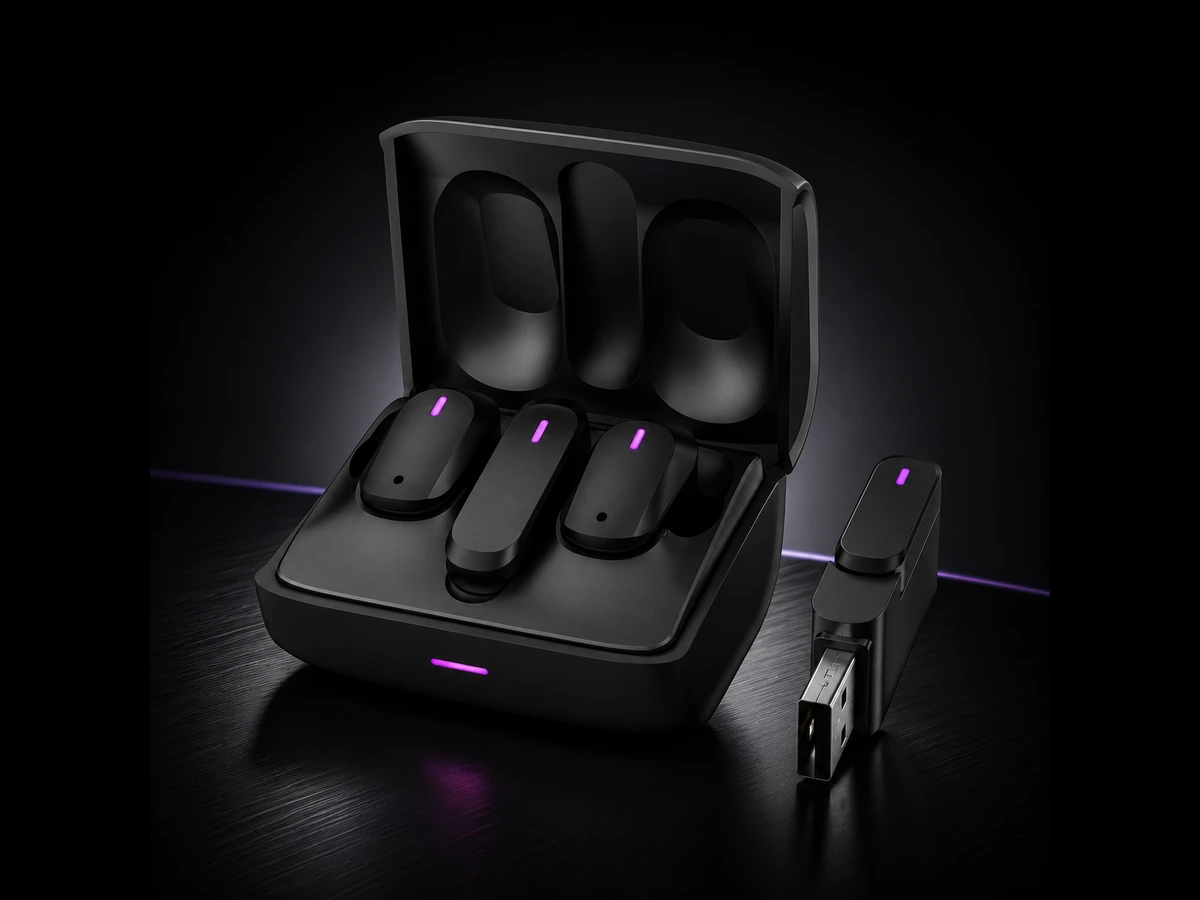
Brands should evaluate RGB gaming earbuds as a complete product system rather than choosing them for lighting alone. The RGB effect, wireless behavior, ENC microphone requirement, physical appearance, controls, packaging and production limits must support the same market position.
For an OEM project, the most important question is not whether the earbuds light up. It is whether the buyer can define the intended effect, approve a production reference, explain the feature accurately and inspect consistency across samples and mass production. That turns RGB from a decorative claim into a controlled product attribute.
MACH G11 is an RGB wireless gaming earbud platform positioned for gaming brands, Amazon audio sellers, mobile gaming users and private-label projects. Its published data confirms wireless connectivity, RGB lighting, an ENC microphone, stable wireless positioning and customization options for logo, packaging, firmware and color. The source does not publish battery, latency, chipset, driver, charging or certification data, so this guide does not invent those specifications.
Understanding the Role of Gaming Earbuds in Modern Gaming Accessories
Gaming earbuds give accessory brands a compact audio format for mobile users, but successful products still need clear technical requirements and credible differentiation.
Gaming accessory portfolios have traditionally emphasized over-ear headsets, keyboards, mice and controllers. Wireless earbuds introduce a portable format that can move between gaming, media and daily use while occupying less package and carrying space. That makes them relevant to mobile-focused brands, marketplace sellers and distributors building broader gaming audio lines.
The smaller form factor does not reduce development complexity. Wireless performance, microphone behavior, fit, controls, battery and charging still affect the user experience, while RGB adds visual, firmware, power and consistency questions. A product can look differentiated in a render yet create returns if controls are unclear, communication quality is not validated or lighting varies noticeably between units.
Private-label buyers should therefore begin with a market role. Decide whether the earbuds are an accessible gaming SKU, a visually distinctive marketplace product, part of a coordinated accessory family or a branded mobile-audio offer. The intended role determines how much emphasis belongs on RGB, voice communication, packaging presentation and customization.
A structured brief also improves supplier comparison. Instead of asking several factories for 'RGB gaming earbuds,' the buyer can provide target users, appearance direction, required behaviors, test conditions and approval standards. Quotations and samples then represent a more comparable scope.
| Commercial role | Primary buyer question | Development focus |
|---|---|---|
| Marketplace gaming SKU | Will the feature set be clear and supportable? | Verified claims, packaging clarity and consistent appearance |
| Accessory family extension | Does the product match the brand's visual language? | Logo, color, RGB direction and packaging system |
| Mobile gaming product | Are wireless and voice requirements defined? | Target devices, connection behavior and microphone tests |
| Private-label program | Which elements can be differentiated? | Confirmed customization scope and approval references |
G11 RGB Gaming Earbuds Overview
G11 is a wireless RGB gaming earbud OEM platform with an ENC microphone and confirmed customization options for logo, packaging, firmware and color.
The G11 product source classifies the model as RGB Gaming Earbuds and lists wireless connectivity, RGB lighting and an ENC microphone. Its application direction includes gaming earbud brands, Amazon audio sellers, mobile gaming users and private-label earbuds.
The platform is positioned around gaming design and clear voice communication. ENC refers to environmental noise cancellation in the microphone path, but the public data does not publish microphone count, algorithm, sensitivity, test result or supported call environment. Buyers should convert 'clear voice' into a project-specific validation plan.
Confirmed OEM/ODM options are logo, packaging, firmware and color. These options can support a branded offer while keeping the product platform recognizable. Any request for different electronics, acoustic parts, battery, charging system or mechanical structure requires separate engineering confirmation because those changes are not promised by the public G11 data.
The product source also does not state the wireless protocol, numerical latency, driver specification, battery capacity, operating time, charging time, materials or completed certifications. Those areas should be resolved in the selected project specification before samples, claims or purchase orders are approved.
From Light Effect to Production Standard: Building an RGB Acceptance Matrix
An RGB acceptance matrix converts a visual idea into approved color, brightness, animation, control, power-state and production-consistency requirements that a factory can reproduce and inspect.
Begin with the product purpose. RGB can signal gaming identity, connect the earbuds to a wider accessory family or create a stronger presentation in listing images and retail displays. The buyer should identify which purpose matters most. A subtle brand accent, an animated gaming effect and a charging-state indicator solve different problems and should not be described as one vague lighting request.
Define the illuminated zones using the actual product structure. Record which earbud or case areas are intended to emit light, which surfaces should remain opaque and how the effect appears from normal viewing angles. Renders can establish direction, but a physical sample is needed because resin color, wall thickness, diffusion and internal reflections influence the result.
Specify color behavior rather than relying on the word RGB. The matrix should list required colors, transition sequence, animation pattern, cycle timing and whether both sides must remain synchronized. It should also define acceptable appearance when the battery state, connection state or charging condition changes. G11 confirms RGB lighting and firmware customization, but the public page does not define individual effects; those details belong in the project review.
Controls and user feedback need equal attention. Buyers should confirm how lighting is turned on or off, whether the setting is remembered, and whether control gestures conflict with audio or call functions. Instructions and package claims should match the released firmware. If the effect cannot be disabled or behaves differently in certain states, that limitation should be explicit.
Power impact must be evaluated without inventing a runtime claim. Lighting consumes energy, but the practical effect depends on LEDs, brightness, animation, wireless behavior, volume and battery configuration. Compare operating time under documented RGB-on and RGB-off conditions using the final hardware and firmware. The public G11 data does not provide battery values, so project results should not be inferred from marketing language.
Create visual limit samples for mass production. An approved sample should represent the target effect, while upper and lower limits can define acceptable brightness, color balance, diffusion and left-right variation. Inspection conditions need consistent ambient light, viewing distance, product state and firmware. A subjective instruction such as 'bright and even' is difficult to audit.
Connect the matrix to brand and package approvals. Logo color, housing color and RGB behavior should work together in listing photos, packaging artwork and the physical product. The package should not show an effect that the released firmware cannot reproduce. Every image and claim should point back to the approved configuration.
Finally, control changes. Firmware updates, resin changes, LED sourcing or mechanical revisions can alter the appearance even when the design file remains the same. Affected matrix rows should return to sample validation. This traceability is what makes RGB a repeatable product feature rather than a one-time prototype effect.
| RGB control area | Buyer definition | Production evidence |
|---|---|---|
| Purpose | Gaming identity, brand family or status communication | Approved product and package brief |
| Appearance | Zones, colors, brightness and diffusion | Target and visual limit samples |
| Animation | Sequence, timing and synchronization | Released firmware and functional test |
| Controls | On/off method, memory and state changes | Control matrix and user instructions |
| Power | RGB-on and RGB-off test conditions | Configuration-specific operating-time record |
| Consistency | Acceptable color and left-right variation | Defined inspection environment and limits |
Technical Overview: Coordinating Wireless Audio, ENC Voice and RGB
A credible RGB gaming earbud project coordinates wireless behavior, ENC microphone requirements, lighting logic, firmware, power and physical design in one approved configuration.
Wireless requirements should identify target devices and intended scenarios. Buyers need to confirm pairing, reconnect, range under defined conditions, controls and any gaming-related mode only when supported by the selected configuration. G11 is confirmed as wireless, but its public data does not identify the protocol or numerical latency.
The ENC microphone requirement should start with the desired environment. Voice pickup for a quiet room, street, shared office or mobile game can produce different acceptance priorities. Define representative devices, call or chat applications, background noise, speaking distance and comparison method. The ENC label does not replace an agreed voice test.
RGB behavior and microphone controls may share the same limited touch interface. The firmware and control map should prevent accidental commands and provide understandable prompts or indicators. Any firmware customization needs a version tied to the approved sample, test record, manual and production order.
Physical design influences more than appearance. Light diffusion, housing color and logo placement can affect visibility, while fit and touch zones affect control access. Buyers should assess the final color and firmware configuration rather than approve lighting and usability on unrelated samples.
Battery and charging expectations should use stated conditions. Compare wireless use, microphone activity and RGB states on the chosen configuration. Since G11 does not publish numerical battery or charging specifications, those figures must be confirmed during development and should not be inserted into SEO or packaging before validation.
- List target devices and wireless behaviors.
- Define ENC voice scenarios and comparison conditions.
- Approve RGB effects in released firmware.
- Check touch controls for lighting, audio and calls.
- Measure operating time under stated RGB conditions.
- Review fit, color and diffusion on final materials.
- Control hardware, firmware and visual sample revisions.
What Gaming Brands Should Consider Before Developing Gaming Earbuds
Before development, brands should define the target user, market position, verified feature hierarchy, customization scope, approval process and supplier evidence required for launch.
Start with the buyer problem. Decide whether G11-type earbuds are intended to lead with RGB differentiation, ENC communication, mobile convenience or a balanced gaming identity. A clear hierarchy prevents every feature from being treated as equally important and helps packaging communicate the product honestly.
Define the target markets and channels early. Marketplace listings, retail packaging and distributor catalogs may require different assets, languages and claim evidence. Certification and labeling needs depend on the final product configuration and market; G11's public data does not claim completed certifications.
Prepare a product requirement document that distinguishes confirmed platform features from project requests. Include target devices, wireless expectations, ENC test scenarios, RGB matrix, controls, color direction, logo files, packaging scope, forecast quantity and schedule.
Evaluate the manufacturing partner through samples and process evidence. Buyers should ask how firmware versions, color references, visual limits, functional tests, package approvals and production changes are controlled. A strong development process reduces ambiguity before mass production.
| Buyer decision | Weak brief | Production-ready brief |
|---|---|---|
| RGB | Colorful gaming light | Defined zones, effects, controls and visual limits |
| ENC | Clear microphone | Target devices, noise scenarios and acceptance method |
| Wireless | Stable connection | Named devices, behaviors and test conditions |
| Branding | Add our logo | Artwork, process, location, color and approved sample |
| Compliance | Global certification | Market-specific plan for the final configuration |
OEM/ODM Customization Opportunities
G11 confirms logo, packaging, firmware and color customization, with final feasibility and production requirements established through project review and sample approval.
Logo customization should define artwork format, position, size, contrast and application process. The logo needs to remain legible alongside RGB effects and the selected housing color. Physical samples provide a more reliable approval reference than screen artwork alone.
Color development should use named references and production-representative materials. Housing color changes can alter perceived light diffusion, so color and RGB approval should happen together. Acceptable variation should be recorded before mass production.
Packaging customization should explain only the functions supported by the released configuration. RGB illustrations, ENC language, included items, controls and market labels need to match the product and firmware. Package construction also requires review for presentation and protection.
Firmware customization can support approved lighting or interaction behavior when feasible. It also requires revision control, regression testing and matching instructions. Hardware requests beyond the confirmed logo, packaging, firmware and color scope need separate engineering evaluation.
MACH can review the brand brief, customization requirements, samples and production scope for G11-based projects. MOQ and lead time remain project dependent.
Conclusion
RGB gaming earbuds create meaningful private-label differentiation when lighting, wireless use, ENC communication, branding and production acceptance criteria are developed together.
G11 provides a confirmed starting point with wireless connectivity, RGB lighting, an ENC microphone and logo, packaging, firmware and color customization. Buyers should treat any unpublished performance or compliance detail as a requirement to verify, not an assumed feature.
MACH industry can evaluate your target market, RGB direction, ENC scenarios, branding and packaging plan. A clear acceptance matrix helps move the project from a visual concept to a controlled OEM production specification.
Frequently Asked Questions
What are G11 RGB gaming earbuds?
G11 is a wireless RGB gaming earbud OEM platform with an ENC microphone and confirmed customization options for logo, packaging, firmware and color.
Why would a gaming brand choose RGB earbuds?
RGB can create a recognizable gaming identity and coordinate the earbuds with a broader accessory family, provided the effect, controls, power conditions and production limits are clearly defined.
What should buyers specify for RGB gaming earbud lighting?
Specify illuminated zones, colors, brightness, diffusion, animation, timing, synchronization, controls, state changes, power test conditions and acceptable production variation.
Does G11 use an ENC microphone?
Yes. The published G11 data confirms an ENC microphone, but it does not publish microphone count, sensitivity, algorithm or test results. Project-specific voice requirements should be validated.
What wireless technology and latency does G11 use?
The public product data confirms wireless connectivity but does not identify the protocol or a numerical latency result. Buyers should confirm the selected configuration and test conditions during project review.
Can G11 RGB gaming earbuds be private labeled?
Yes. The confirmed customization scope includes logo, packaging, firmware and color, subject to project evaluation and sample approval.
How should RGB consistency be checked during production?
Use approved target and limit samples with a defined product state, firmware, ambient light, viewing distance and acceptance limits for brightness, color balance, diffusion and left-right variation.
What battery life does G11 provide with RGB on?
The public G11 data does not publish battery capacity or numerical operating time. RGB-on and RGB-off results should be measured on the final configuration under stated test conditions.
What should brands prepare for an RGB gaming earbud OEM project?
Prepare target users, devices, RGB behavior, ENC voice scenarios, logo and color files, packaging scope, target markets, expected quantity, schedule and sample approval requirements.
Can MACH support certification for G11 projects?
Certification requirements should be evaluated for the target market and final configuration. The public G11 page does not claim completed product-specific certifications.
Related Resources
Need OEM/ODM gaming audio solutions?
Contact MACH Industry to discuss your gaming headset, gaming earbuds, or private-label audio project.
Contact MACH Industry