Home > Resources > OEM Knowledge
How Brands Evaluate Low-Latency Bluetooth Gaming Earbuds for OEM Development
A B2B buyer guide to defining gaming-mode and daily-use requirements before developing private-label Bluetooth gaming earbuds.
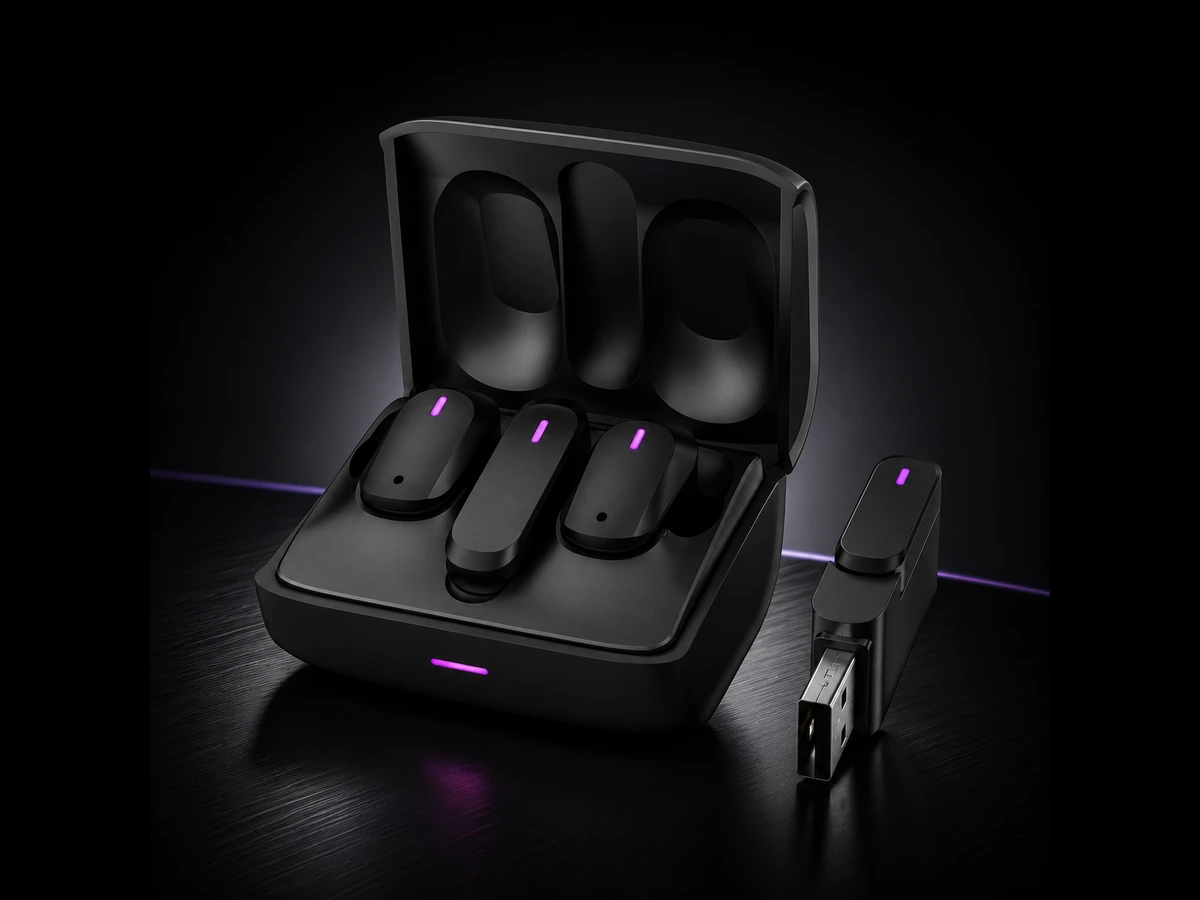
Brands selecting gaming earbuds need to evaluate more than audio output. Wireless architecture, gaming-mode behavior, microphone requirements, battery expectations, charging, comfort, compatibility and customization all influence whether an earbud platform is suitable for OEM development.
The most useful sourcing method is to separate competitive gaming needs from music and daily-use needs, then create measurable acceptance criteria for both. A low-latency label alone does not explain the target device, test method, operating mode or trade-offs. Buyers should define those conditions before comparing samples.
MACH G10 is a wireless gaming earbud platform positioned for mobile gaming, music and daily use. Its published data confirms Bluetooth connectivity, a low-latency gaming mode and OEM/ODM options for logo, packaging, color and firmware. Because the product page does not publish a latency number, battery capacity, microphone specification or completed certification, this guide treats those items as buyer requirements to verify rather than invented product claims.
Understanding the Market Need
Gaming brands need earbud platforms that can serve mobile play and everyday listening without presenting unverified performance claims or sacrificing the requirements of one scenario for the other.
Earbuds address a different product brief from over-ear gaming headsets. They are compact, portable and suitable for users who move between games, music, calls and daily travel. That flexibility can help a gaming accessory brand extend beyond a desk-based product line, but it also concentrates acoustic, wireless, microphone, battery and charging decisions into a much smaller form factor.
The buyer problem is not simply finding Bluetooth earbuds with a gaming label. The real task is defining what gaming mode must accomplish on the target phone, tablet or computer, then deciding how the product should behave when the user returns to music or daily communication. Latency, connection stability, sound tuning, voice pickup, operating time and controls need scenario-specific priorities.
Channel requirements also matter. An Amazon seller may need clear, supportable feature language and compact package content. A distributor may need a platform that can be positioned across several markets. A private-label brand may value color, logo, firmware and package differentiation. Each buyer should convert the commercial plan into a product requirement document before requesting samples.
This makes a structured OEM process valuable. Instead of comparing only a supplier's feature list, buyers can compare platform behavior against an agreed test matrix. The result is a product decision based on evidence, target users and launch conditions.
| Buyer objective | Question to answer | Required evidence |
|---|---|---|
| Mobile gaming | Does gaming mode meet the target use case? | Defined devices, mode, test method and sample results |
| Music and daily use | Is the normal listening experience acceptable? | Tuning review, connection behavior and control checks |
| Private label launch | Can the platform carry the brand clearly? | Approved logo, color, firmware and packaging samples |
| Market entry | Are claims and compliance plans appropriate? | Final specification, target-market plan and matching documents |
G10 Wireless Gaming Earbuds Overview
G10 is a Bluetooth wireless gaming earbud OEM platform for mobile gaming, music and daily use, with a low-latency gaming mode and private-label customization support.
The published product data identifies G10 as Wireless Gaming Earbuds with Bluetooth connectivity. Its application direction covers mobile gaming, music and daily use. It is intended for gaming earbud brands, private-label programs, Amazon sellers and mobile gaming audio projects.
G10 supports logo, packaging, color and firmware customization. Those confirmed options allow a buyer to develop a branded market offer without implying that every electronic or mechanical element can be changed. Any deeper hardware request should be evaluated separately for feasibility, cost, tooling and validation impact.
The product source describes a low-latency gaming mode but does not publish a numerical latency result or measurement condition. It also does not publish battery capacity, charging time, microphone parameters, dimensions, materials or a platform compatibility table. Responsible OEM sourcing therefore requires those items to be confirmed in the project specification and approved sample.
G10 is best used as a platform reference rather than as a substitute for an RFQ brief. Buyers should share target devices, game types, user scenarios, audio direction, microphone expectations, operating-time goals, charging concept, customization scope and target markets before configuration review.
Gaming Mode vs Daily Mode: Building a Dual-Scenario Earbud Requirement Matrix
A dual-scenario requirement matrix defines how gaming mode and daily mode should behave, how each behavior will be tested, and which trade-offs the brand accepts before OEM samples are approved.
Start by defining the gaming scenario precisely. Name the target phones, tablets or computers, operating-system versions and representative games. State whether the priority is reaction timing, stable connection, voice chat, positional cues, casual play or a balance of these factors. A supplier cannot validate a meaningful low-latency requirement when the target device and test condition are undefined.
Next, define how gaming mode is entered and communicated. Buyers should decide whether mode switching uses a touch sequence, app control or another confirmed interaction, then verify prompts, indicators and persistence after reconnection. The user should know which mode is active without relying on ambiguous behavior. Firmware customization can support project-specific behavior when evaluated and approved, but every customized state needs a controlled revision.
Create an acceptance method for latency rather than relying on a label. The method should identify the audio source, target device, codec or connection condition when available, game or test signal, measurement equipment, sample count and pass range. G10 is described as having a low-latency gaming mode, but its public page does not provide a number. The numerical requirement must therefore be agreed during the project instead of inferred.
Daily mode needs its own priorities. Music listening may favor tuning, connection efficiency and natural controls, while calls may require stable microphone behavior. A mode optimized for gaming response may use different processing or power behavior from the everyday mode. Buyers should compare both modes on the same approved devices and decide whether switching creates audible, control or operating-time changes.
Battery and charging expectations belong in both columns of the matrix. Define playback conditions, volume, mode, microphone use and any lighting or case assumptions before comparing operating-time claims. The public G10 data does not confirm capacity or runtime, so those values should be taken from the selected project configuration and verified on production-representative samples.
Comfort must also be tested as a usage condition rather than a generic adjective. Earbud fit varies by ear geometry, tip selection, weight distribution and session length. A gaming session may expose pressure or retention issues that a short music check misses. The buyer should define test duration, user group and acceptable fit feedback while avoiding universal comfort claims.
Finish the matrix with release evidence. Each requirement should point to a product specification, firmware version, approved sample, test record, package claim or user instruction. When color, firmware, acoustic parts or charging configuration changes, affected rows return to validation. This creates a traceable bridge between the brand promise and mass production.
The matrix prevents one scenario from hiding weaknesses in the other. A gaming earbud platform is ready for OEM launch when the brand can explain what gaming mode changes, what daily mode preserves, how both were tested and which configuration the factory will reproduce.
| Decision area | Gaming mode requirement | Daily mode requirement |
|---|---|---|
| Wireless behavior | Defined latency and stability target | Reliable reconnect and efficient everyday use |
| Audio | Game-relevant clarity and timing | Approved music and media tuning |
| Microphone | Voice chat on target devices | Call behavior in representative environments |
| Controls | Clear mode entry and feedback | Predictable media and call operation |
| Power | Runtime under gaming test conditions | Runtime under normal listening conditions |
| Release evidence | Latency, device and firmware test record | Tuning, controls, charging and user test record |
Technical Considerations for Gaming Earbud Development
Gaming earbud development should coordinate acoustics, Bluetooth behavior, microphone requirements, battery and charging, fit, controls and target-device compatibility in one validated configuration.
Acoustic requirements should describe the intended experience rather than demand a single impressive component. Buyers can provide reference products, preferred tonal balance, game genres and music use cases. Tuning should be reviewed with the final ear tips, housing and firmware because physical fit and processing affect the result.
Bluetooth validation should cover pairing, reconnect, range under defined conditions, mode switching and coexistence in representative environments. Low-latency behavior must be tied to the selected device and mode. A result on one phone or operating system should not automatically become a universal compatibility claim.
Microphone requirements need realistic scenarios. Define whether the product must support in-game chat, calls or both, then identify target devices and background conditions. Because the G10 public source does not publish microphone data, sensitivity, processing and performance should be confirmed in the final project specification.
Battery and charging cannot be judged from capacity alone. Earbud consumption, gaming mode, volume, microphone use, standby logic and charging-case behavior all affect the user experience. Buyers should request a consistent test condition and verify the final configuration rather than reuse a generic platform result.
Fit and comfort require representative users and session lengths. Tip options, retention, touch-control placement and left-right identification can affect returns and reviews. Compatibility testing should also verify the intended functions on each target platform, including audio, microphone, controls and mode access.
- Define acoustic references and listening scenarios.
- Specify gaming-mode latency test conditions.
- Validate pairing, reconnect and mode feedback.
- Confirm microphone scenarios and target devices.
- Record battery and charging test conditions.
- Run fit checks with representative users.
- Control firmware and sample revisions.
OEM/ODM Opportunities for Gaming Earbud Brands
G10 supports private-label development through confirmed logo, packaging, color and firmware options, with the final scope defined through project review and sample approval.
Logo and color development should begin with production methods and physical references. Artwork size, location, contrast and surface process influence readability and consistency. A screen rendering is useful for direction, while a physical approved sample provides the production reference.
Packaging should translate the verified product into clear buyer information. It can explain gaming mode, Bluetooth use, included items, charging, controls and support boundaries, but claims should match the approved configuration and test evidence. Package structure and artwork also need review for protection, labeling and target-market requirements.
Firmware customization can help define mode prompts, interaction or other supported behavior. It also adds change-control responsibility. The approved firmware version should be tied to samples, instructions, test records and production release so a late update does not create mismatched claims.
MACH can review the product brief, customization scope, sample plan and manufacturing requirements for G10-based projects. Hardware changes beyond the published options require engineering evaluation. MOQ and lead time remain project dependent.
Buyer Checklist Before Developing Gaming Earbuds
A useful gaming earbud RFQ defines the target user, devices, gaming and daily modes, technical acceptance criteria, customization, compliance scope, quantities and launch schedule.
Start with the commercial decision: target market, channel, user profile, price position and expected quantity. Then define the core scenario and the secondary scenario. If mobile gaming is primary, name representative devices and games. If everyday music and calls are equally important, include those in sample approval.
Convert each expectation into a testable statement. Replace 'low latency' with a mode, device, method and target to be agreed. Replace 'long battery life' with defined playback and charging conditions. Replace 'comfortable' with user group, tip options and session duration.
Finally, identify customization owners and approval timing. Logo, color, packaging and firmware decisions should be locked before the golden sample and mass-production release. Target-market certification needs should be reviewed against the final configuration without claiming documents that have not been completed.
- Target users, channels and launch markets
- Representative phones, tablets and computers
- Gaming-mode and daily-mode priorities
- Latency definition and test method
- Audio and microphone acceptance references
- Battery, charging and standby expectations
- Fit, controls and user-interface requirements
- Logo, color, packaging and firmware scope
- Certification and labeling requirements
- Forecast quantity, schedule and approval owners
Conclusion
Brands should select gaming earbuds by validating a defined gaming mode and an equally clear daily-use mode, not by comparing unqualified feature labels.
G10 provides a Bluetooth wireless gaming earbud starting point with low-latency gaming-mode positioning and confirmed logo, packaging, color and firmware options. The final OEM decision should still be based on target-device tests, approved specifications and production-representative samples.
MACH industry can review your gaming scenario, daily-use requirements, customization brief and launch plan. A structured dual-scenario matrix gives both buyer and manufacturer a clearer path from platform evaluation to controlled production.
Frequently Asked Questions
What are G10 wireless gaming earbuds?
G10 is a Bluetooth wireless gaming earbud OEM platform positioned for mobile gaming, music and daily use, with a low-latency gaming mode and logo, packaging, color and firmware customization.
What should brands evaluate before sourcing gaming earbuds?
Brands should define target devices, gaming and daily-use scenarios, latency test conditions, audio and microphone expectations, battery and charging requirements, fit, controls, customization and target-market compliance.
Does the G10 product page publish a latency number?
No. It confirms a low-latency gaming mode but does not publish a numerical result or measurement condition. A project-specific target and test method should be agreed during OEM evaluation.
How should low latency be tested in Bluetooth gaming earbuds?
Define the target device, operating system, active mode, audio source or game, measurement method, sample count and pass range, then test the approved hardware and firmware configuration.
Why should gaming mode and daily mode be evaluated separately?
The modes may prioritize timing, processing, power or controls differently. Separate evaluation confirms that gaming performance does not hide weaknesses in music, calls, reconnect behavior or everyday operation.
Can the G10 gaming earbuds be private labeled?
Yes. The published G10 data confirms OEM/ODM options for logo, packaging, color and firmware. Final details depend on project review and sample approval.
What battery capacity and operating time does G10 provide?
The public G10 data does not specify battery capacity or numerical operating time. Buyers should confirm the selected configuration and test conditions in the project specification.
What microphone specification does G10 use?
The public G10 product data does not publish microphone parameters. Voice-chat and call requirements should be defined and verified during sample evaluation.
What customization information should a gaming earbud buyer prepare?
Prepare logo artwork, color direction, packaging scope, firmware requirements, target devices, user scenarios, target markets, expected quantity and launch schedule.
How does an OEM gaming earbud development project begin?
It begins with requirement review, platform and configuration evaluation, customization confirmation, sample development, testing and approval before the production release.
Related Resources
Need OEM/ODM gaming audio solutions?
Contact MACH Industry to discuss your gaming headset, gaming earbuds, or private-label audio project.
Contact MACH Industry