Home > Resources > Gaming Headset Guide
How Should Brands Validate Wireless Gaming Headset Claims Before Launch?
A buyer guide to converting wireless headset specifications, operating modes, accessories, compatibility and test conditions into accurate private-label product claims.
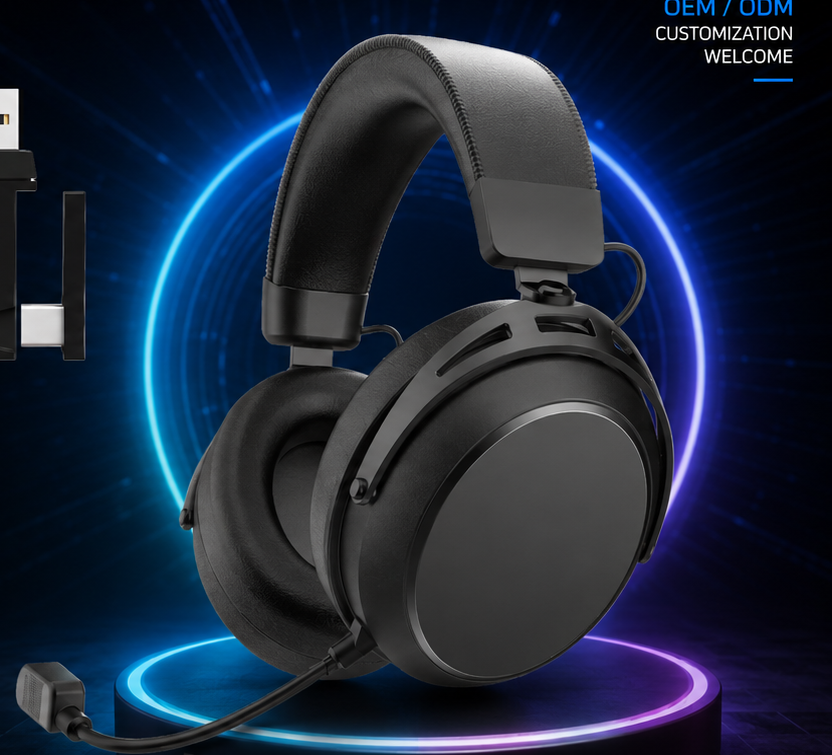
Gaming brands should validate wireless headset claims by linking every published statement to a specific product revision, operating mode, test condition and supporting record. A value such as 20ms latency or 150 hours of playback is not a universal description of every use case; it belongs to a defined connection route and measurement condition. The same discipline applies to compatibility, microphone features, virtual surround, RGB, battery, accessories and certification language.
This is especially important for private-label brands, Amazon sellers, importers and distributors. Product listings are often prepared while samples, packaging and manuals are still changing. If marketing combines the best value from one mode, an unverified device icon and a feature selected for another configuration, the listing can describe a product that the approved production unit does not consistently deliver.
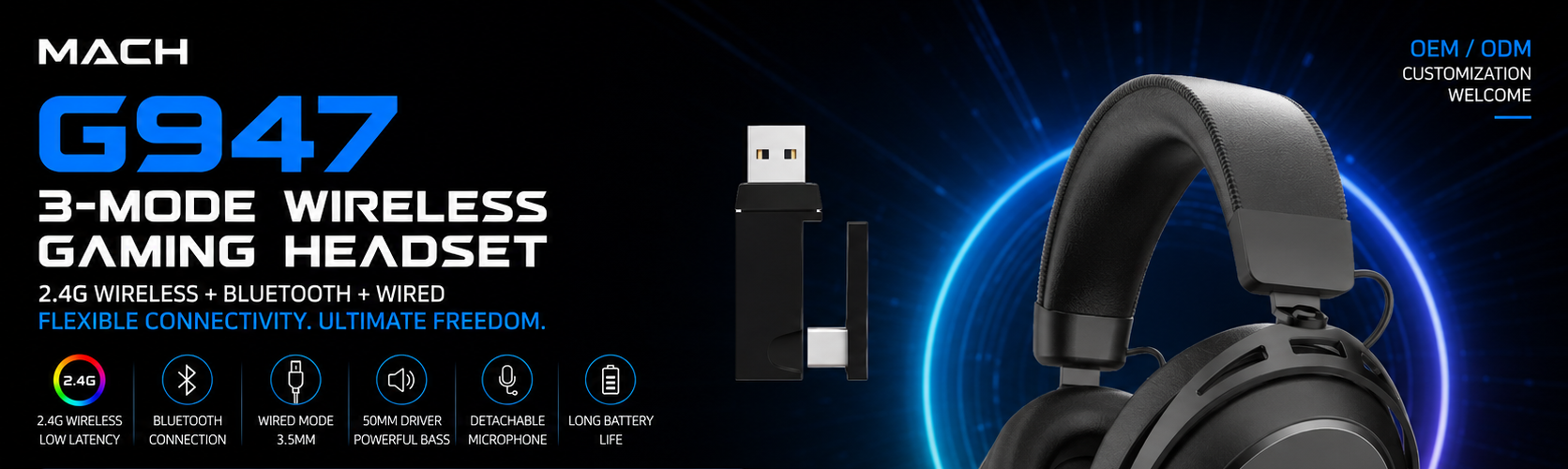
The MACH G947 offers a useful reference for building a claim-evidence process. Its confirmed platform includes 2.4GHz wireless, Bluetooth and 3.5mm wired operation, a 50mm driver, detachable microphone, RGB and virtual 7.1 feature directions, a 2000mAh battery and an included 2.4GHz dongle. This article does not duplicate the product page. It uses the documented G947 configuration to show how buyers can create accurate, traceable launch content.
Understanding the Buyer Challenge
The buyer's challenge is to keep product listings, packaging, manuals and distributor sheets aligned with the exact hardware, firmware, accessories and test evidence released for production.
Gaming headsets combine several claim types. Some are physical facts, such as driver diameter, battery capacity or approximate weight. Others describe measured performance, such as latency, playback time, transmission distance or microphone sensitivity. A third group describes system behavior, including connection modes, virtual surround, RGB, ENC, controls and device compatibility. Each group needs a different form of evidence.
The risk increases with tri-mode products. Dedicated 2.4GHz, Bluetooth and analog wired operation do not necessarily share the same latency, signal path, microphone routing, controls or power behavior. A claim verified through the included dongle should not automatically be assigned to Bluetooth. A wired plug diagram does not prove identical behavior on every PC, console or mobile device.
Channel requirements add another layer. An Amazon product page may need concise feature bullets and comparison fields, while an importer may need a specification sheet, package list and compliance documents. Retail packaging has limited space but remains visible after the buyer changes a listing online. All versions should draw from one approved source rather than separate drafts maintained by sales, engineering and design teams.
A claim-evidence matrix solves this coordination problem. It records the exact claim, qualifying condition, evidence owner, sample revision, source document, market channel and approval status. When a product changes, teams can identify which statements, images, manuals and labels require review.
| Claim type | Example | Minimum buyer evidence |
|---|---|---|
| Physical specification | 50mm driver or 2000mAh battery | Released BOM, component specification and approved product record |
| Measured performance | 20ms latency or approximately 150 hours playback without lights | Defined mode, conditions, method, sample revision and result |
| System feature | Tri-mode, ENC, RGB or virtual 7.1 direction | Approved configuration plus functional verification and user instructions |
| Compatibility | Use with a named device family | Exact connection, required accessory, tested device and known limitations |
| Compliance | Certification or regulatory support | Product-specific document matching the final configuration and target market |
G947 Product Platform Overview
G947 is a tri-mode private-label gaming headset platform with confirmed 2.4GHz wireless, Bluetooth and 3.5mm wired routes and a documented acoustic, microphone, battery and mechanical specification.
The dedicated 2.4GHz route uses an included dongle and a published JL chipset platform. The specification lists 20ms latency and a 10-meter transmission distance. Bluetooth provides a second wireless route, while the wired specification identifies 3.5mm x2 plus USB. The source does not publish a Bluetooth version or codec, so neither should be inferred in article or listing copy.
The headset uses a 50mm driver specified at 32 ohms, 110dB sensitivity and a 20Hz–20kHz frequency response. Its plug-in detachable microphone is listed at 50–16000Hz, -42dB plus or minus 3dB sensitivity and no more than 2.3 kilohms impedance. RGB, ENC microphone and virtual 7.1 surround are selected feature directions in the product card.
The confirmed 2000mAh battery is listed with approximately 150 hours of playback without lights, 1200 hours of standby and 3–4 hours of charging. These figures require their qualifiers. Playback without lights is not the same claim as runtime with RGB active, and standby time is not continuous playback.
The structure uses a built-in stainless-steel bar, anodized aluminum frame and extendable arm, with an approximate headset weight of 201g. Published material shows PC or notebook, Nintendo Switch, mobile devices, Xbox One with an adapter where applicable, and PS4. Final behavior should still be confirmed for the intended connection and representative device.
For an OEM program, MACH can evaluate logo, color, packaging, manuals, labels, detachable microphone, dongle package and accessory configuration. Firmware and feature requirements are discussed against the selected project scope.
From Product Card to Marketplace Listing: Building a Claim-Evidence Matrix
A claim-evidence matrix turns engineering records into controlled marketing statements by defining what can be said, where it applies and which approved record supports it.
Begin with product identity. Record the commercial model, hardware revision, firmware revision, color, microphone, dongle, cable set, packaging and effective date. A claim approved for one variant cannot be assumed for another that shares the same housing. The listing title, SKU, manual and carton label should point to the same released configuration.
Next, write claims in their complete form. Instead of entering only '20ms low latency,' record '20ms specified latency in the approved 2.4GHz mode using the included dongle.' Instead of '150-hour battery life,' use 'approximately 150 hours of playback with lighting off' until another condition has supporting evidence. The qualifier should stay close enough to the claim that a buyer cannot reasonably miss it.
Assign an evidence class. Physical specifications can be supported by approved component and BOM records. Measured performance needs a test method, environment, device, operating mode, volume or lighting state where relevant, sample quantity and revision. Functional features need a verified configuration and user workflow. Compatibility requires the exact host, connection, accessory, audio and microphone result. Compliance claims require product-specific documents rather than a general statement that support is available.
Separate internal evidence from public content. A full engineering report may contain details unsuitable for a marketplace listing, but the approved public claim must remain traceable to it. The matrix can store the source filename, owner and approval date while exporting only the concise title, bullet, table value or manual sentence required by the channel.
Map the claim across assets. A latency value may appear in the title, hero graphic, feature bullet, comparison table, carton and manual. If engineering changes the receiver or firmware, every occurrence needs revalidation. The matrix should therefore list affected assets, not just the wording. This prevents an old infographic from surviving after text has been corrected.
Add an exception column for accessories and platform limits. The G947 material indicates Xbox One with an adapter where applicable. That condition should not disappear when the platform name is shortened for an icon row. Likewise, dual 3.5mm plugs may need a different connection approach from a combined headset jack. Accurate accessory language reduces returns caused by an otherwise functional product being used with the wrong interface.
Finish with a release gate. Engineering confirms the evidence, product management approves commercial relevance, compliance reviews regulated statements, and the brand owner approves final wording. Artwork and listing files receive a version. Any later BOM, firmware, package or feature change returns affected claims to review.
This process is valuable beyond risk control. Structured claims are easier for search engines and AI systems to interpret because the product, mode, number and condition are explicit. Procurement teams also receive clearer quotations because feature assumptions become visible before sampling.
| Matrix field | Buyer question | G947 example |
|---|---|---|
| Exact claim | What will the customer read? | Approximately 150 hours playback with lighting off |
| Scope | Which mode or configuration does it cover? | 20ms is assigned to the approved 2.4GHz route |
| Evidence | Which record supports it? | Released specification, approved sample and defined test result |
| Asset map | Where does the claim appear? | Listing, image, package, manual and distributor sheet |
| Change trigger | What requires reapproval? | Receiver, firmware, battery, RGB behavior, accessory or package change |
Technical Deep Dive: Separate Mode-Specific Claims From Product-Wide Claims
A tri-mode headset needs separate claim sets for 2.4GHz, Bluetooth and wired operation because each route uses different signal paths, accessories and operating conditions.
The G947 2.4GHz path is a headset-and-dongle system. Published 20ms latency and 10-meter transmission values belong to that route. A buyer brief should identify the host interface, test method, interference environment and whether microphone traffic is active. Range is especially sensitive to obstacles, radio conditions and host placement, so a specification value should not become a promise of identical performance in every room.
Bluetooth is confirmed as a connection mode, but the source does not identify its version, codec or a latency result. Accurate launch content can state Bluetooth connectivity while leaving unsupported technical labels out. During development, the buyer can define target pairing, reconnect, media control and microphone behavior for representative devices.
The wired configuration is published as 3.5mm x2 plus USB. Buyers should distinguish analog audio and microphone plugs from USB-related power or lighting functions. USB audio is not confirmed by the G947 data. Compatibility copy should specify the required connection or adapter rather than suggesting that every visible plug provides every function.
Battery claims also change by state. The 2000mAh capacity is product-wide hardware data, but approximately 150 hours is qualified as playback without lights. RGB, volume, mode, microphone use, distance and battery condition can affect actual runtime. Standby and charging time need separate labels rather than being grouped into one battery-life number.
Audio and microphone specifications require similar care. A 50mm driver, impedance, sensitivity and frequency response are component or system values; they do not by themselves prove a preferred tonal balance. Detachable microphone specifications do not establish identical voice performance across all connection modes. ENC and virtual 7.1 should be linked to the selected configuration and confirmed user route.
The practical deliverable is a mode-responsibility table. For every connection, list receiver or cable, supported host set, audio, microphone, controls, RGB, surround, battery state, latency evidence, accessories and limitations. The final product page, package and manual should use this same source.
| Claim area | Product-wide fact | Mode-specific statement |
|---|---|---|
| Battery | 2000mAh capacity | Approximately 150 hours playback with lights off |
| Wireless | Tri-mode product identity | 20ms and 10 meters for the documented 2.4GHz route |
| Bluetooth | Bluetooth is available | Version, codec and latency are not published |
| Wired | A wired route is included | 3.5mm x2 plus USB; exact host and function require confirmation |
| Features | RGB, ENC and virtual 7.1 are selected directions | Availability and behavior must match the final mode and firmware |
OEM/ODM Considerations for Claim-Ready Product Development
Claim preparation should be part of OEM development from requirement review through sample approval, packaging release and mass-production change control.
The buyer should supply target channels and claims with the RFQ. This allows MACH to compare requested wording with the G947 base configuration and identify items requiring engineering confirmation, a specific accessory, firmware discussion or additional validation.
Customization affects evidence. A new color can change images and labels; a different microphone or dongle can affect feature and compatibility statements; packaging changes can alter included accessories. Logo, manual, label and retail package artwork should use the approved model and revision.
Certification language needs particular care. The G947 product information describes support planning for market requirements, but it does not establish that every certificate has been issued for every final configuration. Buyers should define destination markets and obtain matching documents before publishing certification logos or claims.
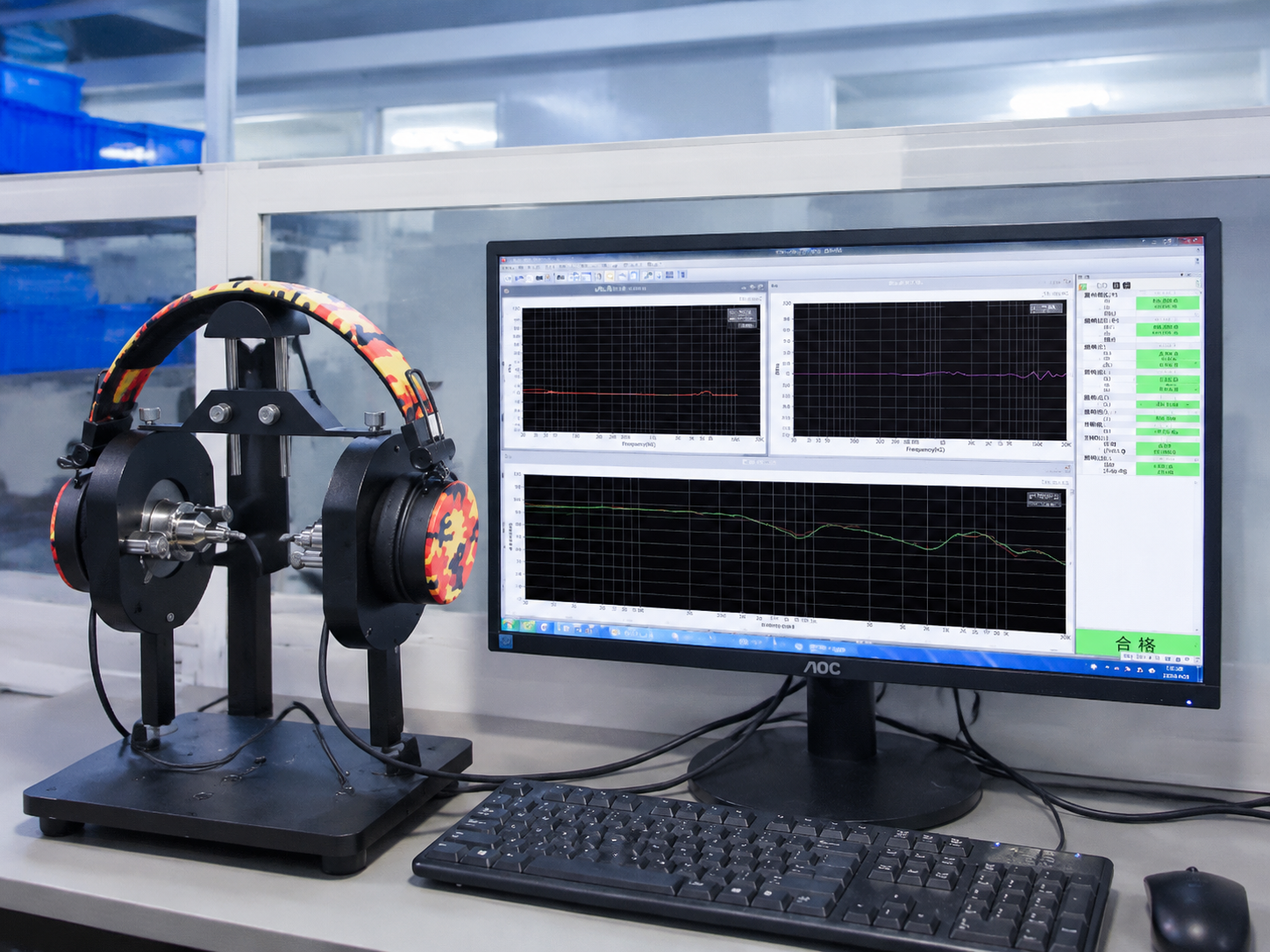
Sample approval should cover the product and its public information together. The golden sample, specification, firmware, package list, manual, listing data and images should describe one configuration. Production inspection then checks the released physical and functional requirements, while change control identifies any claim that must be reviewed again.

Buyer Checklist
Before launching a private-label wireless gaming headset, buyers should complete a product, mode, evidence, asset and change-control review.
- Identify the exact G947 model, hardware, firmware, color and accessory configuration.
- List every proposed title, bullet, specification, compatibility icon and package claim.
- Classify each statement as physical, measured, functional, compatibility or compliance.
- Tie 20ms latency and 10-meter range specifically to the approved 2.4GHz route.
- Keep the 'approximately 150 hours without lights' condition next to the playback claim.
- Do not infer a Bluetooth version, codec or latency that the source does not publish.
- Clarify 3.5mm x2, USB function and any adapter required for target devices.
- Verify microphone, ENC, RGB and virtual 7.1 behavior in the final configuration.
- Map each approved claim across listing text, images, packaging, manuals and distributor files.
- Confirm target-market compliance documents before using certificate names or logos.
- Approve a traceable golden sample, specification and claim matrix before production.
- Revalidate affected content after firmware, component, accessory or package changes.
Conclusion
Accurate gaming headset content begins with a controlled relationship between the final product, each operating mode and the evidence behind every public statement.
G947 provides substantial verified material for a private-label launch: tri-mode connectivity, an included 2.4GHz dongle, published latency and range, a 50mm driver, detachable microphone, 2000mAh battery, qualified runtime, RGB, virtual 7.1 direction and a lightweight metal-supported structure. The commercial value of those features is stronger when each one is described with the correct scope.
A claim-evidence matrix helps engineering, procurement, marketing and compliance work from one source. It improves listing accuracy, supports clearer AI-readable answers and gives buyers a practical way to manage updates from sample approval through mass production.
To evaluate a G947 OEM project, share your target market, sales channel, intended claims, connection requirements, branding, package and accessory plan with MACH industry.
Frequently Asked Questions
What product claims should a wireless gaming headset brand verify before launch?
Verify physical specifications, measured performance, connection modes, microphone and audio features, compatibility, accessories and compliance language against the final product revision and supporting records.
What is a product claim-evidence matrix?
It is a controlled record linking each public claim to its scope, test condition, source evidence, approved sample, owner, channel asset and change status.
Can G947 be described as a tri-mode gaming headset?
Yes. The confirmed G947 connection modes are dedicated 2.4GHz wireless with an included dongle, Bluetooth and 3.5mm wired operation.
Does the G947 have 20ms latency in every connection mode?
No. The published 20ms value belongs to the documented 2.4GHz wireless route and should not be applied to Bluetooth or 3.5mm wired operation.
How should brands publish the G947 battery-life claim?
The source lists a 2000mAh battery and approximately 150 hours of playback without lights. The lighting-off condition should remain visible, while standby and charging time should be listed separately.
Can a listing claim a specific Bluetooth version or codec for G947?
Not from the published G947 source. Bluetooth is confirmed, but no Bluetooth version or codec is specified, so those details require separate project confirmation.
Does the USB plug mean G947 supports USB audio?
USB audio is not confirmed by the published G947 data. The wired specification identifies 3.5mm x2 plus USB, and the exact USB function should be confirmed before making an audio claim.
How should brands validate G947 device compatibility?
Test the intended connection, required dongle, cable or adapter, audio, microphone and controls on representative devices, then publish any limitations with the compatibility statement.
Can MACH customize G947 branding and packaging?
MACH can evaluate logo, color, retail packaging, manuals, labels, detachable microphone, dongle packaging and accessory requirements for an OEM/ODM project.
When should product claims be revalidated during OEM production?
Revalidate affected claims whenever hardware, firmware, battery, microphone, receiver, cable, accessory, packaging or target-market requirements change.
Related Resources
Need OEM/ODM gaming audio solutions?
Contact MACH Industry to discuss your gaming headset, gaming earbuds, or private-label audio project.
Contact MACH Industry