Home > Resources > OEM Knowledge
What Should Buyers Approve Before Wired Gaming Headset Mass Production?
A practical B2B framework for approving product configuration, brand appearance, packaging, QC evidence and trial-production controls before a private-label wired gaming headset enters mass production.
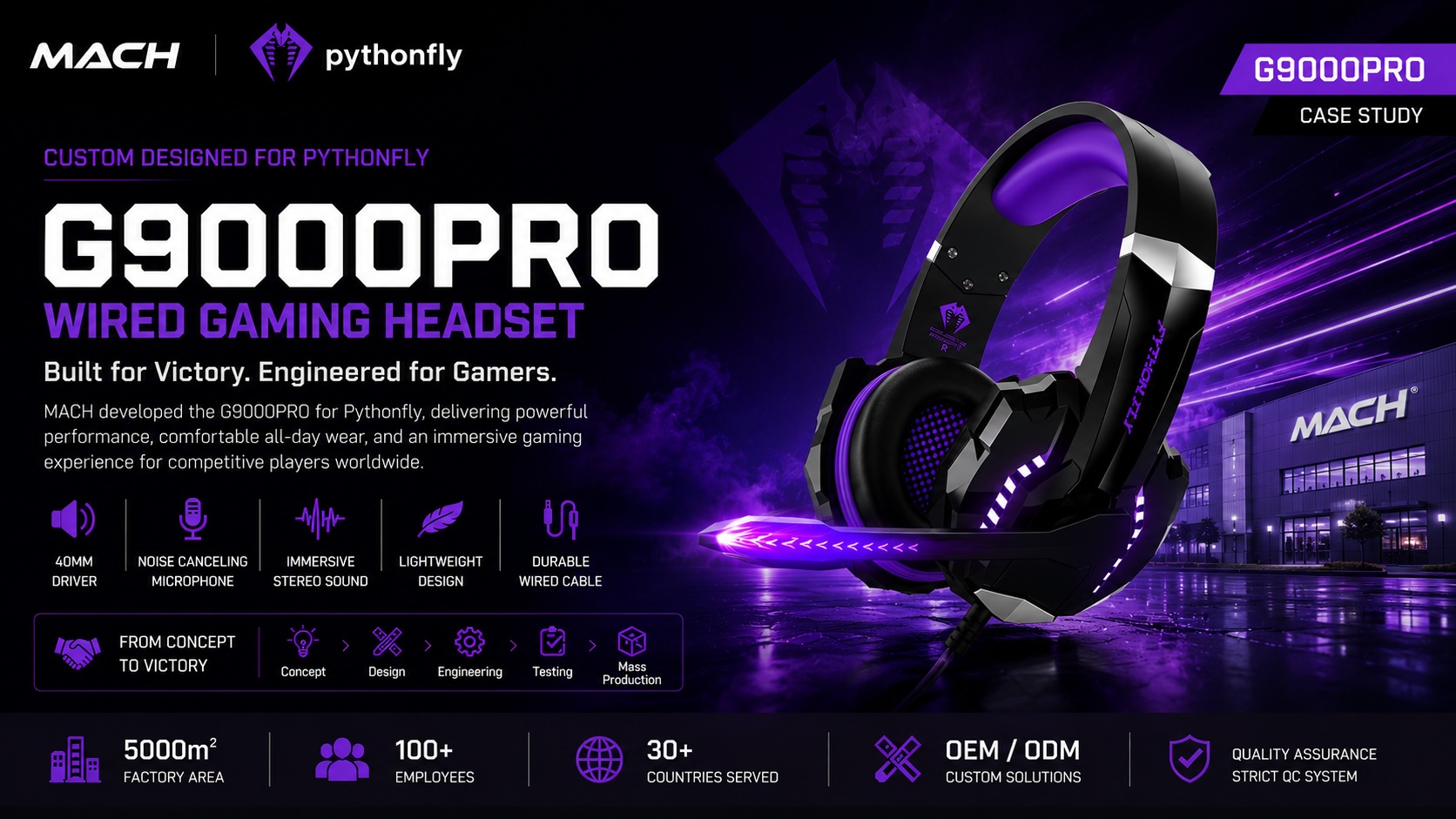
Before a wired gaming headset enters mass production, the buyer should approve four connected layers: the functional product, the brand presentation, the complete retail package and the production-control plan. A good-looking sample is not enough. The release record should define the exact structure, audio and microphone target, RGB behavior, cable and controls, logo, colors, packaging, accessories, compliance documents, test methods and acceptable workmanship.
The G9000pro China OEM project provides a useful example because it combined a wired headset platform, 40mm speaker, RGB styling, gaming microphone support, OEM logo and packaging customization, trial production, QC and export-document coordination. This article does not repeat that case. It uses the confirmed project scope to explain how brands can build a disciplined pre-production quality gate.
The objective is traceability: every retail promise and every factory inspection point should refer to an approved specification or sample before quantity production begins.
Key Takeaways for OEM Buyers
Mass-production approval should be a documented release decision covering function, brand appearance, packaging and production repeatability, not a general message that the sample looks acceptable.
- Freeze the exact wired headset configuration and separate confirmed standard features from requests still under evaluation.
- Approve finished-product audio, microphone, RGB, cable, controls and workmanship using identified samples.
- Control logo, colors, surfaces and cosmetic limits with references the factory can inspect.
- Approve the retail package only after product dimensions, accessories and printed claims are final.
- Use trial production to verify that the approved result can be repeated by the intended process.
- Define responsibility, evidence and change control before issuing mass-production authorization.
Why Sample Approval Often Fails to Control Production
Sample approval fails when it records an opinion but does not identify the configuration, evidence, tolerances and production controls behind that opinion.
An early sample may use hand-selected parts, temporary artwork or a package made before accessories are final. A buyer can approve its general direction without realizing that the approval leaves the bill of materials, microphone version, RGB presentation, cable, logo method or workmanship limits open. Those gaps become production questions later.
The problem is especially visible in a private-label wired gaming headset because several systems meet in one retail product. The driver and acoustic chamber affect sound. The microphone, cable and any control module affect communication. RGB introduces another electrical and cosmetic path. Logo, surface finish and packaging determine the brand impression. A change in one layer can affect another.
A useful approval record therefore states the sample identifier, date, configuration, deviations, test results, artwork version and decision owner. It also states what is not approved. Conditional approval should list the correction and the evidence required before release.
The G9000pro case confirms that MACH coordinated structure and mold support, PCB work, branding, packaging, trial production, QC and production planning. Those activities illustrate why the handoff to mass production is a cross-functional decision rather than a single cosmetic check.
G9000pro Project Facts Used in This Guide
The source case describes an overseas-brand OEM project based on a wired G9000pro platform with a 40mm speaker, RGB appearance, gaming microphone support and private-label execution.
The confirmed challenge was to create a reliable wired gaming headset for overseas channels while balancing RGB gaming styling, 40mm speaker performance, microphone quality control, OEM logo application, custom packaging and cost control.
MACH support covered industrial-design review, structure and mold support, PCB coordination, tooling support, logo and packaging customization, trial production, QC checks, certification-document review and mass-production planning. The project also references user-manual and retail-box support.
The source mentions CE, FCC and RoHS documentation review for export support. This is not a claim that every future private-label version automatically holds those certifications. Certification and compliance support must be coordinated according to the target market and final configuration.
The case does not publish a connector type, cable length, microphone measurements, RGB effect specification, material grade, final test limits, MOQ, price, order quantity or project duration. This guide does not invent them.
The Four-Layer Release Gate Before Mass Production
A practical release gate has four approvals: product definition, brand and cosmetic execution, retail package, and production-system readiness.
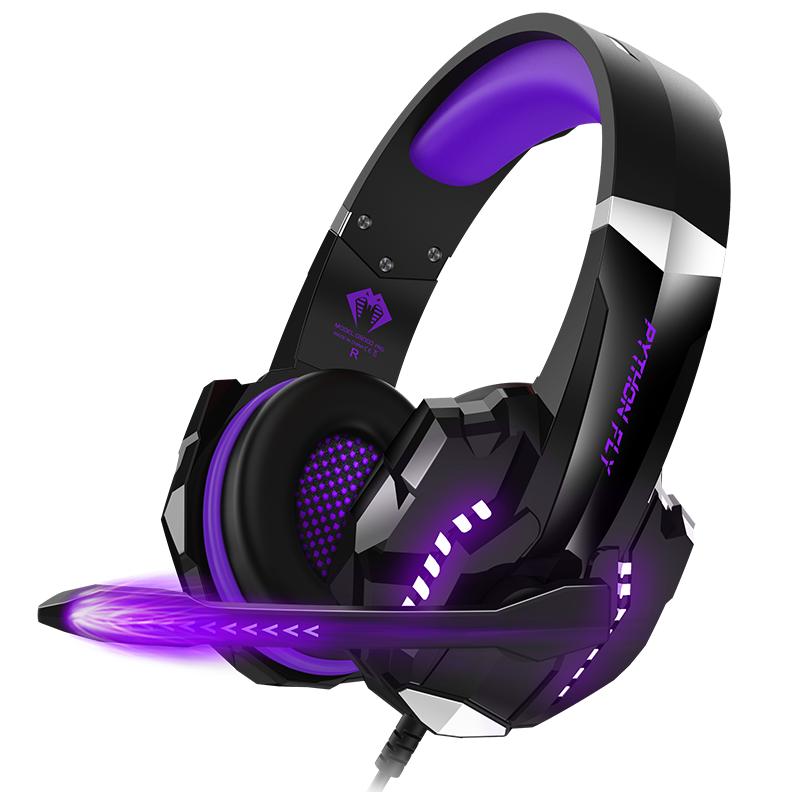
Layer one is product definition. The signed specification should identify the approved platform, structure, driver, microphone, cable and plug configuration, controls where applicable, RGB behavior, PCB or electrical version, accessories and workmanship expectations. General engineering principles can guide the review, but only the final project record defines what the factory must build. For G9000pro, the confirmed reference points are a wired platform, 40mm speaker, gaming microphone support and RGB direction; unpublished details must remain open questions until approved.
Layer two is brand and cosmetic execution. Approve logo artwork, method, size, position and orientation on a physical or production-representative sample. Define color references, surface appearance, RGB presentation and acceptable cosmetic boundaries under agreed lighting. A digital rendering cannot fully establish texture, gloss, color difference, logo adhesion or assembly gaps. If a brand changes logo artwork or color after approval, the affected sample and package should return to review.
Layer three is the retail package. The product, microphone, cable, manuals, inserts and any accessories must fit the final pack-out. Printed feature claims should match the approved configuration and supporting evidence. Barcodes, legal labels, importer information, warnings and language versions should be controlled by file revision. Package approval includes protection and assembly sequence, not only graphic design.
Layer four is production-system readiness. Trial production should use the intended materials, tooling, process instructions, fixtures, inspection methods and operators as far as practical. The goal is not to create another ideal sample; it is to reveal whether the process can repeatedly make the approved product. Records should identify defects, corrections, retest results and unresolved risks.
The four layers need one release owner and a clear change path. A product may pass acoustic review while packaging remains open, or artwork may be approved while an accessory changes. The status should remain conditional until every required layer is closed. A simple red, amber and green register can show blocked, conditional and released items.
This framework also separates a golden sample from a specification. The sample demonstrates an approved physical result, while drawings, BOM, artwork, work instructions and test criteria explain how to reproduce it. Neither is sufficient alone. A golden sample can age or be interpreted subjectively; documents can miss tactile or visual details. Together they create a more useful production reference.
For buyers, the final authorization should name the released sample and document versions, accepted deviations, required production checks and change-notification rule. This reduces the risk that a minor substitution, artwork update or packaging change quietly alters the sellable product after approval.
| Release layer | What must be approved | Typical evidence | Release risk |
|---|---|---|---|
| Product definition | Configuration, function and workmanship | Specification, BOM reference, identified sample and test record | A visually approved sample contains unconfirmed parts or behavior |
| Brand execution | Logo, colors, surfaces and RGB presentation | Artwork revision, color reference and cosmetic sample | Production appearance differs from the brand-approved reference |
| Retail package | Claims, files, accessories, labels and protection | Pack-out sample, print files and accessory list | Box content or claims do not match the approved product |
| Production readiness | Repeatable process, inspection and change control | Trial-production report, defect actions and control plan | A hand-built sample cannot be repeated at production scale |
Product Performance: Audio, Microphone, RGB and Cable
The product gate should evaluate the assembled headset as one system because driver size, microphone design, lighting and cable behavior do not prove finished performance individually.
The G9000pro case confirms a 40mm speaker direction. A 40mm driver can be appropriate for a wired gaming headset, but diameter alone does not establish tuning, channel match, distortion, speech clarity or consistency. Buyers should approve the finished acoustic result with agreed listening or measurement references and production-representative cushions and structure.
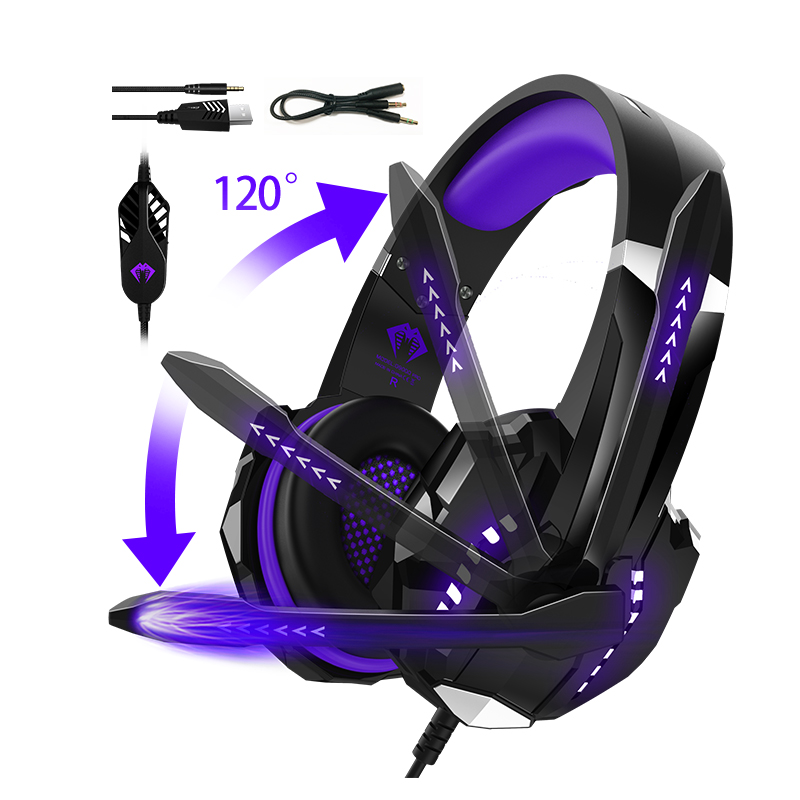
Microphone review should cover the intended gaming communication use, position, mechanical stability, voice intelligibility, movement noise and the approved cable or control path. The source does not publish microphone sensitivity, frequency response or ENC, so no such specification is attributed to this project.
RGB approval should define the actual color or effect, brightness consistency, controls and electrical path present in the final configuration. Photographs and packaging need to show the approved effect accurately. The case confirms RGB styling but not a particular pattern, power connector or control sequence.
Cable and connector requirements belong in the final RFQ even though the case does not publish their values. Buyers should confirm cable construction, length, plug arrangement, strain relief, control functions and packing method for their selected version rather than infer them from another model.
Brand and Cosmetic Approval
Cosmetic quality becomes inspectable when the buyer converts subjective expectations into controlled references, viewing conditions and defect rules.
Logo approval should identify the final vector artwork, application method, position, scale, color and orientation. Inspect contrast, edge quality, adhesion and alignment on the real surface. If both earcups carry branding, symmetry should be part of the review.
Color and finish approval requires a physical reference or agreed standard and a defined way to view it. Surface texture, gloss, molding marks, gaps, scratches, contamination and assembly alignment should have acceptance guidance appropriate to the retail channel.
RGB is both a function and a cosmetic element. Its appearance should be reviewed with surrounding plastics and mesh because light diffusion, brightness and color can look different after materials and finishes are finalized.
Packaging and Documentation Release
Packaging is released only when the final product, accessories, claims, artwork and protection method agree with one another.
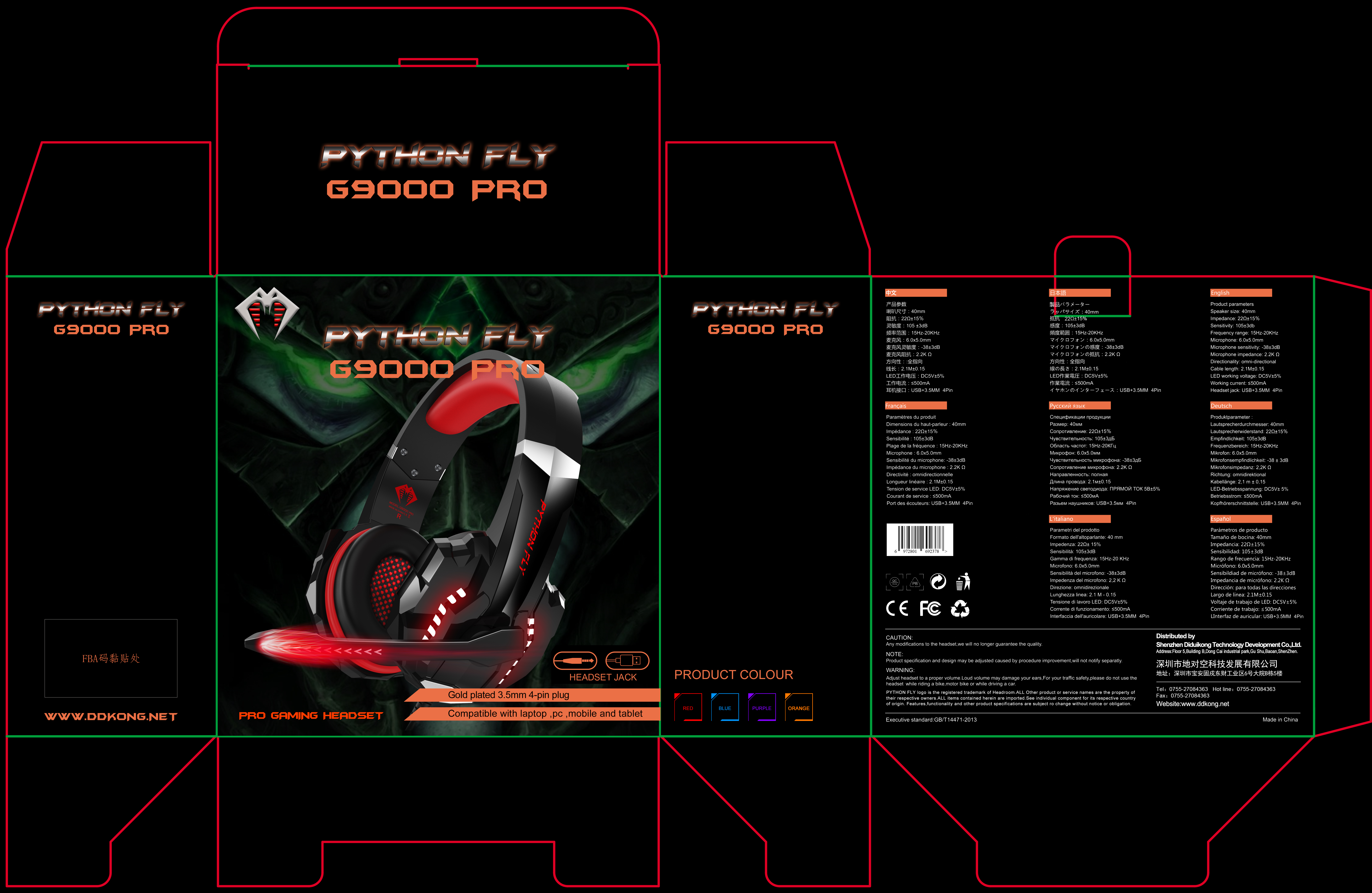
The G9000pro scope confirms custom packaging, user-manual support and retail-box planning. A buyer should approve one complete pack-out sample containing the intended headset, cable, microphone configuration, printed materials and any agreed accessories.
Every printed claim should trace to the approved product and evidence. Optional features, unsupported connector assumptions and unconfirmed certifications should not appear. Revision control is essential when packaging files pass among the brand, design team, supplier and printer.
Packaging review also considers protection, presentation and packing consistency. Inserts should hold the product without creating cosmetic damage or cable stress. Labels, barcodes, carton information and destination-market requirements should be checked before mass printing.
Trial Production and Quality-Control Evidence
Trial production should prove that the intended manufacturing and inspection process can repeat the approved headset, not merely produce one more acceptable unit.
The trial should record the build quantity selected for the project, actual materials and tooling used, process observations, defect types, rework, test results and corrective actions. This article does not assign a universal trial quantity because the source does not publish one and suitable scope depends on project risk.
Quality checks can cover appearance, assembly, cable and connector function, audio channels, microphone operation, RGB, controls where present, packaging and documentation. Exact tests, sampling levels and defect limits should be agreed for the final configuration rather than copied from another headset.
The release report should show whether corrective actions were verified and which items remain conditional. Mass production should use the approved BOM, artwork and work instructions, with substitutions or process changes routed through review.
Final shipment inspection does not replace process control. It checks output after much of the cost has already been incurred. Incoming material control, in-process checks and traceable final testing reduce the chance that a repeated defect reaches the end of production.

Buyer Checklist Before Authorizing Mass Production
The buyer should authorize production only when the product, branding, package, evidence and responsibility matrix are complete enough for repeatable execution.
- Identify the approved wired headset model, specification, BOM reference and golden sample.
- Confirm the 40mm acoustic target through the finished headset rather than driver size alone.
- Approve microphone position, voice result, mechanical behavior and cable path.
- Freeze RGB presentation, electrical behavior and customer-facing images.
- Confirm cable, plug, strain relief and control requirements for the selected configuration.
- Approve logo artwork, method, position, color and durability expectation.
- Approve product colors, surfaces, gaps and cosmetic defect references.
- Complete the retail pack-out with manuals, inserts, labels, barcodes and accessories.
- Review every package and marketplace claim against the approved configuration.
- Confirm the target-market compliance plan and exact available documents.
- Review trial-production defects, corrective actions and verification evidence.
- Define inspection stages, sampling approach, defect classification and decision authority.
- Lock approved files and require notification before material, component or process changes.
- Confirm project-specific MOQ, commercial terms and schedule in the final quotation.
How MACH Supports Pre-Production Coordination
MACH industry can coordinate the technical, branding, packaging and manufacturing information needed to evaluate a wired gaming headset before production release.
In the G9000pro case, MACH support included industrial-design review, structure and mold support, PCB coordination, tooling support, logo and packaging customization, trial production, QC and mass-production planning. These confirmed activities show the project areas that need to converge before release.
For a similar OEM project, the exact platform, customization, documentation, testing and commercial terms must be evaluated through the buyer's RFQ. Certification support is coordinated for the target market and final configuration; it should not be interpreted as automatic certification of every version.
Brands can provide their target channel, product requirements, artwork, packaging files, accessory list, quality expectations and compliance needs so MACH can assess the appropriate sample and pre-production review path.
Conclusion
The safest point to authorize wired gaming headset mass production is when four layers are closed: product function, brand appearance, retail package and production readiness.
The G9000pro project demonstrates why these layers belong together. A wired platform with a 40mm speaker, RGB, microphone support, logo and custom packaging still needs trial production, quality control and document coordination before it becomes a controlled private-label program.
Use the four-layer release gate and buyer checklist to turn sample comments into reproducible manufacturing instructions. Buyers preparing a similar wired gaming headset can review the G9000pro case and contact MACH industry for an OEM platform and pre-production assessment.
Share your target market, approved features, branding, packaging, accessories and quality requirements for an OEM platform and pre-production evaluation.
Contact MACH IndustryFrequently Asked Questions
What is a pre-production quality gate for a wired gaming headset?
It is a documented approval point where the buyer and supplier confirm the product configuration, brand appearance, packaging, test evidence and production controls before authorizing mass production.
Is an approved appearance sample enough to start mass production?
No. Appearance approval does not automatically confirm acoustics, microphone behavior, RGB, cable and controls, packaging, documentation or production repeatability. Each required layer needs its own acceptance record.
What should a wired gaming headset golden sample contain?
It should represent the approved product configuration, materials, colors, logo, cable, microphone, lighting, accessories and workmanship. Its identification, limitations and relationship to the packaging sample should be documented.
How should buyers evaluate a 40mm gaming headset driver before production?
Evaluate the finished headset for tonal balance, speech clarity, channel consistency, useful-level distortion, seal variation and unwanted noise. A 40mm diameter alone does not define sound quality.
What microphone checks matter before wired headset production?
Check voice intelligibility, position, stability, movement noise, mute or control behavior where applicable, connector and cable routing, and consistency across the approved sample set.
Should RGB lighting be part of the quality-control checklist?
Yes. Confirm the approved color or effect, brightness consistency, power path, controls, cable behavior and cosmetic presentation. The test should match the final configured product.
How is packaging approved for a private-label gaming headset?
Approve the retail box, inserts, artwork, manuals, labels, barcodes, accessory placement and transport protection against the final product and pack-out list before printing or mass packing.
Does certification support mean the headset is already certified?
No. Certification and compliance support can be coordinated according to the target market and final product configuration. Buyers should confirm the exact documents that apply to the approved version.
What MOQ and lead time apply to a similar wired headset project?
They depend on the selected platform, customization, packaging, accessories, tooling and production plan. They should be confirmed through a project-specific quotation rather than inferred from this case.
What should buyers provide for a pre-production review?
Provide the approved specification, artwork, color references, packaging files, accessory list, target market, required documents, test criteria, defect limits and named approval responsibilities.
Related Resources
Need OEM/ODM gaming audio solutions?
Contact MACH Industry to discuss your gaming headset, gaming earbuds, or private-label audio project.
Contact MACH Industry