Home > Resources > OEM Knowledge
Gaming Headset OEM for Brazil: From Wireless Evaluation to Wired Market Testing
A practical OEM development case showing how a Brazilian gaming brand evaluated G938 and G946 wireless samples, then advanced a USB-only G938 wired sample for market testing while planning the wireless ANATEL path in parallel.
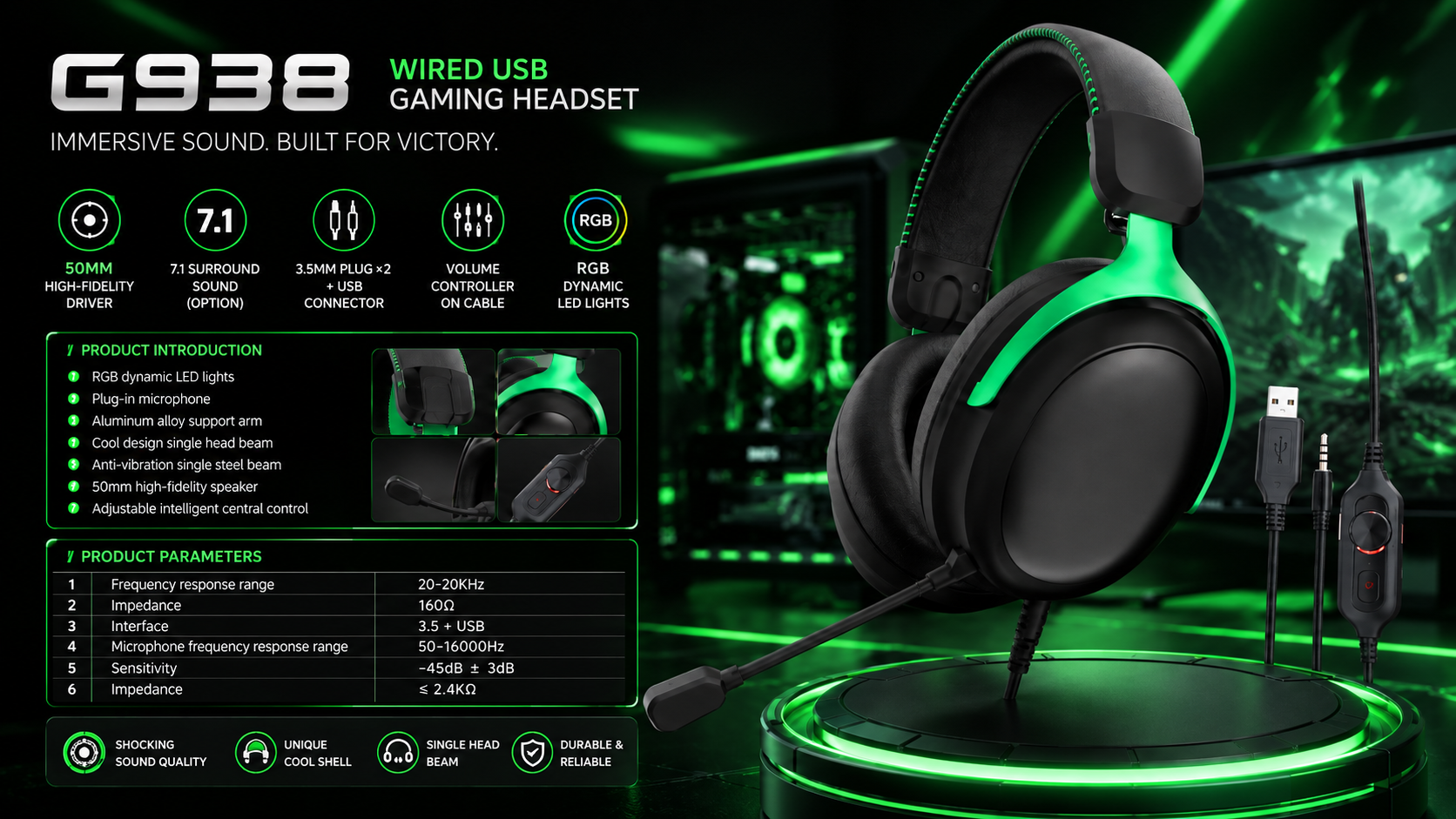
A Brazilian gaming and PC hardware company approached MACH while planning a long-term gaming audio line for its home market. The buyer was not looking for a one-time catalog purchase. Its questions covered product specifications, samples, OEM and ODM scope, private labeling, colors, packaging, production planning, warranty, compliance support and the practical cost of bringing a differentiated headset to Brazil.
The project remains in progress. It has not reached mass production, formal market launch or completed ANATEL certification. What makes the case useful is the sequence of decisions: wireless platform evaluation first, a USB-only wired route for faster commercial testing next, and wireless compliance planning in parallel. It shows how a gaming headset OEM Brazil project can move forward without treating early sample approval as a finished launch.
The Customer’s Goal: Building a Premium Gaming Headset Line for Brazil
The buyer’s objective is to build a coherent premium gaming audio line, not simply place a logo on an off-the-shelf headset.
The customer operates in gaming, PC hardware, gaming peripherals and e-commerce. Its initial brief asked for the latest headset platforms, technical data, commercial terms, MOQ logic, sample arrangements, private-label options, lead times, warranty and experience supporting Brazil and South America. This breadth indicated that the purchasing decision would involve engineering, compliance and channel economics together.
For product positioning, the customer used products such as the HyperX Cloud III as a reference point for comfort, positioning and product expectations. That reference did not mean that MACH claimed equivalence or superiority. It helped define the level of perceived comfort, fit and presentation the customer wanted to evaluate for a premium or super-premium segment.
Why Brazil Requires a Different Product Development Strategy
Brazilian market planning must connect product configuration, landed cost, compliance and early channel validation.
A wireless gaming headset adds a radio-compliance workstream that a basic wired product does not carry in the same way. At the same time, import taxes, local taxes, logistics, packaging and retail requirements influence whether a technically attractive product remains commercially practical. The buyer therefore needed more than a sample that sounded good; it needed a sequence that could reduce uncertainty before committing to higher-volume production.
MACH did not present the project as choose model, print logo and ship. The working roadmap was sample evaluation, evaluation and approval, cost validation, ANATEL planning, initial production and import, and Brazilian market validation. Each stage provides information for the next, while later decisions remain conditional on technical, regulatory and commercial review.
Selecting the Right Platforms: G938 and G946
G938 and G946 were selected as complementary platforms for evaluating premium positioning and future SKU planning.
G938 was presented as a premium gaming headset candidate that could support both wireless evaluation and a dedicated wired development route. Its mechanical construction, comfort direction and gaming-focused presentation made it relevant to the customer’s initial positioning study.
G946 added a product-family perspective. The platform can be planned as a wired version, a wireless version, and a wireless version combined with a magnetic charging dock. The purpose of this structure is not to force every feature into one SKU. It gives a brand a way to create multiple price tiers while keeping a unified design language, packaging logic and future expansion path. In practical terms, one platform can support multiple SKUs and a more consistent brand identity.
Why We Started with Standard Samples Before Custom Branding
Validate the platform first, customize the brand second.
The first sample round used standard G938 Wireless and G946 Wireless units without the customer’s logo. This separated the evaluation of the underlying product from later branding decisions. If comfort, audio, microphone behavior or mechanical quality did not meet expectations, adding a logo or custom package would not solve the core issue.
Starting with standard samples also protected the project schedule and budget. The customer could learn how each platform behaved before discussing custom colors, thicker padding, packaging artwork or production quantities. Customization decisions would then be tied to a platform the buyer had physically tested rather than to catalog images alone.
Sample Evaluation: What the Customer Tested
The first evaluation focused on product quality, sound, microphone performance, comfort, wireless behavior and mechanical execution.
The buyer reviewed sound, microphone performance, comfort, wireless connection, latency, mechanical structure and build quality. These checks addressed both user experience and business risk. For example, a headset may have the right visual position but still require work on fit, microphone clarity or connection behavior before it is suitable for a branded program.
The sample stage also gave both teams a shared physical reference. Comments could be tied to a specific unit and configuration, reducing ambiguity when discussing possible changes. This is especially important when a product family may later include wired, wireless and dock-equipped variants.
G938 Approved for the Next Stage
The G938 passed the customer’s initial evaluation for this stage of the project.
That result is deliberately stage-specific. It does not mean the product is fully certified, formally launched, confirmed for mass production or proven as a bestseller. It means the initial wireless sample gave the customer enough confidence to continue the development and commercial assessment.
The G946 Wireless also completed sample evaluation and remains relevant to the wider product-family discussion. The immediate next action, however, shifted toward a wired G938 route that could support earlier market learning while wireless compliance planning continued.
A Dual-Track Strategy: Wired Market Testing + Wireless ANATEL Planning
The project now follows a dual-track market-entry strategy for Brazil: wired market validation and wireless compliance planning in parallel.
The wired route offers a way to test product positioning, customer response, channel fit and landed-cost assumptions without waiting for the entire wireless compliance path to conclude. It is not a shortcut around applicable requirements; it is a different product configuration with a different development sequence.
For the wireless route, G938 and G946 did not have completed ANATEL certification for this customer’s final branded configuration at the time of evaluation. MACH can support the process with specifications, datasheets, engineering documents, certification samples, technical coordination and product adjustments when required. Certification work must be based on the customer brand, final configuration and target market, and no certification outcome is guaranteed in advance.
Developing the G938 USB Wired Version
The next-stage G938 wired sample is a USB-only gaming headset configuration.
For this project, the wired development direction is specific: USB only. It should not be described as a 3.5 mm or Type-C configuration. Defining the connection clearly helps align sample construction, computer compatibility checks, packaging language and future sales materials.
MACH has provided a G938 Wired quotation on an FOB Shenzhen basis, with retail packaging not included in that quotation. Commercial values remain confidential. The G938 wired sample has been prepared for the next evaluation stage, where the customer can review the dedicated configuration before making a decision about an initial market-validation batch.
Improving Comfort with Thicker Earcup Padding
The customer asked MACH to evaluate thicker earcup foam and padding as a comfort-focused OEM change.
The request came from the customer’s comfort expectations and reference products. It is more substantial than a logo change because cushion thickness can affect fit, clamp perception, seal, material choice, visual proportions and acoustic performance.
MACH’s engineering review therefore considers comfort, fit, material behavior, acoustic impact, structural feasibility and cost impact together. The aim is to determine whether a thicker cushion can improve the intended experience while preserving the overall design and the verified audio direction. The work remains under evaluation and is not presented as a finalized production change.
Color Strategy: Standard Production vs Custom Green
Black and green is the preferred brand direction, while a standard color offers greater flexibility during early validation.
The customer’s preferred visual direction is black with green accents. That combination can help create a recognizable gaming identity, and the green G938 reference image supports discussion of the intended look. However, custom color production must be evaluated against efficient production planning and the expected validation volume.
For early market validation, the standard color configuration provides greater production flexibility, while custom color production becomes more efficient at higher volumes. If green is not practical for the first validation stage, black and red remains a workable standard direction. This approach preserves the custom green concept for a later stage without forcing an inefficient color decision too early.
Packaging for Market Validation
A simple paper box with an internal paper tray was recommended for efficient early-stage packaging.
The customer is reviewing total Brazilian landed cost, including import taxes, local taxes, logistics, packaging and related expenses. A large premium retail box can add cost and shipping volume before the channel proposition has been validated. MACH therefore recommended a simple paper box with an internal paper tray for this stage.
The format can be environmentally considerate, cost-effective, efficient to pack and capable of protecting the product when properly engineered. It also gives the customer flexibility if local retail presentation or outer packaging needs to be adapted later. MACH has used a similar approach in European projects, but no customer identity is disclosed here.
From Sample Testing to Commercial Validation
Technical approval and commercial approval are separate gates in a mature OEM program.
The customer is now reviewing market feasibility and total cost rather than treating sample approval as an automatic purchase order. The relevant questions include whether the intended retail position can absorb landed cost, whether the proposed packaging is appropriate, and whether an initial market-validation batch can produce useful evidence for a later scale-up decision.
If the wired test supports the commercial case, higher-volume production can be considered after validation. In parallel, the wireless product can continue through configuration confirmation and ANATEL planning. This staged process protects both parties from making claims or commitments that the current evidence does not support.
What This Project Shows About Gaming Headset OEM Development
A credible OEM process links platform validation, cost validation, compliance, production planning and market learning.
This case shows why real OEM development is more than private-label printing. Platform choice affects SKU architecture. Cushion changes can affect acoustics and structure. Color decisions interact with production efficiency. Packaging influences landed cost. Wireless features create a market-specific compliance path.
The current status is therefore meaningful without being exaggerated: G938 Wireless passed the customer’s initial evaluation for this stage; G946 Wireless completed sample evaluation; a USB-only G938 Wired sample has been prepared; the future G938 Wireless ANATEL path is under planning; comfort optimization remains under engineering evaluation; and the customer is reviewing total cost and feasibility. The project has not entered mass production or formal Brazilian market launch.
How MACH Supports Gaming Brands
MACH supports brands from platform selection through engineering, packaging, compliance coordination and production planning.
For gaming headset OEM and ODM programs, MACH can evaluate wired, 2.4G wireless, Bluetooth and multi-mode product directions; private-label identity; logo and color options; structural and comfort changes; accessories; packaging; samples; and certification support. The exact scope depends on the selected platform, final specification, target market and forecast.
Looking for a gaming headset OEM/ODM partner for Brazil, Europe, the US or other markets? Contact MACH to discuss your target segment, intended devices, connection strategy, brand requirements, packaging, certification plan and validation timeline. A clear brief allows engineering and commercial decisions to be tested in the right order.
Plan Your Gaming Headset OEM Project
Share your target market, connection modes, positioning, branding, packaging and compliance requirements with MACH.
Contact MACH IndustryFrequently Asked Questions
Can MACH develop wired and wireless versions of the same gaming headset?
Yes. Depending on the selected platform and final specification, MACH can evaluate wired and wireless versions as related SKUs. Connection behavior, components, validation and compliance requirements are confirmed separately for each version.
Can MACH support ANATEL certification for Brazil?
MACH can provide technical specifications, datasheets, engineering documents, certification samples, engineering coordination and product adjustments when required. Certification is based on the final branded configuration and applicable requirements, and approval cannot be guaranteed in advance.
What gaming headset customization options are available?
Options can include private-label branding, logo, color direction, packaging, cushions, accessories, microphones, connection modes and selected structural or firmware items. Feasibility, quantity, cost and validation depend on the platform and scope.
Can gaming headset ear cushions be customized?
Cushion materials, shape and thickness can be evaluated. Because cushions influence comfort, fit, seal, acoustics, appearance and cost, changes should be reviewed and tested as engineering items rather than treated as cosmetic changes only.
Can MACH customize gaming headset colors?
Yes. Standard colors are usually more flexible for pilot validation, while custom colors become more efficient when production volume supports dedicated material and process planning.
Does MACH support private-label packaging?
Yes. MACH can evaluate retail packaging, simple paper boxes, internal paper trays, manuals, labels and related brand materials according to the product, market and commercial plan.
What is the typical gaming headset OEM development process?
A practical process covers requirement definition, platform selection, sample evaluation, engineering and cost validation, compliance planning, final sample approval, production preparation and market validation. The sequence may vary by product and destination.
Related Resources
Need OEM/ODM gaming audio solutions?
Contact MACH Industry to discuss your gaming headset, gaming earbuds, or private-label audio project.
Contact MACH Industry