Home > Resources > OEM Knowledge
How Should Brands Control Gaming Headset Variants Before Mass Production?
A buyer guide to controlling model identity, BOM, firmware, connection modes, microphone, dongle, CMF, packaging, samples, and production changes across private-label gaming headset variants.
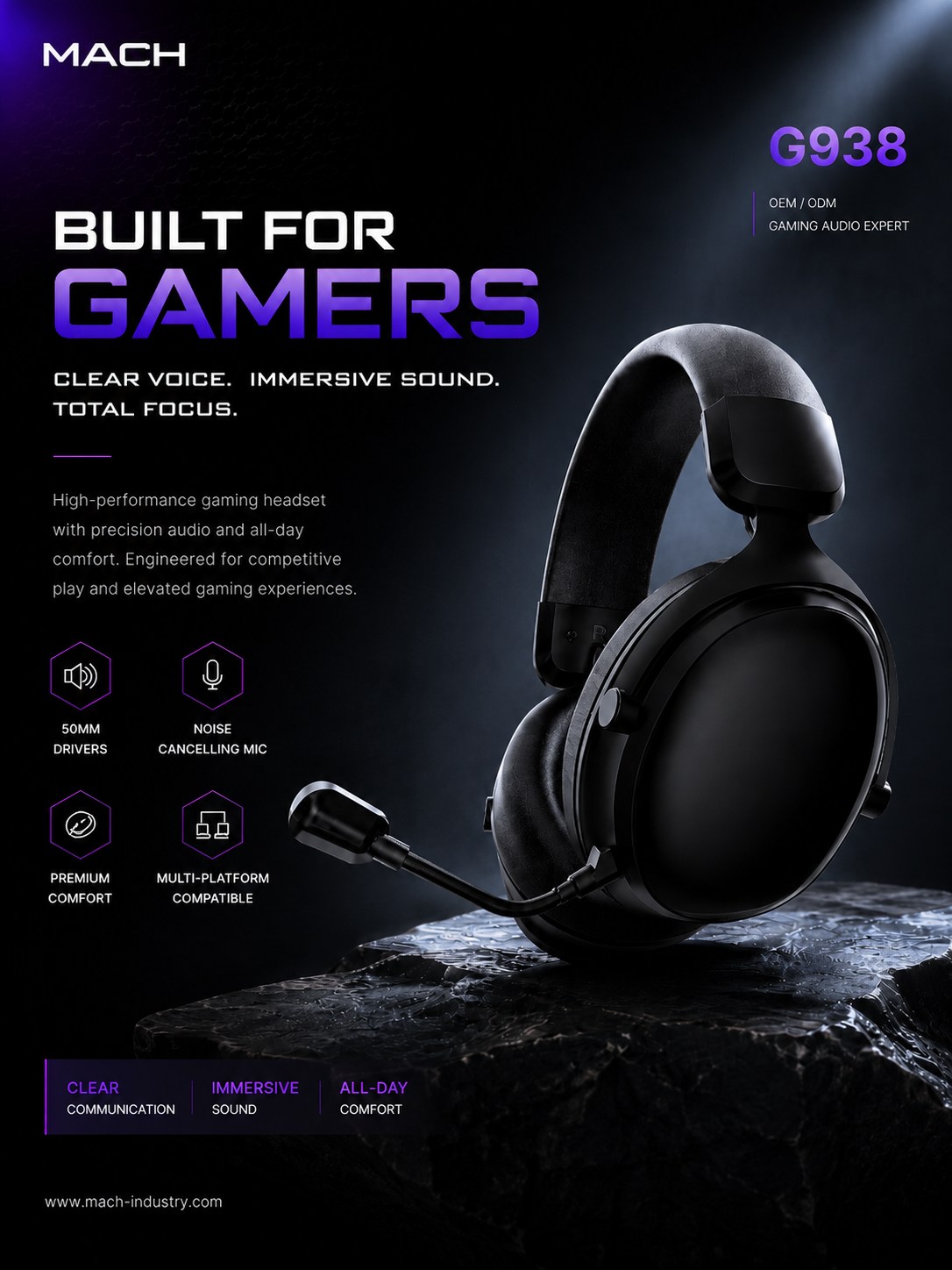
Gaming brands should control headset variants by assigning each configuration a unique model identity and linking that identity to an approved BOM, firmware, connection matrix, acoustic components, microphone, dongle, battery, CMF, RGB, accessories, packaging, labels, golden sample, inspection limits, and change history. A shared housing or family name is not enough to prevent production mix-ups.
This matters because one headset platform can support several commercial versions. A black wireless SKU may look similar to a wired, color, firmware, microphone, or surround-sound version while requiring different components, claims, manuals, tests, compliance documents, and after-sales parts. Without variant control, a correct component for one SKU can become a defect in another.
G938 BK provides a documented reference. It is a distinct black tri-mode OEM version with JL7018M-based 2.4GHz wireless, Bluetooth, 3.5mm wired operation, a confirmed 50mm driver, long folding boom microphone with ENC support, a 1000mAh battery, RGB, and reinforced double-steel headband. This article uses that confirmed configuration to explain an OEM control method rather than duplicate the product page.
Why Variant Control Matters for Gaming Brands
Variant control keeps engineering, purchasing, production, packaging, marketing, compliance, and after-sales teams aligned around the exact headset being built and sold.
Gaming audio platforms often share visible structures while changing internal or bundled details. Connection modes, radio solution, driver, microphone, battery, firmware, dongle, cable, RGB, color, logo, packaging, instructions, adapters, and target devices can define separate SKUs. Buyers should decide which differences create a new model code, revision, market package, or optional accessory.
The risk begins during quotation. A supplier may price a base platform while the buyer assumes a specific dongle, microphone, battery, firmware behavior, packaging set, or market label is included. A configuration matrix makes the quotation comparable by listing every required item, its status, and the evidence needed for approval.
Sampling creates another risk. Appearance samples, engineering samples, compliance samples, pilot samples, and shipment samples can belong to different revisions. Each sample should carry the model, revision, date, firmware, BOM reference, and purpose. Otherwise, a visually approved unit may not represent the wireless or packaging configuration released for production.
Marketing depends on the same controls. A 20ms 2.4GHz reference should not be applied to Bluetooth or wired operation. A 50-hour lighting-off runtime should not become an unrestricted battery claim. Compatibility icons, microphone descriptions, RGB behavior, accessories, and certification language should follow the tested variant.
After-sales teams also need variant identity. Replacement dongles, microphones, cables, packaging parts, firmware, and troubleshooting instructions may not be interchangeable across revisions. The model and revision should be visible in records that customer service and warehouses can use.
| Control area | Uncontrolled approach | Buyer-ready approach |
|---|---|---|
| Model identity | One family name for several versions | Unique SKU and revision linked to exact hardware, firmware, CMF, accessories, and market package |
| Samples | Approved sample | Labeled sample purpose, model, revision, firmware, BOM, date, owner, and approval record |
| Claims | Use the best platform specification | Use mode- and variant-specific evidence, conditions, host list, limitations, and approved wording |
| Production | Build the black version | Controlled work order, BOM, firmware, fixtures, labels, packaging, tests, traceability, and release |
G938 BK Product Platform Overview
G938 BK is a black tri-mode wireless gaming headset configuration for private-label PC, notebook, console, mobile, retail, and e-commerce programs.
Its confirmed connection modes are dedicated 2.4GHz wireless, Bluetooth, and 3.5mm wired operation. The JL7018M-based 2.4GHz route is specified at 20ms latency with a transmission distance beyond 10m. Bluetooth provides an additional wireless route, while the wired configuration uses 3.5mm operation. USB Audio is not claimed for this product configuration.
The acoustic platform uses a buyer-confirmed 50mm driver with 32-ohm impedance, 110dB sensitivity, and a listed 20Hz-20kHz response. The long folding boom microphone is specified at 50Hz-16kHz, -42dB plus or minus 3dB sensitivity, and no more than 2.3k ohms impedance. ENC support is identified for the selected configuration.
The 1000mAh battery is specified for approximately 50 hours of playback with lighting switched off, 600 hours standby, and two hours charging. RGB lighting and a reinforced double-steel headband support the black gaming identity.
MACH can evaluate brand identity, black CMF and surface finish, RGB direction, retail packaging, user materials, microphone, dongle, accessories, firmware, connection modes, samples, and final specification. Each item should be attached to the G938 BK variant record so it is not confused with another product configuration.
| G938 BK area | Confirmed reference | Variant-control record |
|---|---|---|
| Connections | 2.4GHz, Bluetooth, 3.5mm wired | Host matrix, receiver or cable, firmware, mode behavior, microphone, controls, and limitations |
| Audio and voice | 50mm driver, folding boom microphone, ENC support | Component IDs, tuning target, microphone version, routing, limits, and approved samples |
| Power and appearance | 1000mAh battery, RGB, black CMF | Battery source, runtime conditions, lighting behavior, color masters, cosmetics, and packaging |
| Structure | Reinforced double-steel headband | Mechanical revision, materials, fit, reliability, assembly limits, and change history |
Technical Deep Dive: Building a Controlled Variant Specification
A controlled variant specification is a versioned product record that connects commercial identity with every approved engineering, manufacturing, packaging, compliance, and service detail.
Start with a model hierarchy. The family name identifies the platform, the variant code identifies the commercial configuration, and the revision identifies approved changes over time. Market packages can have separate suffixes when labels, plugs, manuals, accessories, or compliance documents differ. The naming rule should be short enough for factory and warehouse use but detailed enough to prevent ambiguity.
The BOM is the technical center. It should identify the housing and CMF parts, headband and joints, 50mm driver, cushions, PCB and radio solution, battery, microphone, RGB components, receiver or dongle, cables, fasteners, labels, packaging, manuals, and accessories. Approved alternates require their own review rather than being treated as interchangeable because they fit physically.
Firmware needs the same discipline. Record the headset and receiver firmware identity, device behavior, pairing, connection priorities, prompts, controls, RGB state, battery reporting, reconnect, and any market-specific requirements. A firmware change can affect compatibility, latency, runtime, user instructions, testing, and support even when the housing is unchanged.
The connection matrix translates hardware into buyer claims. For each approved host and mode, list the required receiver, cable, or adapter; audio output; microphone input; controls; RGB; battery state; firmware; latency method; range conditions; and limitations. G938 BK's 20ms value belongs to its specified 2.4GHz route and should not be transferred to Bluetooth or 3.5mm operation.
Samples must be traceable to the record. Appearance samples can approve black CMF and RGB, acoustic samples can approve tuning, engineering samples can approve wireless and microphone behavior, and packaging samples can approve the retail set. The final golden sample should represent the released BOM, firmware, accessories, labels, and packaging, not a mixture of independently approved parts.
Quality limits convert approval into production. Define incoming checks, critical dimensions, assembly controls, firmware programming and verification, pairing, wireless and wired function, acoustic and microphone checks, battery and charging, RGB, black cosmetics, accessory count, label scan, packaging, and final inspection. The plan should distinguish tests performed on every unit from sampled verification.
Traceability should connect production date or lot, material and battery lots where applicable, firmware, work order, inspection result, rework, and shipment. This enables investigation when a field issue appears in only one revision or production lot.
Engineering changes close the loop. A supplier, material, firmware, PCB, battery, microphone, driver, dongle, tooling, color, packaging, or process change should be reviewed for its effect on performance, compliance, documents, replacement parts, and market claims. The approved revision changes only after required evidence is accepted.
The buyer benefit is operational clarity. Variant control reduces the chance that purchasing orders one configuration, marketing describes another, the factory builds a third, and customer support receives no way to identify the difference.
| Variant record | Required content | Why it matters |
|---|---|---|
| Identity | Family, variant, revision, market package, status, and effective date | Prevents similar products and revisions from being mixed |
| Engineering | BOM, firmware, drawings, CMF, acoustics, microphone, battery, radio, and limits | Defines the product that must be built and tested |
| Commercial | Host matrix, claims, images, accessories, labels, packaging, manuals, and compliance | Keeps sales material aligned with approved evidence |
| Operations | Work order, inspection, traceability, rework, shipment, spares, and changes | Supports repeatable production and targeted issue investigation |
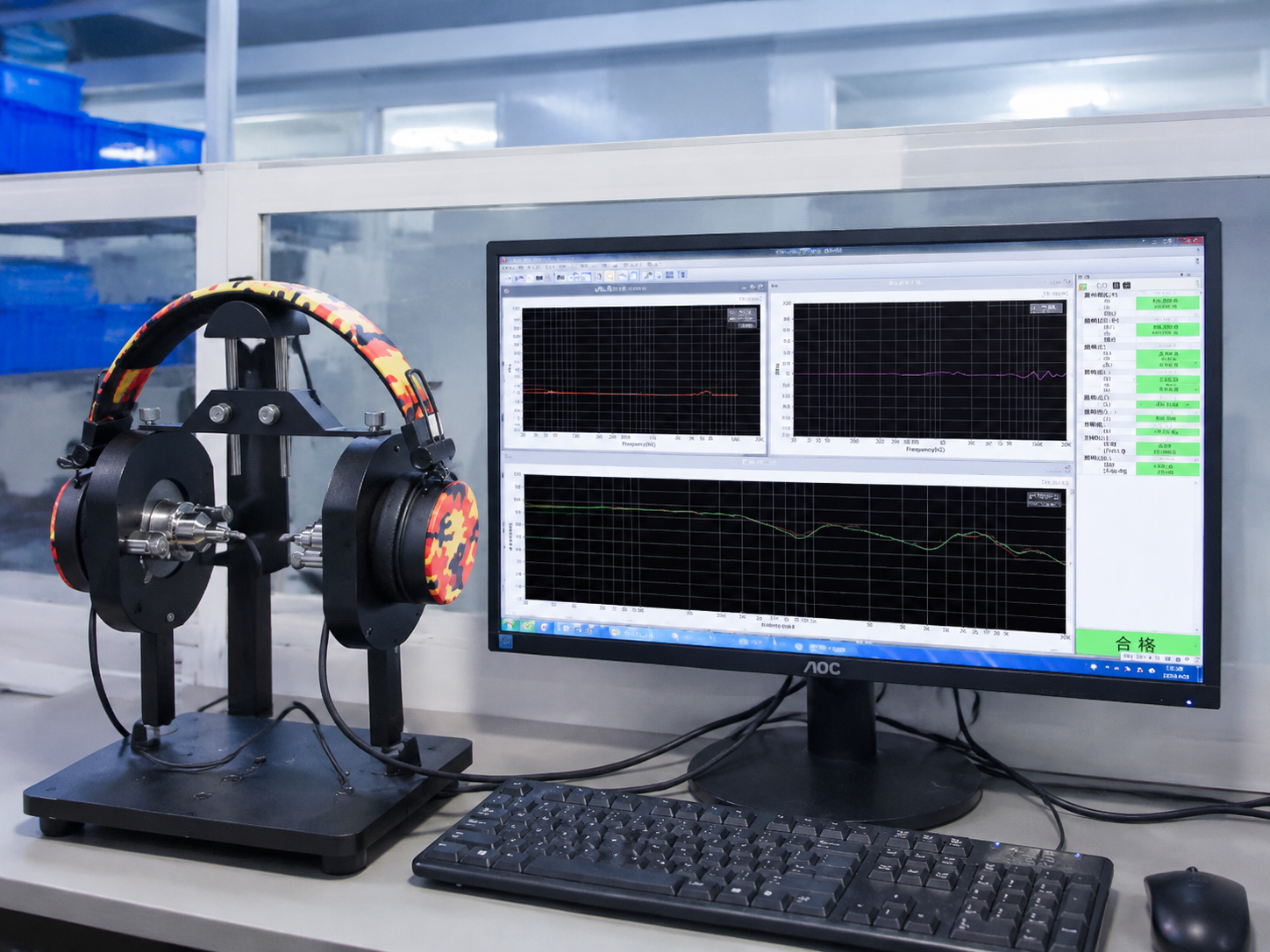
Buyer Decision Guide for OEM Variant Approval
Before mass production, buyers should approve the exact variant identity, feature matrix, samples, BOM, firmware, claims, packaging, compliance plan, quality limits, and change process.
Begin with the commercial brief. Define target market, users, devices, sales channel, price position, black visual direction, required modes, accessory set, quantity, schedule, packaging, labels, and compliance responsibilities. Mark every item as required, preferred, or optional.
Translate the brief into an engineering matrix. For G938 BK, define the JL7018M-based 2.4GHz route, Bluetooth, and 3.5mm wired operation separately. Add driver, microphone, ENC, battery, RGB, headband, receiver, cable, firmware, controls, and host-specific behavior.
Set evidence requirements. Wireless latency and range need defined methods and conditions. Audio and microphone require targets and production limits. Runtime needs lighting, volume, mode, battery, temperature, and endpoint conditions. Black CMF and RGB need physical masters and cosmetic limits. Structural approval needs fit and reliability criteria.
Review compliance against the final variant. The product source offers certification support but includes no G938 BK product-specific certificate files. Applicable radio, EMC, battery, materials, labeling, documentation, and test requirements should be determined for the target market.
Release production only after the golden sample, BOM, firmware, work instructions, fixtures, labels, packaging, manuals, quality plan, traceability, corrective-action route, and change process all refer to the same model and revision.
- Assign a unique family, variant, revision, market package, and release status.
- Freeze connection modes, target hosts, receiver or cable, firmware, functions, and limitations.
- Confirm driver, microphone, ENC, battery, RGB, headband, black CMF, accessories, and packaging BOM.
- Approve acoustic, microphone, latency, range, runtime, charging, structural, and cosmetic evidence.
- Label every sample with model, revision, firmware, BOM reference, date, purpose, and approval status.
- Align product claims, images, labels, manual, compatibility, and compliance language with the variant.
- Define incoming, assembly, programming, pairing, function, appearance, accessory, and final-inspection controls.
- Set traceability for work orders, lots, firmware, inspection, rework, shipment, and replacement parts.
- Require risk review, revalidation, approval, and revision updates for engineering or supplier changes.
OEM/ODM Development Considerations
MACH can evaluate G938 BK branding, black CMF, RGB, packaging, user materials, microphone, dongle, accessories, firmware, connection modes, sampling, validation, and production control.
Branding and CMF requirements should define logo artwork, method, location, color masters, surface finish, RGB behavior, cosmetics, and acceptance. Packaging should identify and protect the correct headset, microphone, dongle, cable, accessories, manuals, and market labels.
Microphone, dongle, firmware, connection, battery, driver, RGB, or structural changes can alter tests, claims, compliance, replacement parts, and schedule. MACH can evaluate feasibility after the buyer defines the intended behavior and target devices.
Sampling can be organized by purpose, followed by final configuration confirmation and a production release package. Wireless, wired, acoustic, microphone, battery, charging, RGB, black-finish, accessory, and packaging checks should use the approved G938 BK revision.
For mass production, quality control should compare materials, firmware, assembly, functions, appearance, labels, accessories, and packaging against the released variant specification. Change control protects that result after approval.
Conclusion
Reliable OEM headset production begins with controlling the exact variant, not merely selecting a product family or approving a visual sample.
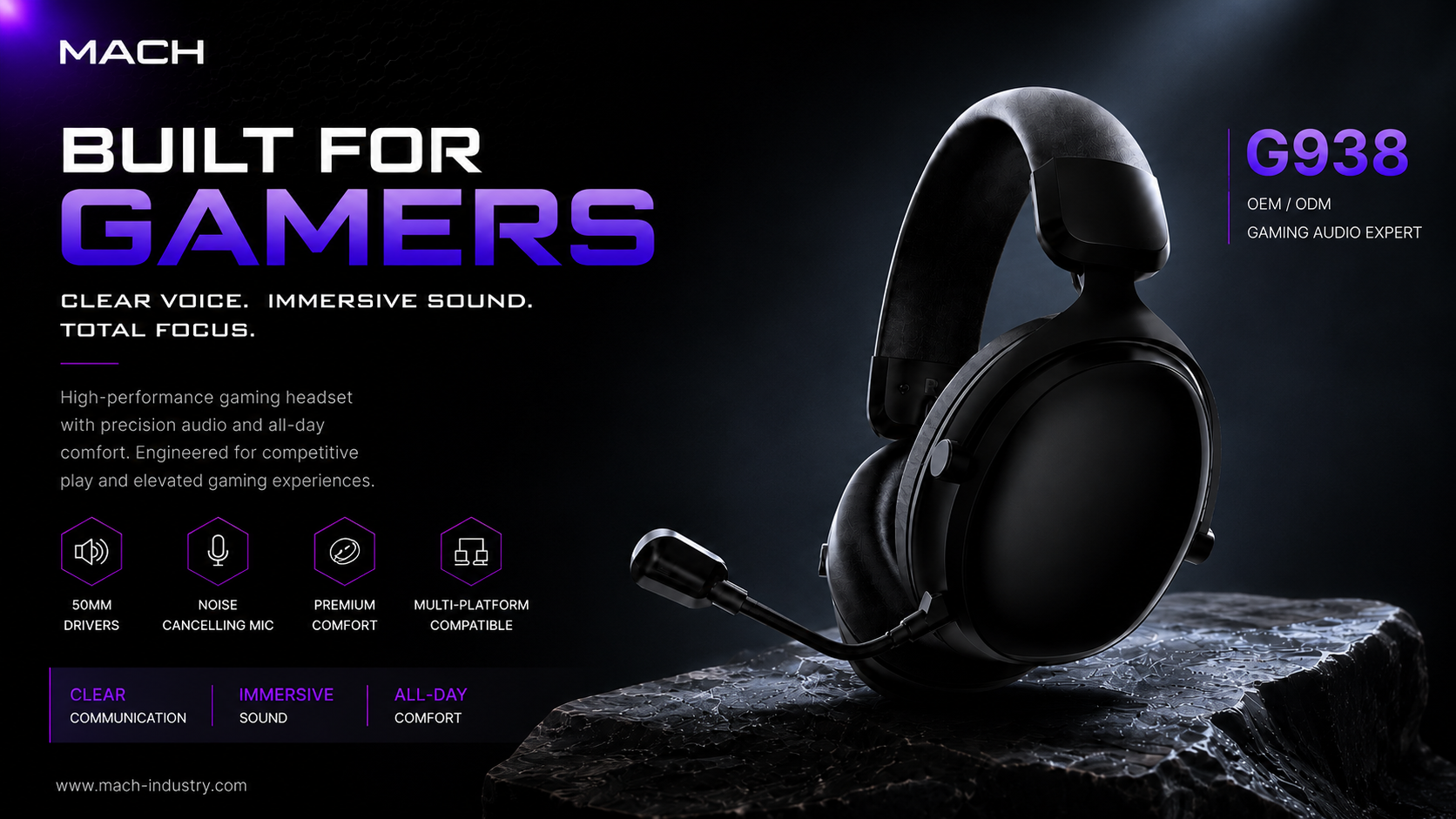
G938 BK provides a practical reference with black CMF, 2.4GHz, Bluetooth, 3.5mm wired operation, a 50mm driver, folding ENC microphone support, 1000mAh battery, RGB, and reinforced double-steel headband. These features become a repeatable commercial product only when identity, BOM, firmware, claims, samples, packaging, tests, and revisions stay aligned.
A clear variant-control process helps product managers, buyers, engineers, factories, marketers, warehouses, and customer-service teams work from the same approved definition.
Discuss your gaming headset project with MACH. Share your target devices, variant plan, connection modes, black CMF, branding, packaging, quantity, and market.
Contact MACH IndustryFrequently Asked Questions
What is gaming headset variant control?
Variant control links a unique model and revision to the exact BOM, firmware, modes, components, CMF, accessories, packaging, labels, samples, tests, compliance records, and change history approved for production.
Why do private-label headset brands need separate variant codes?
Similar-looking versions can use different radios, firmware, drivers, microphones, batteries, dongles, cables, colors, packaging, or market documents. Separate codes prevent ordering, production, marketing, warehouse, and support mix-ups.
What configuration is confirmed for G938 BK?
G938 BK combines JL7018M-based 2.4GHz wireless, Bluetooth, 3.5mm wired operation, a 50mm driver, folding boom microphone with ENC support, a 1000mAh battery, RGB, and a reinforced double-steel headband.
What should be included in a gaming headset BOM?
Include mechanical and CMF parts, drivers, cushions, PCB and radio solution, battery, microphone, RGB, dongle, cables, fasteners, labels, packaging, manuals, accessories, and approved alternates.
How should OEM headset samples be identified?
Label each sample with model, variant, revision, firmware, BOM reference, date, sample purpose, owner, and approval status so appearance, engineering, compliance, packaging, and production samples are not confused.
Can MACH customize G938 BK branding and packaging?
MACH can evaluate brand identity, black CMF, RGB direction, retail packaging, user materials, microphone, dongle, accessories, firmware, connection modes, samples, and final specification.
What MOQ applies to a G938 BK OEM project?
MOQ is project based and depends on configuration, branding, CMF, firmware, accessories, packaging, engineering work, and order planning. Buyers should provide the intended variant scope for evaluation.
How should firmware changes be controlled?
Record firmware identity and behavior, review impacts on pairing, modes, controls, prompts, battery reporting, latency, runtime, compatibility, documents, and support, then revalidate and release a new revision when required.
Which certifications are required for a wireless gaming headset variant?
Requirements depend on the target market and final radio, EMC, battery, materials, labels, accessories, and documentation. MACH can coordinate support, but completed G938 BK certificates are not claimed without product-specific files.
What must buyers approve before mass production?
Approve the variant identity, BOM, firmware, connection matrix, performance evidence, CMF, golden sample, accessories, packaging, labels, manuals, compliance plan, QC limits, traceability, and change process.
Related Resources
Need OEM/ODM gaming audio solutions?
Contact MACH Industry to discuss your gaming headset, gaming earbuds, or private-label audio project.
Contact MACH Industry