Home > Resources > Gaming Headset Guide
How to Choose a Tri-Mode Gaming Headset Platform for OEM Development
A B2B guide to evaluating 2.4GHz, Bluetooth and 3.5mm wired architecture, audio, microphone, mechanics, accessories and validation before selecting a tri-mode headset for an OEM program.
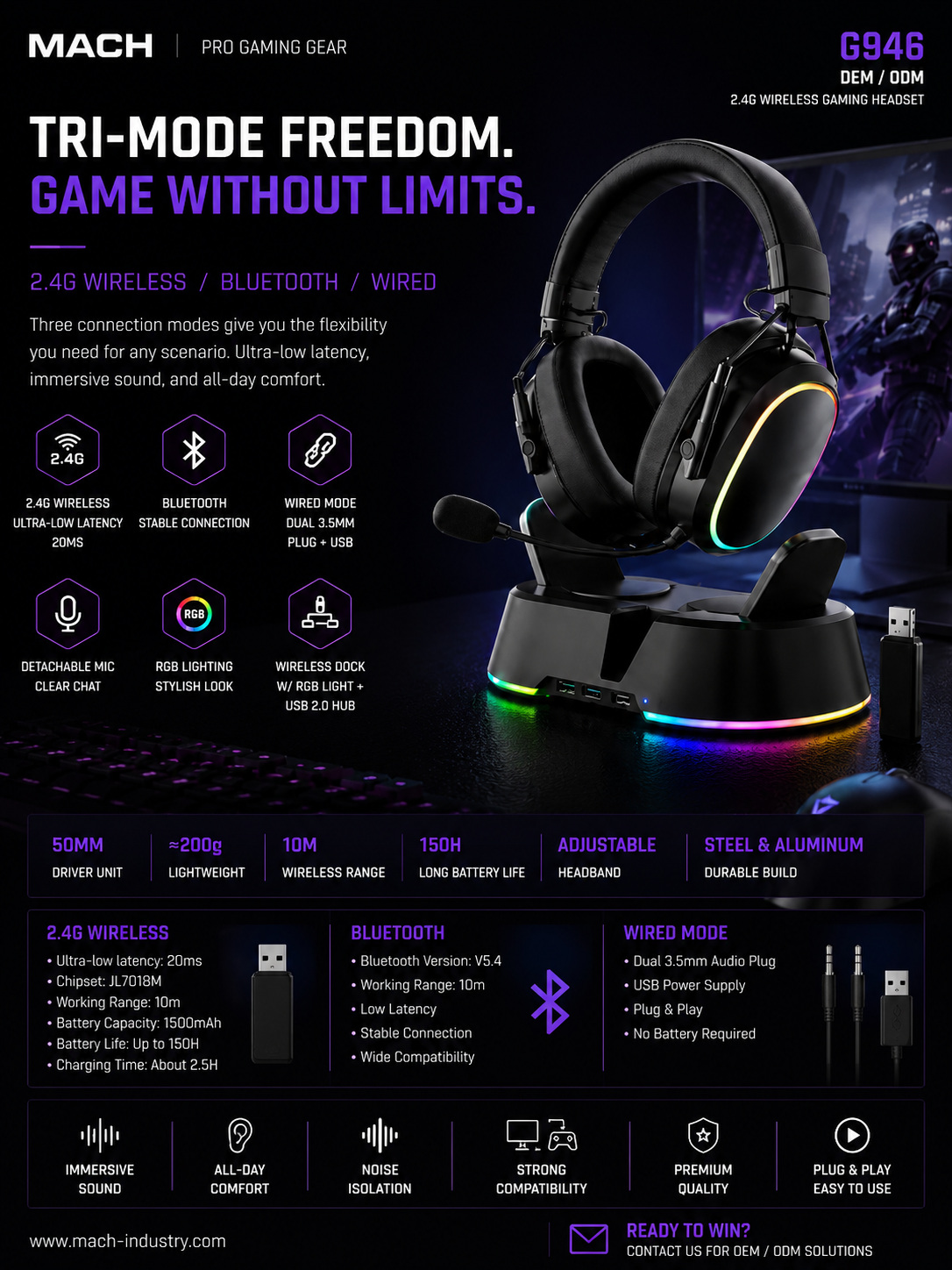
Gaming brands should choose a tri-mode headset platform by mapping each intended user scenario to a specific connection path, then validating audio, microphone, controls, accessories and device behavior in that mode. The presence of 2.4GHz wireless, Bluetooth and 3.5mm wired operation is only the starting point; a buyer-ready platform also needs a clear mode matrix, stable mechanical design, defined customization scope and an approval plan before mass production.
This matters because gaming now spans competitive PC sessions, consoles, notebooks, mobile devices and everyday listening. A single private-label gaming headset may be expected to serve several of these contexts, but the three modes do not provide identical latency, microphone routing, controls, power behavior or device support. Product managers therefore need to select a platform around the planned market proposition instead of treating tri-mode as one universal compatibility claim.
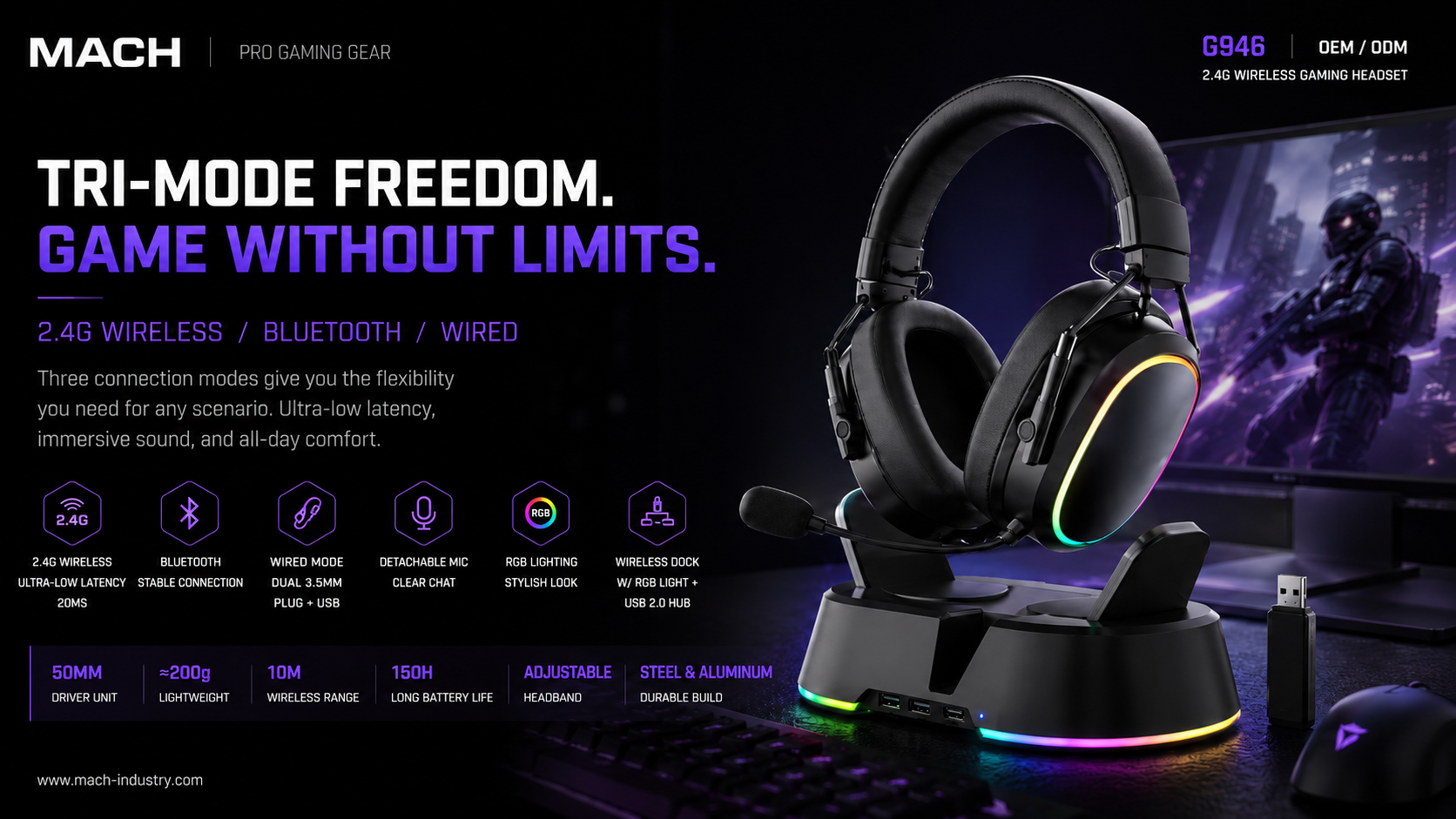
The MACH G946 is a useful development example. Its published configuration combines dedicated 2.4GHz wireless, Bluetooth and 3.5mm wired operation with a 50mm driver, detachable plug-in microphone, RGB lighting, an approximately 200g metal-supported structure and a multifunction wireless dock. This guide uses only confirmed G946 information to explain how an OEM buyer can evaluate a flexible platform without turning the article into another product description.
Why Tri-Mode Gaming Headsets Are Becoming Important for Gaming Brands
Tri-mode platforms help brands address different gaming and listening situations with one product concept, but only when each connection route is assigned a clear purpose and validation scope.
The device environment around gaming audio is fragmented. A buyer may be planning a dedicated wireless route for PC gaming, Bluetooth for compatible mobile or notebook use, and a wired option for equipment that accepts 3.5mm audio. A tri-mode platform can reduce the need to develop three unrelated housings and accessory sets, while giving the final user a choice of connection according to the device and situation.
The benefit is not automatic. More modes introduce more states, instructions, accessories and support questions. The buyer must decide how users switch modes, which microphone route is active, whether the headset requires power in wired operation, how pairing and reconnect work, and what happens when several known devices are nearby. These questions influence firmware review, manuals, packaging and after-sales preparation.
A tri-mode headset is therefore a platform decision rather than a feature-count decision. The preferred platform is the one that demonstrates the required behavior with manageable complexity.
| Brand objective | Relevant connection route | Buyer question |
|---|---|---|
| Dedicated wireless gaming | 2.4GHz through the approved receiver | Are latency, range, microphone and controls verified under the intended test conditions? |
| Convenient wireless listening | Bluetooth on a compatible host | Which profiles, controls, microphone behavior and reconnect rules are confirmed? |
| Simple wired fallback | 3.5mm connection | Does the target device support the required audio and microphone pin arrangement? |
| Retail differentiation | Headset, receiver, RGB and dock as one platform | Which items are included, customizable, replaceable and covered by the approved package? |
What Is a Tri-Mode Gaming Headset?
A tri-mode gaming headset provides three distinct connection methods: dedicated 2.4GHz wireless, Bluetooth and analog 3.5mm wired operation.
Dedicated 2.4GHz wireless normally uses a matched receiver and is evaluated as a controlled headset-to-dongle system. It is commonly selected when a gaming program prioritizes responsive wireless audio and microphone communication. The G946 specification lists 20ms latency for its 2.4GHz mode and transmission up to 10m. Those values belong to the documented G946 route and should not be applied to Bluetooth or wired operation.
Bluetooth is a separate wireless path that can be useful with compatible mobile devices, notebooks and general listening scenarios. Buyers should not assume all Bluetooth implementations have the same latency, codec, profile or microphone behavior. The G946 page confirms Bluetooth operation but does not publish a Bluetooth version or codec, so those details should be confirmed during an actual project review rather than inferred.
The 3.5mm path provides analog wired operation for compatible equipment. It can offer a practical fallback when wireless power, pairing or receiver use is undesirable. Connector arrangement matters: the published G946 material identifies dual 3.5mm wired plugs. A buyer should confirm how that arrangement fits each target device and whether an adapter is required.
These modes complement one another, but they are not interchangeable. Clear documentation should explain each route without promising identical functionality across all three.
G946 Platform Overview: A Flexible Gaming Headset Development Example
G946 is an OEM-ready tri-mode gaming headset and dock platform built around three confirmed connections and a defined acoustic, microphone and mechanical configuration.
The platform supports 2.4GHz wireless, Bluetooth and 3.5mm wired modes. Its 2.4GHz specification lists a JL platform, 20ms latency and transmission up to 10m. No more specific chipset identity or Bluetooth version is claimed because the source material does not provide those details.
The structure combines a stainless-steel support bar with an anodized aluminum frame and has a published approximate headset weight of 200g. RGB lighting supports the gaming appearance. The accompanying wireless dock includes RGB base lighting and a USB 2.0 hub, allowing product teams to evaluate a coordinated headset-and-desktop-accessory proposition.
G946 is a reference platform, not a guarantee that every desired market configuration is already approved. Branding, color, RGB direction, packaging, microphone, dongle, dock, firmware and device behavior should be reviewed against the buyer's final specification.
How OEM Buyers Should Evaluate a Gaming Headset Platform
OEM buyers should evaluate a platform through a written use-case matrix, engineering evidence, sample approval and production controls rather than relying on a feature summary.
Start with connection flexibility. List every target host, required mode, receiver or cable, audio output, microphone input, controls and known limitations. A platform can be described as tri-mode while still requiring different accessories or behavior on different devices. Compatibility should be treated as a testable configuration, not a logo placed on packaging.
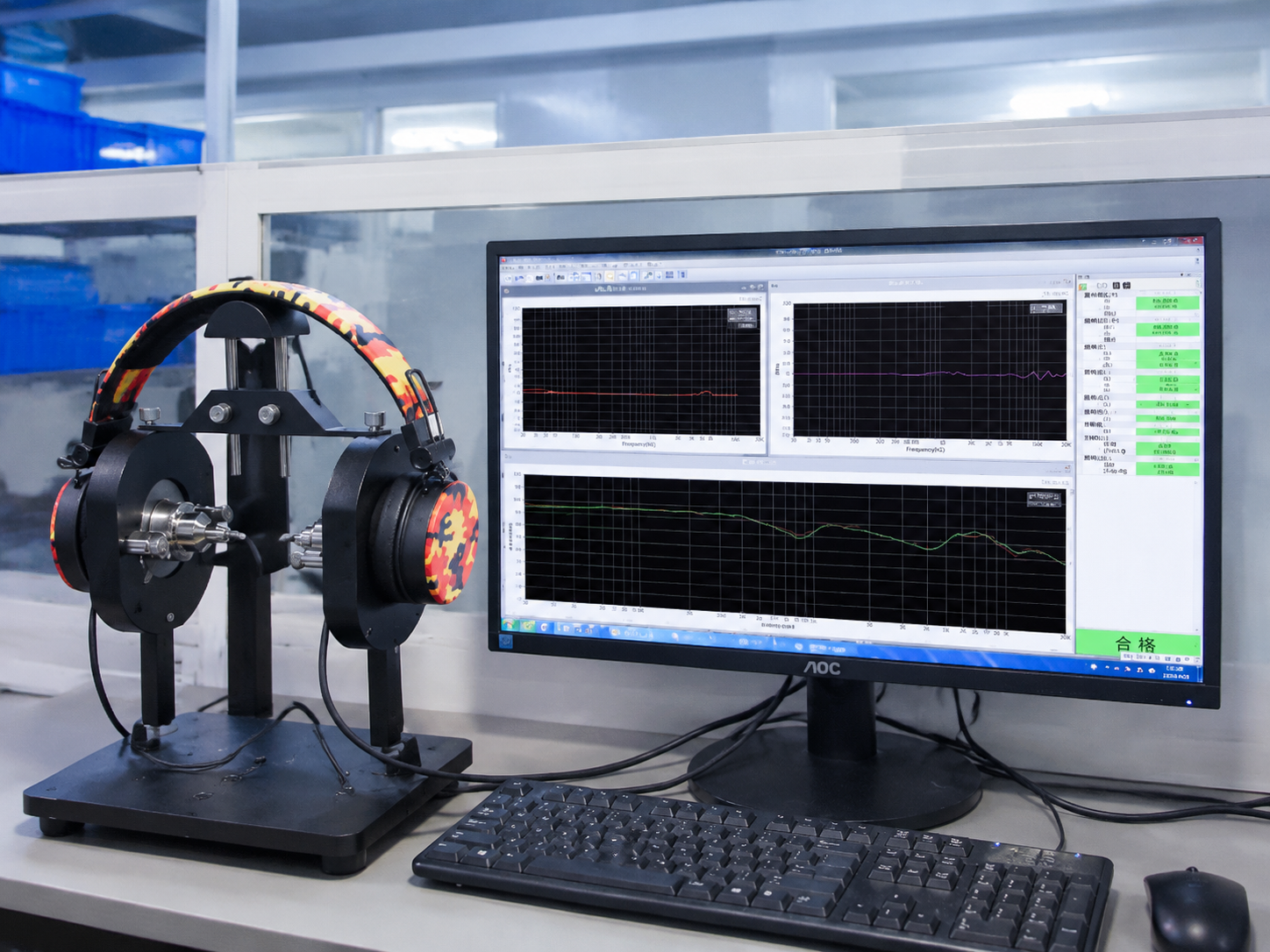
Define audio requirements in listening and measurement terms. Confirm driver, impedance, sensitivity and frequency response, then establish the intended tonal direction, channel balance, distortion limits and cushion seal. If the headset will be used in both gaming and everyday listening, discuss whether one tuning direction is acceptable across those scenarios.
Review the microphone as a system. A detachable design needs mechanical retention and connector-life checks in addition to voice evaluation. Buyers should define pickup clarity, noise environment, positioning, mute behavior, mode routing and whether replacement microphones must be available.
Mechanical assessment should consider weight distribution, clamp, adjustment range, joints, support materials, cushions, cable exits and detachable parts. The G946's approximate 200g weight and metal-supported structure are useful starting facts, but comfort and durability still require sample-based evaluation.
- Define target users, devices, sales markets and the purpose of each connection mode.
- Create a mode-by-device matrix for audio, microphone, controls, RGB, power and accessories.
- Confirm only published technical values and identify every open item requiring a sample or engineering review.
- Set acoustic and microphone targets beyond driver diameter and marketing terminology.
- Evaluate comfort, approximately 200g weight distribution, metal structure and detachable microphone durability.
- Specify receiver, 3.5mm cables, adapters, dock, manuals and retail package contents.
- Separate cosmetic customization from firmware, electrical or structural development.
- Approve a traceable golden sample and release specification before mass production.
- Define incoming, assembly, function, appearance and final inspection requirements.
- Align packaging and compatibility claims with evidence from the final configuration.
Technical Deep Dive: Why Connectivity Architecture Matters in Gaming Headset Development
Connectivity architecture determines how the headset, receiver, Bluetooth host, analog cable, microphone, controls, power system and accessories behave together across real user scenarios.
A product manager should begin with signal paths rather than mode names. In dedicated 2.4GHz operation, digital audio travels through the matched receiver and radio link before conversion and amplification in the headset. Microphone audio returns through that controlled path. The receiver, headset firmware and host interface therefore form one system, and latency or range values must be tied to a defined method and environment.
Bluetooth uses a different host relationship. Pairing, profiles, reconnect priority, call or media behavior and microphone routing can vary by implementation and device. Because the G946 source confirms Bluetooth but does not publish a version or codec, an OEM brief should list the required behavior and ask for verification on representative hosts. It should not convert an unspecified Bluetooth path into a low-latency claim.
Analog 3.5mm operation removes the wireless link but introduces connector and host questions. The G946 documentation identifies dual 3.5mm plugs, which commonly separate headphone and microphone connections. The buyer must check the intended equipment and any adapter requirement. Wired mode may also change which onboard controls, RGB functions or processing remain available, so the manual and packaging should describe confirmed behavior.
Mode switching is an architectural concern of its own. Teams should define whether inserting a cable overrides wireless operation, how the headset changes between 2.4GHz and Bluetooth, which device reconnects after power cycling, and what users hear or see during transitions. Even when these behaviors seem minor, unclear priorities can create support tickets and inconsistent review results.
The accessory system belongs in the same architecture. A receiver needs a defined interface, storage and replacement approach. The detachable microphone needs a keyed orientation, retention target and spare-part identity. The G946 dock combines wireless headset placement, RGB base lighting and a USB 2.0 hub, so buyers should distinguish dock power and hub functions from headset audio connections. USB audio is not confirmed by the published G946 specification and should not be implied.
Platform flexibility comes from controlled choices, not from assuming every route behaves alike. A robust development specification describes each mode, host, accessory and limitation independently, then identifies shared user expectations such as volume, microphone clarity and understandable controls. This architecture becomes the basis for prototypes, test plans, manuals, packaging claims and after-sales troubleshooting.
For a private-label brand, this approach also supports future product planning. The team can decide whether the complete headset-and-dock configuration is appropriate for one channel while a different accessory package serves another. Each version still needs a distinct BOM, package list and approval record, but a well-documented base architecture makes those decisions easier to manage.
| Architecture area | What to define | Risk if left unclear |
|---|---|---|
| 2.4GHz route | Receiver, latency method, range conditions, audio, microphone and controls | Claims may not match the approved host or test method |
| Bluetooth route | Required behavior, profiles, reconnect and representative host checks | Buyers may assume an unpublished version, codec or latency |
| 3.5mm route | Plug arrangement, microphone path, adapters and powered functions | Wired behavior may differ from packaging expectations |
| Mode transitions | Priority, switching, prompts, power and remembered devices | Users may experience confusing or inconsistent operation |
| Accessory system | Receiver, microphone, cables, dock, hub, spares and package list | Missing or incompatible parts can stop a valid mode from working |
Design and Manufacturing Considerations for Custom Gaming Headsets
Custom development should preserve the validated connection architecture while controlling the mechanical, visual, accessory and packaging changes that create the brand's commercial product.
Industrial design choices affect more than appearance. Color and finish must be compatible with the selected materials and production process. Logo position should remain legible without interfering with adjustment, cushions, controls or lighting. RGB direction should be reviewed under realistic ambient light and linked to confirmed control behavior.
The dock should be evaluated as its own subassembly and as part of the retail set. Confirm RGB appearance, headset placement, USB 2.0 hub function, power arrangement, cable routing, stability and package protection. Do not describe the dock as providing USB audio unless that function is specifically verified.
Manufacturing release should include approved drawings, BOM, firmware, CMF references, package contents, labels, inspection limits and golden samples. Functional checks should cover the three modes, microphone, RGB and dock functions against the final configuration. Any change to radio, receiver, microphone, driver, material, firmware or accessory set should pass documented review before substitution.
Tri-Mode Gaming Headset OEM Development Process
A controlled OEM process moves from requirements and platform selection through engineering validation, prototypes, testing and a documented mass-production release.
Requirement definition comes first. The buyer should provide target markets, devices, sales channel, expected user scenarios, required connection modes, branding direction, package concept and quantity range. Open technical questions should be visible rather than hidden behind a generic request for a tri-mode headset.
Platform selection compares the brief with the confirmed G946 base configuration. Design, engineering validation and testing then convert the selected branding, mode, accessory and packaging requirements into traceable prototypes. No completed G946 certification is claimed in this article; compliance requirements must be planned for the final configuration and destination.
Before mass production, both parties should approve the released specification, BOM, firmware, package list, golden sample, test plan and inspection criteria. Production follows those references through material control, assembly, function testing and final inspection.
Conclusion
The right tri-mode platform is the one whose three connection routes, mechanical design, accessories and customization scope match a brand's documented users and devices.
G946 demonstrates how one platform can combine dedicated 2.4GHz wireless, Bluetooth and 3.5mm wired operation with a confirmed 50mm driver, detachable microphone, RGB, lightweight metal-supported structure and multifunction dock. Its value to an OEM buyer lies in the choices it enables, not in treating every mode as identical.
Brands should select the platform through a use-case matrix, verified technical data, representative samples and a controlled production specification. This creates more accurate claims, clearer manuals, stronger quality planning and fewer avoidable compatibility assumptions.
To evaluate a G946-based private-label program, share your target markets, intended devices, connection priorities, branding, RGB, microphone, receiver, dock and packaging requirements with MACH industry.
Frequently Asked Questions
What is a tri-mode gaming headset?
A tri-mode gaming headset provides three distinct connection paths: dedicated 2.4GHz wireless, Bluetooth and analog 3.5mm wired operation. Each mode can have different device, microphone, control and power behavior.
Why do brands choose 2.4GHz, Bluetooth and wired connections in one headset?
The three routes can address different scenarios: dedicated wireless gaming, convenient wireless listening and wired use with compatible equipment. Buyers should still define and test the intended behavior of each route.
Is a tri-mode headset suitable for private-label gaming brands?
It can be suitable when the target users need several connection choices and the brand can clearly document devices, accessories, switching and limitations. More modes also require broader validation and support preparation.
What is the specified latency of the G946?
The published G946 specification lists 20ms latency for its dedicated 2.4GHz wireless mode. This value should not be applied to Bluetooth or 3.5mm wired operation.
Does the G946 support USB audio?
USB audio is not confirmed in the published G946 specification. The dock includes a USB 2.0 hub, while the confirmed headset connections are 2.4GHz wireless, Bluetooth and 3.5mm wired.
What microphone does the G946 use?
G946 uses a detachable plug-in microphone specified at 50Hz–16kHz, -42dB ±3dB sensitivity and no more than 2.3kΩ impedance. The product card identifies ENC support for the selected direction.
What should buyers test before approving a tri-mode headset?
Buyers should test each required host and mode for audio, microphone, controls, switching, reconnect, range where relevant, accessories and limitations. Acoustic, mechanical, RGB, dock and package checks should use the final configuration.
What G946 customization options can MACH evaluate?
MACH can evaluate branding, color, RGB appearance, packaging, microphone, receiver, dock, firmware and platform behavior requirements. Availability, cost, MOQ and timing depend on engineering review.
What should a buyer prepare before contacting a gaming headset manufacturer?
Prepare target markets, intended devices, use cases, required connection modes, branding and color direction, microphone and dock requirements, package contents, compliance needs and expected quantity.
How does tri-mode gaming headset OEM development work?
The process normally covers requirement definition, platform selection, industrial and package design, engineering validation, traceable prototypes, testing, final specification approval and controlled mass-production release.
Related Resources
Need OEM/ODM gaming audio solutions?
Contact MACH Industry to discuss your gaming headset, gaming earbuds, or private-label audio project.
Contact MACH Industry