Home > Resources > Gaming Headset Guide
How to Develop a Bluetooth Wireless Gaming Headset for Global Gaming Brands
A technical buyer guide to Bluetooth gaming headset OEM development, covering wireless architecture, latency planning, 50mm drivers, ENC microphones, customization, compliance, and production risk.
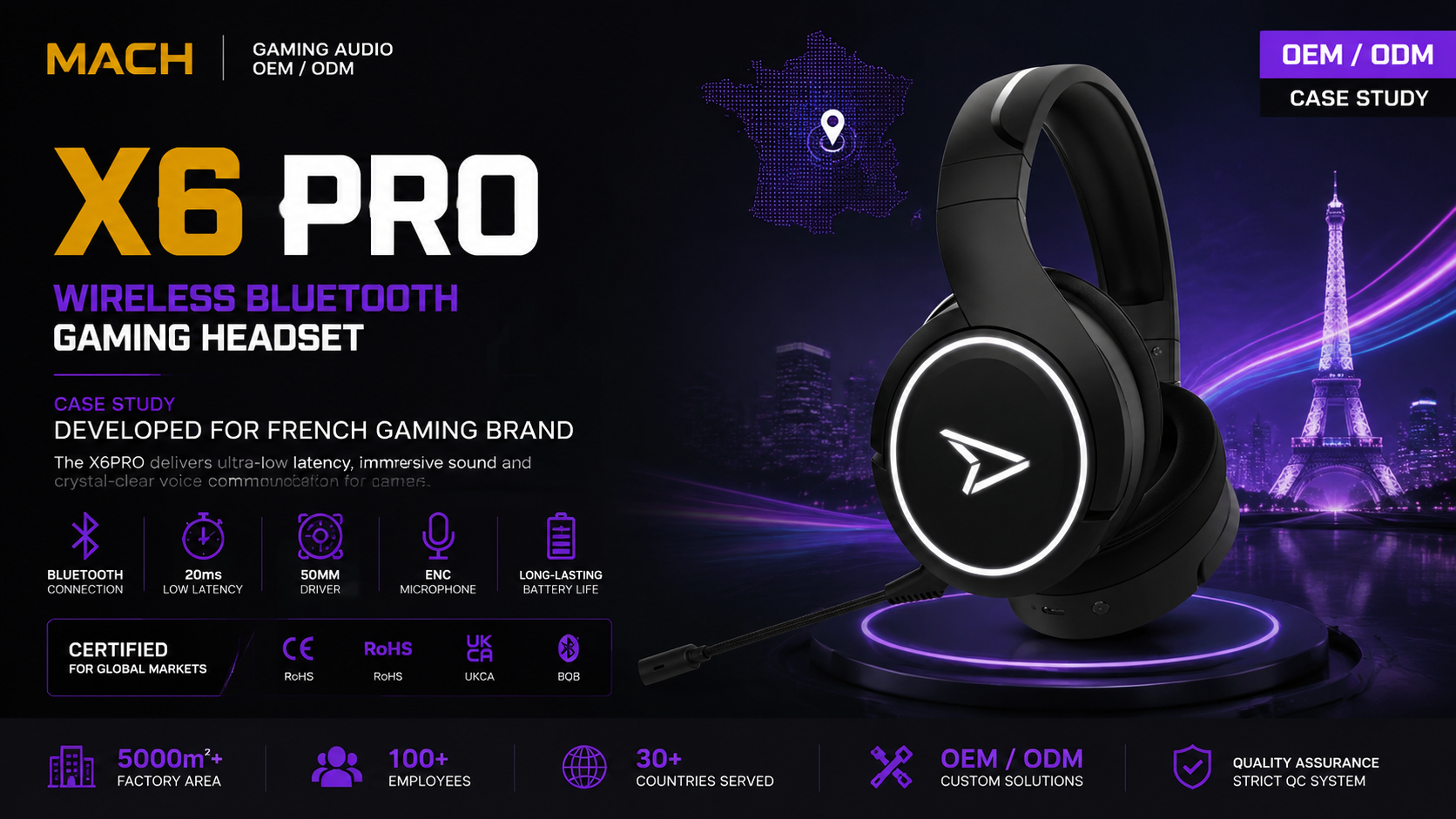
Developing a wireless gaming headset requires balancing wireless performance, audio quality, microphone clarity, customization flexibility, and certification requirements. A Bluetooth chipset may define part of the architecture, but the commercial result also depends on RF integration, antenna placement, firmware, acoustic tuning, controls, mechanical design, packaging, compliance planning, and repeatable production.
This guide uses the X6pro France OEM project as an engineering and sourcing reference. X6pro is a Bluetooth wireless gaming headset platform designed for a low-latency gaming application, with a 50mm speaker driver and an ENC noise-reduction microphone. The France project included private-label logo and packaging customization plus coordination for CE, RoHS, UKCA, and BQB requirements. Rather than repeating the case study, the article explains how a gaming brand can evaluate a Bluetooth gaming headset OEM program for European and wider global markets.
What Should Brands Consider Before Developing a Bluetooth Gaming Headset?
Begin with target markets, user scenarios, host devices, wireless priorities, audio positioning, customization scope, compliance destinations, and measurable approval criteria.
A Bluetooth gaming headset intended mainly for mobile users has a different product brief from a dedicated PC esports headset. Mobile compatibility, convenient pairing, music playback, calls, and use across multiple compatible devices may carry more weight. A PC or console product may prioritize a dedicated transmitter and a tightly controlled low-latency path. The brand should identify its primary scenario before deciding which wireless architecture and feature set belong in the product.
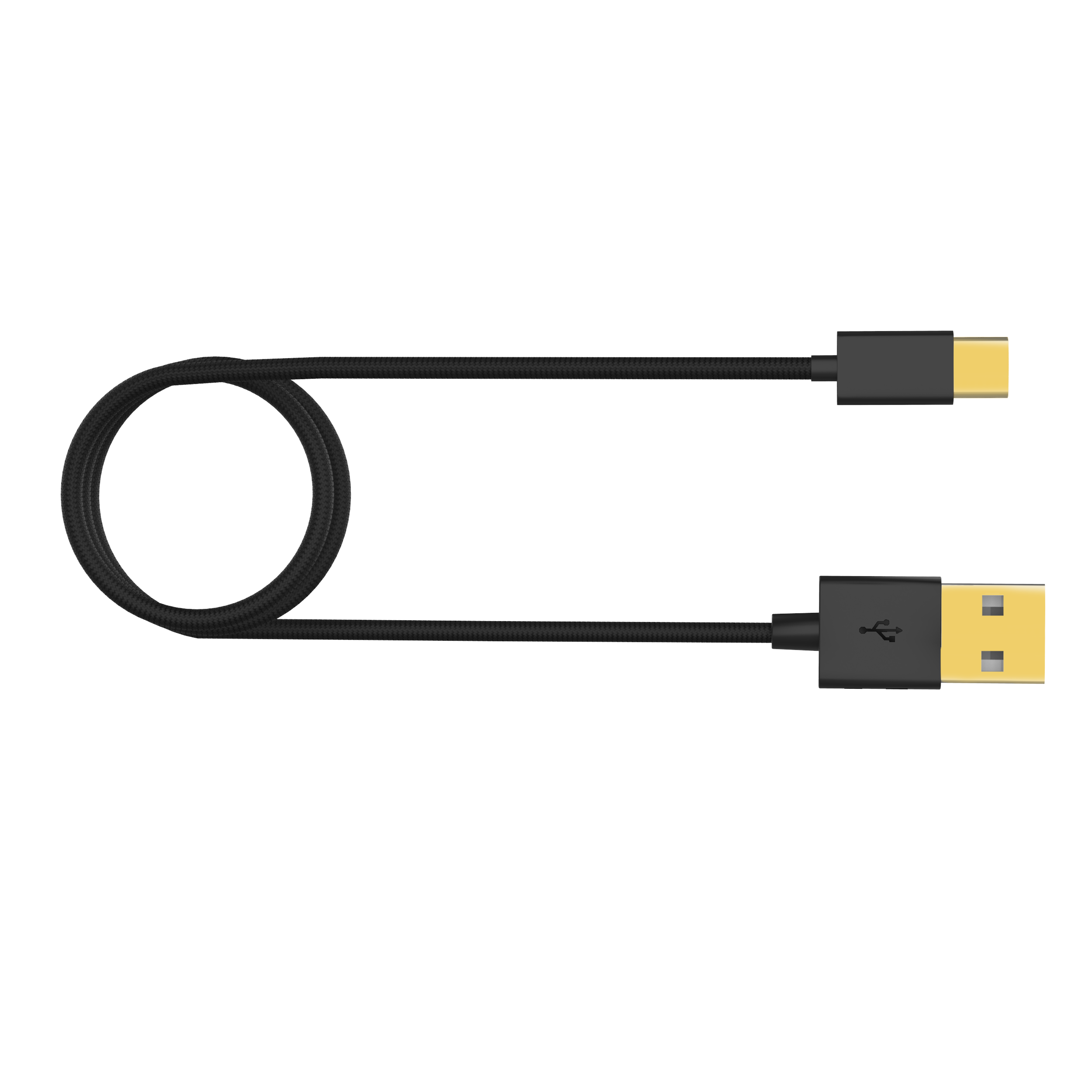
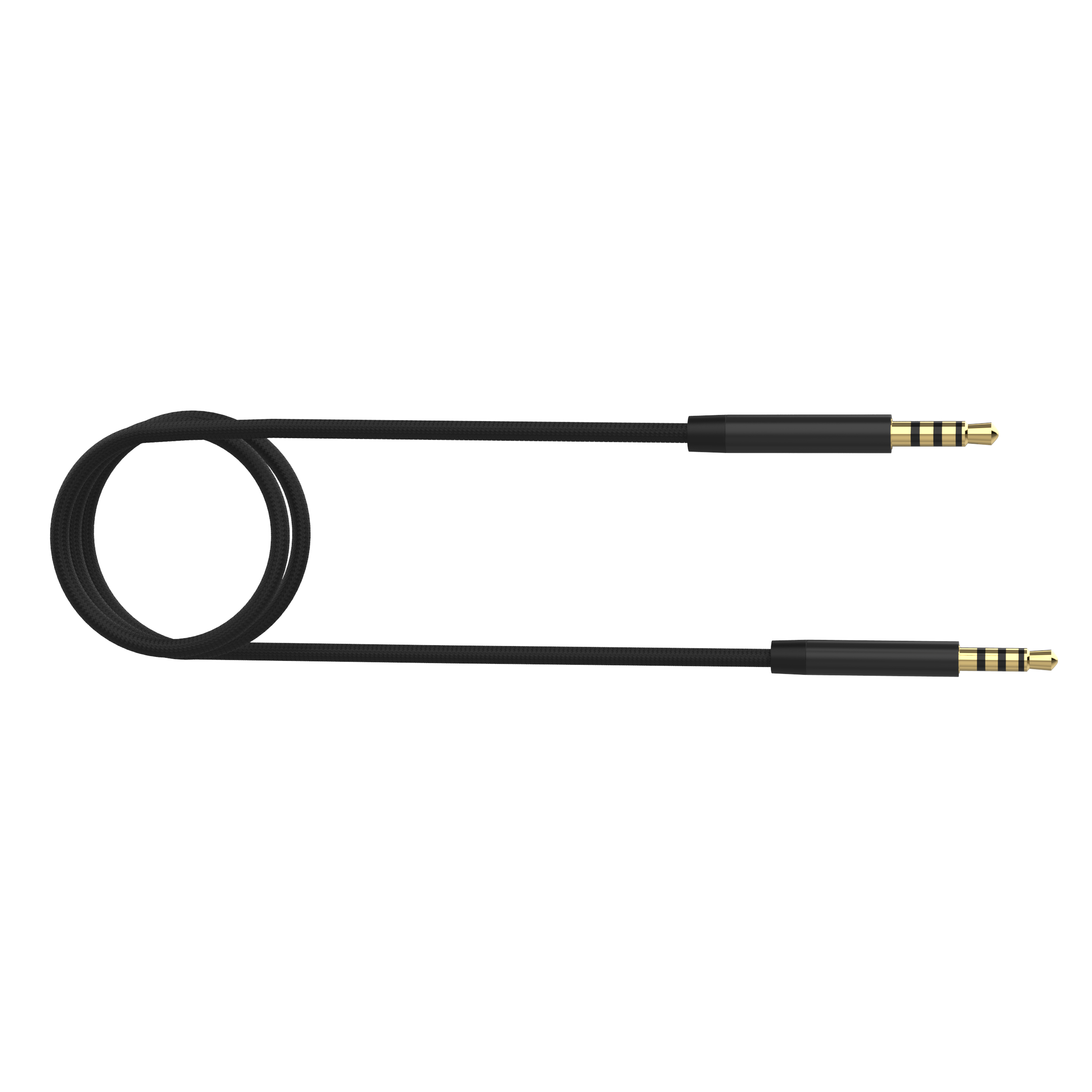
Commercial positioning should describe the complete retail SKU, not only a target factory price. The headset, charging and audio cables, microphone, packaging, manuals, labels, certification preparation, inspection, and logistics all contribute to cost and launch risk. A clear distinction between essential and optional features helps the Bluetooth gaming headset manufacturer recommend an appropriate platform.
Customization depth affects engineering responsibility. Logo, color, CMF, packaging, accessories, and voice prompts may be available on a mature gaming headset ODM platform. New mechanics, PCB changes, control logic, acoustic targets, or extensive firmware behavior require broader validation. Compliance should also be discussed at the beginning because the final configuration and intended sales countries influence the applicable requirements.
Bluetooth Gaming Headset vs 2.4GHz Wireless Gaming Headset
Bluetooth emphasizes convenient direct compatibility with consumer devices, while a 2.4GHz gaming system normally uses a dedicated USB transmitter for a more controlled gaming connection. The correct choice depends on the brand's priority use cases.
Bluetooth is valuable when users expect to pair directly with phones, tablets, laptops, or other compatible devices. It can support a headset beyond gaming, including music, calls, and general audio. Actual latency, microphone behavior, codec support, and connection performance depend on the headset implementation, Bluetooth profiles, firmware, host hardware, and operating system.
A 2.4GHz gaming headset generally uses a matched USB transmitter. This architecture can give engineers more control over audio transport, microphone return, pairing, and gaming-oriented latency. However, it requires a transmitter and verified compatibility with the intended USB interfaces, PCs, consoles, adapters, and operating environments.
Some brands choose Bluetooth because convenience and mobile use are central to the offer. Others choose 2.4GHz for a dedicated gaming experience, while dual-mode products serve both scenarios at the cost of additional controls, firmware states, accessories, testing, and user instructions. Buyers should evaluate the customer journey rather than assuming one radio technology is universally superior.
| Evaluation point | Bluetooth wireless | 2.4GHz wireless |
|---|---|---|
| Latency | Depends on implementation, mode, codec, firmware, and host device; gaming modes require explicit validation | Often developed around a dedicated low-latency link between a matched transmitter and headset |
| Compatibility | Direct pairing across a broad range of compatible mobile and consumer devices | Requires a compatible USB transmitter and target-platform verification |
| Gaming application | Suitable when Bluetooth convenience and supported gaming-mode behavior fit the product brief | Common for PC and console scenarios prioritizing a dedicated gaming connection |
| Mobile usage | Convenient for phones, tablets, music, calls, and general audio | Possible with compatible transmitters and interfaces, but less universal |
| Development complexity | Profiles, codecs, pairing, reconnection, firmware, host variation, and power management | RF link, dongle behavior, USB compatibility, antenna performance, and synchronized firmware |
X6pro France OEM Project Overview
X6pro provided a Bluetooth gaming headset platform for a French gaming brand seeking low-latency application support, a 50mm driver, an ENC microphone, private-label execution, and European compliance coordination.
The X6pro platform was selected for a France OEM gaming headset project centered on Bluetooth wireless use. It is designed for a low-latency gaming application around a 20ms target. That wording is important: it describes the intended platform mode and does not mean that every Bluetooth host, firmware version, use condition, or test method automatically produces the same result.
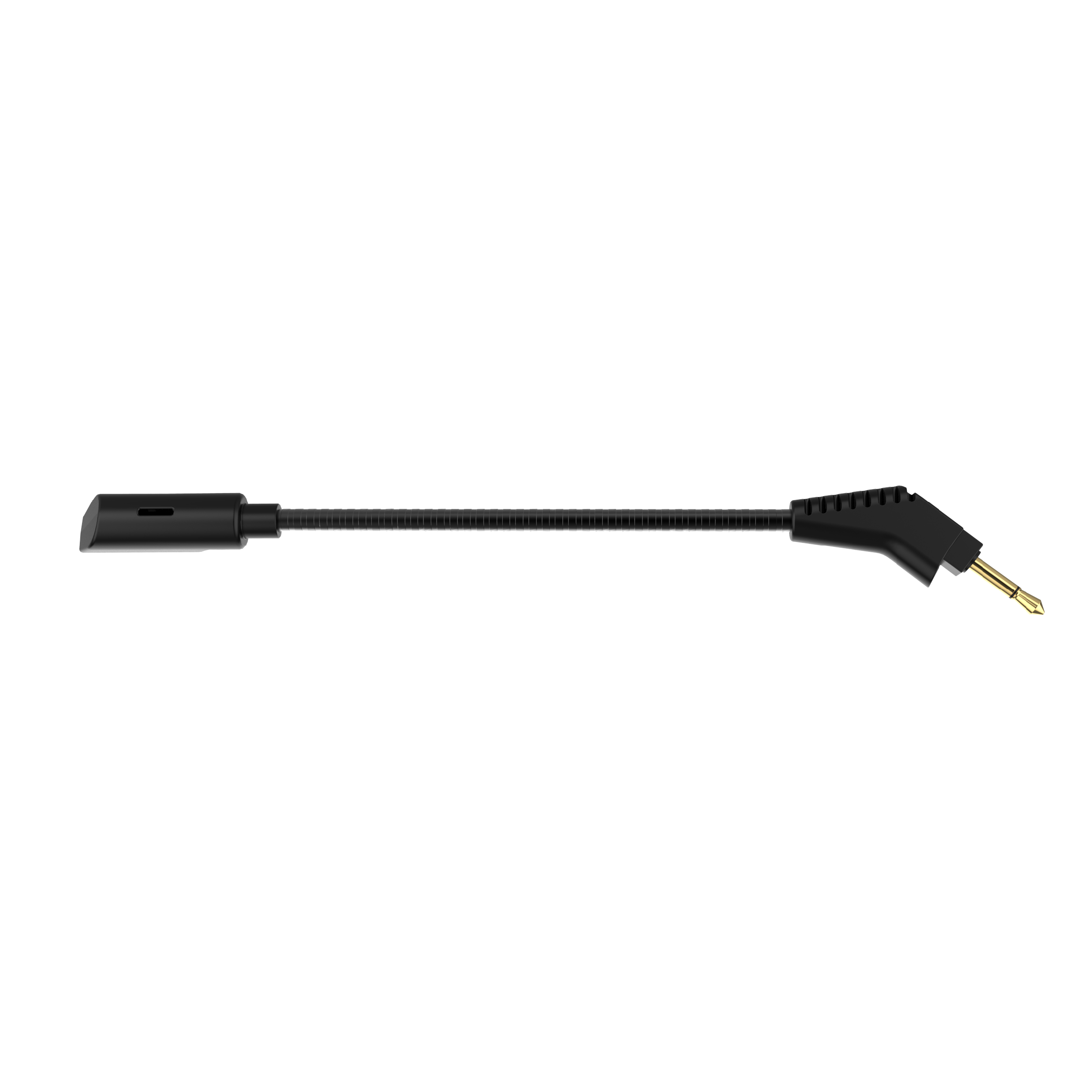
The audio architecture uses a 50mm speaker driver, while the microphone includes ENC noise-reduction positioning for online communication. Both features must be assessed as systems. Driver performance depends on chamber design, ear-pad sealing, tuning, fit, and impedance. Microphone clarity depends on capsule selection, boom geometry, placement, processing, wireless transport, and environmental conditions.
MACH supported the project through industrial design coordination, mechanical development, acoustic tuning, firmware customization, testing support, certification coordination, private-label logo and packaging implementation, and mass-production planning. The scope demonstrates why a European gaming headset supplier program connects product engineering, brand execution, compliance documents, and production control.
Planning a Bluetooth gaming headset for your brand?
Share your target countries, user scenarios, device list, latency expectations, customization scope, and compliance needs for an OEM/ODM platform discussion.
Discuss your project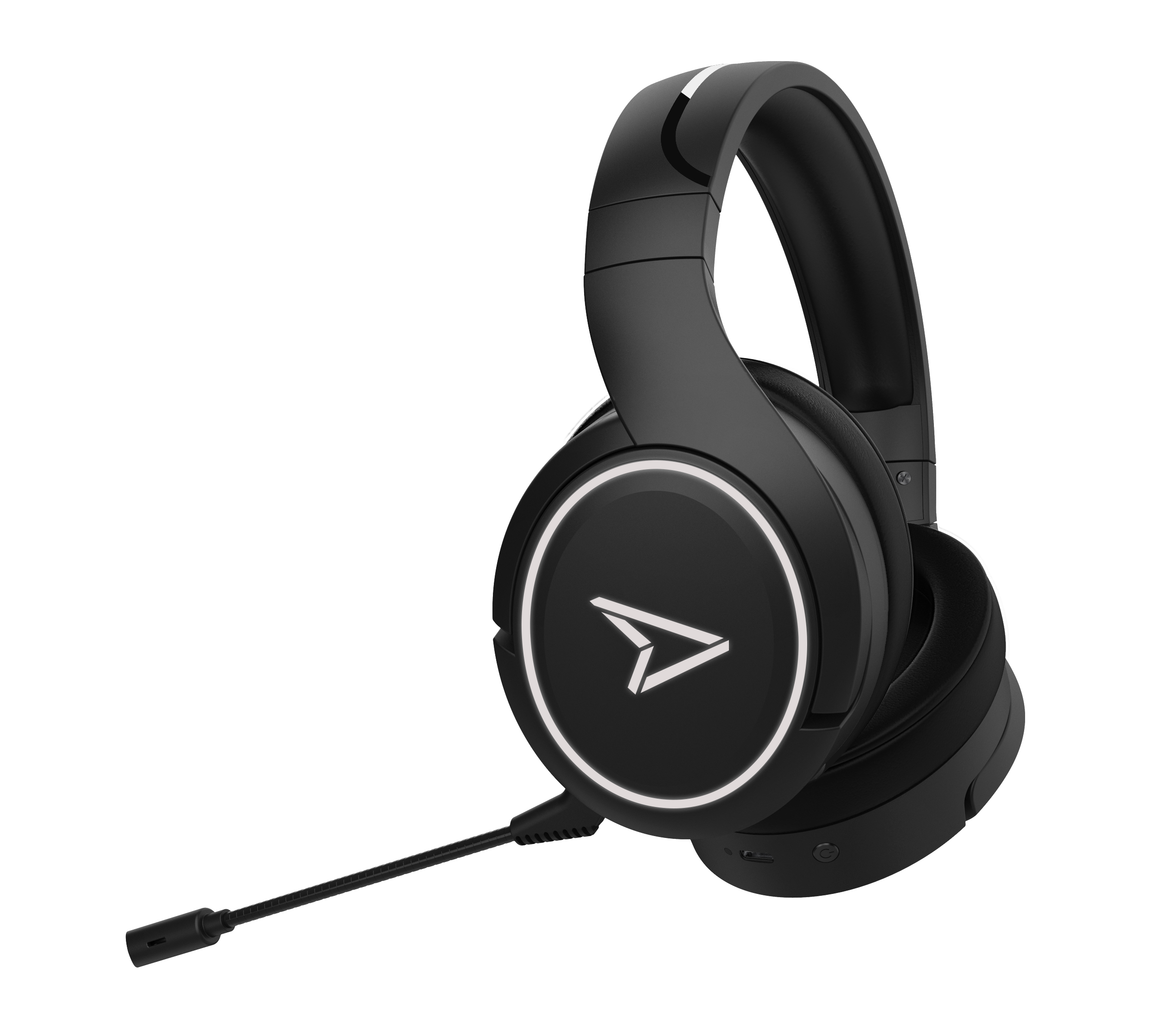
Technical Deep Dive: Engineering Considerations Behind Bluetooth Gaming Headset Development
Bluetooth gaming performance is created by the complete RF, antenna, firmware, acoustic, microphone, mechanical, and power-management system, not by the chipset name alone.
Bluetooth offers strong value for mobile compatibility, convenient pairing, and use across compatible consumer devices. For gaming, the engineering team must also consider latency optimization, two-way audio behavior, reconnection, stability, and power use. These factors depend on the selected profiles and modes, firmware logic, host support, and how the complete system is integrated.
A chipset provides protocol and processing capabilities, but it cannot compensate for poor RF integration. Antenna location must account for the PCB ground, battery, driver magnets, metal reinforcement, wiring, controls, decorative parts, enclosure geometry, and the user's head. A change to the earcup structure or surface materials can alter antenna surroundings after an early prototype appears functional.
Connection stability needs testing across representative devices and environments. The headset may operate near Wi-Fi routers, phones, computers, wireless peripherals, and other radios. Engineers should review pairing, reconnection, range behavior, mode transitions, audio interruption, and recovery instead of checking only whether a connection can be established once.
Firmware connects the hardware to the user experience. It controls pairing, prompts, buttons, indicators, mute, volume, low-power behavior, charging states, sleep logic, and gaming-mode selection. Voice prompts, manuals, packaging claims, and control mappings must describe the same behavior. Firmware versions also need to remain traceable from prototypes through pilot and mass production.
The X6pro platform is designed for a low-latency gaming application with a 20ms target, but this should not be generalized to all Bluetooth products. A meaningful latency statement requires a defined mode, host device, signal path, firmware, and test method. Buyers should ask what condition a target describes and ensure that their intended devices support the required operating path.
Acoustics and mechanics influence wireless development too. The driver chamber and vents affect tuning; ear pads affect seal and user variation; microphone placement affects voice pickup; internal space constrains antenna and battery positions. Power management must account for radio modes, volume, prompts, processing, standby logic, and charging. For that reason, this article does not state an unconfirmed battery duration.
A mature Bluetooth gaming headset OEM platform can reduce risk by providing an established RF layout, mechanical architecture, firmware base, acoustic starting point, assembly method, and test baseline. Customization can still create new risks, especially when it changes antenna surroundings, PCB, firmware, microphone processing, battery, or structure. Those changes should be identified and validated explicitly.
Why 50mm Drivers Are Used in Gaming Headset Development
A 50mm driver is a familiar foundation for over-ear gaming products, but diameter alone does not determine sound quality, positional cues, comfort, or market tier.
The 50mm format fits many over-ear structures and can support the output and bass target desired by gaming brands when integrated correctly. Yet two nominally similar drivers can differ in diaphragm material, motor design, sensitivity, impedance, distortion, matching, and consistency. Component diameter should therefore be one part of the acoustic specification rather than the headline proof of performance.
The assembled acoustic system includes rear and front chamber volume, vents, damping, grille openings, leakage paths, driver-to-ear distance, and ear-pad geometry. Ear-pad material and compression change sealing, bass perception, comfort, and variation across users. Mechanical tolerances may also affect left-right consistency.
Brands should define a sound target based on intended users and content. Speech intelligibility, positional information, impact, music playback, and fatigue may carry different priorities. Appropriate measurements and controlled listening can assess the complete headset. A 50mm driver is not automatically better than a 40mm driver; the better solution is the system that meets the product brief reliably.
How ENC Microphones Improve Gaming Communication
ENC processing is designed to reduce selected environmental noise in the outgoing microphone signal so teammates receive clearer speech, but the result depends on hardware, placement, processing, and real noise conditions.
Online gaming communication needs intelligible voice at a stable level. Keyboard sounds, fans, nearby speech, and room noise can compete with the user's voice. ENC algorithms analyze the microphone signal and suppress selected background components before transmission. The aim is useful speech clarity, not simply the strongest possible filtering.
The microphone capsule, boom length, pickup direction, distance from the mouth, acoustic ports, and mechanical vibration all affect the source signal available to the algorithm. Firmware parameters must balance noise reduction with natural speech. Excessive processing can create pumping, clipping, or an artificial voice character, so representative user testing matters.
ENC should not be confused with ANC. In this context, ENC addresses the outgoing communication signal, whereas active noise cancellation primarily reduces unwanted sound heard by the wearer. Accurate terminology in packaging, manuals, and listings helps prevent unrealistic expectations and supports clearer supplier approval criteria.
Certification Planning for Global Gaming Headset Markets
Certification scope depends on the destination market, final Bluetooth implementation, battery and charging configuration, supplied accessories, labels, packaging, and the responsible economic operator.
CE marking supports relevant European Union regulatory requirements for the final product, while UKCA relates to applicable Great Britain requirements. RoHS addresses restrictions on specified hazardous substances in electrical and electronic equipment. The required standards, technical documentation, labeling, and declarations depend on the exact product and market; these marks should not be treated as interchangeable logos added at the end of packaging design.
BQB commonly refers to Bluetooth Qualification. Qualification planning connects the implemented Bluetooth design, profiles, components, declarations, and product listing strategy. Using a Bluetooth-capable chipset does not by itself finish the brand's qualification responsibilities. The supplier and buyer should confirm which qualified design is used and what documentation the marketed product requires.
The X6pro France OEM project included coordination around CE, RoHS, UKCA, and BQB requirements. This does not mean every future customization automatically holds the same status. PCB, radio, battery, charging, firmware, model naming, accessories, and destination changes may affect the compliance plan. Certification should be reviewed against the final configuration before production and market launch.
OEM Development Process for Bluetooth Gaming Headsets
A controlled project progresses from requirements and platform selection through multidisciplinary engineering, prototypes, testing, compliance preparation, pilot production, and mass production.
Requirement review documents target countries, users, sales channels, gaming devices, Bluetooth scenarios, latency expectations, audio and microphone positioning, branding, packaging, certification needs, and commercial constraints. MACH can then evaluate whether X6pro or another custom wireless gaming headset platform fits the brief and identify the changes requiring engineering work.
Industrial design and engineering validation should connect external appearance with internal RF, acoustic, mechanical, microphone, battery, PCB, and control requirements. Prototype rounds need defined objectives and an issue list. Approval should cover physical samples, specifications, firmware versions, CMF standards, accessories, packaging files, and acceptance criteria.
Testing support may include pairing, reconnection, target-device compatibility, gaming-mode operation, RF stability, acoustic and microphone assessment, charging, controls, indicators, mechanical reliability, labels, and packaging. Certification coordination uses the final configuration and intended markets. Pilot production verifies assembly and inspection methods before volume manufacturing.
- Requirement review
- OEM or ODM platform selection
- Industrial design coordination
- RF, mechanical, firmware, acoustic, and microphone validation
- Prototype and revision control
- Functional and compatibility testing
- Certification preparation
- Pilot and mass-production control
Wireless Gaming Headset OEM Buyer Checklist
A structured RFQ helps the supplier recommend a suitable platform, identify open engineering questions, and separate confirmed requirements from optional ideas.
Buyers should provide intended countries and channels before asking for a final compliance or packaging plan. The device list should name actual phones, computers, consoles, operating systems, and adapter scenarios that matter. If latency is commercially important, define the intended gaming mode, host, signal path, and acceptance method rather than requesting a headline number without conditions.
Battery expectations should include volume, wireless mode, processing, lighting, standby behavior, and test assumptions. Brand customization should cover logo process, CMF references, packaging languages, labels, barcodes, accessories, manuals, and importer information. Clear inputs allow the gaming headset supplier in China to expose tradeoffs before sampling instead of discovering them during production.
- Target country and sales channel
- Bluetooth use cases and host-device list
- Gaming devices and operating systems
- Latency requirement with defined conditions
- Driver size and acoustic target
- Microphone and ENC expectations
- Battery target with test assumptions
- Firmware, controls, indicators, and prompts
- Logo, color, and CMF requirements
- Accessories and retail packaging
- Certification and labeling scope
Conclusion
A market-ready Bluetooth gaming headset is the result of aligned wireless, acoustic, microphone, mechanical, firmware, compliance, branding, and production decisions.
The X6pro France OEM project illustrates how a Bluetooth platform can support gaming-brand requirements when engineering and compliance are considered together. Bluetooth adds mobile convenience and broad device relevance, while a low-latency gaming application requires careful firmware and host-path planning. The 50mm driver and ENC microphone also need system-level evaluation rather than specification-only approval.
Brands can reduce risk by defining target scenarios, choosing the correct OEM or ODM depth, validating real devices, controlling versions, planning certification early, and approving production criteria. MACH supports Bluetooth gaming headset development through industrial design, mechanics, acoustics, firmware customization, testing support, certification coordination, private-label packaging, and mass-production planning.
Need support with wireless gaming audio development?
Send your target markets, host-device list, Bluetooth requirements, performance priorities, customization scope, and compliance plan for a project review.
Contact MACHFrequently Asked Questions
Is Bluetooth suitable for gaming headsets?
Bluetooth can suit gaming headsets when mobile compatibility, convenience, and direct connection to supported devices are important. Gaming suitability depends on the implemented mode, latency path, microphone behavior, firmware, and host-device support rather than Bluetooth alone.
What is the difference between a Bluetooth and 2.4GHz gaming headset?
Bluetooth normally pairs directly with compatible consumer devices. A 2.4GHz gaming headset usually uses a dedicated USB transmitter and matched link designed around gaming audio and microphone communication. Each approach has different compatibility, accessory, firmware, and validation requirements.
Can MACH customize Bluetooth gaming headsets?
Yes. MACH supports project-dependent industrial design, mechanical, acoustic, firmware, logo, CMF, accessory, manual, label, and packaging customization. Feasibility and testing requirements depend on the selected platform and requested changes.
What can be customized in OEM gaming headset development?
Customization can include industrial design, structure, controls, colors, finishes, logo processes, ear pads, microphone configuration, acoustic tuning, firmware behavior, prompts, accessories, packaging, manuals, and market labels.
Why do gaming headsets use 50mm drivers?
A 50mm driver is a familiar option for over-ear gaming designs and can support suitable output and acoustic targets. Final performance also depends on driver construction, chamber design, damping, ear-pad seal, impedance, tuning, and consistency.
What is ENC microphone technology?
ENC microphone processing is designed to reduce selected environmental noise in the outgoing communication signal so speech remains clearer. It differs from ANC, which primarily reduces unwanted sound heard by the wearer.
What certifications are required for Bluetooth gaming headsets?
Requirements depend on the destination market, final radio and battery configuration, accessories, labels, and packaging. European and UK programs may involve CE, RoHS, UKCA, and Bluetooth qualification planning, but the exact scope must be reviewed for the final product.
How long does wireless gaming headset development take?
Timing depends on whether the project adapts a mature ODM platform or requires new mechanics, electronics, firmware, acoustics, tooling, packaging, testing, and certification work. A reliable schedule requires a reviewed requirement and change list.
Should gaming brands choose OEM or ODM development?
ODM is suitable when an established platform meets the core product brief with controlled customization. Deeper OEM development is appropriate when distinctive mechanics, electronics, firmware, acoustics, or accessories justify broader engineering and validation.
How can brands reduce wireless headset development risk?
Define markets and devices, select a suitable platform, review RF and mechanics together, control firmware and specification versions, test representative scenarios, plan compliance early, and verify pilot-production inspection criteria.
Related Resources
Need OEM/ODM gaming audio solutions?
Contact MACH Industry to discuss your gaming headset, gaming earbuds, or private-label audio project.
Contact MACH Industry