Home > Resources > OEM Knowledge
How Buyers Freeze a Feature-Rich Wired Gaming Headset Configuration Before ODM Production
A buyer guide to freezing USB 7.1, Type-C, vibration, RGB, microphone, cable, firmware-name and packaging requirements before wired gaming headset mass production.
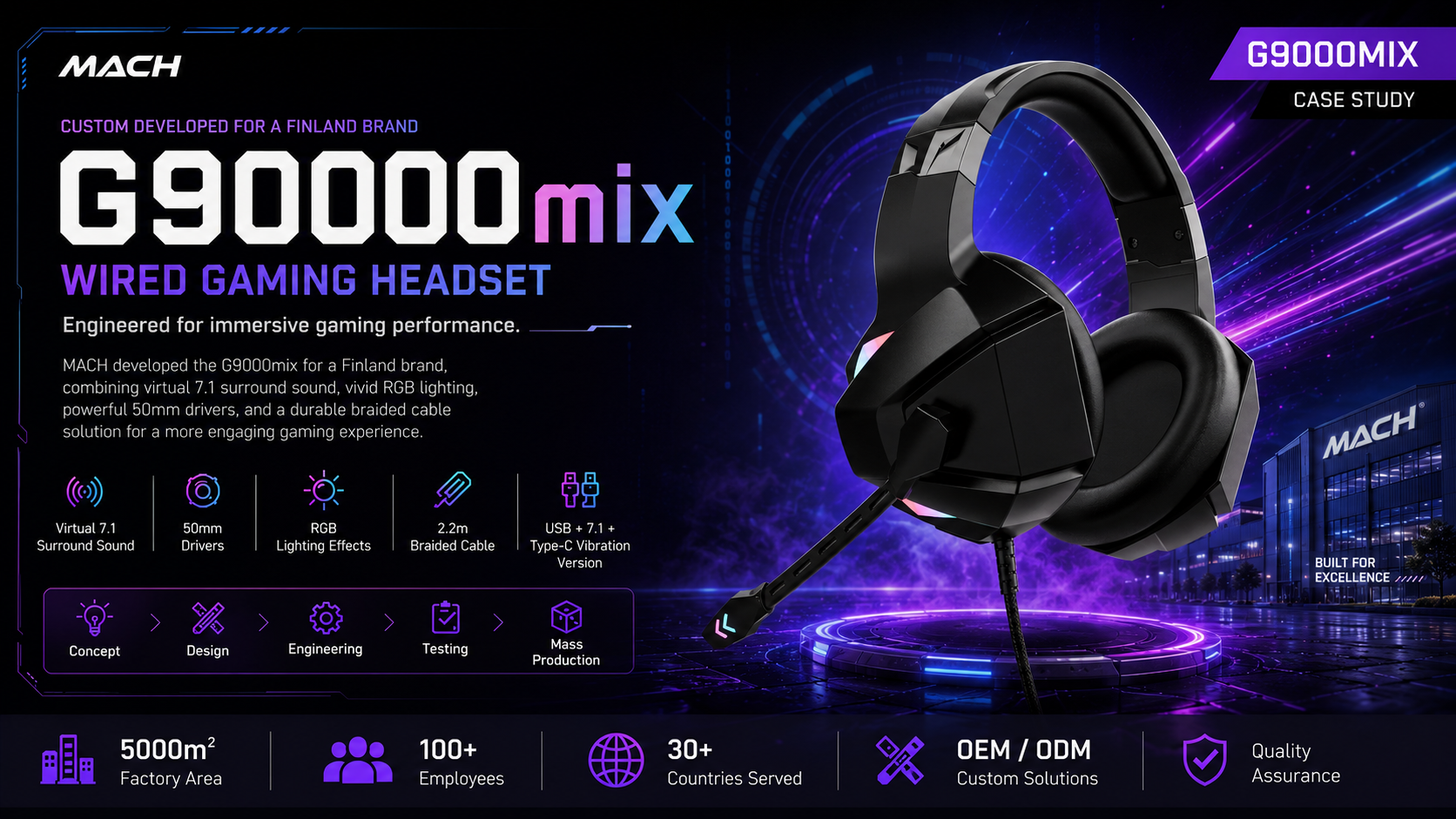
Gaming brands should freeze a feature-rich wired headset configuration by converting every product claim into a controlled hardware, firmware, accessory, packaging and test requirement before authorizing mass production. A phrase such as "USB 7.1 + Type-C vibration headset" is not a production specification. The buyer and ODM manufacturer still need to define connector roles, signal paths, power behavior, audio mode, vibration behavior, RGB operation, microphone target, cable construction, device name, pack-out and approval evidence.
The G9000mix Finland ODM project is a useful reference because its public scope combined a wired RGB headset platform with virtual 7.1 positioning, 50mm drivers, a 2.2m braided cable, USB + 7.1 + Type-C vibration configuration, microphone improvement, device-name adjustment, connector-finish requirements and customized packaging. This article does not repeat the published case study. It explains the configuration-control method that buyers can apply to similar feature-rich wired gaming headset programs.
Key Takeaways for ODM Buyers
A feature-rich wired gaming headset becomes production-ready only when its commercial claims, physical configuration and verification evidence describe the same SKU.
- Define the job of every connector instead of listing connector names alone.
- Map audio, microphone, lighting, vibration, control and power paths for each intended device scenario.
- Freeze cable length, braid, split points, connector finish and included adapters as BOM items.
- Treat USB device name and other visible firmware behavior as controlled release data.
- Require pre-production evidence that represents the intended mass-production build.
- Route every post-approval change through impact review and documented reapproval.
G9000mix Finland Project Facts Used in This Guide
G9000mix was a Finland-market ODM wired gaming headset project built around a defined set of product, brand, interface and packaging requirements.
The public case identifies the customer anonymously as a Finland gaming audio brand or importer. It confirms an ODM project that reached mass production, with RGB, logo, packaging, industrial-design, QC, microphone and cost requirements.
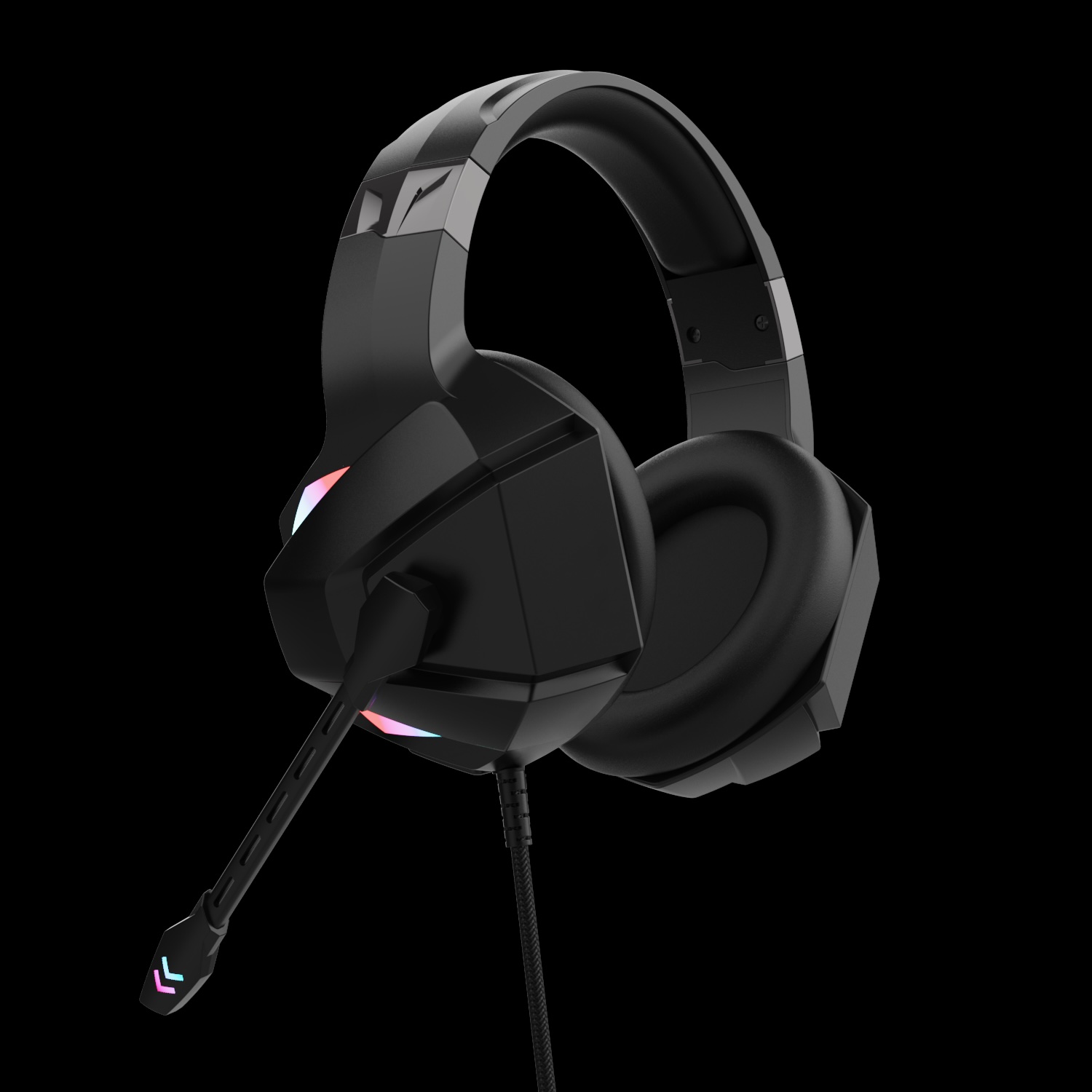
Published information describes a USB + 7.1 + Type-C vibration version with virtual 7.1 positioning, RGB, 50mm drivers and a 2.2m braided cable. The scope also included microphone improvement, USB device-name adjustment, gold-colored connector finish and retail-packaging details. These facts do not prove that every connector serves every function or establish universal compatibility; the final SKU still requires mode-specific confirmation.
Why a Feature List Is Not a Production Specification
Marketing language states what a buyer wants to sell; a production specification states exactly how the approved SKU is built, used and verified.
Feature lists help a manufacturer understand the commercial direction, but they are not final production instructions. "USB," "Type-C," "7.1," "RGB" and "vibration" each hide decisions about electronics, controls, host devices, software, cable routing, accessories and tests.
USB may carry audio, auxiliary power or a combined function. Type-C may be native or adapter-based. Virtual 7.1 may depend on a selected audio solution or software environment. Vibration needs an activation method and approved behavior. None of these meanings should be inferred from a connector name.
Configuration control creates one source of truth. Each requirement receives an owner, revision, implementation, verification method and approval record, while the BOM, firmware identity, artwork, manual and packaging refer to the same released SKU.
Build a Configuration Freeze Matrix for USB 7.1, Type-C, Vibration, RGB and Microphone
The configuration freeze matrix links each buyer-facing feature to its physical implementation, operating condition, approval evidence and downstream retail files.
Start with use cases rather than components. List the intended host environments and the actions a user should take in each one. Record the connection used, whether separate power is needed, where audio and microphone signals travel, which controls operate, and whether lighting, vibration or virtual surround is available. Do not turn an untested use case into a compatibility claim.
Next, create one row for every feature. A good row includes the commercial name, hardware or firmware implementation, user control, default state, dependencies, sample revision, test method, pass evidence, packaging claim and owner. When a requirement changes, the team can see which documents and tests are affected.
For the USB and Type-C configuration, identify connector gender, cable or adapter arrangement, mechanical finish, strain relief, insertion orientation and function. The G9000mix project publicly confirms gold-colored USB and Type-C connector requirements, but appearance is only one layer. The final specification should also explain the electrical and user-facing role of each interface.
For virtual 7.1, define whether the selected configuration needs a specific USB audio path, operating-system setting or software component. State the approved listening mode and how the user selects it. Avoid treating virtual surround as a property of the 50mm driver itself. Driver diameter and surround processing describe different parts of the system.
For vibration, record the activation method, applicable audio path, control location, expected user behavior and verification procedure. A buyer may want vibration as a differentiating feature, but excessive or inconsistent operation can alter comfort and perceived audio. The target should be approved on the physical sample rather than described only as present or absent.
For RGB, define the lit zones, mode or color behavior, power dependency and default state. Inspect both powered-off cosmetics and powered-on appearance. Packaging renders, manual instructions and sales images should match what the released hardware actually does.
For the microphone, use an approved voice sample or measurable requirement where available, together with mechanical position, mute behavior and cable or control configuration. The G9000mix scope included microphone component improvement, so microphone acceptance should be connected to a traceable sample revision instead of a general phrase such as "clear mic."
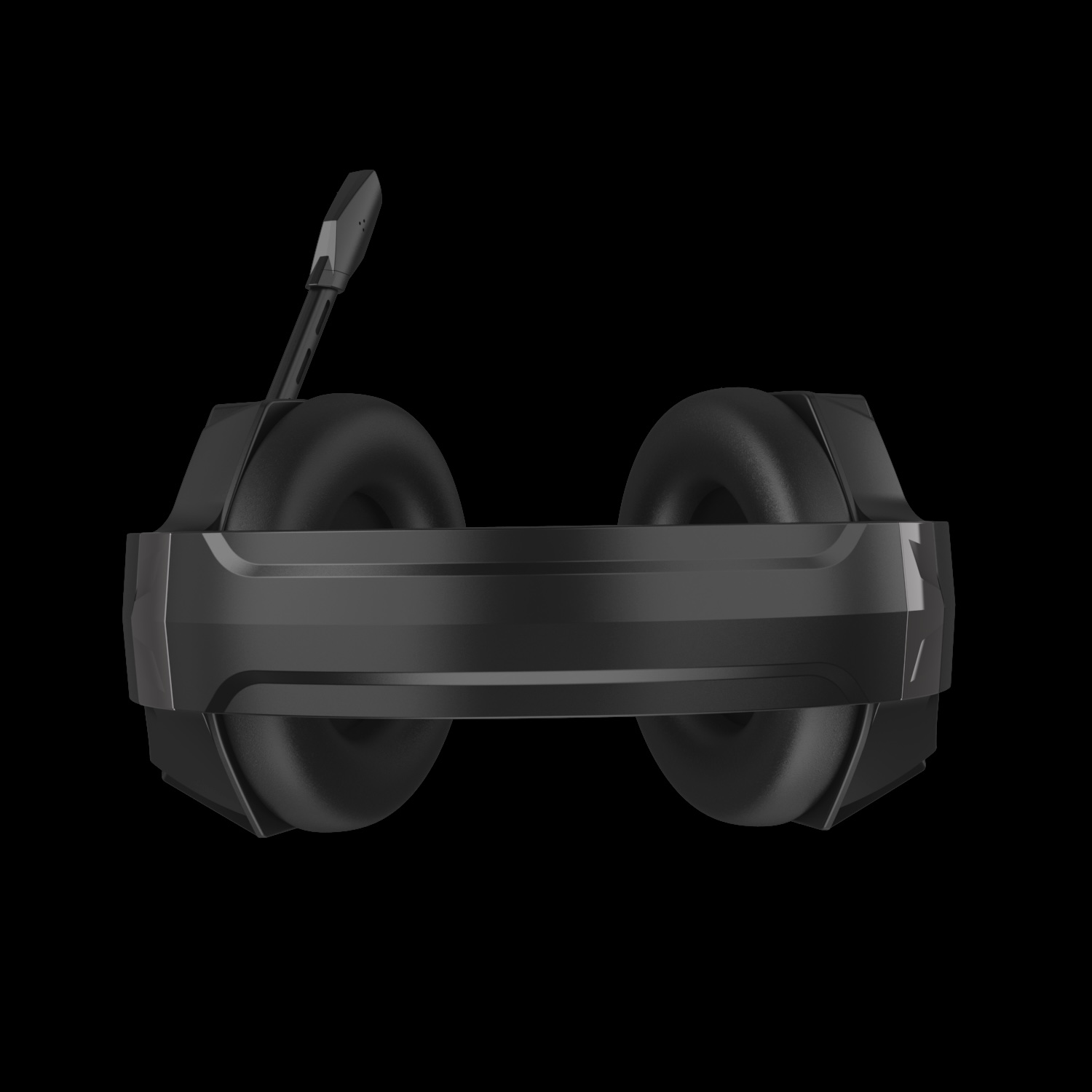
Finally, freeze physical details that are easy to overlook: cable length and tolerance, braid, connector plating appearance, inline controls, labels, logo position, device name, included adapters, color-box contents and carton pack-out. These details create user-visible differences and must be controlled like major features.
| Feature | What must be frozen | Approval evidence |
|---|---|---|
| USB path | Connector, electrical role, host use, controls and dependencies | Functional matrix and approved connected test |
| Type-C element | Native connector or adapter role, orientation, finish and included accessory | Physical sample, fit check and pack-out record |
| Virtual 7.1 | Signal path, software or setting dependency, selection method and claim wording | Approved mode test and matching manual instruction |
| Vibration | Activation, applicable mode, user control and target behavior | Approved sample comparison under defined content |
| RGB | Lit zones, behavior, default state, power source and artwork depiction | Powered-off and powered-on golden sample |
| Microphone | Component revision, position, mute/control behavior and acceptance method | Voice or instrumented test linked to sample revision |
| Cable and connectors | Length, braid, split, strain relief, finish and markings | Drawing, BOM and incoming/line inspection reference |
| Retail set | Device name, labels, manual, accessories, color box and carton | Complete sealed-pack approval |
Technical Deep Dive: Map Signal, Power and Control Paths
A connection architecture should show where audio, microphone, power and commands travel in every supported scenario; connector labels alone cannot do that.
Draw a mode diagram for each intended user scenario. Begin at the host device, follow the physical connector or adapter, then identify the selected electronics and the output to the drivers. Add a separate return path for the microphone. Mark where RGB and vibration receive power, and show whether an inline or software control changes their state. This exercise exposes assumptions before they become packaging claims.
The first distinction is signal versus power. A connector can physically fit and still serve a different function from what a buyer expects. A USB connection may carry digital audio and power in one design, while another implementation may use a 3.5mm path for audio and USB only for auxiliary functions. Type-C also describes a connector form, not a universal promise about audio protocol or host support. The released matrix must use the actual selected design.
The second distinction is physical compatibility versus functional compatibility. An adapter may solve plug geometry without guaranteeing microphone routing, surround processing, vibration control or RGB behavior. Console, PC and other host environments may handle audio devices differently. Buyers should name only those device scenarios that have been validated with the final cable, adapter, firmware and settings.
The third distinction is base audio versus processing. Virtual 7.1 is a signal-processing function, while the 50mm drivers reproduce the resulting signal. Acoustic approval should state the connection and mode used during evaluation.
The microphone deserves its own path analysis. Trace microphone pickup through the boom, wiring, inline control and connector into the host. Confirm mute logic and the effect of any adapters. A microphone improvement should be validated in the final configuration because a component change alone does not guarantee the same result after routing, housing and host interaction.
Power-dependent features need state testing. RGB and vibration behavior should be approved during connection, disconnection and repeated operation. This guide assigns no unpublished electrical limits or results to G9000mix.
The path map then serves engineering, quality, packaging and sales. When a connector, controller, audio solution or firmware revision changes, it identifies the scenarios that require retesting.
| Architecture question | Why it matters | Required output |
|---|---|---|
| Where does playback audio travel? | Determines the active audio electronics and host requirement | Mode-specific signal path |
| Where does microphone audio return? | Adapters and plug arrangements can change voice behavior | Separate microphone path and mute logic |
| What powers RGB and vibration? | Auxiliary features may not operate in every connection scenario | Power map and state table |
| How is virtual 7.1 enabled? | Processing may depend on solution, software or settings | Activation instruction and validated environment |
| What does Type-C do? | Connector shape does not define protocol or compatibility | Exact function and included accessory definition |
| Which device claims are approved? | Physical fit is not the same as end-to-end function | Device-by-mode validation record |
Use Approval Gates From Prototype to Mass Production
Approval gates prevent a visually approved prototype from bypassing configuration, packaging and repeatability checks.
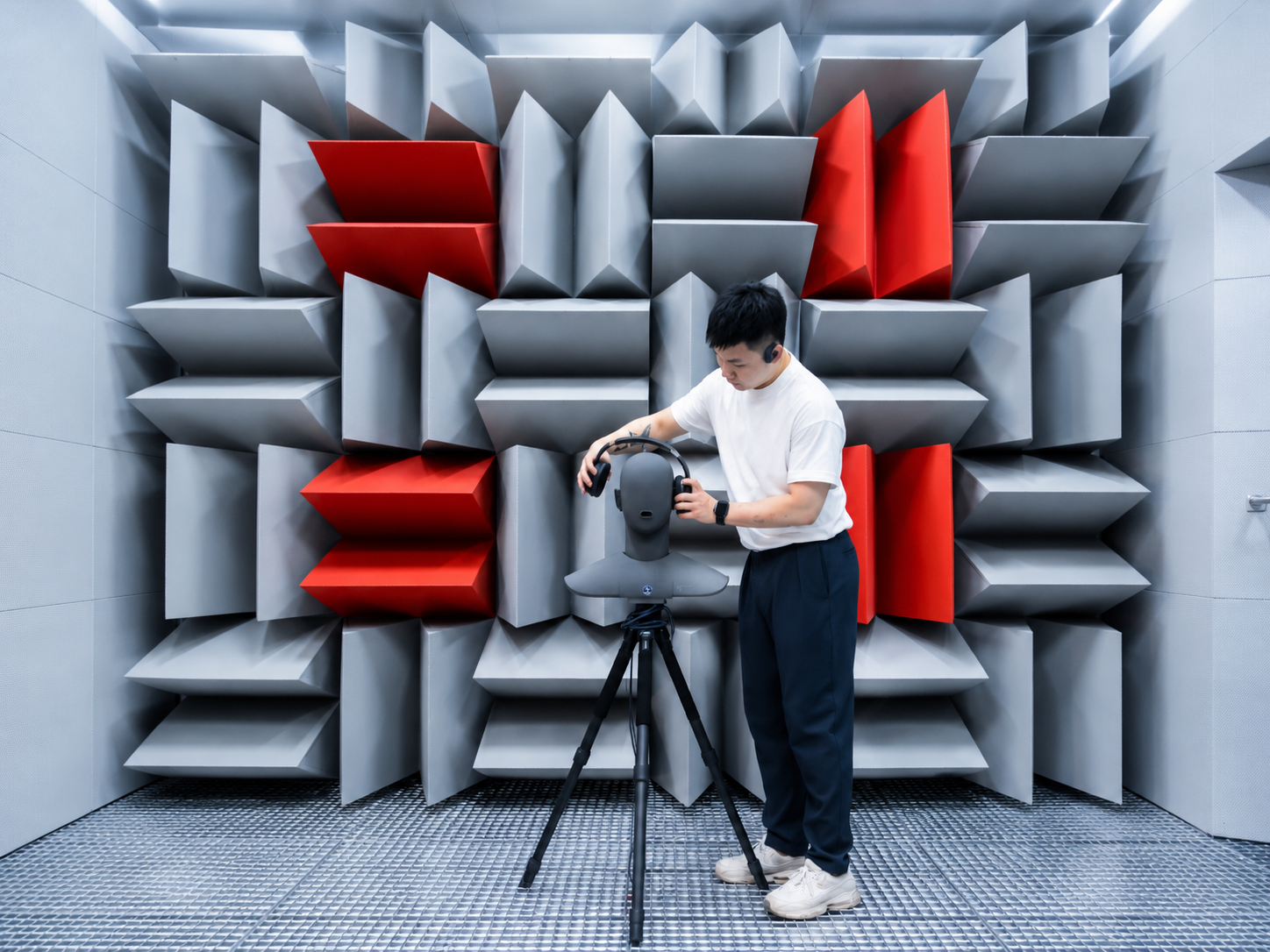
Each approval should name the sample, date and revision. A photo in a chat thread is not enough when several configurations look similar. Retain a golden sample or equivalent controlled reference, plus the documents needed to reproduce it.
When a late change appears, classify its impact. A connector substitution may affect fit, function, artwork and packaging. A microphone component change may require voice validation. A firmware-name update requires identity checks. A color-box correction may change only artwork, but still needs pack-out confirmation. The change record should identify what is retested and who approves release.
| Gate | Minimum review scope | Release decision |
|---|---|---|
| Requirement review | Target user, host scenarios, feature priorities, cost direction and retail claims | Approve platform and engineering evaluation |
| Engineering sample | Signal paths, controls, microphone, audio, RGB, vibration, cable and connectors | Approve technical direction or open revisions |
| Brand sample | Logo, colors, device name, packaging artwork and accessories | Approve customer-facing identity |
| Pre-production sample | Production-intent BOM, firmware, process, pack-out and test evidence | Authorize pilot or mass-production preparation |
| Production inspection | Function, cosmetics, labels, accessories, packaging and revision identity | Release shipment according to agreed plan |

What MACH Supported in the G9000mix Project
The public project scope shows MACH industry coordinating product, brand, packaging, microphone, quality and mass-production requirements around an ODM platform.
Confirmed support included industrial-design confirmation, logo silkscreen review, packaging and carton coordination, microphone component improvement follow-up, cable and connector requirement checking, pre-production sample review, quality inspection and mass-production support.
The case also records device-name adjustment, gold-colored USB and Type-C connector requirements, cable-length coordination, anti-theft sticker placement and a material instruction for the Finland market environment. These details illustrate why ODM execution needs cross-functional control beyond selecting a headset shape. Scope, certification, MOQ and commercial terms still depend on each project.

Buyer Checklist Before Configuration Freeze
Before release, the buyer should be able to identify the exact SKU, explain every user mode and trace every retail claim to approved evidence.
- Selected headset platform and production-intent revision
- Host-device and connection-mode matrix
- Audio, microphone, power and command-path diagrams
- Virtual 7.1 activation method and claim wording
- Vibration behavior, user control and approval method
- RGB zones, default state, modes and power dependency
- Microphone sample revision, mute behavior and acceptance evidence
- Cable length, braid, split, strain relief and connector specification
- USB device name and other visible firmware identity
- Logo artwork, position, color and process
- Color-box, manual, label and anti-theft sticker revisions
- Complete pack-out and master-carton specification
- Pre-production sample and golden-sample identification
- Compliance requirements for the destination market
- Change-request owner, impact review and reapproval workflow
Conclusion
The safest way to launch a feature-rich wired gaming headset is to freeze the complete user experience, not merely approve a product photo and feature list.
G9000mix demonstrates how one ODM project can combine 50mm drivers, RGB, virtual 7.1 positioning, vibration direction, USB and Type-C elements, microphone improvement, a braided cable, device identity, branding and custom packaging. The sourcing challenge is keeping those layers synchronized from sample review through production.
A configuration freeze matrix, signal-and-power map, controlled sample hierarchy and claim-to-evidence review give buyers a practical method. They also make supplier communication more efficient because every requested feature has a defined implementation and approval path.
MACH industry can review a wired gaming headset brief, evaluate an ODM platform and coordinate the confirmed product, branding, packaging, quality and production scope. Final functions and market claims should always be based on the approved project configuration.
Share your target market, connection modes, audio and microphone requirements, RGB or vibration direction, branding, packaging, estimated quantity and launch plan for a project evaluation.
Contact MACH IndustryFrequently Asked Questions
What is a gaming headset configuration freeze?
It is the documented release of one approved SKU, including hardware, firmware identity, connection modes, controls, accessories, packaging, test requirements and revision ownership.
Why is a feature list not enough for wired gaming headset production?
Terms such as USB, Type-C, 7.1, RGB and vibration do not define signal paths, power, host conditions, controls or verification. Production needs those details.
What should buyers specify for a USB gaming headset?
Specify the connector and cable arrangement, whether USB carries audio or auxiliary power, microphone routing, control behavior, host scenarios, device name and required tests.
Does a Type-C connector guarantee audio compatibility?
No. Type-C describes a connector form. Audio protocol, adapter role, host support and other functions must be confirmed for the selected implementation.
How should virtual 7.1 be approved in an ODM headset?
Define the signal path, required software or setting, activation method, test environment and user instructions, then verify the production-intent sample.
Why should RGB and vibration be included in the mode matrix?
Their power source, controls and availability may vary by connection scenario. The matrix prevents unsupported product and packaging claims.
How is a microphone improvement controlled before production?
Link the approved microphone component and final signal path to a named sample revision and repeatable voice or instrumented acceptance method.
What is a pre-production sample for a wired gaming headset?
It is a production-intent sample representing the planned BOM, firmware, cosmetics, cable, accessories and packaging before mass production is authorized.
Should packaging be part of the headset configuration freeze?
Yes. Product claims, manual instructions, adapters, labels, anti-theft elements, color-box contents and carton pack-out must match the approved product.
What should a buyer send MACH for a similar ODM review?
Send target market, host devices, connection modes, required features, branding, packaging, compliance needs, estimated quantity, cost direction and launch schedule.
Related Resources
Need OEM/ODM gaming audio solutions?
Contact MACH Industry to discuss your gaming headset, gaming earbuds, or private-label audio project.
Contact MACH Industry