Home > Resources > OEM Knowledge
2.4G Wireless Gaming Headset OEM Development: Lessons from the WH6 Korea Project
A practical engineering guide to 2.4G wireless gaming headset OEM development, using the WH6 Korea project to explain low-latency wireless review, driver selection, microphone evaluation, RF testing, packaging, and mass production support.
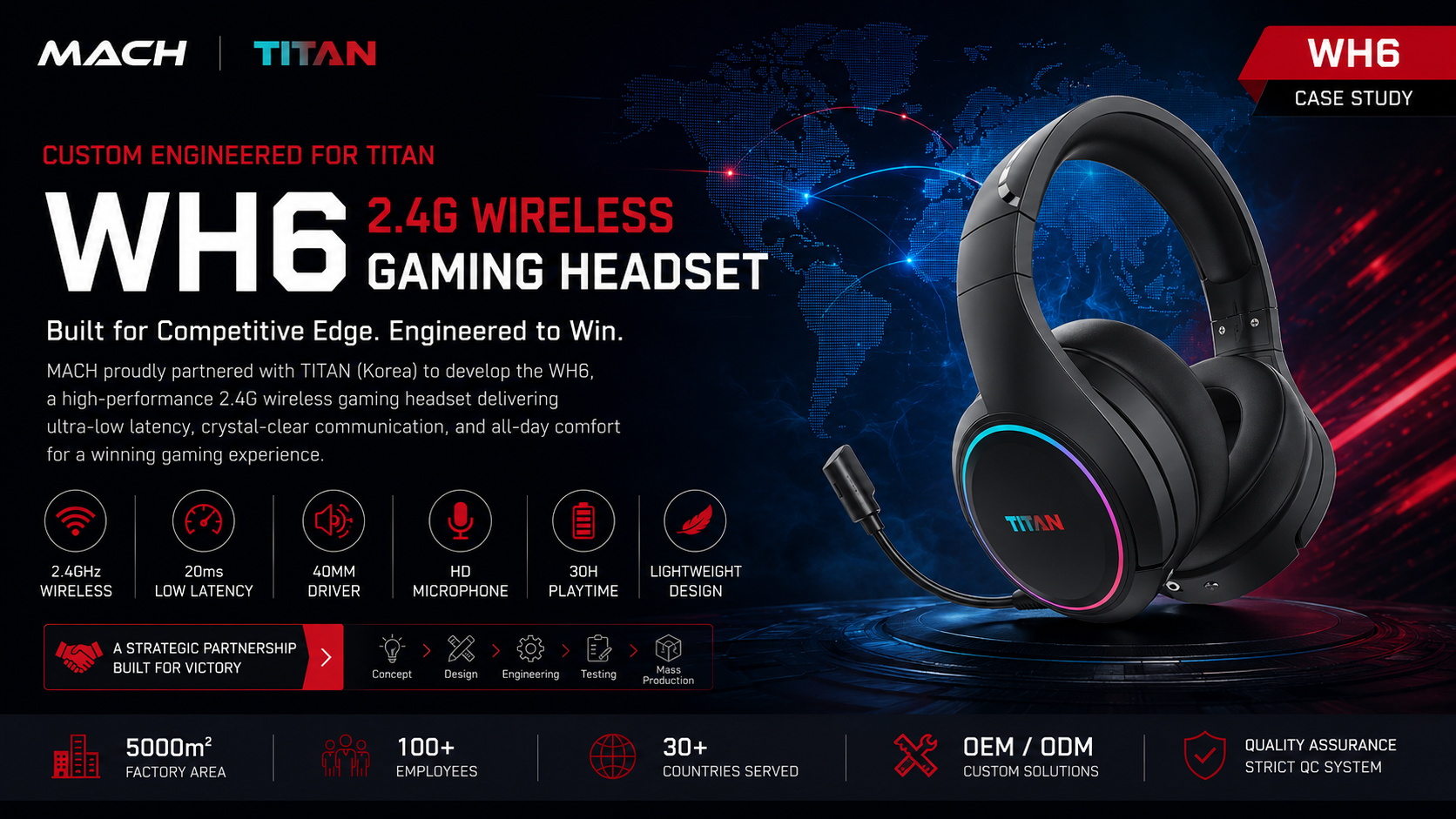
A 2.4G wireless gaming headset looks simple from the outside: a headset, a transmitter, a microphone, a battery, and a retail box. For an OEM buyer, however, the project is a connected engineering workflow. Low-latency wireless performance, RF stability, driver choice, microphone clarity, charging interface, battery marking, RGB lighting, logo customization, packaging, testing, and mass production control all need to be reviewed before the product is ready for launch.
This article uses the WH6 Korea OEM case as a practical example. The case involved a Korean gaming brand developing a private-label 2.4GHz wireless gaming headset based on the WH6 platform, with virtual 7.1 audio, RGB lighting, Type-C transmitter and charging interface, detachable microphone, packaging customization, KC-related battery requirements, RF stability review, tooling support, QC, and mass production readiness. The goal here is not to repeat the case page, but to explain what overseas brands can learn from the project when planning their own wireless gaming audio line with MACH industry.
Why 2.4G Wireless Gaming Headsets Need Structured OEM Development
A wireless gaming headset is not only an audio product. It is also an RF, battery, charging, microphone, firmware, packaging, and production-control project.
For gaming users, a wireless headset must feel instant, stable, and comfortable. For OEM buyers, those expectations create a longer checklist than a basic wired headset. A 2.4G wireless gaming headset needs stable wireless connection, low-latency audio behavior, transmitter compatibility, battery planning, charging interface control, microphone performance, and repeatable production quality.
The WH6 Korea OEM project shows why the development process must be structured. The project scope covered 2.4GHz low-latency audio, virtual 7.1, RGB lighting, logo customization, packaging, KC-related battery requirements, RF stability, tooling, QC, and mass production. Each item affects the buyer’s launch risk, so MACH industry treats them as connected project requirements rather than separate late-stage details.
Starting With Buyer Requirements and Market Review
The strongest wireless headset projects begin with a clear RFQ that defines the target market, user expectations, feature scope, certification needs, and launch schedule.
A Korean gaming brand may have specific expectations for retail positioning, product appearance, wireless performance, packaging language, and local certification preparation. Before selecting the final configuration, MACH industry reviews the buyer’s intended sales channel, feature priorities, pricing direction, color version needs, packaging files, battery-related requirements, and sample approval process.
This stage helps prevent a common sourcing problem: choosing a product only because the appearance looks suitable. A headset can look strong in a photo but still require deeper review for wireless stability, antenna layout, microphone pickup, battery marking, transmitter compatibility, and mass production repeatability. By converting the buyer’s commercial brief into a factory-readable specification, the OEM team can evaluate the correct path before samples are finalized.
Low-Latency Wireless Platform and RF Stability Review
For a 2.4G wireless gaming headset, RF behavior and transmitter stability are central parts of the product experience.
The WH6 case page lists a 2.403-2.478GHz wireless range and Type-C transmitter support. For the user, the important result is stable connection and responsive audio during gaming. For the manufacturer, that result depends on wireless module selection, antenna positioning, PCB and RF support, transmitter fit, charging and connection interface review, and practical wireless range checks.
Low-latency wireless gaming headset manufacturing should include more than a single power-on check. MACH industry reviews RF stability, antenna and wireless range behavior, product structure, and transmitter requirements during the project. This reduces the risk of signal inconsistency, sample-to-production differences, or a final product that performs well in a short demo but not in normal gaming use.
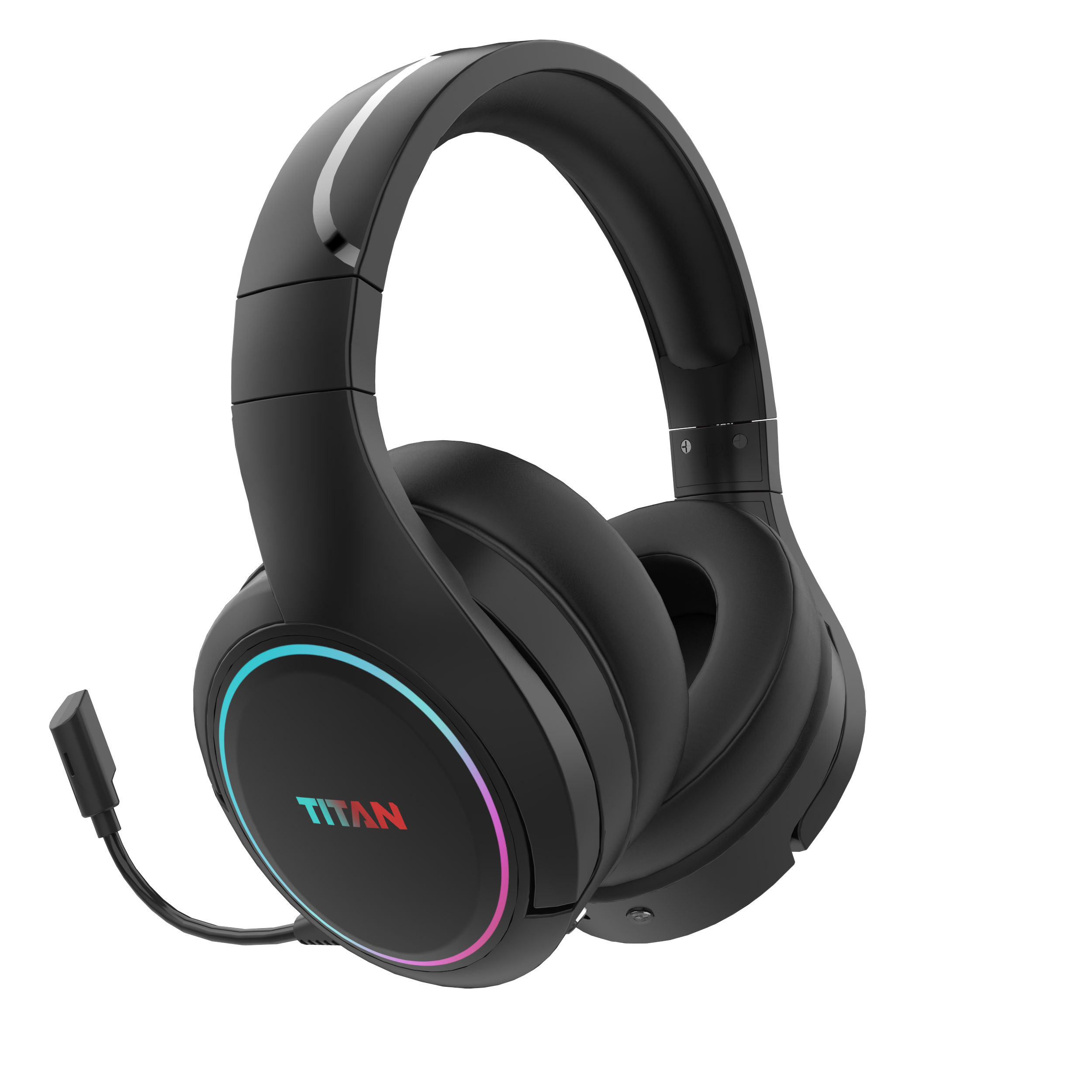
Driver Design: 40mm Evaluation and the WH6 50mm Platform
Driver size should be chosen according to product positioning, housing structure, tuning direction, cost target, and user expectations, not as an isolated specification.
Many gaming brands ask about 40mm driver gaming headset design because 40mm drivers are common in compact or cost-controlled headset platforms. A 40mm driver can be suitable when the housing structure, acoustic chamber, target tuning, and retail position match the product plan. It can also support a lighter structure in some designs.
The WH6 Korea OEM case, however, is based on a platform that the published case page lists with a 50mm speaker driver. That difference is important to state clearly. MACH industry does not treat driver size as a marketing label to copy across projects. Instead, the team reviews whether a 40mm, 50mm, or other driver configuration fits the headset structure, desired sound direction, buyer’s price position, and production stability. For a wireless gaming headset, the acoustic design must also work with battery placement, PCB layout, earcup volume, and comfort requirements.
Ultra-Clear Microphone and User Communication Requirements
A gaming headset microphone must support real communication use, not only pass a basic component specification.
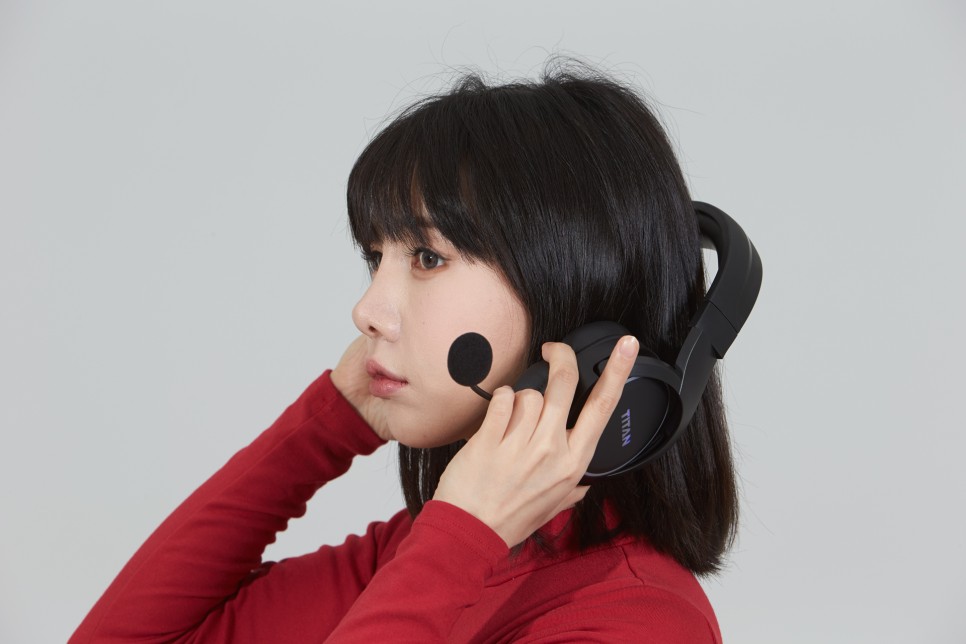
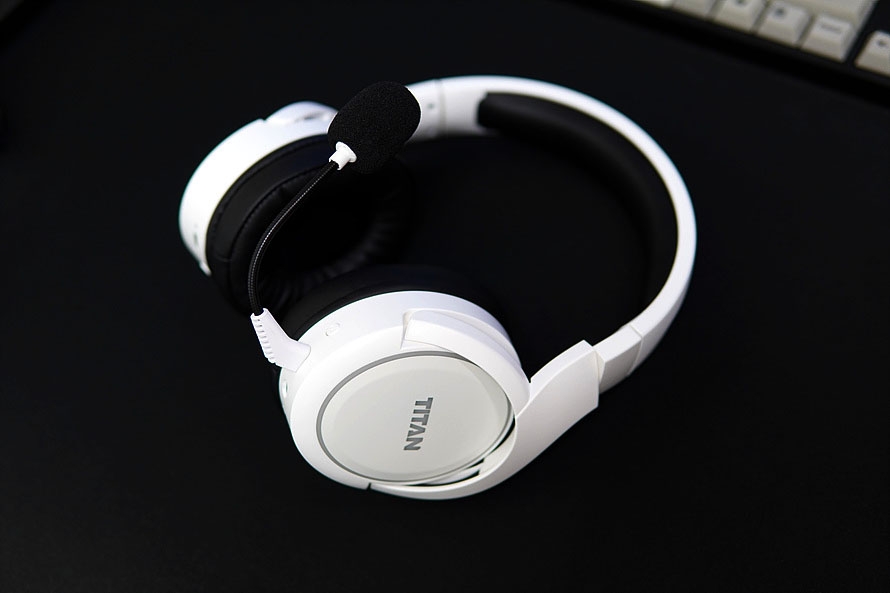
Voice communication is central to gaming. In the WH6 project, the product scope included a detachable microphone and microphone performance review. For an overseas gaming brand, this matters because users quickly notice unclear pickup, unstable mic positioning, weak noise handling, or inconsistent performance between samples.
MACH industry reviews microphone structure, pickup behavior, detachable fit, cable or wireless interaction where relevant, and production consistency. For an ultra-clear microphone gaming headset solution, the goal is not to promise unrealistic studio performance. The goal is to help the buyer validate that the headset supports clear chat, stable usage, and repeatable assembly quality for the intended market segment.
Battery, Type-C, RGB, Logo, and Packaging Customization
Private-label wireless headset development must align electronic configuration, brand identity, packaging, and market requirements before mass production.
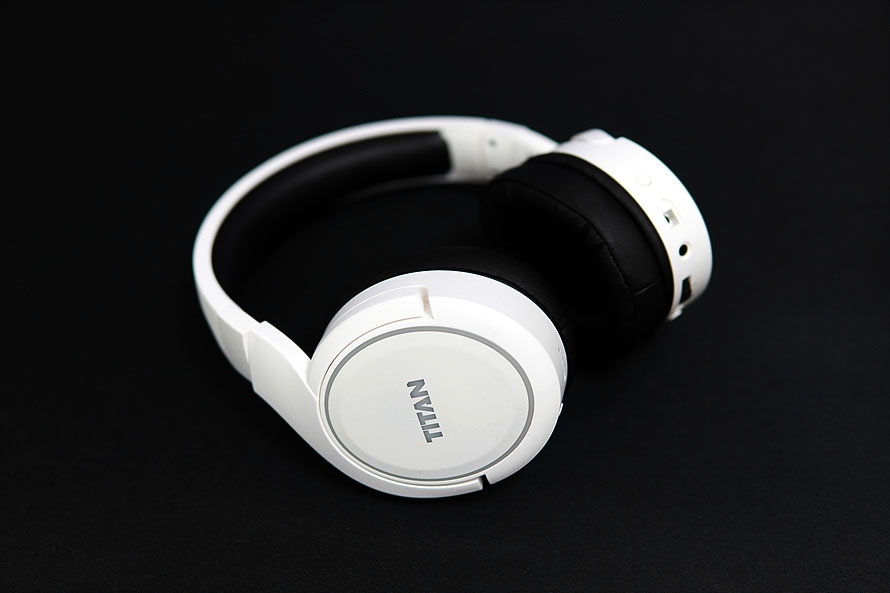
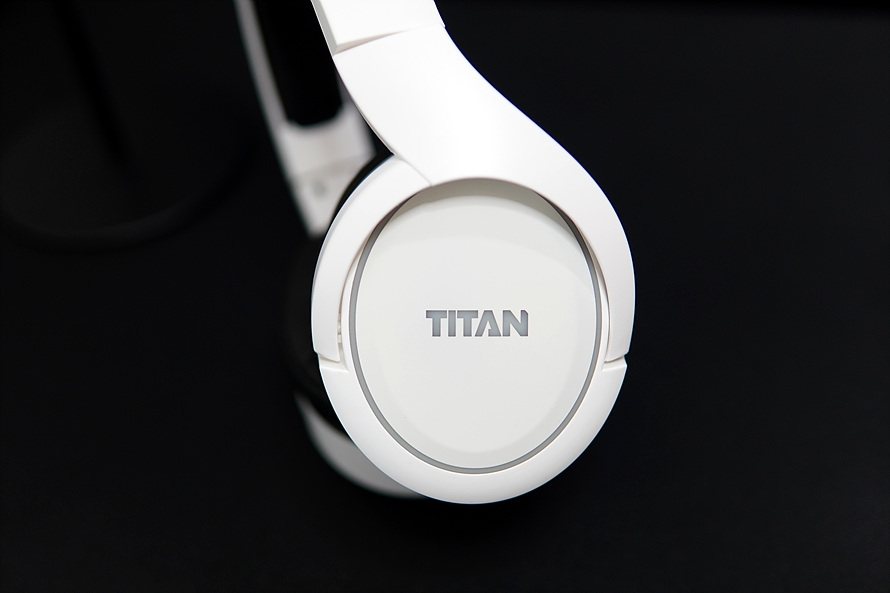
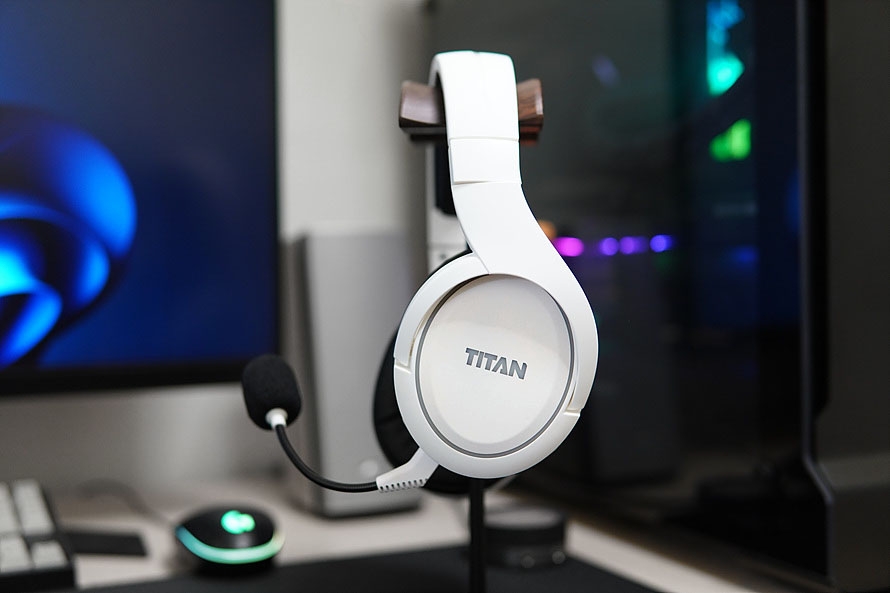
The WH6 Korea OEM project included a Type-C transmitter and charging interface, RGB lighting with LED logo, black and white color versions, customer logo customization, custom retail packaging supplied by buyer files, battery marking requirements, and KC battery requirement coordination. These items show how wireless headset customization extends beyond the shell and logo.
A buyer’s packaging must describe the real feature set. Logo placement must match the product surface and lighting design. Battery marking and certification-related details must be coordinated before shipment. Color versions must remain consistent across samples, packaging, and production. MACH industry supports these details so the product can move from sample approval to retail-ready production without unnecessary rework.
Testing, QC, and Mass Production Readiness
A launch-ready wireless headset needs approved samples, documented specifications, RF and function checks, packaging confirmation, and final inspection standards.
Testing for a 2.4G wireless gaming headset should include wireless pairing, transmitter recognition, audio output, microphone pickup, RGB lighting, charging behavior, battery-related checks, button or control behavior, 3.5mm wired audio support where applicable, surface finish, assembly quality, and packaging accuracy. For the WH6 project, MACH industry also supported trial production, QC inspection, tooling follow-up, final sample validation, and mass production coordination.
This process helps the buyer confirm more than one good sample. The production team must reproduce the approved configuration consistently. Final inspection connects the approved headset, accessories, packaging, labels, and shipment requirements. For overseas buyers, this reduces launch risk because the project has a defined path from engineering review to production readiness.
What Korean Gaming Brands Can Learn From the WH6 OEM Project
The WH6 project shows that successful private-label wireless headset development depends on early requirement clarity and disciplined manufacturing follow-through.
The main lesson from the WH6 Korea OEM project is that wireless gaming headset development should be managed as a complete product program. The buyer’s requirements, wireless solution, driver direction, microphone performance, battery and Type-C details, RGB lighting, logo placement, packaging, testing, and QC must all point toward the same launch goal.
For Korean gaming brands and other overseas buyers, a strong RFQ should include target market, feature priorities, required wireless mode, transmitter and charging expectations, driver preference, microphone expectations, color and logo scope, packaging files, certification requirements, and timeline. MACH industry can then help evaluate the platform, clarify technical feasibility, prepare samples, coordinate production details, and support mass production as an OEM/ODM gaming audio manufacturer.
Frequently Asked Questions
What should a brand confirm before starting a 2.4G wireless gaming headset OEM project?
The buyer should confirm the target market, wireless performance expectations, audio feature scope, driver direction, microphone requirements, battery and charging requirements, logo and packaging needs, certification requirements, launch timing, and expected production planning.
Why is RF stability important for a low-latency wireless gaming headset?
RF stability affects wireless range, signal consistency, dropout risk, and the user experience during gaming. A low-latency headset should be reviewed for antenna design, wireless frequency behavior, transmitter compatibility, and practical usage scenarios before mass production.
Does the WH6 Korea OEM project use a 40mm driver?
The published WH6 case page lists a 50mm speaker driver. For brands evaluating 40mm driver gaming headset design, MACH industry can review whether a 40mm or larger driver platform better fits the target sound profile, structure, cost, and market position.
Can MACH industry support detachable microphone gaming headset projects?
Yes. MACH industry supports detachable microphone review, microphone pickup evaluation, structural fit, sample validation, and production checks for wireless and wired gaming headset OEM/ODM projects.
What certification or market requirements may matter for a Korea wireless gaming headset project?
Requirements depend on the product configuration and sales channel. In the WH6 Korea OEM case, the project included KC-related battery requirement coordination, battery marking, RF stability review, sample validation, QC, and production readiness support.
How does MACH industry support packaging for private-label wireless gaming headsets?
MACH industry helps coordinate buyer-supplied packaging files, logo placement, color version requirements, carton and labeling details, accessory checks, and production packing standards so the approved sample and shipment presentation remain aligned.
Can customer information remain confidential in MACH case-based articles?
Yes. When customer identity must remain confidential, MACH industry uses anonymous descriptions such as a Korean gaming brand or an overseas gaming accessories brand and avoids disclosing sensitive commercial information.
Related Resources
Need OEM/ODM gaming audio solutions?
Contact MACH Industry to discuss your gaming headset, gaming earbuds, or private-label audio project.
Contact MACH Industry