Home > Resources > OEM Knowledge
OEM Wired Gaming Headset Development: Lessons from the G9000PRO Project
A practical engineering guide to OEM wired gaming headset development, private label customization, testing, and production planning, using the G9000PRO project as an example.
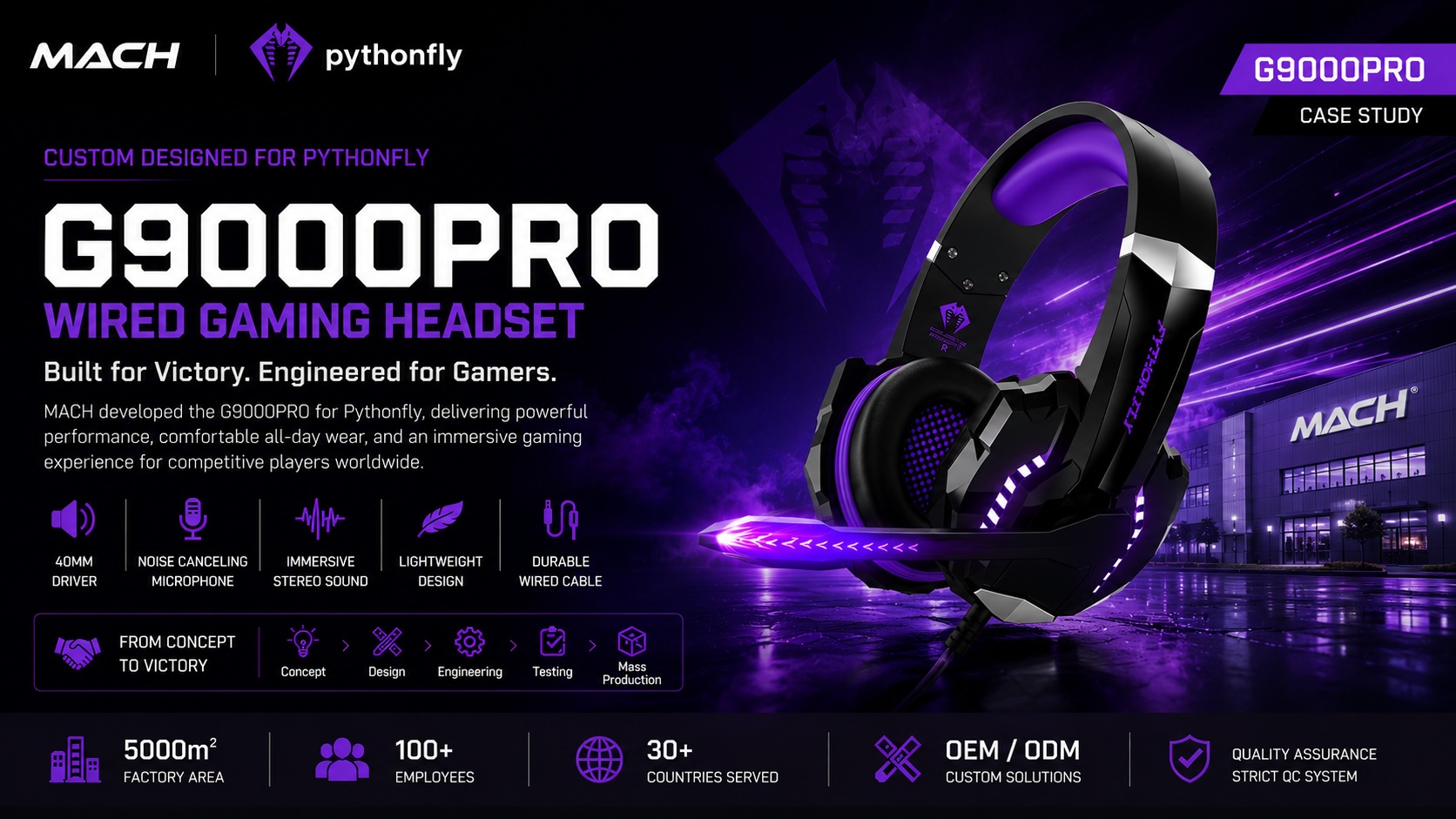
Wired gaming headsets remain a practical product category for many gaming accessory brands. They are cost-efficient, stable in latency, easy to position for retail channels, and familiar to PC and console buyers. But a successful OEM wired gaming headset is not created by selecting a product photo and adding a logo. It requires platform evaluation, acoustic checks, microphone review, mechanical confirmation, packaging planning, compliance documentation, and repeatable production control.
This article uses the G9000PRO China OEM gaming headset case study as a practical example. The goal is not to repeat the case page, but to explain how MACH industry supports OEM wired gaming headset development from product concept to mass production for an overseas gaming accessories brand or gaming brand partner.
Why Wired Gaming Headsets Still Matter in OEM Product Planning
Wired gaming headsets remain relevant when brands need stable latency, simple compatibility, controlled cost, and predictable retail positioning.
Wireless gaming audio receives a lot of attention, but wired gaming headsets continue to serve a clear market role. For many brands, a wired headset can provide stable connection, predictable latency, simpler compatibility, and a lower entry price than more complex wireless platforms.
From an OEM manufacturing perspective, wired headsets also give buyers a controlled way to test a gaming audio line before investing in more customized ODM projects. A brand can start with an existing headset platform, define the target channel, adjust visual identity and packaging, validate quality expectations, and then decide whether to expand into wireless headsets or gaming earbuds later.
Starting Point: Platform Selection Before Styling
The first engineering decision is the headset platform, not the logo or box artwork.
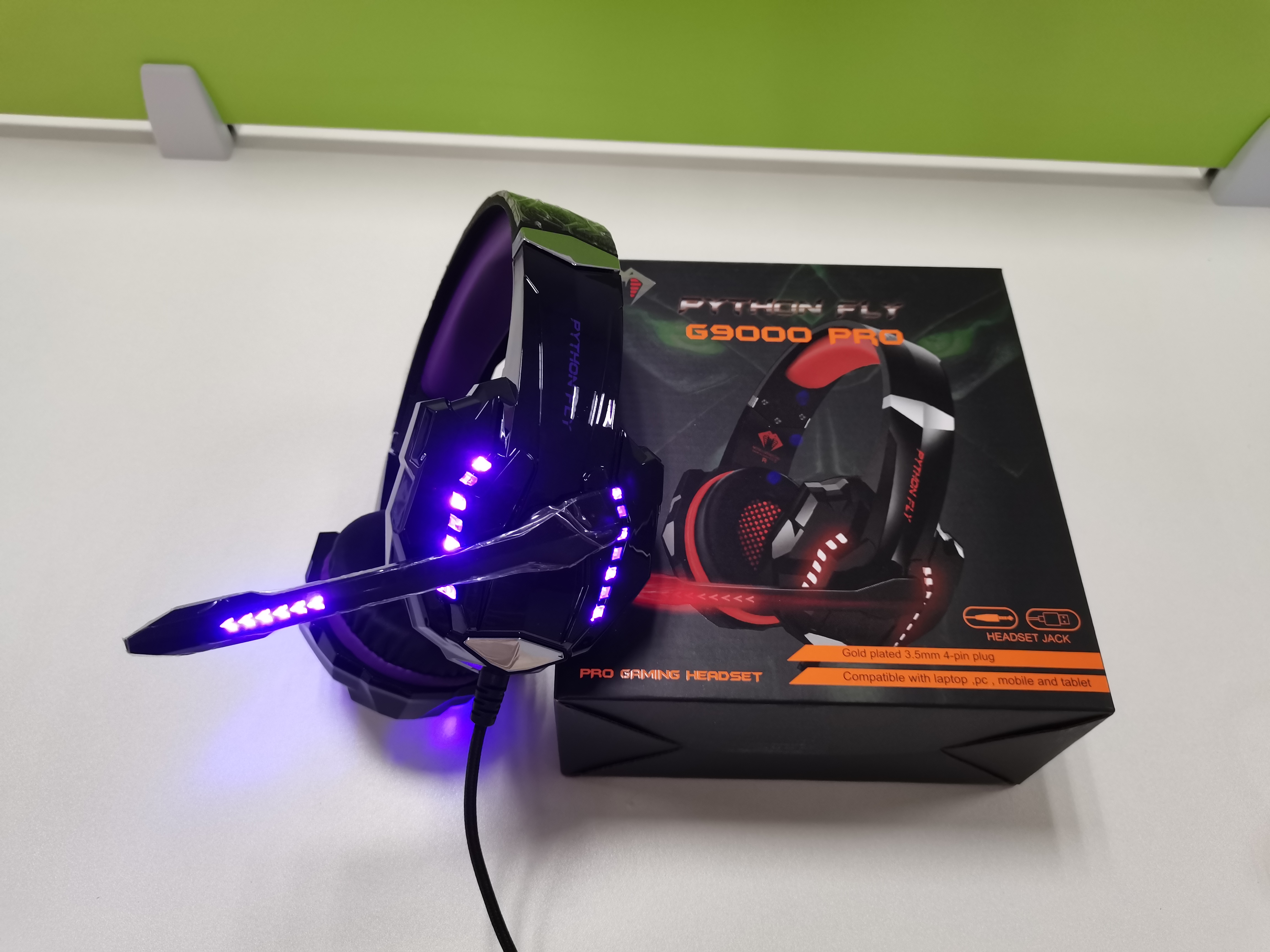
For the G9000PRO project, the buyer needed a wired gaming headset platform with gaming-style appearance, RGB lighting direction, 40mm speaker positioning, microphone support, OEM branding, packaging customization, and export-oriented documentation support.
When MACH industry evaluates a wired gaming headset platform, the review usually covers structure, comfort, speaker configuration, microphone position, cable design, connector requirements, lighting function, assembly method, and expected production stability. This helps avoid choosing a headset that looks strong in a photo but does not fit the buyer's target price, channel expectations, or quality requirements.
Private Label Customization: More Than Applying a Logo
Private label work should connect brand identity, product configuration, packaging, documentation, and production requirements.
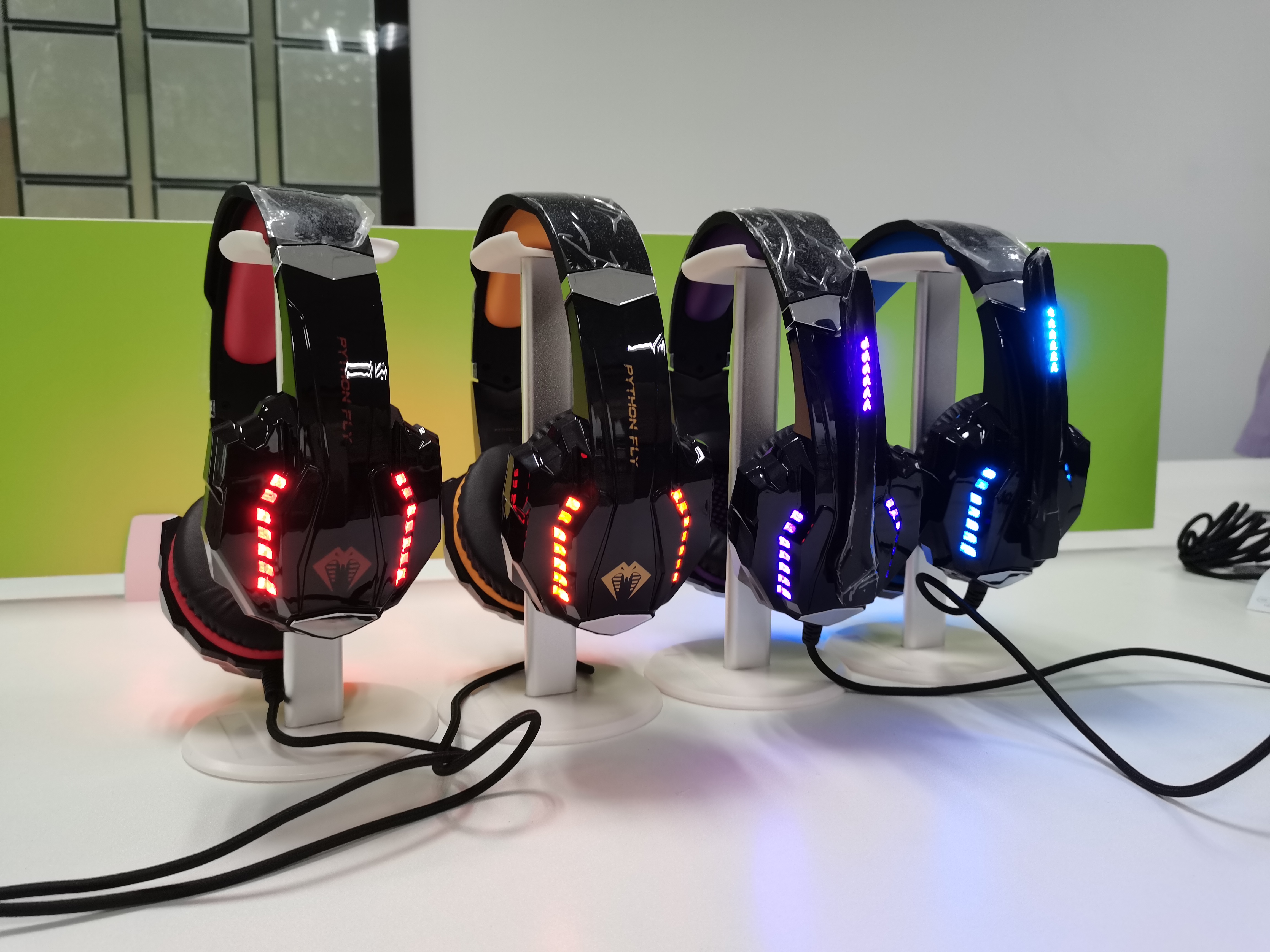
Private label gaming headset manufacturing often begins with logo placement, but a credible retail-ready product requires more than surface branding. Buyers need to align the product story, packaging, accessories, user manual, carton labeling, and compliance documents so the headset can move through sales channels without confusion.
For a wired gaming headset such as G9000PRO, customization can include logo position, color direction, RGB presentation, microphone specification, cable and plug requirements, packaging structure, printed materials, and carton configuration. MACH industry helps convert these brand requirements into factory-ready specifications so sampling and production teams work from the same reference.
Acoustic and Microphone Review for Gaming Use
Gaming headset evaluation should include the listening experience, microphone usability, cable behavior, and assembly consistency.
A gaming headset is judged by the user's listening and communication experience. In wired OEM projects, speaker size is only one part of the evaluation. The headset also needs suitable tuning direction for game audio, acceptable voice pickup for chat, stable cable connection, and consistent assembly quality so performance does not vary widely between samples and mass production.
The G9000PRO case involved a 40mm speaker platform and gaming microphone support. During similar OEM projects, MACH industry focuses on practical checks: whether the sound profile fits the target channel, whether the microphone position is usable, whether cable handling feels appropriate, and whether the finished headset can meet the buyer's expected quality level at the target price point.
Packaging and Retail Presentation
Packaging connects product engineering with sales-channel requirements and buyer confidence.
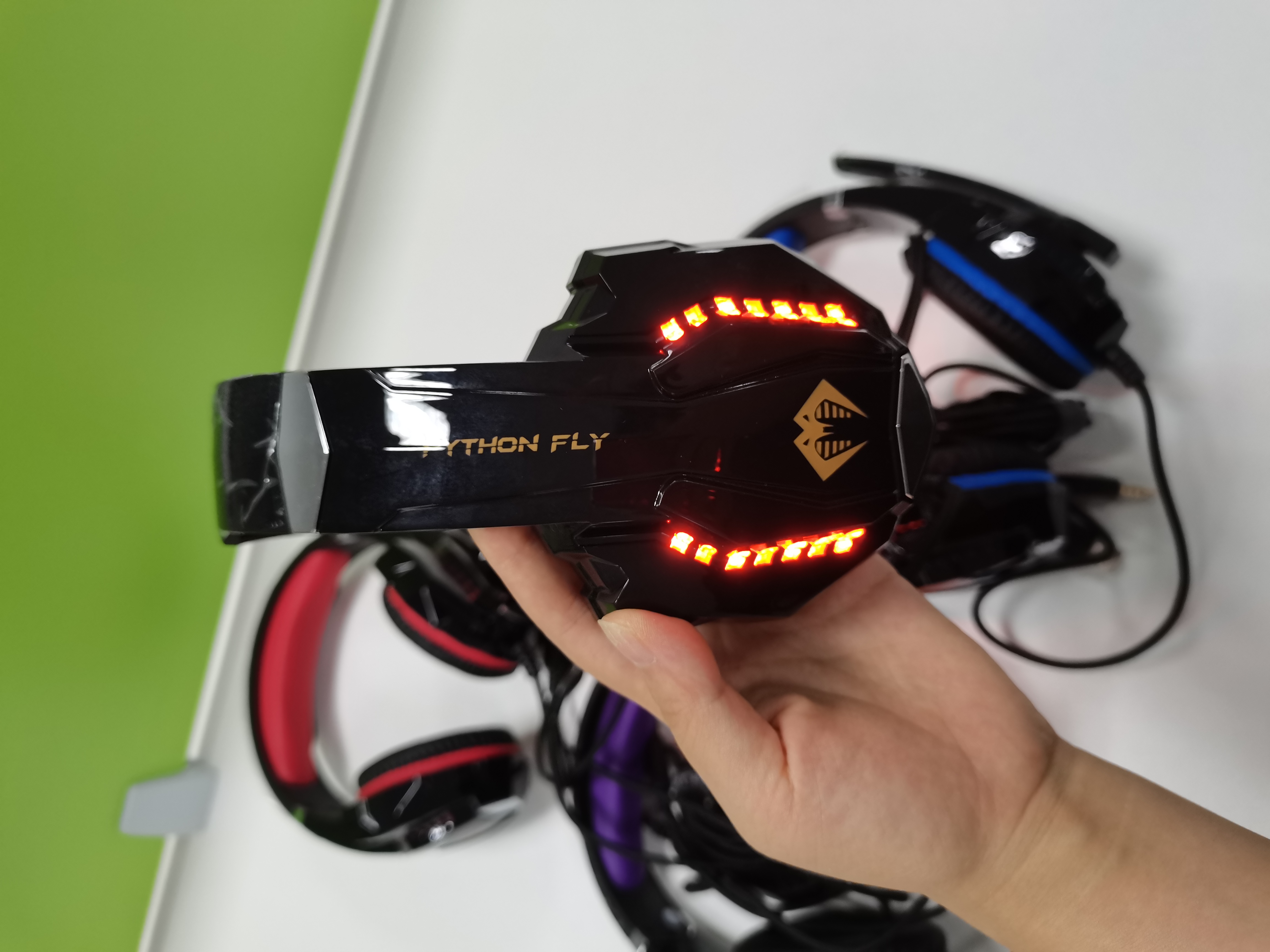
Packaging is often where an OEM project becomes real for the buyer. For overseas gaming accessories brands, packaging must support the retail channel, communicate key product features, protect the product during shipment, and match the brand's visual identity.
In the G9000PRO project, packaging customization was part of the OEM scope. For similar projects, MACH industry supports packaging artwork coordination, user manual preparation, retail box direction, and production documentation so the product presentation is consistent from sample review to shipment.
Testing, Documentation, and Quality Control
Testing and documentation should be planned before mass production, not treated as a final-stage formality.
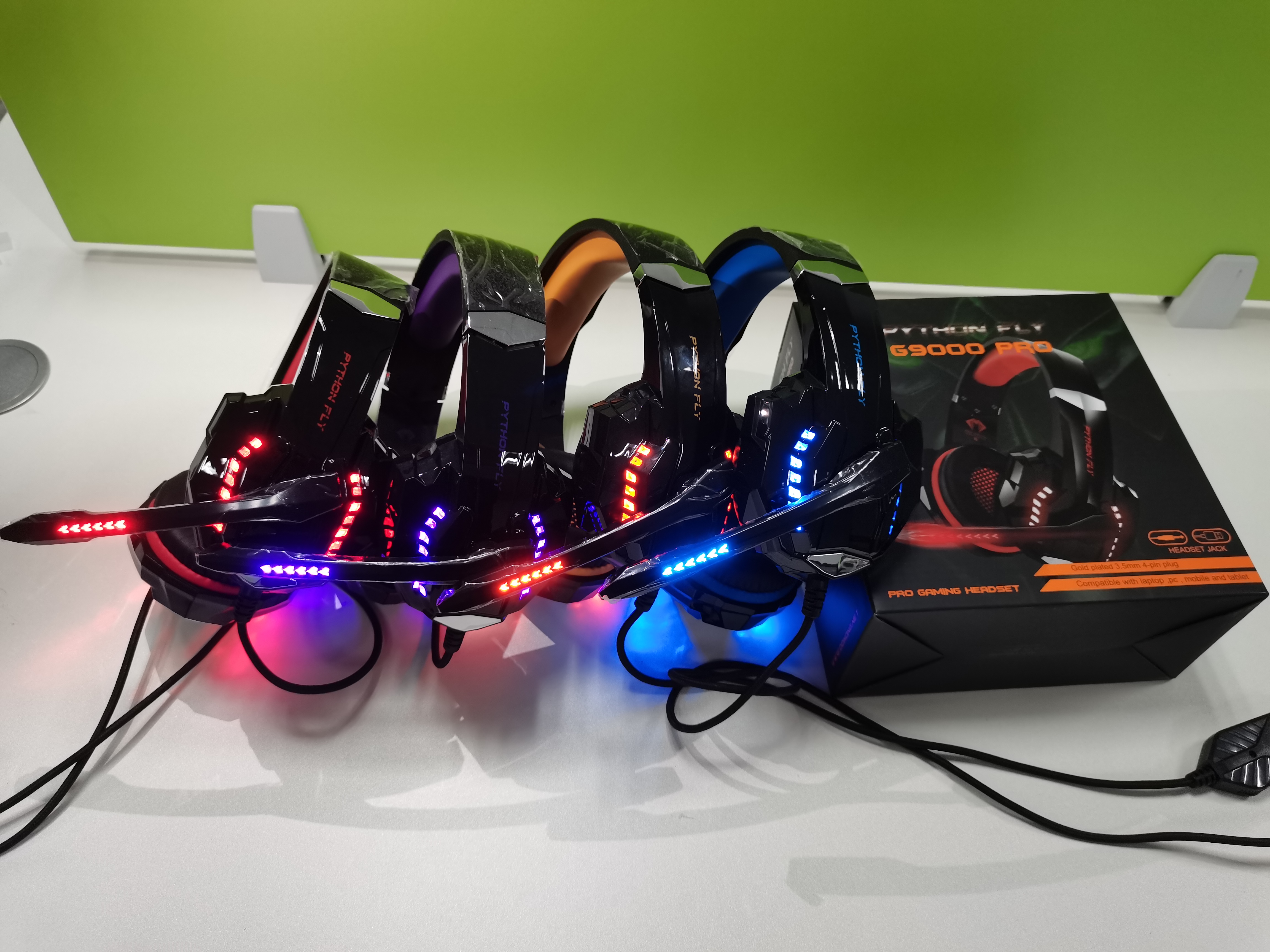
Before mass production, a wired gaming headset project should move through sample review and practical quality checks. These checks can include speaker function, microphone clarity, RGB lighting behavior, cable and connector reliability, headband and earcup assembly, surface finish, packaging accuracy, and final inspection criteria.
Certification documentation also matters. The G9000PRO case involved CE, FCC, and RoHS documentation support. MACH industry treats these items as part of the project checklist because missing or unclear documentation can delay import, channel approval, or buyer acceptance.
From Trial Production to Mass Production Planning
A launch-ready OEM project needs a locked sample, documented specifications, and repeatable production standards.
Once the buyer approves the product direction, the project must become repeatable. That means confirming the golden sample, locking the bill of materials, documenting packaging and labeling requirements, defining inspection points, and planning production timing.
For an OEM wired gaming headset project, MACH industry coordinates the bridge between commercial requirements and manufacturing execution. The buyer may focus on launch timing, brand presentation, and channel requirements. The factory team must focus on component readiness, production workflow, QC standards, and shipment preparation.
What Brands Can Learn from the G9000PRO Example
Private label gaming headset manufacturing works best when the project scope is clear from the beginning.
The main lesson from the G9000PRO project is that a buyer does not need to start with a fully custom design to create a market-ready product, but the buyer does need a structured development path. Platform selection, customization scope, sample review, documentation, packaging, QC, and mass production planning should be treated as one connected process.
For overseas buyers, this approach reduces the risk of unclear expectations. For the manufacturer, it creates a stable reference for execution. For the final product, it helps the headset feel like a planned brand item rather than a generic product with a logo added at the end.
Frequently Asked Questions
What is an OEM wired gaming headset project?
An OEM wired gaming headset project uses an existing or semi-custom headset platform and adapts it for a brand through logo, packaging, appearance, acoustic, microphone, cable, compliance, and production requirements.
Why do brands still develop wired gaming headsets?
Wired gaming headsets remain useful for brands that need stable latency, simple compatibility, controlled cost, and predictable retail positioning for PC, console, and entry-to-mid-range gaming channels.
What can be customized in a private label gaming headset?
Common private label customization includes logo placement, color direction, RGB styling, microphone specification, cable and connector options, retail packaging, user manual, carton labeling, and compliance documentation.
What did the G9000PRO project demonstrate?
The G9000PRO project showed how a wired headset platform can be reviewed, customized, tested, documented, and prepared for mass production for an overseas gaming accessories brand.
How should buyers evaluate a wired headset platform?
Buyers should evaluate acoustic performance, microphone quality, structure, comfort, cable durability, visual identity, packaging readiness, certification needs, quality control process, and production scalability.
Does OEM development require new tooling?
Not always. Many OEM wired gaming headset projects can start from an existing platform. New tooling may be required when the brand needs a unique structure, new shell, special mechanical design, or exclusive industrial design.
What testing is important before mass production?
Important checks include speaker performance, microphone clarity, cable and connector reliability, RGB function, fit and comfort, packaging accuracy, labeling, documentation, and production quality inspection criteria.
How can MACH industry support similar projects?
MACH industry supports OEM and ODM gaming audio projects through platform review, customization planning, sample coordination, quality control, certification documentation support, packaging work, and mass production planning.
Related Resources
Need OEM/ODM gaming audio solutions?
Contact MACH Industry to discuss your gaming headset, gaming earbuds, or private-label audio project.
Contact MACH Industry