Home > Resources > OEM Knowledge
ODM Wired Gaming Headset Development: USB 7.1 RGB Lessons from the G9000mix Finland Project
A practical engineering guide to ODM wired gaming headset development, using the G9000mix Finland project to explain USB 7.1 audio, Type-C configuration, RGB styling, testing, packaging, and production support.
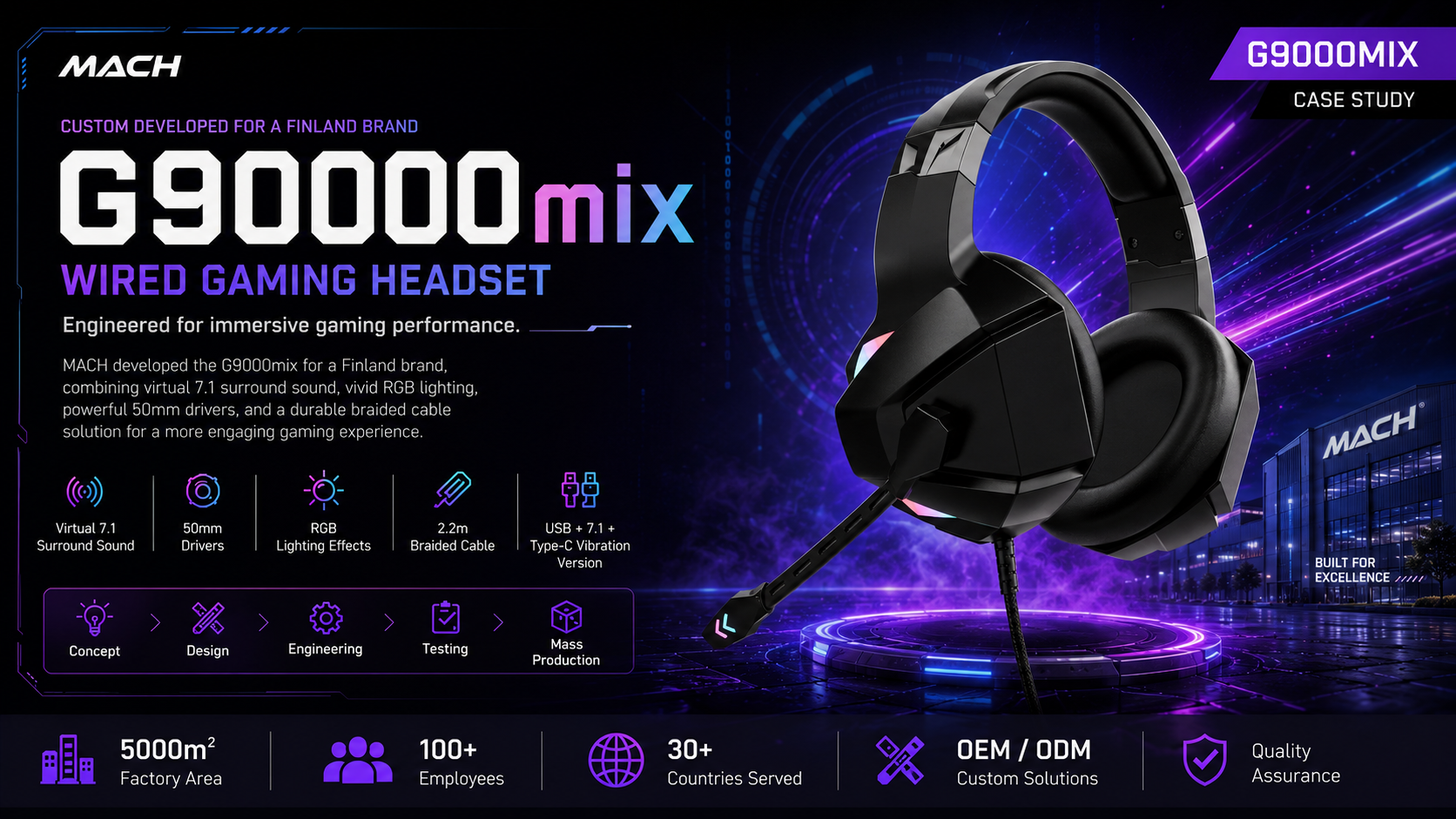
For many overseas gaming accessory brands, a wired gaming headset is still a practical product category. It can offer stable latency, predictable compatibility, a clear retail price position, and a familiar user experience for PC and console gamers. But once the product scope includes USB audio, virtual 7.1 surround sound, Type-C connection, RGB styling, microphone improvement, and private-label packaging, the project becomes more than a simple logo order.
This article uses the G9000mix Finland ODM project as an example to explain how MACH industry supports wired gaming headset development from requirement confirmation to mass production support. The goal is not to repeat the case study page. Instead, it breaks down the engineering and project-management decisions behind an ODM wired gaming headset for a Finland gaming brand and shows what overseas buyers should prepare before starting a similar project.
Why Wired 7.1 Gaming Headsets Still Fit OEM/ODM Roadmaps
Wired gaming headsets remain useful when a brand needs stable latency, clear compatibility, controlled cost, and a retail-ready product that can be launched without the complexity of wireless certification and battery management.
Wireless gaming audio is growing, but wired gaming headsets continue to solve a different buyer problem. They avoid battery-life concerns, keep latency simple, and make compatibility easier to communicate. For gaming accessory brands entering or expanding a product line, a wired headset can be a controlled way to build category presence before moving into more complex wireless platforms.
Virtual 7.1 surround sound adds another layer to the product position. For end users, it creates a stronger gaming feature message than a basic analog headset. For the manufacturer, it requires attention to USB audio behavior, device naming, software or chipset direction, connector consistency, and practical testing. This is why USB 7.1 RGB wired gaming headset manufacturing should be managed as an ODM development project rather than a catalogue purchase.
Starting With Market Requirements, Not Only Product Photos
A reliable ODM brief starts with the buyer’s target market, sales channel, feature priorities, and launch constraints before selecting the exact headset configuration.
In the G9000mix Finland ODM project, the buyer needed a wired gaming headset suitable for a private-label gaming audio launch. The scope included RGB styling, USB 7.1 plus Type-C connection, logo printing, customized retail packaging, microphone improvement, cable and connector details, and production support. Those requirements shaped the project more than the product image alone.
For MACH industry, the first step is to translate market requirements into a factory-readable product brief. That brief should define the target user, channel expectations, required connector type, audio feature direction, microphone expectations, packaging format, certification needs, and shipment planning. When the brief is clear, the engineering and production teams can evaluate whether an existing platform can support the project or whether deeper ODM changes are needed.
Platform Selection for USB + 7.1 + Type-C Headset Development
The base platform must support the required audio interface, structure, comfort, cable design, connector configuration, and production repeatability.
The G9000mix platform gave the Finland project a practical starting point for a USB 7.1 wired gaming headset. Instead of beginning from an empty mechanical design, the project could focus on adapting a known platform to the buyer’s required configuration. This is often the most efficient path for overseas brands that need a credible product launch without taking on the time and tooling risk of a fully new structure.
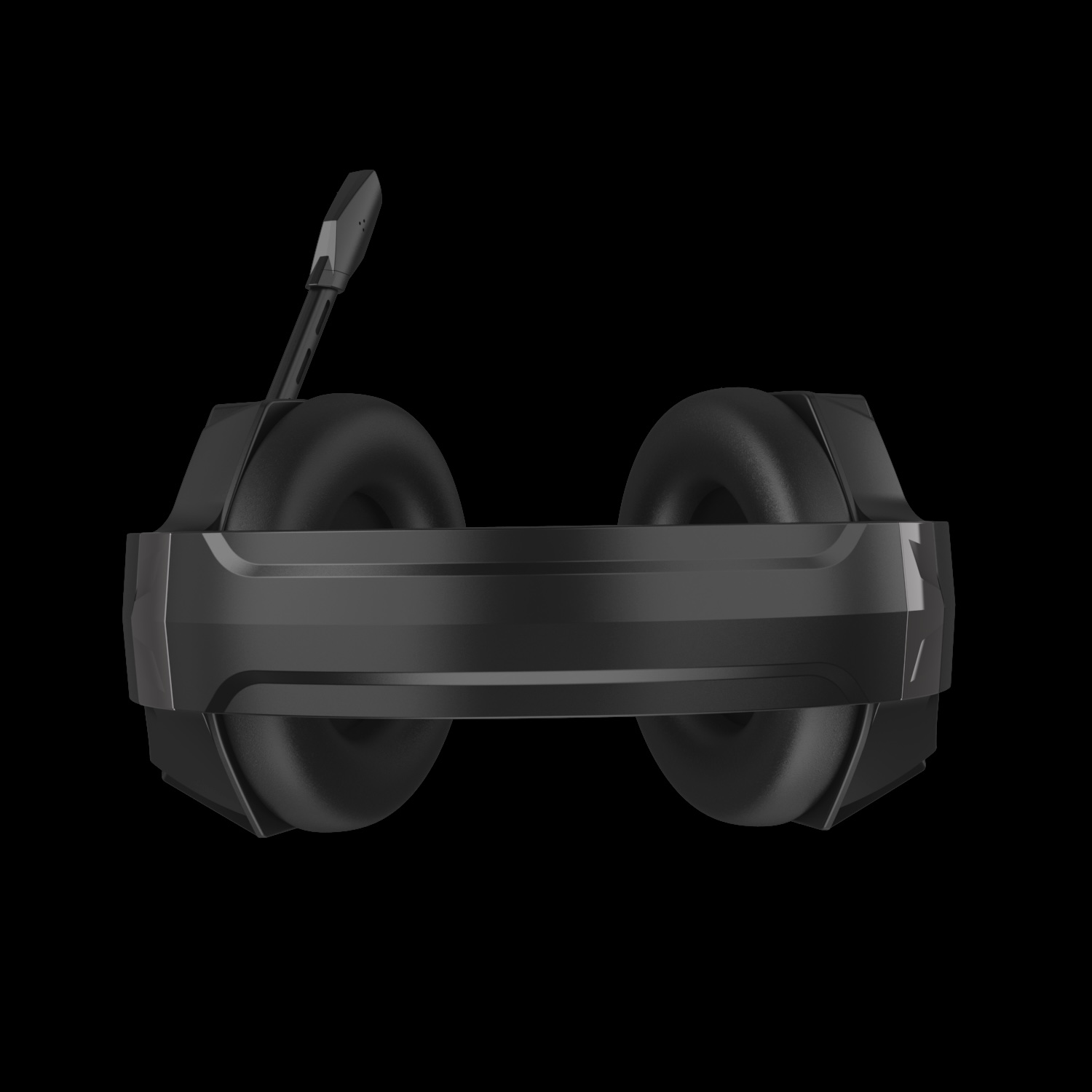
Platform evaluation includes more than confirming that the headset turns on. MACH industry reviews the headband and earcup structure, speaker and microphone arrangement, cable routing, connector requirements, surface finish, lighting behavior, assembly method, packaging fit, and production stability. For a USB + 7.1 + Type-C gaming headset solution, the device behavior and connector details are also part of the product experience. If these details are not locked before sampling, the project can lose time later in packaging, QA, or channel approval.
RGB Styling, Logo Placement, and Private-Label Identity
Private-label customization should connect visual design with production feasibility, not simply place a logo on an existing product.
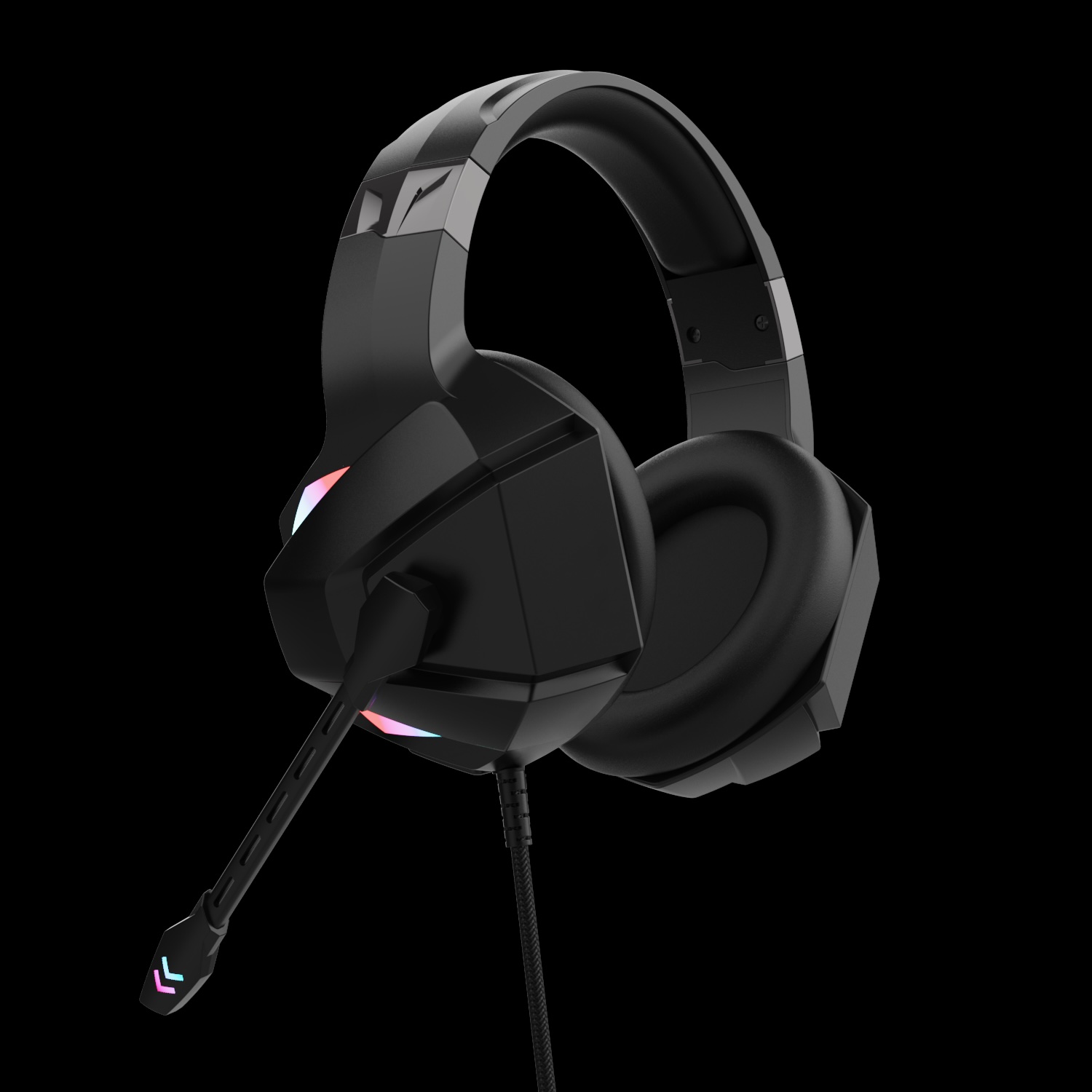
For a gaming headset, appearance matters because the product competes visually on marketplace pages, retail shelves, and social content. RGB styling, shell color, logo placement, and packaging design all influence how the buyer’s brand is perceived. In the G9000mix Finland project, MACH industry supported logo silkscreen placement, product styling confirmation, and packaging coordination so the final headset could present as a brand product rather than a generic item.
Good private label gaming headset manufacturing also considers repeatability. Logo position must match the product surface and printing method. RGB presentation should be practical for assembly and testing. Packaging artwork should reflect the exact product configuration. These details are small individually, but together they determine whether the approved sample can be reproduced consistently during production.
Microphone, Cable, Connector, and Low-Temperature Market Details
ODM development often succeeds or fails through details that are easy to underestimate: microphone pickup, cable length, connector finish, USB device naming, and material choices for the target market.
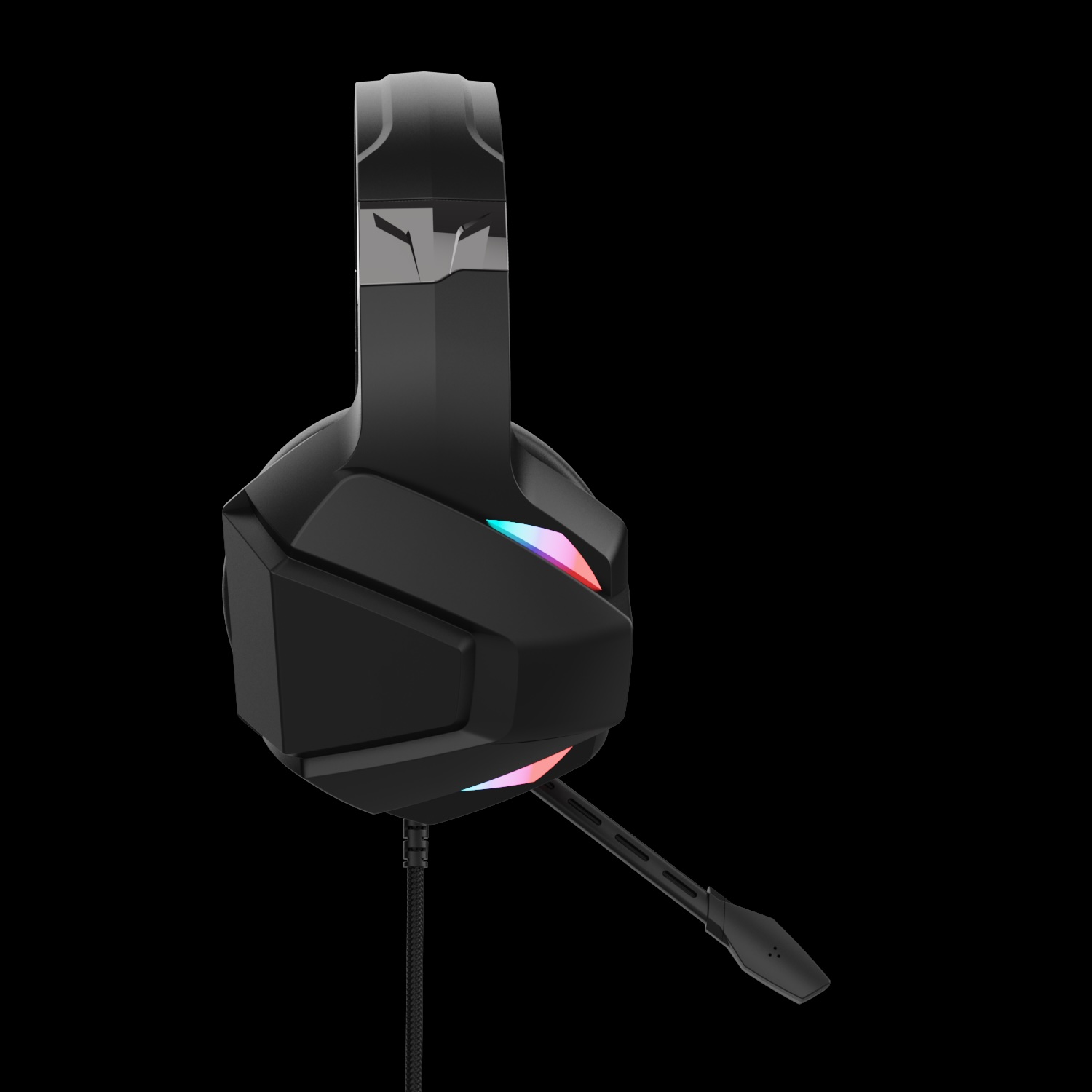
The Finland project included microphone component improvement, USB device name adjustment, gold-colored USB and Type-C connector details, cable-length coordination, and high-temperature tape requirements for a low-temperature market environment. None of these items are dramatic on their own, but they are exactly the details that separate a managed ODM project from a loose sourcing order.
For gaming users, microphone performance affects communication quality. For buyers, connector finish and cable structure affect perceived quality. For a Nordic market, material behavior and packaging protection may receive additional attention because the product must remain stable through storage, transport, and seasonal conditions. MACH industry uses these details to build a more complete production checklist before mass production begins.
Packaging, Retail Control, and Shipment Preparation
Packaging should be treated as part of product development because it affects channel readiness, protection, labeling, and buyer acceptance.
Private-label gaming headset projects often move from product discussion to packaging discussion faster than expected. The box must communicate the correct feature set, protect the headset during shipment, support barcode or channel requirements, and match the buyer’s brand language. In the G9000mix Finland ODM project, the scope included customized color box and carton requirements, plus anti-theft sticker placement inside the color box.
MACH industry supports packaging coordination by checking that the printed claims, visual layout, product accessories, carton details, and production packing method match the approved scope. This reduces avoidable problems such as outdated feature callouts, mismatched connector descriptions, missing accessories, or carton details that do not fit the buyer’s warehouse and retail requirements.

Testing and Final Inspection Before Mass Production Shipment
A USB 7.1 RGB wired gaming headset should be checked as an electronic product, an audio product, and a retail product before shipment.
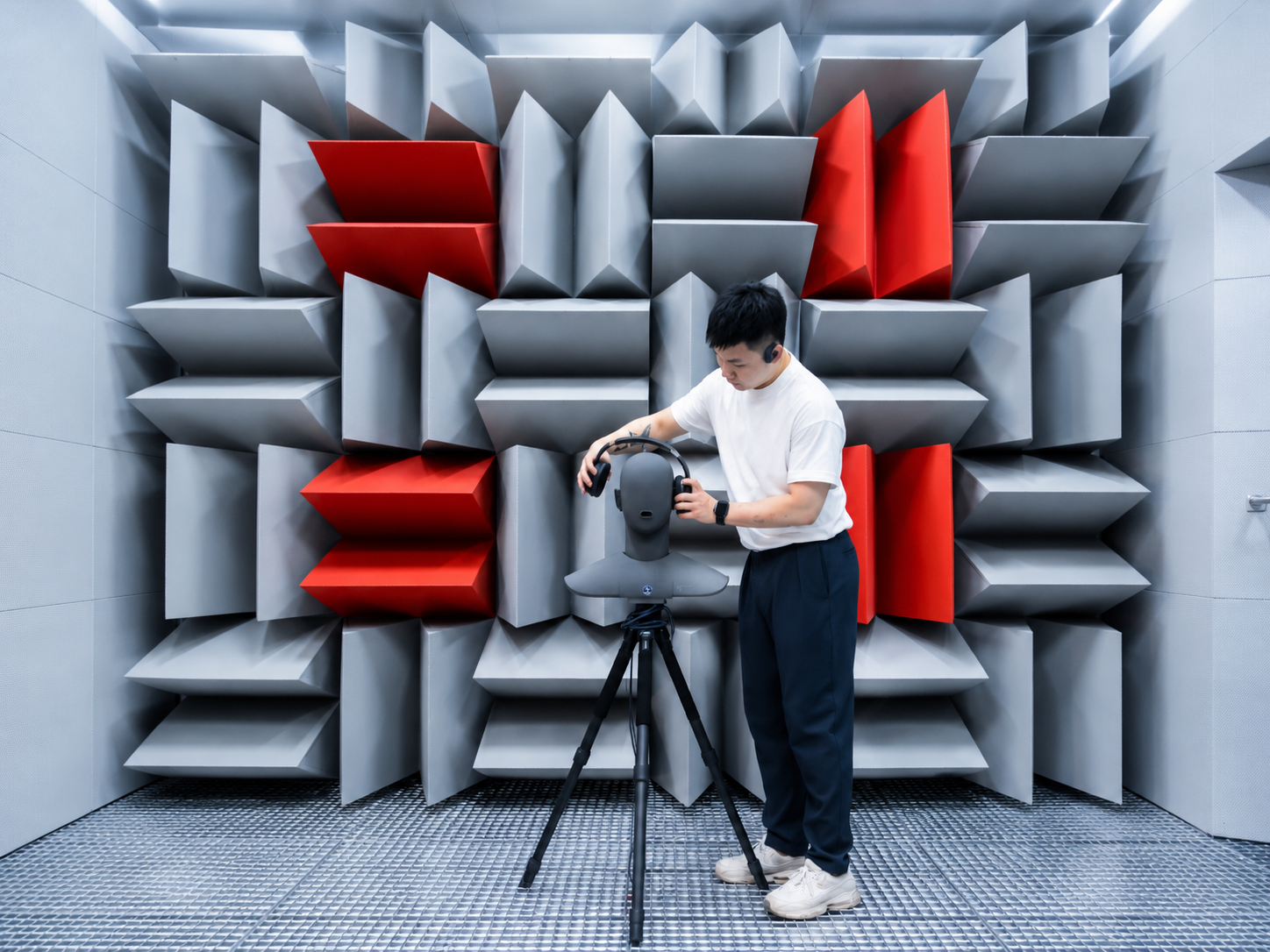
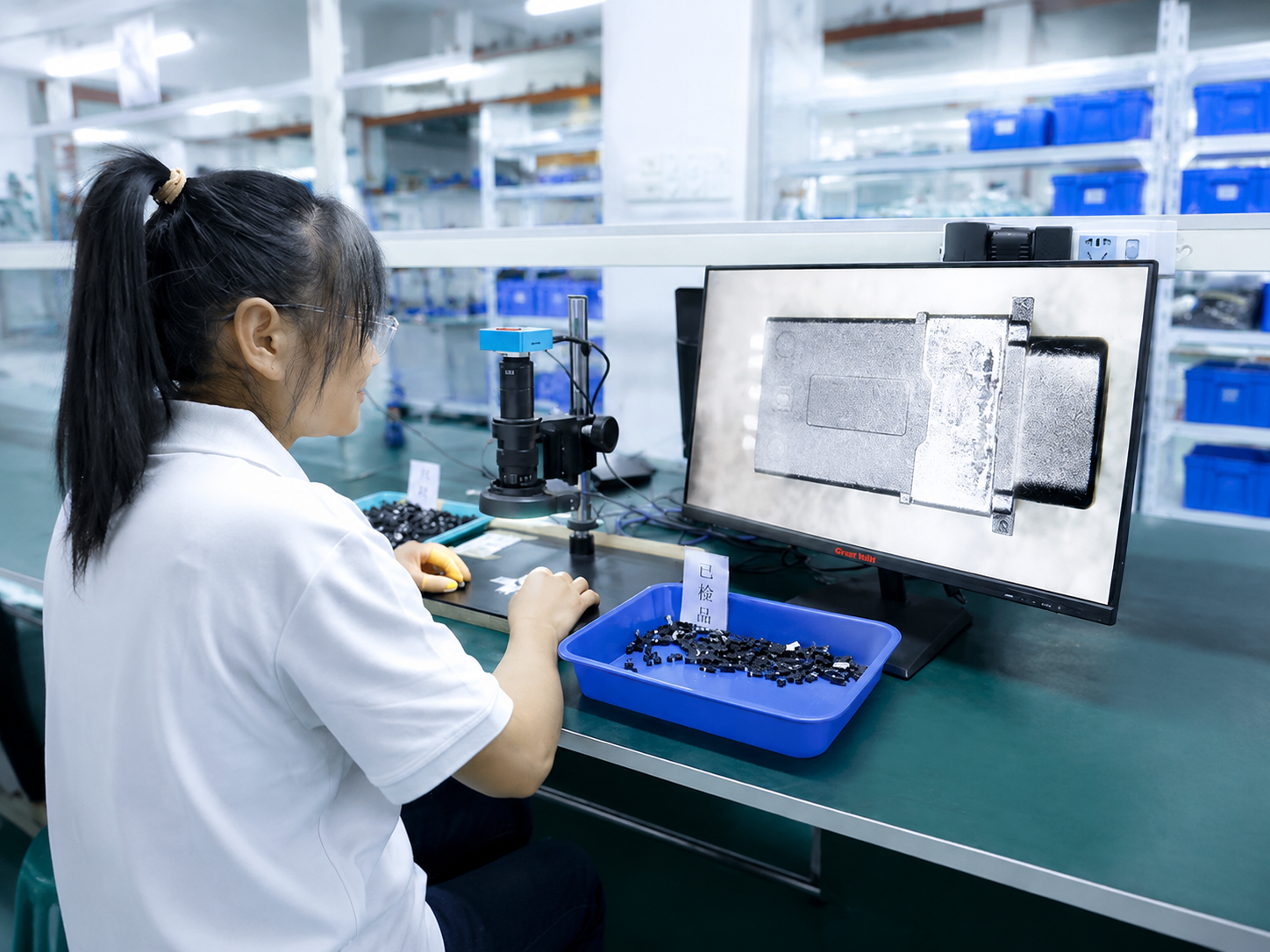
Testing for a wired gaming headset includes basic functional checks, but the project should go further. For a USB 7.1 RGB model, the team should review USB recognition, audio output, microphone pickup, RGB lighting behavior, cable and connector fit, Type-C configuration, button or control behavior if applicable, surface finish, packaging accuracy, and final inspection standards.
The G9000mix Finland project included pre-production sample support and final inspection before shipment. This matters because the buyer’s approval is not only about one good sample. The factory must be able to reproduce the approved configuration at scale. Final inspection helps verify that the product, packaging, labels, and accessories align with the confirmed scope before goods leave the factory.
What Overseas Brands Can Learn From the G9000mix Finland ODM Project
The strongest lesson is that a wired headset launch becomes easier when the buyer and manufacturer treat requirements, sampling, testing, packaging, and production as one connected workflow.
The G9000mix Finland ODM project shows how an overseas gaming brand can use an existing headset platform while still building a differentiated private-label product. The value came from structured customization: USB 7.1 and Type-C configuration, RGB styling, logo placement, packaging requirements, microphone improvement, connector details, sample review, quality checks, and mass production coordination.
For overseas buyers, the practical takeaway is to prepare a complete RFQ before requesting price. Share the target market, required interface, audio feature expectations, microphone needs, RGB direction, logo and packaging scope, certification needs, timeline, and any environmental or retail-channel requirements. MACH industry can then evaluate the best OEM or ODM route and help turn the requirement list into a manufacturable gaming audio product.
Frequently Asked Questions
What makes a wired gaming headset project different from a simple private-label order?
A wired gaming headset project usually requires connector configuration, audio platform review, microphone evaluation, RGB behavior, packaging requirements, and production testing. A simple private-label order may focus mainly on logo and box artwork, while ODM development connects product structure, user experience, and manufacturing control.
Can MACH industry support USB, 7.1 surround sound, and Type-C gaming headset configurations?
Yes. MACH industry supports wired gaming headset projects involving USB audio, virtual 7.1 surround sound solutions, Type-C connector requirements, cable details, microphone improvement, RGB styling, and private-label packaging for overseas gaming brands.
Why is pre-production sample review important for a 7.1 RGB gaming headset?
Pre-production sample review helps confirm the approved appearance, USB device behavior, microphone pickup, RGB lighting, cable and connector details, packaging layout, and inspection criteria before the project moves into mass production.
Does an ODM wired gaming headset require a completely new industrial design?
Not always. Many brands use an existing headset platform as the base, then customize audio configuration, connector details, microphone components, logo placement, packaging, accessories, and production requirements. This can reduce development risk compared with a fully new design.
How should overseas brands prepare an RFQ for a wired gaming headset ODM project?
A useful RFQ should include target market, expected product position, connector requirements, sound or chipset direction, microphone expectations, RGB requirements, logo and packaging needs, certification requirements, target launch timing, and estimated order planning.
Can MACH industry support confidential projects for overseas gaming brands?
Yes. MACH industry can describe projects using general terms such as a Finland gaming brand or an overseas gaming accessories brand when customer identity, channel details, or launch information must remain confidential.
What quality checks are relevant for USB 7.1 wired gaming headsets?
Relevant checks include speaker function, microphone pickup, USB recognition, Type-C adapter or connector fit, RGB lighting behavior, cable and strain relief, headband and earcup assembly, cosmetic inspection, packaging accuracy, and final shipment inspection.
Related Resources
Need OEM/ODM gaming audio solutions?
Contact MACH Industry to discuss your gaming headset, gaming earbuds, or private-label audio project.
Contact MACH Industry