Home > Resources > Gaming Headset Guide
How Gaming Brands Develop Limited Edition IP Collaboration Headsets
A buyer and engineering guide to turning an IP concept into a limited-edition gaming headset through industrial design, CMF, tooling, validation, compliance planning, and controlled production.
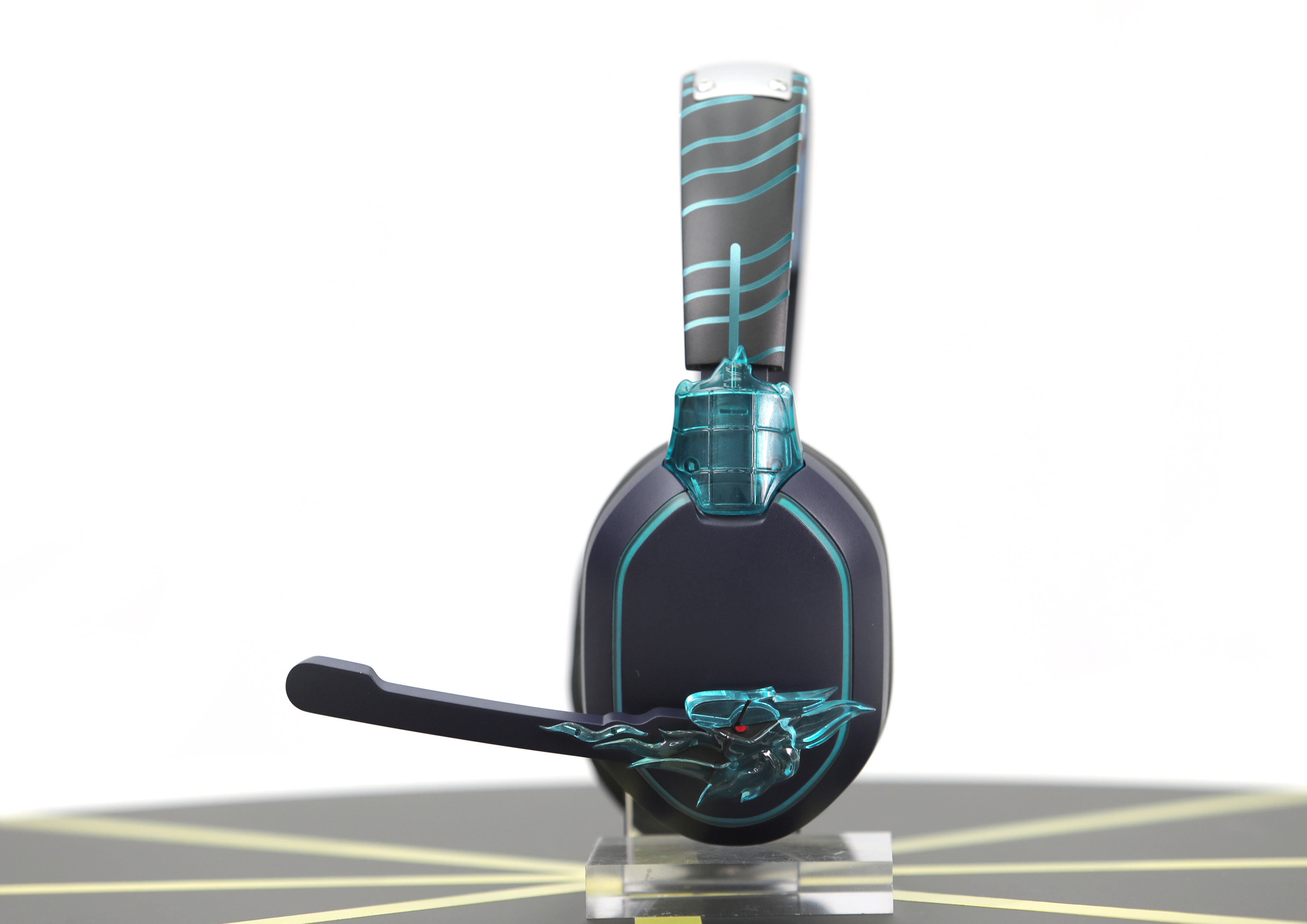
Limited edition gaming headsets require more than visual customization. Successful projects combine IP storytelling, industrial design, engineering validation, manufacturing execution, and quality control. A brand must convert creative assets into a specification that can be molded, decorated, assembled, tested, approved, packaged, and reproduced consistently.
The KAKASHI France OEM project provides a practical reference. MACH worked with Lexip France on a KAKASHI-themed, Naruto-inspired collaboration headset positioned as a Bluetooth wireless gaming accessory for Nintendo Switch-focused users. Its confirmed direction included a 50mm speaker driver, high-definition microphone, LED lighting, custom surface graphics, and water-transfer decorative finishing. This guide extracts the sourcing and engineering decisions behind that type of program rather than repeating the case study. It does not claim that MACH is an official IP license holder or disclose commercial licensing terms.
Why Limited Edition Gaming Products Need Different Development Strategies
A standard OEM headset adapts a product platform to a brand; a limited-edition IP headset must also preserve recognizable creative identity across design, manufacturing, approval, and retail presentation.
Conventional private-label development may focus on logo position, molded color, packaging, accessories, and a validated electronics platform. That approach can be efficient when the base product already fits the target channel. A limited-edition IP collaboration adds another decision system: approved character cues, visual hierarchy, collector expectations, special finishes, stakeholder reviews, and production traceability.
The difference affects the whole development brief. Creative teams may prioritize recognition and storytelling, while engineers must protect fit, strength, acoustic openings, controls, wireless performance, assembly access, and repeatable tolerances. Procurement teams must control process count, tooling scope, reject risk, packaging protection, and the approved cost structure. These interests need to converge before the design is frozen.
Limited edition should therefore describe a controlled product concept, not simply a new color. The headset, microphone, lighting, surface treatment, packaging, and presentation should feel intentional together. A supplier suited to this work needs design interpretation, CMF engineering, structure and tooling capability, sample management, process validation, and quality documentation in addition to ordinary OEM customization.
| Development area | Standard OEM headset | Limited-edition IP headset |
|---|---|---|
| Product identity | Brand logo and selected colorway | Recognizable character cues integrated with brand and product language |
| Approval | Buyer confirms commercial sample | Buyer coordinates creative, brand, technical, packaging, and rights-holder approvals |
| CMF | Established paint, print, or molded-color options | Layered graphics, special finishes, decorative parts, and approved visual masters |
| Engineering | Validate changes to a mature platform | Resolve interaction between character design, structure, tooling, assembly, and function |
| Production control | Standard approved sample and QC plan | Golden samples, artwork versions, finish boundaries, process limits, and traceable revisions |
KAKASHI France OEM Project Overview
KAKASHI was developed with Lexip France as an anime-inspired Bluetooth gaming headset project combining a themed visual system with production-ready hardware and surface processes.
The project was positioned as a limited-edition IP collaboration gaming headset for a France gaming accessory partner. The product direction used a Bluetooth wireless platform, 50mm speaker driver, high-definition microphone, LED lighting, and Nintendo Switch-focused accessory positioning. Its appearance combined dark neutral housings, cyan accents, illuminated earcup outlines, transparent decorative elements, custom graphics, and a character-inspired headband treatment.
MACH's documented scope covered product concept discussion, industrial design, structural development, mold development, prototypes, trial production, certification coordination, and mass-production support. Water transfer printing and other decorative finishing helped carry visual elements across curved surfaces that could not be treated as a flat label area.
The project is described here as a KAKASHI-themed collaboration headset, a Naruto-inspired collaboration project, and an anime-inspired gaming headset. These terms explain the design context without asserting exclusive rights, official merchandise status, licensing fees, sales performance, project duration, or other unconfirmed commercial information.
| Project item | Confirmed KAKASHI direction |
|---|---|
| Partner | Lexip France |
| Product | Bluetooth wireless gaming headset |
| Positioning | Limited-edition, Nintendo Switch-focused gaming accessory |
| Audio and voice | 50mm speaker driver and high-definition microphone |
| Visual system | LED lighting, custom surface graphics, transparent details, and water-transfer finishing |
| Development support | Concept, industrial design, structure, molds, prototypes, trial production, certification coordination, and mass production |
Creating a Limited Edition Gaming Headset: Balancing IP Identity, Design and Mass Production
A successful limited-edition headset translates character identity into a coherent product language, then proves that every visible feature can be manufactured and inspected at production scale.
Limited edition development is not a color-swap exercise. The product must communicate why the collaboration exists while remaining comfortable, functional, durable, and feasible to build. A logo placed on an unrelated shell may identify an IP, but it rarely creates a convincing collectible object. Stronger programs use selected character cues to shape color blocking, line work, surface rhythm, translucent details, lighting, control graphics, microphone treatment, and packaging without compromising normal headset use.
The first balance is character recognition versus brand identity. Buyers should identify a small set of non-negotiable visual cues instead of covering every surface with references. Those cues must coexist with the gaming brand's logo, established palette, retail language, and legal markings. The second balance is gaming culture versus usability. Dramatic components may look effective in artwork yet interfere with headband adjustment, hinge movement, button access, cushion replacement, microphone position, weight distribution, or packaging volume.
The translation path should be explicit: character concept becomes a visual language; visual language becomes industrial design; industrial design is resolved through color, material, and finish development; CMF and structure are reviewed in prototypes; and approved samples become production standards. At each handoff, the team should record what is fixed, what may be adapted, who approves changes, and how the feature will be measured or visually inspected.
Character concept begins with permitted artwork, symbols, palette references, narrative cues, target users, channel, and product tier. Visual-language work converts those inputs into proportion, contrast, repeated lines, focal zones, and relationships between opaque, translucent, soft, and metallic-looking surfaces. Industrial design then assigns those ideas to real parts while protecting parting lines, screw locations, assembly direction, wall thickness, draft, acoustic openings, controls, cable paths, antenna surroundings, and wearing comfort.
CMF development determines whether the concept survives contact with manufacturing. A digital cyan, gray, or black is not a production specification. The team needs physical color references, gloss targets, textures, print methods, coverage boundaries, substrates, coatings, and acceptable variation. A water-transfer film that looks continuous in a rendering may stretch near compound curves, lose registration at edges, or conflict with a joint. Prototype reviews should therefore include both appearance and process feasibility.
Many weak IP products fail in predictable ways. Some add only a logo, leaving the hardware visually disconnected from the story. Others overload the product with artwork until controls and structure become difficult to use. A concept may rely on a finish that cannot maintain position or color across batches. New parts may increase mold and assembly cost beyond the approved product tier. Late creative changes can also collide with completed tooling, packaging dimensions, certification samples, or production fixtures.
Successful programs treat design, engineering, manufacturing, and quality control as one system. Designers define the intended hierarchy and experience. Engineers make the form, materials, interfaces, lighting, and processes workable. Manufacturing teams establish fixtures, work instructions, process windows, and pilot-run evidence. Quality teams convert subjective appearance into signed samples, viewing conditions, defect definitions, checkpoints, and traceability. This integration is what turns a compelling collaboration image into a repeatable limited-edition product.
| Stage | Primary output | Buyer approval question |
|---|---|---|
| Character concept | Permitted cues, audience, product role, and creative boundaries | Which elements are essential for recognition? |
| Visual language | Palette, focal zones, graphics, materials, and lighting direction | Does the headset communicate both IP and brand identity? |
| Industrial design | Real part geometry, controls, interfaces, and wearing form | Is the concept usable and structurally feasible? |
| CMF development | Physical colors, substrates, finishes, artwork maps, and process limits | Can suppliers reproduce the intended appearance consistently? |
| Prototype | Integrated design and engineering sample | Are appearance, function, assembly, and packaging ready for validation? |
| Mass production | Approved standards, process control, inspection, and traceability | Does output remain consistent with the signed master? |
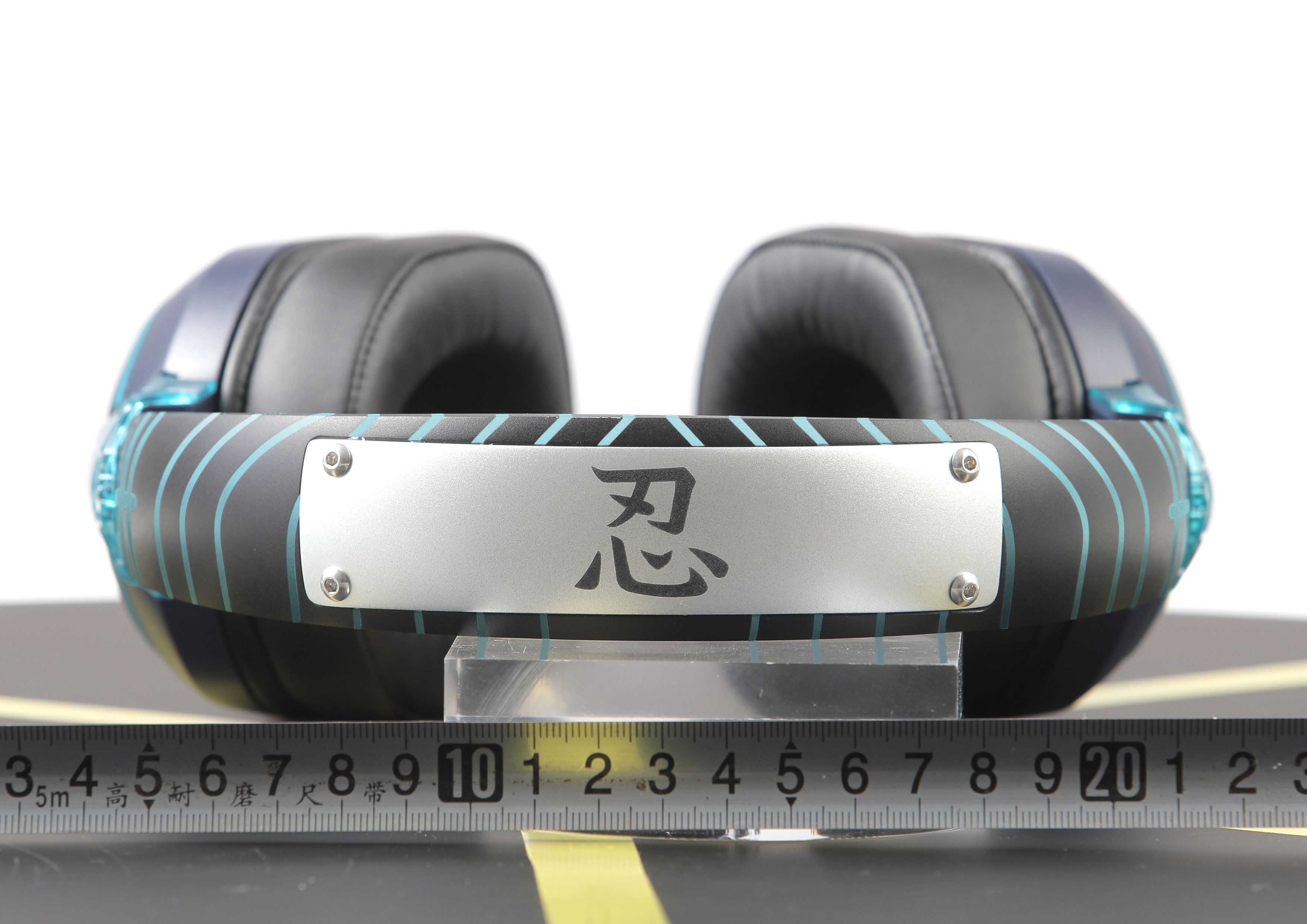
From Character Inspiration to Industrial Design
Character inspiration becomes industrial design when symbolic elements are reduced to a usable hierarchy of shape, color, graphics, materials, and interaction details.
Design teams should begin by separating literal assets from transferable design principles. A literal asset may be an approved emblem or graphic. A transferable principle may be a recognizable line pattern, contrast between dark and bright tones, a technical motif, or a translucent energy-like accent. The second category often integrates more naturally into a headset because it can influence the product rather than sit on top of it.
Each cue needs a physical home. Large curved headband areas may support repeated graphics; earcup caps can provide focal surfaces; yokes and decorative inserts can carry color or transparency; LED paths can reinforce an outline; and controls should remain legible. The designer also has to view the product folded, worn, displayed, photographed, and packed. A feature visible only in one rendering angle may have limited value at retail.
Industrial-design reviews should use annotated views showing artwork boundaries, visible seams, logo clear space, control access, microphone movement, cushion interfaces, and prohibited zones. This creates a common language for creative reviewers and the factory, reducing the risk that a visually small revision causes a structural or tooling change later.
Why CMF Matters for Collectible Gaming Accessories
CMF creates perceived coherence and collectibility by controlling how colors, materials, textures, graphics, transparency, and light behave on the actual product.
Color establishes hierarchy, but material and finish determine whether the same palette feels generic or intentional. Molded plastic, painted plastic, transparent polycarbonate, soft cushions, printed films, metal-look plates, and illuminated regions reflect light differently. The CMF specification should define their relationship rather than approve isolated color chips.
Water transfer printing can apply a complex repeated pattern across curved three-dimensional parts. The film is prepared and transferred onto a treated substrate, followed by rinsing, drying, inspection, and protective coating as required by the approved process. It is useful when flat printing cannot follow the surface, but it does not guarantee perfect registration. Coverage maps, seam locations, stretch tolerance, edge treatment, base color, topcoat, and acceptable variation need agreement.
Collectible value depends on consistency at close viewing distance. Buyers should review samples under defined lighting, compare left and right assemblies, check graphics near joints and edges, and decide which differences are normal process variation. A physical golden sample, approved artwork version, color references, and defect catalogue give production and inspection teams a more reliable standard than renderings alone.
| CMF method | Useful for | Key control point |
|---|---|---|
| Molded color | Stable base parts and color blocking | Resin, color masterbatch, texture, and lot variation |
| Painting | Controlled gloss, opacity, and premium surface feel | Preparation, film thickness, adhesion, dust, and curing |
| Water transfer printing | Patterns over curved or compound surfaces | Film stretch, positioning, seams, edge coverage, and topcoat |
| Pad or silk printing | Logos, symbols, and defined graphic zones | Registration, ink adhesion, opacity, and wear |
| Transparent decorative parts | Depth, lighting, and visual accents | Material clarity, flow marks, fit, scratching, and light diffusion |
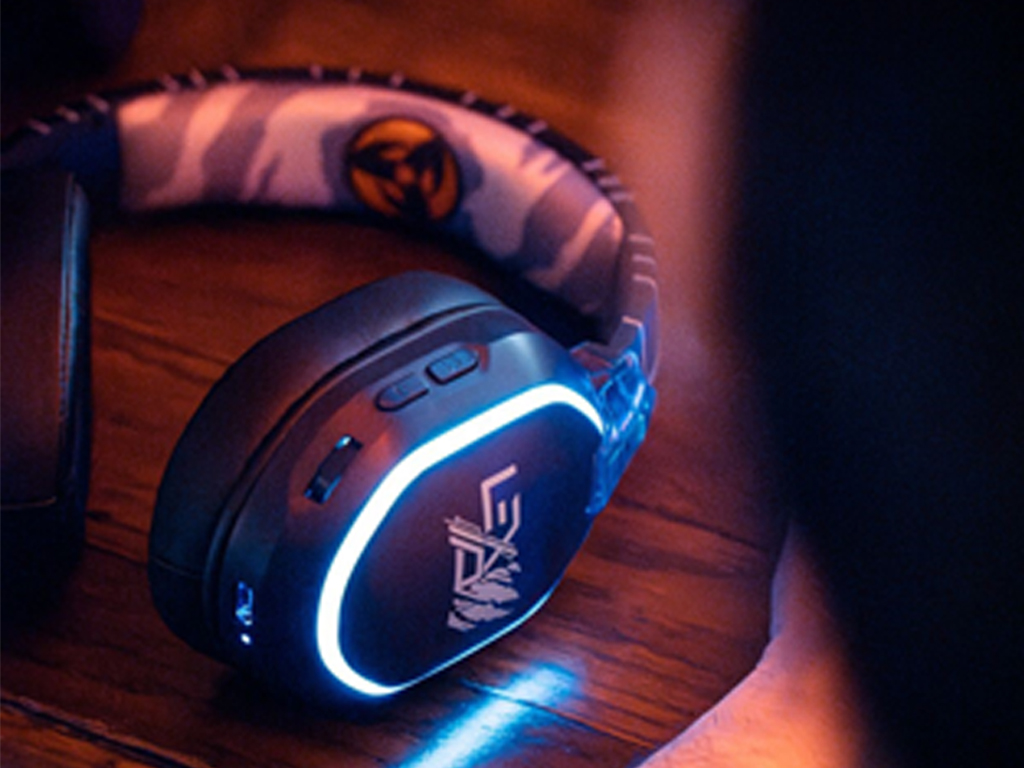
Engineering Challenges Behind Custom IP Gaming Headsets
Custom IP headset engineering must protect mechanical strength, fit, assembly, acoustic function, wireless behavior, and manufacturability while supporting the visual concept.
A headset is a moving assembly. The headband flexes, sliders travel, yokes rotate, cushions compress, the microphone is positioned, and users repeatedly operate controls and charging ports. Decorative changes near these areas can alter clearances, loads, wear paths, or assembly sequence. Engineers must check interference and tolerance stacks across the complete size range, not only a static appearance sample.
Custom components may require mold development or revised inserts. Parting lines, gate locations, ejector marks, ribs, bosses, snap fits, screws, draft angles, and surface textures all affect visible quality. Transparent or illuminated parts need additional attention because sink marks, weld lines, flow marks, scratches, internal stress, and light leakage are easier to see.
Materials and coatings also interact. A finish that adheres well to one resin may require different preparation on another. Added paint or film thickness can affect mating parts. Decorative layers near hinges or adjustment paths may wear. Assembly fixtures should avoid contacting finished show surfaces, and packaging must prevent rubbing during transit. These constraints belong in design reviews before mass-production tooling is finalized.
Technical Deep Dive: Why IP Headset Projects Require Early Manufacturing Engineering
Early manufacturing engineering prevents creative features from becoming late tooling, decoration, assembly, durability, or quality problems.
Manufacturing engineers should review the concept before exterior geometry is frozen. Mold feasibility determines whether a visible shape has adequate draft, stable wall thickness, workable parting lines, acceptable gates and ejection, and enough space for ribs, bosses, fastening, and internal components. A decorative surface also needs uninterrupted process access. If a graphic crosses a deep recess, joint, screw, sharp edge, or moving interface, the intended finish may not be repeatable.
Parting lines and assembly direction are visual decisions as well as technical ones. A seam through a character focal zone can weaken recognition. A decorative insert may conceal a fastener but add tolerance and assembly steps. Material selection affects stiffness, impact behavior, texture, coating adhesion, transparency, light diffusion, and appearance after molding. These trade-offs should be documented while the design can still change economically.
Water-transfer engineering begins with the substrate and surface preparation. The team defines cleaning, primer or base coat where applicable, film orientation, immersion direction, pattern positioning, rinsing, drying, coating, curing, and inspection. Curved parts stretch the pattern differently, so exact alignment may not be realistic across every unit. The approval standard must distinguish unacceptable distortion from normal process variation and define how left-right visual balance will be judged.
Durability cannot be inferred from appearance. Process validation may include adhesion, abrasion, handling, environmental exposure, chemical resistance, and repeated contact checks selected for the material, finish, market, and use case. Batch consistency should be evaluated in a pilot run, where operators, fixtures, cycle time, rework rules, and inspection conditions reflect intended production rather than a single hand-prepared prototype.
Engineering involvement continues through design review, prototype validation, pilot production, and quality control. Prototype review checks fit, movement, function, acoustics, microphone operation, controls, lighting, graphics, and assembly. Pilot production reveals variation across multiple units and confirms work instructions. Quality planning then establishes incoming checks, in-process controls, final inspection, golden samples, defect limits, lot traceability, and escalation rules.
Wireless Gaming Headset Platform Considerations
The visual concept must be built on a wireless headset platform whose Bluetooth behavior, audio system, microphone, controls, lighting, charging, and target-device use are validated in the final configuration.
Bluetooth can support wireless listening and selected gaming-accessory use, but buyers should define the intended devices and scenarios before platform selection. Nintendo Switch-focused positioning does not remove the need to confirm final connection behavior, audio and microphone paths, pairing, controls, charging, labeling, and packaging claims for the approved headset and target system.
A 50mm driver describes physical diameter, not guaranteed sound quality. Acoustic performance also depends on the transducer design, enclosure volume, damping, cushion seal, driver placement, tuning, electronics, and test targets. Product teams should approve measurable specifications and listening references rather than assume a larger number automatically creates better gaming audio.
The high-definition microphone, LED lighting, Bluetooth platform, and decorative structure should be evaluated together. Lighting and transparent parts can affect internal space and power planning. Microphone geometry affects use and storage. Surface treatments must not block ports, openings, indicators, or controls. This article does not assign unconfirmed latency, battery-life, ANC, or 2.4GHz capabilities to the KAKASHI configuration.
OEM Development Process From Concept to Mass Production
The OEM workflow moves through a series of controlled approvals: concept, design, engineering, molds, prototypes, testing, certification planning, pilot production, and mass production.
Concept review defines authorization boundaries, decision owners, target user, platform, markets, product tier, hardware baseline, visual direction, packaging, cost direction, and required evidence. Industrial design and CMF then convert approved cues into product geometry, graphics, colors, materials, finishes, and lighting. Engineering reviews structure, electronics, acoustic requirements, wireless behavior, assembly, tools, and testability.
After design freeze, mold and fixture work proceeds for approved custom parts. Tooling samples are reviewed for dimensions, movement, fit, surface quality, and assembly before decorated prototypes become approval references. Functional and reliability testing should use the final or representative structure and materials where those choices affect results.
Trial production is the bridge between sample making and volume output. It checks operator instructions, fixtures, process windows, takt assumptions, decoration yield, assembly sequence, inspection, packaging, and traceability across a batch. Only approved corrections should enter production, with artwork, bill of materials, firmware where applicable, packaging, labels, golden samples, and quality criteria under revision control.
| Phase | Main buyer input | Manufacturing output |
|---|---|---|
| Concept | IP boundaries, users, channel, product tier, and approvals | Feasibility questions and development brief |
| Design and CMF | Creative direction, artwork, brand rules, and physical references | Industrial design, coverage maps, materials, finishes, and process proposal |
| Engineering and molds | Approved direction and performance requirements | Structure, tooling, assembly, tolerance, and validation plan |
| Prototype and testing | Sample feedback and acceptance criteria | Integrated samples, test records, and corrected specification |
| Trial production | Approved files, packaging, and quality standards | Process evidence, inspection results, and production corrections |
| Mass production | Purchase and release requirements | Controlled manufacturing, QC, traceability, packing, and shipment preparation |
Certification Planning for Global Gaming Accessories
Certification planning starts with the final product configuration, radio functions, battery and charging system, materials, accessories, labels, packaging, and destination markets.
CE, FCC, RoHS, and other requirements are not interchangeable badges. Their relevance depends on where the headset will be sold and what the final configuration contains. A Bluetooth product may require radio, electromagnetic compatibility, electrical safety, battery, chemical, labeling, documentation, and market-specific reviews. The responsible parties should define the evidence and conformity route with qualified specialists.
Visual customization can still affect compliance planning. New coatings or materials may change substance documentation. A transparent part near an antenna may influence wireless validation. Revised LEDs, electronics, batteries, cables, chargers, model names, labels, or packaging statements may affect the scope of existing evidence. Buyers should avoid assuming that reports for a base platform automatically cover every custom edition.
MACH can coordinate certification preparation and sample support according to an agreed project scope. The KAKASHI article does not claim that every listed certification applies to every future variant or destination. Buyers should confirm applicable standards, applicant information, model relationships, reports, declarations, marking, language, and technical files for the actual product they intend to place on the market.
Buyer Checklist Before Starting an IP Gaming Headset Project
A useful RFQ combines creative authority, product requirements, manufacturing constraints, approval workflow, quality standards, and market-entry information.
Provide permitted IP files, brand guidelines, required legal notices, territory information, and the people responsible for creative and commercial approval. Define target users, retail channel, product tier, target platform and devices, wireless mode, audio and microphone expectations, lighting, controls, wearing requirements, accessories, and packaging concept.
For appearance, include reference colors, artwork hierarchy, logo rules, material preferences, finish direction, transparent or decorative parts, water-transfer expectations, and acceptable adaptation. Identify whether the project can use an existing headset platform or requires new structure and molds. Share certification markets, quality expectations, inspection method, packaging tests, production quantity planning, cost direction, and launch constraints without asking the supplier to guess them.
Before approving tooling or production, confirm the design freeze, bill of materials, artwork revisions, CMF samples, mold ownership and maintenance terms, test plan, compliance responsibilities, labels, packaging, golden sample, defect criteria, change-control method, and escalation contacts. A clear checklist makes approvals faster because it exposes unresolved decisions while changes are still manageable.
- Document IP permissions, territories, legal notices, approval owners, and file versions
- Define users, product tier, sales channels, target platform, and intended device behavior
- Specify Bluetooth, audio, 50mm driver, microphone, controls, charging, and LED requirements
- Provide brand rules, character cues, physical colors, graphics, materials, and finish references
- Decide which elements use existing structure and which need molds, inserts, jigs, or fixtures
- Approve water-transfer coverage, positioning, edge treatment, coating, durability, and variation limits
- Agree prototype, function, mechanical, acoustic, wireless, finish, packaging, and pilot-run checks
- Confirm destination markets and certification, labeling, documentation, and applicant responsibilities
- Freeze packaging structure, artwork, accessories, manuals, labels, and product protection
- Set golden samples, defect definitions, inspection levels, traceability, and engineering change control
Conclusion
Limited-edition IP gaming headsets succeed when creative identity is translated into an engineered, testable, and repeatable manufacturing specification.
The KAKASHI France OEM project illustrates how an anime-inspired concept can move through product design, custom CMF, structural development, molds, prototypes, trial production, certification coordination, and mass-production support. Its main lesson is transferable: character recognition, brand identity, gaming use, manufacturing feasibility, and quality control must be resolved together.
Brands evaluating an IP collaboration gaming headset should involve their OEM or ODM manufacturer before artwork and geometry are locked. Early review helps place graphics on feasible surfaces, control tooling and process complexity, protect product function, define realistic finish standards, and build an approval path that can survive production.
Frequently Asked Questions
How do brands develop a limited-edition IP gaming headset?
Brands define IP permissions, audience, platform, product requirements, and approval owners, then move through visual language, industrial design, CMF, engineering, tooling, prototypes, testing, compliance planning, trial production, and controlled mass production.
What makes an IP collaboration headset different from a standard OEM headset?
An IP collaboration headset must preserve recognizable creative identity across the product, finish, lighting, packaging, approvals, and production standards while maintaining normal function, durability, and manufacturability.
Can a limited-edition headset use an existing OEM platform?
Yes. A mature platform can reduce hardware and structural development, but custom parts, graphics, CMF, lighting, materials, packaging, wireless behavior, and compliance scope still require validation.
How are anime-inspired gaming accessories manufactured?
Approved character cues are translated into product geometry, colors, materials, graphics, decorative parts, and lighting, then validated through engineering, physical samples, tooling, process trials, testing, and quality-controlled production.
Why is CMF important for a limited-edition gaming headset?
CMF controls how color, material, texture, graphics, transparency, and light work together on the physical headset. It determines whether the collaboration feels coherent and whether appearance can remain consistent across production batches.
What is water transfer printing on a gaming headset?
Water transfer printing applies a decorative film across suitable three-dimensional surfaces. The process requires substrate preparation, positioning, transfer, rinsing, drying, coating where applicable, and inspection for stretch, seams, coverage, adhesion, and consistency.
Does water transfer printing produce identical graphics on every headset?
Not necessarily. Curves and process behavior can create controlled variation. Buyers should define positioning zones, seam and stretch limits, left-right balance, physical master samples, viewing conditions, and unacceptable defects.
What should be tested before producing a custom IP gaming headset?
The plan may include fit and movement, structural durability, Bluetooth behavior, audio, microphone, controls, charging, lighting, finish adhesion and wear, assembly, packaging protection, labels, and pilot-run consistency.
Does a cosmetic collaboration headset need a new certification review?
It may. Materials, coatings, lighting, radio surroundings, electronics, battery, accessories, labels, model identity, and markets can affect whether existing evidence applies, so the final configuration needs a qualified review.
What files should a buyer provide for an IP headset RFQ?
Provide authorization and approval information, permitted artwork, brand rules, target users and markets, platform and hardware needs, CMF references, tooling scope, testing, certification, packaging, quantity planning, cost direction, and quality requirements.
What type of OEM manufacturer is suitable for an IP gaming accessory project?
Look for integrated industrial design, structural engineering, electronics, acoustic support, CMF and decoration control, tooling, prototypes, testing coordination, compliance support, pilot production, QC, traceability, and mass-production management.
Is MACH the official license holder for the KAKASHI or Naruto IP?
This article does not claim that MACH is an official license holder or has exclusive rights. KAKASHI is presented as a themed, Naruto-inspired collaboration project with Lexip France; rights and approvals remain with the relevant parties.
Related Resources
Need OEM/ODM gaming audio solutions?
Contact MACH Industry to discuss your gaming headset, gaming earbuds, or private-label audio project.
Contact MACH Industry