Home > Resources > Gaming Headset Guide
How Gaming Brands Turn Character Concepts Into Premium IP Gaming Headsets
An engineering and sourcing guide to converting character artwork into a premium gaming headset through industrial design, CMF, tooling, prototypes, process validation, and controlled production.
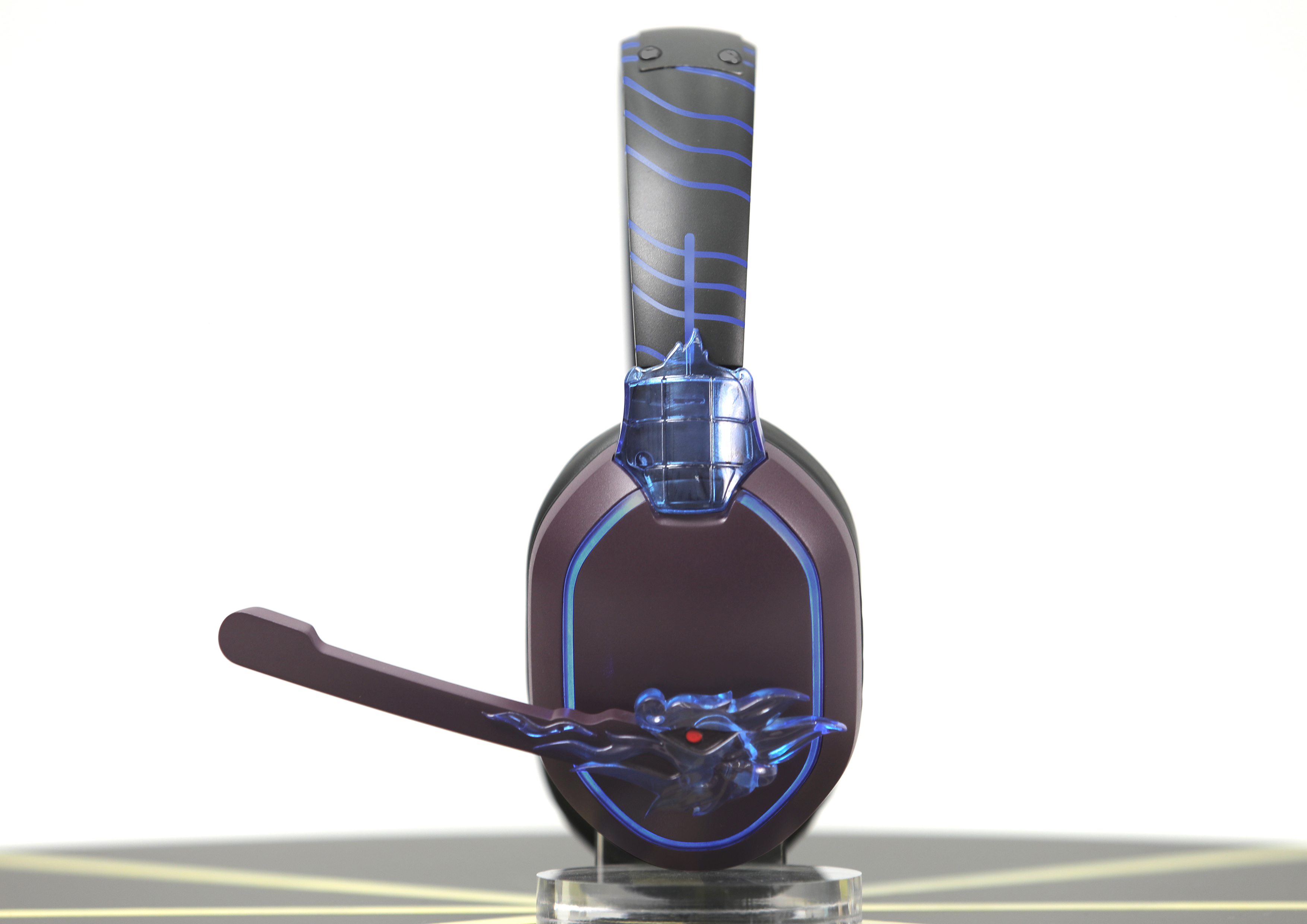
A successful IP gaming headset requires more than visual artwork. Brands need a development partner that can transform character identity into industrial design, manufacturing processes, and a reliable production system. The work begins by separating essential character cues from decorative ideas, then assigning those cues to real parts, materials, finishes, tools, assembly steps, tests, and quality standards.
The MADARA France OEM project with Lexip provides a useful reference. This Naruto-inspired collaboration project used a Bluetooth wireless headset platform positioned for Nintendo Switch-focused accessory use, with a 50mm speaker driver, high-definition microphone, LED lighting, custom graphics, and water-transfer decorative finishing. This guide explains the transferable product-development decisions rather than copying the case study or asserting unconfirmed licensing, commercial, sales, quantity, or schedule information.
Why IP Gaming Headsets Are Different From Standard OEM Products
A standard OEM project customizes a product platform; an IP collaboration product must also convert protected creative identity into a repeatable physical specification without compromising function or production control.
Standard private-label development often changes a logo, molded color, packaging, accessories, and selected hardware options on a mature platform. An IP collaboration adds visual hierarchy, character-recognition requirements, special finishes, multiple approval owners, and closer scrutiny of every visible part. Artwork approval alone is not enough because a rendering does not define molding, decoration, assembly, durability, or batch variation.
Premium positioning also raises the inspection standard. Buyers may evaluate graphic placement, color relationships, surface continuity, transparency, light diffusion, left-right symmetry, gaps, seams, and packaging presentation at close distance. These characteristics must be translated into physical masters, measurable dimensions, process limits, defect definitions, and traceable file revisions.
The suitable OEM or ODM partner therefore needs industrial design, structural engineering, CMF, tooling, prototype, electronics, acoustic, testing, certification coordination, pilot production, and QC capabilities. The core job is not to make one attractive sample; it is to create a system that reproduces the approved product.
| Area | Standard OEM | Premium IP collaboration |
|---|---|---|
| Identity | Logo, color, and packaging | Character cues integrated into shape, graphics, CMF, lighting, and presentation |
| Engineering | Validate selected platform changes | Resolve artwork, structure, tooling, assembly, surface process, and function together |
| Approval | Commercial sample approval | Creative, brand, engineering, packaging, compliance, and production approvals |
| Quality | Platform QC plus customization checks | Golden samples, appearance zones, process variation, traceability, and premium finish criteria |
MADARA France OEM Project Overview
MADARA was developed with Lexip France as an anime-inspired product collaboration combining a themed appearance with a Bluetooth gaming headset platform and manufacturing support.
The confirmed product direction included Bluetooth wireless audio, Nintendo Switch-focused positioning, a 50mm speaker driver, high-definition microphone, LED lighting, and MADARA-inspired visual customization. Purple and blue accents, dark housings, transparent decorative details, earcup lighting, custom headband graphics, and surface decoration created the product language.
MACH's scope covered product concept, industrial design, structural development, mold development, prototypes, trial production, certification coordination, and mass-production support. Water transfer printing and related decorative processes were considered as manufacturing operations, not artwork pasted onto a completed headset.
This article describes MADARA as a themed gaming headset and anime-inspired collaboration. It does not claim official or exclusive license status, disclose IP contract terms, licensing value, order quantities, development duration, customer reviews, sales results, or market ranking.
| Project item | Confirmed direction |
|---|---|
| Partner | Lexip France |
| Product | Bluetooth wireless gaming headset |
| Positioning | Premium IP collaboration and Nintendo Switch-focused accessory |
| Hardware | 50mm speaker driver, high-definition microphone, and LED lighting |
| Development | Concept, design, structure, molds, prototypes, trial production, certification coordination, and mass production |
From Character Artwork to Production Reality: Engineering a Premium IP Gaming Headset
Character artwork becomes a manufacturable headset when its essential visual cues are converted into an industrial-design and process specification that engineering, tooling, production, and QC teams can reproduce.
IP design is not the act of attaching a character image to a plastic shell. Artwork is usually created for a flat visual medium, while a headset is a three-dimensional moving assembly with curved surfaces, seams, hinges, sliders, cushions, controls, ports, acoustic openings, a microphone, and internal electronics. The product team must decide which character elements remain literal and which become color, proportion, line, texture, transparency, lighting, or a separate decorative component.
A disciplined translation follows six steps: character elements become a controlled color system; the color system supports a graphic language; graphic language is assigned to industrial-design surfaces; industrial design is resolved through materials and surface finishing; approved samples define manufacturing standards; and those standards govern mass production. Every step should record the owner, approved file, physical reference, acceptable adaptation, and inspection method.
Character recognition depends on hierarchy, not quantity. A few strong cues can be more effective than artwork across every surface. The team should identify focal zones visible when the headset is worn, displayed, folded, photographed, and packed. Supporting colors and patterns can connect these zones, while brand marks, controls, legal labels, and functional areas retain enough clear space.
Engineering must evaluate product structure, mold feasibility, usable surface area, assembly direction, material selection, and manufacturing tolerance while the concept is still flexible. A graphic crossing a parting line may split visibly. A decorative feature can block a screw or reduce hinge clearance. Added coating thickness can tighten an assembly gap. A translucent part may reveal flow marks or internal features. Solving these interactions after tooling is expensive and can force compromises in the visual concept.
Premium collaboration projects face a three-way constraint: preserve character identity, maintain production feasibility, and control cost and quality consistency. More processes do not automatically create a more premium product. Each paint layer, printed symbol, transparent insert, custom mold, and manual alignment adds operations, fixtures, yield risk, and inspection requirements. Procurement teams should spend complexity where users can see or feel a meaningful difference.
Common failures begin when artwork cannot follow real geometry, a proposed process exceeds the product tier, surface effects vary too much between units, structure limits the intended graphic area, or approval is based on a specially prepared sample that cannot represent normal production. Late changes can also invalidate packaging, fixtures, tooling inserts, compliance samples, or assembly instructions.
The remedy is an integrated loop: design proposes recognizable cues; engineering maps them to feasible parts and processes; suppliers produce representative prototypes; stakeholders approve physical results; pilot production measures variation; and QC converts the approved appearance into golden samples, viewing conditions, defect limits, and traceability. Artwork files should be linked to part numbers and revisions so operators never rely on an outdated graphic. Appearance zones can also be ranked by visibility, allowing tighter control on focal surfaces and practical limits on concealed areas. That loop turns character art into a sellable product rather than a one-off display sample.
| Translation stage | Output | Production question |
|---|---|---|
| Character elements | Approved symbols, themes, and recognition priorities | Which cues must remain recognizable? |
| Color system | Physical colors and hierarchy | Can materials and suppliers reproduce them? |
| Graphic language | Lines, patterns, focal zones, and clear areas | Do graphics fit the real geometry? |
| Industrial design | Parts, interfaces, movement, and assembly | Can the product function and be assembled? |
| Surface finishing | Processes, coverage maps, coatings, and masters | Are appearance and durability repeatable? |
| Mass production | Work instructions, QC, traceability, and release standards | Does batch output match the approved product? |
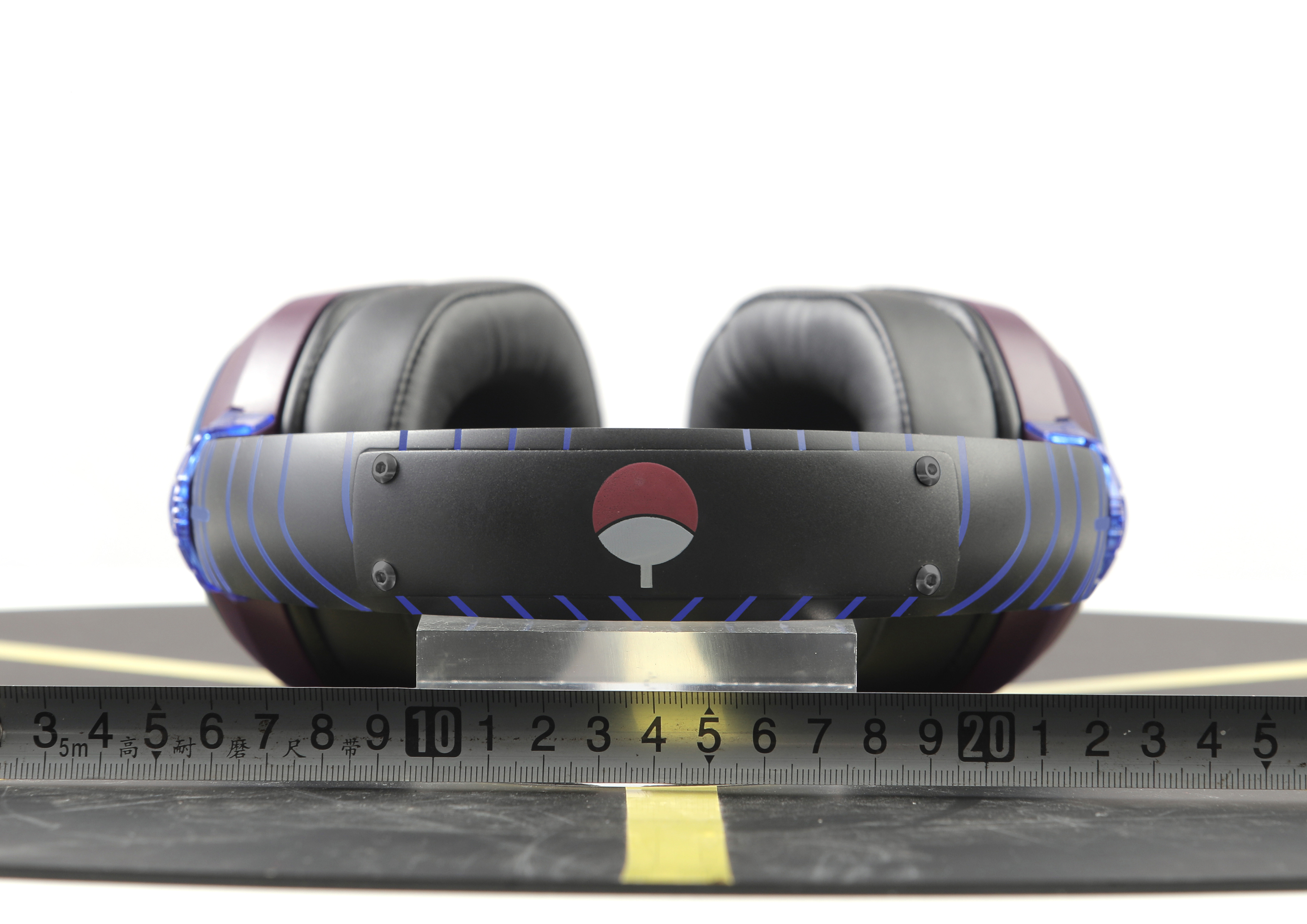
Turning Character Identity Into Industrial Design
Industrial design turns character identity into shape language, color blocking, graphic zones, materials, lighting, controls, and wearing details that operate as one product.
Start by classifying creative inputs as required assets, adaptable cues, and prohibited changes. Required assets may need precise form and placement. Adaptable cues can influence line direction, color contrast, texture, or translucent details. This avoids treating every illustration detail as equally important and gives engineers room to resolve physical constraints.
Annotated industrial-design views should show decoration boundaries, seams, parting lines, controls, microphone movement, cushion interfaces, LED paths, logos, labels, and no-print zones. Reviews should cover front, side, top, rear, worn, folded, and packaged views. A feature visible in one rendering but hidden during normal use may not justify tooling or process complexity.
Physical prototypes are essential because digital color and surface rendering cannot fully predict scale, gloss, texture, transparency, light diffusion, headband curvature, or graphic distortion. Approval should move from concept renders to process-representative samples before the product enters pilot production.
Why Surface Finishing Matters in Premium Gaming Accessories
Surface finishing determines whether the product's color, graphics, transparency, texture, and lighting form a coherent premium appearance that remains consistent in production.
CMF specifies color, material, and finish as a connected system. Molded resin, paint, water-transfer film, printed ink, transparent plastic, soft cushions, and illuminated areas respond differently to light and wear. Buyers need physical references for color, gloss, texture, opacity, transparency, and acceptable variation rather than relying only on screen values.
Water transfer printing can carry complex patterns around suitable curved parts. The process may involve surface preparation, base coating, film placement, activation and transfer, rinsing, drying, protective coating, curing, and inspection. Curvature can stretch or shift the pattern, so coverage maps, immersion direction, seams, edge limits, base color, topcoat, and left-right balance require definition.
Premium quality is controlled through representative samples and realistic process windows. Teams should inspect under agreed lighting and distance, check edges and joints, compare multiple pilot units, and define acceptable process variation. A handcrafted perfect sample without production evidence is a weak standard.
| Finish method | Purpose | Primary control |
|---|---|---|
| Molded color | Base color and texture | Resin, masterbatch, lot variation, and molding condition |
| Painting | Gloss, opacity, and surface character | Preparation, thickness, adhesion, curing, and contamination |
| Water transfer | Complex patterns on curved surfaces | Position, stretch, seams, coverage, coating, and batch variation |
| Pad or silk printing | Defined symbols and logos | Registration, opacity, adhesion, and wear |
| Transparent parts | Visual depth and light effects | Clarity, flow marks, scratches, fit, and diffusion |
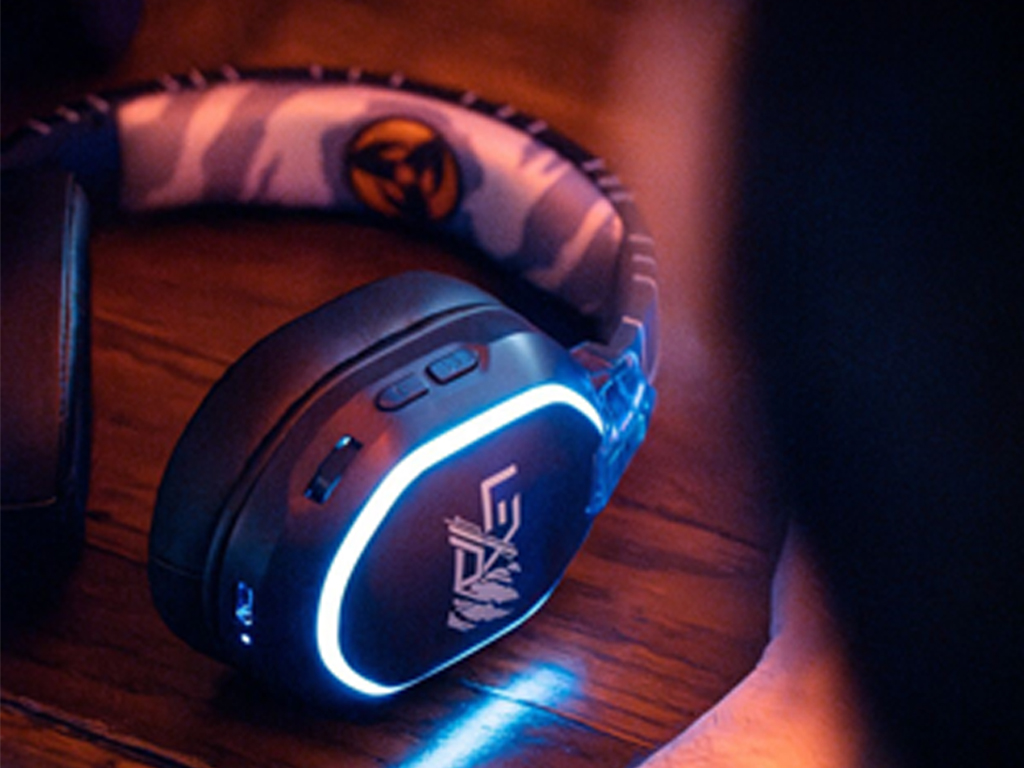
Engineering Challenges Behind Custom IP Gaming Headsets
The main engineering challenge is preserving the intended appearance while maintaining structural strength, movement, fit, acoustics, wireless function, assembly access, and production tolerances.
A headset flexes and moves repeatedly. Headband stress, slider travel, yoke rotation, cushion compression, microphone position, button access, and cable or charging interfaces must remain reliable. Decorative parts and finishes near these areas can alter clearances, wear paths, loads, or assembly sequence.
Custom geometry may require new molds or inserts. Engineers review wall thickness, ribs, bosses, snap fits, screws, draft, gates, ejection, sink risk, weld lines, and visible parting lines. Transparent and illuminated components reveal defects more easily, while surface decoration can add thickness at mating features.
Prototype validation should combine dimensions, fit, movement, assembly, function, audio, microphone, Bluetooth behavior, lighting, and appearance. Trial production then tests variation across multiple units, operators, fixtures, and process cycles before mass-production release.
Technical Deep Dive: Why Premium IP Products Need Manufacturing Engineering Early
Early manufacturing engineering keeps character-driven design compatible with injection molding, assembly, surface processing, tooling quality, pilot production, and inspection.
Mold structure should be reviewed before exterior surfaces are frozen. Injection feasibility depends on draft angle, wall thickness, material flow, parting line, gates, ejection, ribs, bosses, and the ability to release the part without damaging visible geometry. Assembly gaps and tolerance stacks must remain stable after paint, film, printing, or coating is added.
Surface-processing review identifies where parts can be held, masked, immersed, rinsed, dried, coated, and inspected. For water transfer, engineers define pattern positioning, surface preparation, film orientation, transfer direction, protective coating, cure conditions, and normal batch variation. Fixtures should avoid contact with premium show surfaces.
Tooling reviews should place parting lines and gates away from important appearance zones where feasible, while maintaining mold performance. Draft cannot be removed simply to preserve a vertical graphic wall. Assembly gaps need targets that account for molding and finish variation. Appearance quality must be connected to realistic tooling condition and process capability.
Before volume production, representative prototypes verify design and function; trial production checks operators, fixtures, cycle conditions, decoration yield, assembly, packaging, and inspection; and quality inspection establishes golden samples, measurement points, defect rules, traceability, and escalation. These steps are engineering controls, not marketing claims.
The Role of OEM Manufacturing in IP Product Development
OEM manufacturing supports IP product development by connecting design intent with engineering decisions, process capability, supplier control, pilot evidence, and production quality.
Design teams define identity and experience. Engineering teams resolve structure, electronics, acoustics, wireless behavior, materials, tools, assembly, and testability. Manufacturing teams create fixtures, work instructions, process windows, production routing, and capacity plans. QC teams define incoming, in-process, and final controls.
A buyer benefits when these functions exchange information early. CMF changes can affect tooling and assembly; structure can limit artwork; lighting can change materials and internal space; packaging can damage a special finish; and compliance samples must represent the configuration intended for sale.
Supplier evaluation should therefore go beyond a product catalogue. Ask for development ownership, engineering review methods, tooling management, process-sample capability, pilot-run controls, change management, inspection standards, and how approved creative files are protected from uncontrolled production revisions.
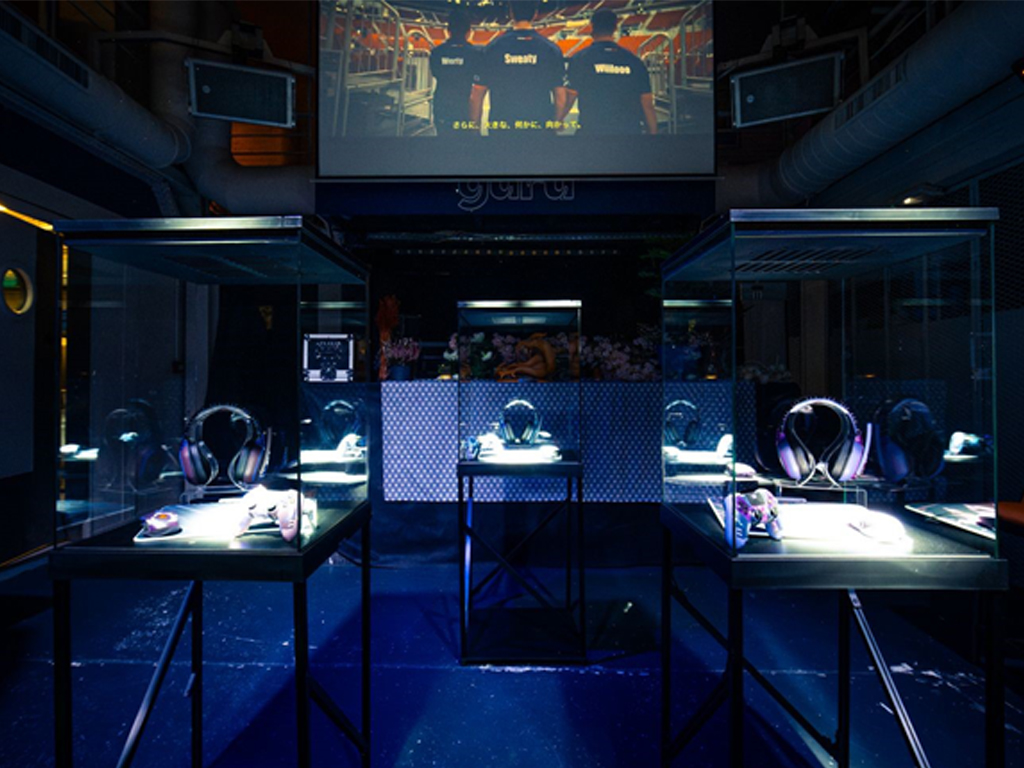
Bluetooth Gaming Headset Platform Considerations
A premium visual concept still depends on a validated Bluetooth platform, acoustic system, microphone, controls, charging interface, lighting, and target-device behavior.
Buyers should define intended devices and use cases before selecting the platform. Nintendo Switch-focused positioning requires confirmation of the final connection, audio and microphone path, pairing, controls, labeling, packaging language, and expected user workflow for the approved configuration.
A 50mm driver identifies diameter, not automatic sound quality. Performance depends on transducer design, enclosure, damping, cushion seal, driver position, electronics, tuning, and agreed test targets. The high-definition microphone also needs defined sensitivity, position, clarity targets, mechanical integration, and functional testing.
LED lighting and transparent components affect appearance, internal space, assembly, and power planning. This guide does not assign ANC, 2.4GHz, latency, or battery claims to MADARA because those details are outside the confirmed brief.
Certification Planning for Global Gaming Accessories
Certification planning must reflect the final radio product, electronics, materials, accessories, labels, documentation, and destination markets rather than a generic list of logos.
CE, FCC, RoHS, and other requirements address different regulatory areas and vary by market and configuration. Bluetooth products may involve radio, EMC, safety, battery, chemical, labeling, and technical-documentation obligations. Qualified specialists should confirm the applicable path and responsible parties.
Customization can affect evidence. New materials and coatings may change substance documentation; decorative parts near an antenna can affect radio review; and revisions to electronics, lighting, charging, battery, accessories, model identity, labels, or packaging can change scope. Reports for a base platform should not be assumed to cover every premium edition.
MACH can coordinate samples and certification support within an agreed project scope. This article does not state that every named certification is completed for every MADARA variant or future market.
IP Gaming Headset Buyer Checklist
A useful RFQ defines creative permissions, product positioning, hardware, design direction, materials, processes, tooling, markets, packaging, approvals, and quality control.
Provide permitted character assets, brand rules, territory and approval information, target users, channel, product tier, target platform, intended devices, Bluetooth behavior, audio, microphone, lighting, controls, comfort, accessories, and packaging direction. Separate required visual cues from adaptable references.
Define physical color references, graphic zones, materials, transparent parts, water-transfer coverage, coating and durability expectations, tooling scope, prototype gates, test plan, certification markets, packaging protection, quantity planning, cost direction, and launch constraints. Confirm who approves creative, engineering, compliance, and production samples.
Before production, freeze the bill of materials, drawings, artwork, CMF masters, mold status, firmware where applicable, labels, packaging, tests, golden sample, defect criteria, inspection method, traceability, and change-control process.
- Confirm IP permissions, territories, assets, legal notices, and approval owners
- Define audience, product tier, channel, platform, devices, and user workflow
- Specify Bluetooth, audio, 50mm driver, microphone, controls, charging, and LED requirements
- Provide physical colors, graphics, materials, finishes, and premium appearance priorities
- Map water-transfer zones, seams, pattern tolerance, coating, and durability requirements
- Agree structure, molds, inserts, fixtures, ownership, maintenance, and engineering changes
- Approve prototype, trial-production, functional, finish, packaging, and inspection plans
- Confirm markets, certification scope, labels, applicant details, and technical documents
- Freeze packaging, accessories, manuals, protection, golden samples, and quality criteria
Conclusion
Premium IP gaming hardware becomes production-ready when character identity is translated into controlled geometry, CMF, tooling, assembly, validation, and quality standards.
MADARA demonstrates the practical relationship between character-inspired design and manufacturing execution. The value is not the artwork alone, but the process that connects visual recognition to a Bluetooth headset platform, 50mm driver, microphone, lighting, structure, surface finishing, molds, prototypes, trial production, and inspection.
Brands should involve manufacturing engineering before artwork and product surfaces are locked. Early review protects creative intent while controlling cost, feasibility, consistency, and production risk.
Frequently Asked Questions
How is character artwork turned into a gaming headset?
Teams identify essential cues, build a color and graphic system, assign it to industrial-design surfaces, select materials and finishes, validate structure and tooling, approve physical samples, run trial production, and define QC standards.
What makes a premium IP gaming headset different from standard OEM customization?
It integrates character identity into shape, CMF, decorative parts, lighting, packaging, approval control, tooling, and production standards rather than changing only a logo or color.
Can an existing Bluetooth headset platform support an IP project?
Yes, when its hardware and structure fit the brief. Custom graphics, parts, finishes, lighting, packaging, device behavior, testing, and compliance still require validation.
Why is mold development important for custom gaming headsets?
Custom geometry may require molds or inserts, and mold decisions determine parting lines, draft, gates, ejection, visible quality, dimensions, assembly fit, and repeatability.
How does water transfer printing work on a gaming headset?
A decorative film is transferred to a prepared three-dimensional part, then rinsed, dried, coated where required, cured, and inspected for position, stretch, seams, coverage, adhesion, and consistency.
Can water-transfer graphics be identical across every unit?
Curved geometry can create controlled variation. Buyers should define coverage zones, seam and stretch limits, physical masters, viewing conditions, and unacceptable defects.
What should brands test before producing a premium IP headset?
Testing may cover structure, fit, movement, Bluetooth, audio, microphone, controls, charging, lighting, finish adhesion and wear, assembly, packaging, labels, and pilot-run consistency.
Do appearance changes require certification review?
They may. Materials, coatings, decorative parts, antenna surroundings, lighting, electronics, battery, accessories, labels, model identity, and markets can affect applicable evidence.
What should buyers include in an IP gaming headset RFQ?
Include permissions, assets, audience, platform, hardware, design direction, physical colors, materials, finishes, tooling, tests, markets, certification, packaging, cost direction, quantity planning, and quality criteria.
Who can manufacture an IP collaboration gaming headset?
Choose a supplier with coordinated industrial design, structure, electronics, acoustics, CMF, tooling, prototypes, testing, certification support, pilot production, QC, traceability, and volume manufacturing.
Is MACH the official license holder for MADARA or Naruto?
This article does not claim that MACH is an official or exclusive license holder. MADARA is described as a themed, anime-inspired collaboration project with Lexip France; rights and approvals remain with the relevant parties.
Related Resources
Need OEM/ODM gaming audio solutions?
Contact MACH Industry to discuss your gaming headset, gaming earbuds, or private-label audio project.
Contact MACH Industry