Home > Resources > Gaming Headset Guide
How Gaming Brands Develop IP Collaboration Headsets From Concept to Mass Production
A sourcing and engineering guide to developing IP collaboration gaming headsets through concept translation, CMF, structural engineering, tooling, testing, compliance planning, and mass production.
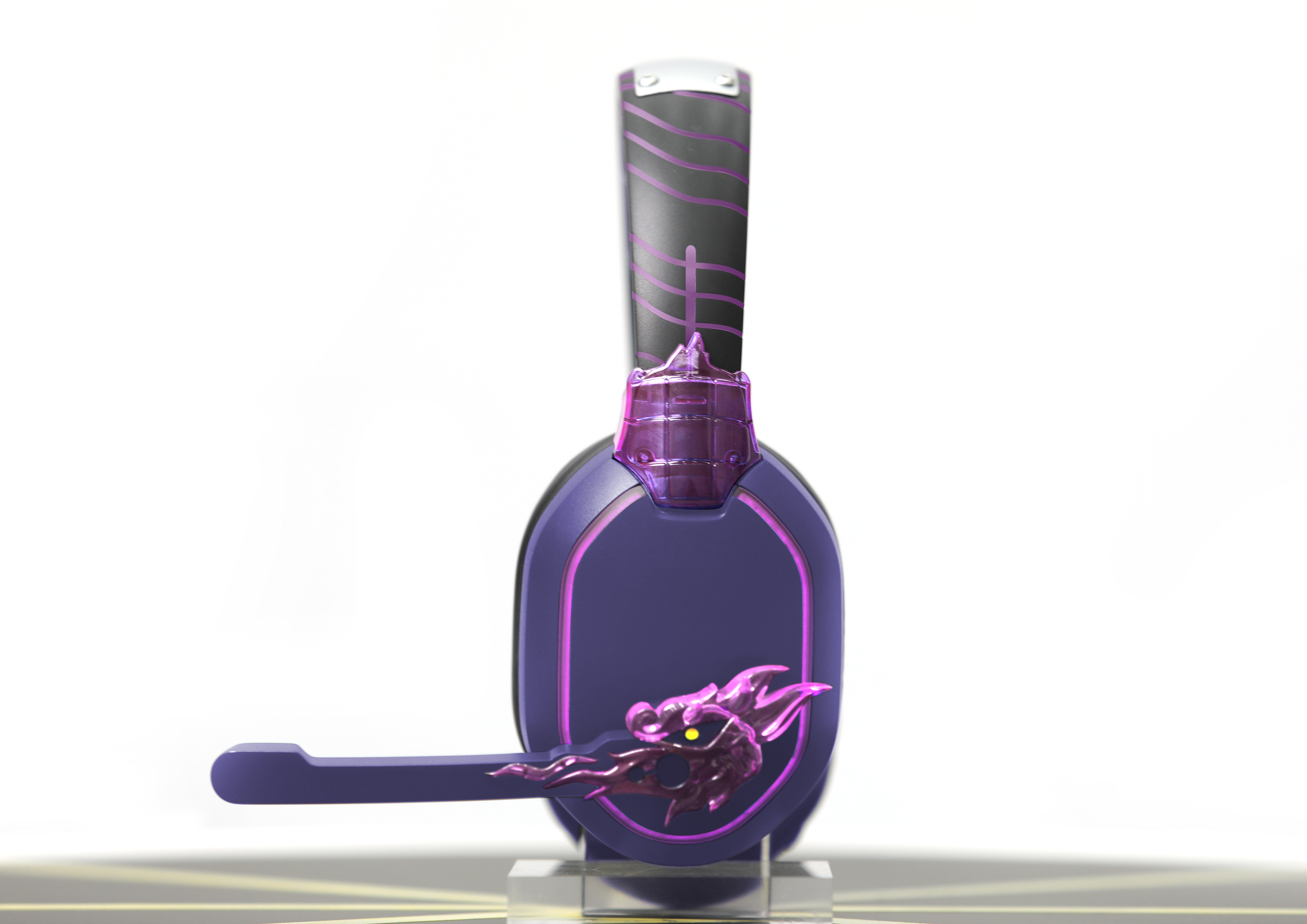
Creating an IP gaming headset requires more than adding artwork to an existing product. Successful collaboration projects combine creative direction, industrial design, engineering validation, manufacturing capability and quality control. The first step is to convert the approved IP brief into a product requirement that defines audience, platform, character cues, hardware, cost direction, manufacturing processes, packaging, compliance markets, and approval responsibilities.
The SASUKE France OEM project is a useful development reference. MACH worked with Lexip France on a co-branded, anime-inspired Bluetooth wireless gaming headset positioned around Nintendo Switch-focused accessory use. The product direction included a 50mm speaker driver, high-definition microphone, LED lighting, custom water-transfer graphics, decorative components, and support spanning concept discussion, industrial design, structural and tooling development, prototypes, trial production, certification coordination, and mass production. This article explains the transferable engineering and sourcing lessons rather than repeating the case study.
Why IP Collaboration Headsets Require More Than Traditional OEM Manufacturing
IP collaboration hardware requires coordinated creative approval, product design, engineering, tooling, process validation, traceability, and quality control beyond standard logo-and-packaging customization.
A traditional private-label program may begin with a mature headset platform and change the logo, color, packaging, manual, and accessory set. This can be appropriate when the existing shape and product language already fit the brand. An IP collaboration project often demands more: recognizable character cues, a specific silhouette or decorative feature, layered CMF, lighting behavior, special graphics, custom parts, and packaging that presents the same visual story.
Those requirements create engineering consequences. New decorative components may need mold design, fastening features, ribs, draft, texture, optical clearance, and assembly instructions. Surface graphics must respect parting lines, moving joints, acoustic openings, controls, cushions, and production tolerances. LED effects need suitable translucent materials, light guides, diffusion, power and control decisions, and checks for light leakage or uneven brightness.
Testing and approval also become more structured. The buyer, brand partner, IP stakeholders, design team, factory, and compliance specialists may review different aspects of the same sample. Version control is essential so an approved graphic, color, structure, firmware behavior, packaging file, and legal statement do not diverge as the project moves toward tooling and production.
A capable supplier does not need to own the IP rights to perform manufacturing work, but it must follow the buyer's documented authorization and approval process. Rights, territories, artwork permissions, trademark use, and legal notices remain matters for the relevant brand and IP parties. The factory's role is to translate approved requirements into manufacturable, inspectable product specifications.
| Development area | Standard OEM customization | IP collaboration development |
|---|---|---|
| Design | Existing platform with controlled branding changes | Character-linked product language, custom parts, CMF, lighting, and packaging |
| Engineering | Platform fit and change validation | Feasibility review across structure, optics, graphics, materials, tooling, and assembly |
| Tooling | Often limited or unnecessary | May require new inserts, decorative parts, housings, fixtures, or dedicated molds |
| Testing | Functional and quality checks for the final variant | Functional, mechanical, finish, lighting, assembly, packaging, and approval-stage verification |
| Customization control | Logo, color, packaging, accessories | Approved IP assets, character cues, boundaries, samples, revisions, traceability, and production masters |
SASUKE France OEM Project Overview
SASUKE demonstrates a co-branded gaming headset program in which themed industrial design, CMF, structural elements, lighting, Bluetooth hardware, and production preparation were developed as one project.
The SASUKE France OEM project involved Lexip France and an anime/IP-inspired gaming accessory direction. It was developed as a wireless Bluetooth gaming headset with Nintendo Switch-focused positioning, a 50mm driver, high-definition microphone, LED lighting, and custom decorative surface processes.
The physical product used more than a printed logo. Character recognition was built through a purple and dark color language, water-transfer headband graphics, transparent decorative components, themed earcup treatment, illuminated outlines, and a distinct product silhouette. MACH's support included concept discussion, industrial design, structural development, tooling, prototypes, trial production, testing coordination, certification support, and mass-production preparation.
This description treats SASUKE as a co-branded collaboration project and an IP-inspired product-development example. It does not state that MACH is an official license holder or has exclusive rights. It also does not disclose licensing terms, authorization fees, sales data, order value, development duration, or unconfirmed market results.
| Project item | SASUKE direction |
|---|---|
| Partner | Lexip France |
| Product | Wireless Bluetooth gaming headset |
| Use positioning | Nintendo Switch-focused gaming accessory |
| Audio | 50mm speaker driver |
| Communication | High-definition microphone |
| Visual system | LED lighting, themed CMF, custom surface graphics, and decorative parts |
| Development scope | Concept, design, engineering, tooling, prototype, trial production, compliance support, and mass production |
From Character Concept to Mass Production: How IP Collaboration Headsets Become Real Products
An IP headset becomes a real product by translating approved character cues into a controlled industrial-design, CMF, structural, tooling, test, compliance, and production specification.
The process starts with an IP concept brief, not a finished factory drawing. The brief should identify the character or story direction, target audience, permitted visual assets, required approvals, target market, product tier, channel, platform, hardware baseline, packaging expectation, and commercial boundaries. The development team then decides which cues are essential for recognition and which can be adapted to the physical limits of a headset.
Character elements can be translated through five major design tools. Color language establishes the primary palette, accents, contrast, and material relationships. Symbol elements may become a printed detail, engraved plate, translucent insert, decorative component, control icon, or packaging feature. Surface graphics can use water transfer, pad printing, silk printing, painting, labels, texture, or another feasible process. Lighting effects can reinforce color and silhouette when optical materials, diffusion, electronics, and power constraints support them. Product silhouette can be changed through earcup geometry, headband components, yokes, microphone design, or added themed parts when tooling scope allows.
Industrial design organizes those elements into one product rather than a collection of decorations. Designers need clear hierarchy: which surface carries the strongest character cue, where the brand remains legible, how left and right sides relate, what the product looks like with lighting off, and how the headset appears when folded, worn, displayed, or photographed. The design must also respect comfort, controls, acoustic volumes, microphone position, structural load paths, assembly, and packaging.
CMF development converts visual intent into physical standards. Color must be defined across molded resin, paint, film, transparent plastic, metal, cushions, cable, light output, and packaging. Material choices affect strength, translucency, texture, adhesion, tooling, wear, and cost. Finish specifications define gloss, texture, transfer graphics, printing, coating, logo processes, acceptable variation, and protected zones. The goal is not perfect identity between unlike materials, but a coherent result with agreed tolerances.
Structural engineering and tooling turn the concept into producible parts. Engineers review wall thickness, ribs, bosses, draft angles, undercuts, parting lines, snap fits, screws, hinges, headband adjustment, cable paths, acoustic openings, LED components, decorative-part retention, and assembly sequence. Tooling may use new molds, inserts, modified parts, soft tooling, jigs, or fixtures depending on the required differentiation. Cost control happens here by separating high-value custom features from changes that add complexity without improving recognition or function.
Prototypes move through purpose-specific stages. Appearance samples validate proportions, graphics, color, material impression, and lighting direction. Engineering samples validate fit, assembly, mechanics, electronics, audio, microphone, controls, and wireless behavior. Tooling samples reveal molding and tolerance realities. Trial production checks whether operators, fixtures, process settings, inspection criteria, packaging, and traceability can reproduce the approved specification consistently.
Testing and compliance planning must follow the final configuration. Mechanical, functional, finish, lighting, wireless, battery, packaging, and market-specific requirements may be relevant depending on the product. Certification support for CE, FCC, RoHS, or another market does not mean every themed variant is automatically certified; the responsible parties should confirm scope, samples, reports, labels, technical files, and changes for each launch market.
Mass production begins only after design, engineering, and manufacturing approvals converge. Approved samples, artwork, color masters, boundary samples, bills of material, firmware versions where applicable, packaging files, work instructions, inspection plans, defect definitions, and change-control rules become the production reference. Ordinary OEM execution struggles when creative design, engineering, tooling, and factory control are handled as separate handoffs. Complex IP hardware needs design, engineering, and manufacturing teams participating together from the beginning.
Planning an IP-inspired gaming hardware collaboration?
Share the approved concept scope, target user, platform, hardware requirements, design assets, market, tooling expectations, and production quantity for a feasibility review.
Discuss the development scope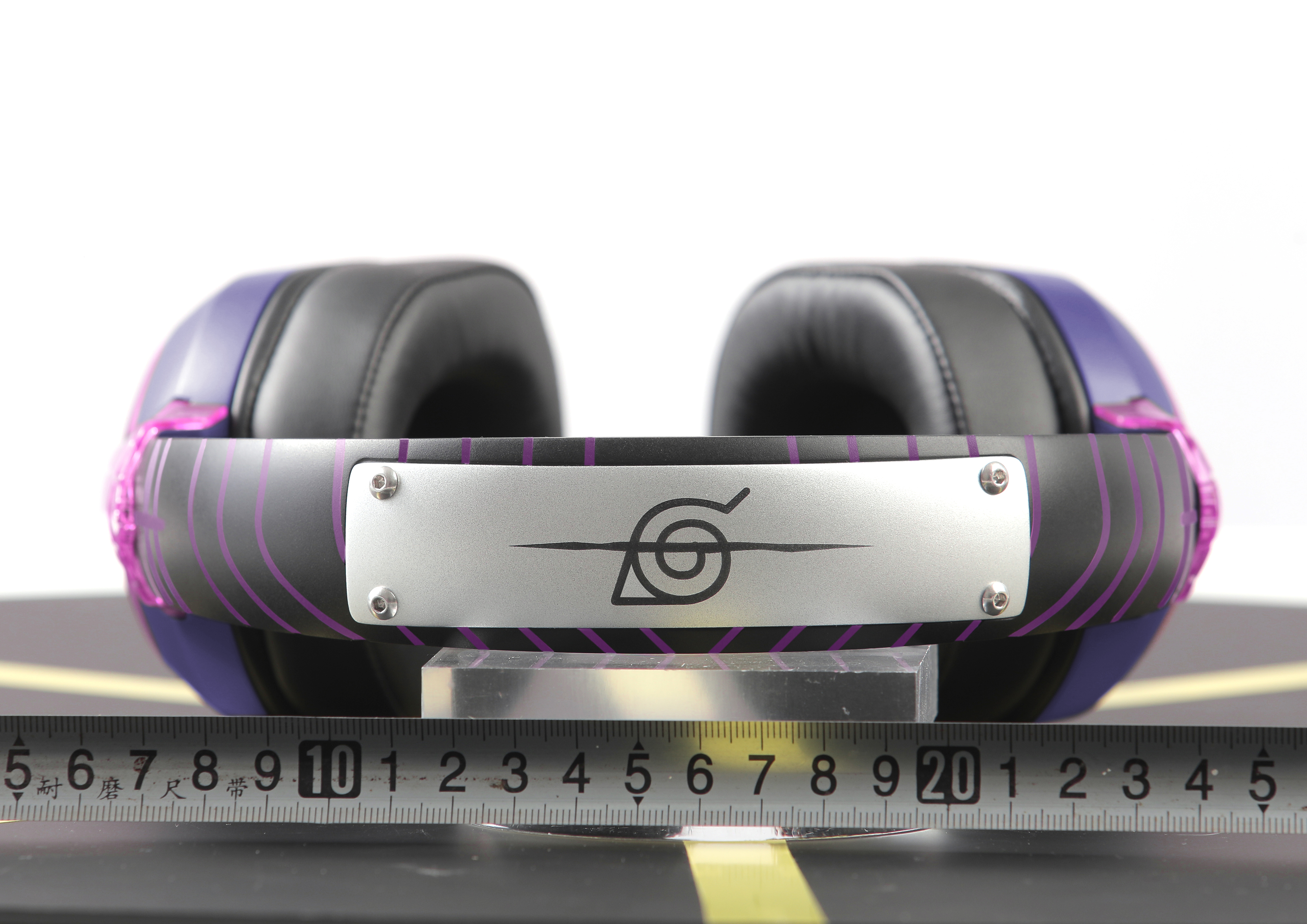
Turning IP Elements Into Industrial Design
Effective IP industrial design selects a small number of recognizable cues and integrates them with ergonomics, hardware, controls, lighting, and manufacturing boundaries.
Recognition does not require placing every available graphic on the product. A controlled hierarchy often works better: one dominant color system, one or two signature symbols, a supporting pattern, and a lighting treatment that remains coherent when the headset is powered off. Overloading small parts with unrelated cues can reduce legibility and make production control difficult.
Design teams should provide vector artwork, color references, hierarchy rules, exclusion zones, minimum logo sizes, and approval ownership. Engineering teams then convert those inputs into coverage maps, part drawings, process notes, light-guide definitions, tooling requirements, and physical samples. This translation is where a creative concept becomes an executable product brief.
Why Tooling Development Matters in Custom Gaming Headsets
Tooling determines whether custom geometry can be molded, assembled, finished, inspected, and reproduced without undermining structural or cosmetic requirements.
A custom gaming headset may need new earcup covers, yokes, headband decorations, microphone parts, buttons, light guides, translucent features, trim pieces, or internal supports. Mold design must consider material flow, shrinkage, draft, gate position, ejection, weld lines, texture, cosmetic surfaces, undercuts, and how the part will be held during finishing and assembly.
Prototype and tooling reviews should use measurements and boundary conditions, not visual approval alone. Tooling samples can reveal sink marks, warpage, flow lines, gloss differences, sharp edges, interference, or insufficient retention. Changes made before production tooling is frozen are generally easier to manage than cosmetic or structural corrections discovered after the full approval chain.
The Role of CMF and Surface Finishing in Limited Edition Gaming Products
CMF and surface finishing carry character identity across physical materials, but every process needs a defined substrate, preparation, appearance standard, durability expectation, and production control plan.
Water transfer printing can wrap repeated or organic graphics around selected three-dimensional parts. Pad printing and silk printing can place localized symbols or text. Painting can provide base color, accent, gloss, or texture direction. Molded color may reduce secondary finishing on suitable parts. Transparent plastic and laser-engraved or illuminated elements can add depth when optical and structural constraints are engineered together.
No process is universally superior. The correct method depends on geometry, artwork, material, visual priority, target cost, order structure, durability, yield, and supplier capability. A character pattern that needs broad curved coverage may suit water transfer, while a precise symbol may be better printed, molded, engraved, or added as a separate part.
Production control should define surface cleaning, primer or basecoat where required, pattern orientation, transfer boundaries, masking, film or ink version, coating, curing, gloss, scratch and adhesion expectations, acceptable variation, visual inspection lighting, and defect samples. Limited-edition appearance still needs repeatability across the production quantity.
| Design need | Possible process direction | Control focus |
|---|---|---|
| Curved repeated pattern | Water transfer printing | Stretch, orientation, coverage boundary, voids, coating, and variation |
| Localized symbol or text | Pad, silk-screen, or UV printing | Alignment, opacity, adhesion, edge quality, and wear |
| Solid color or finish effect | Molded color or painting | Color, gloss, texture, thickness, contamination, and yield |
| Illuminated identity | Transparent part, light guide, engraved or printed detail | Diffusion, leakage, brightness consistency, fit, and appearance when off |
| Three-dimensional themed cue | Custom molded decorative component | Tooling, strength, retention, sharp edges, assembly, and cosmetic consistency |
Technical Deep Dive: Why IP Gaming Headset Projects Need Manufacturing Engineering Early
Manufacturing engineering must join the design stage because mold architecture, materials, assembly, surface treatment, lighting, and quality boundaries determine whether an IP concept can be reproduced at scale.
Mold structure shapes the visible product. Parting lines, gates, ejector locations, draft, texture, and split strategy can interfere with character graphics or high-priority cosmetic zones. Engineers should review where each IP element sits before tooling data is released. A surface that looks continuous in a rendering may need to be divided into multiple molded and assembled parts.
Material selection links appearance and function. Opaque resin, transparent PC, elastomers, paint, printing inks, transfer film, coatings, metal plates, and cushion materials react differently to heat, flexing, light, cleaning, wear, and assembly stress. The intended finish needs representative substrate trials, not assumptions based on an unrelated sample.
Assembly planning protects cosmetic work. Coated or printed components may require dedicated trays, gloves, fixtures, torque limits, protective films, and an assembly sequence that avoids sliding decorated surfaces against tools or adjacent parts. Added finish thickness can narrow gaps, affect snap fits, interfere with buttons, or create uneven seams if masking and tolerances are not defined.
Special processes need pattern-alignment and appearance rules. Water-transfer graphics naturally shift around curves; lighting exposes gaps and material differences; decorative parts can create left-right variation. Boundary samples and coverage maps help quality teams separate allowed process variation from wrinkles, voids, scratches, poor adhesion, color drift, light leakage, loose parts, or incorrect artwork versions.
Early feasibility review identifies which creative features need tooling, which can use existing parts, which process carries excessive yield risk, and which details can be simplified without losing recognition. Prototype verification then checks structure, finish, light, function, and assembly together. Production validation confirms process settings, fixtures, cycle, inspection, rework limits, packaging protection, and traceability before mass production.
Certification Planning for Global Gaming Accessories
Compliance planning should begin with destination markets and the final electrical, wireless, material, battery, accessory, labeling, and packaging configuration.
CE, FCC, RoHS, and other requirements can involve different regulations, test scopes, technical documents, responsible parties, declarations, markings, and sample configurations. A Bluetooth headset may require radio and electromagnetic review, while materials, batteries, chargers, cables, and packaging can create additional obligations depending on the destination market.
An IP-themed cosmetic variant may appear to share a platform with another headset, but changes in materials, coatings, lighting, antenna surroundings, battery, PCB, accessories, or labels can affect the applicable review. Buyers should maintain a change list and confirm whether existing evidence remains relevant rather than assuming platform-level coverage.
MACH can coordinate certification support within an agreed project scope. That wording does not mean every SASUKE configuration has automatically passed CE, FCC, RoHS, or all other market requirements. The launch team should verify reports, model listings, samples, labels, declarations, technical files, and local obligations before making claims.
OEM Development Process for IP Gaming Headsets
The development workflow moves through gated approvals so creative, engineering, compliance, and production decisions remain aligned.
Each stage should have a defined output and approval owner. Concept approval does not authorize tooling; appearance approval does not replace functional testing; certification support does not replace production validation. Gated decisions reduce the risk of artwork, geometry, materials, firmware, packaging, or claims changing after dependent work has started.
| Stage | Buyer and supplier output |
|---|---|
| Concept | IP scope, audience, product position, platform, markets, commercial boundaries, and approvals |
| Industrial design | Silhouette, character cues, controls, ergonomics, lighting, graphics, and product hierarchy |
| CMF development | Color, material, finish, pattern, logo, coating, optical and appearance standards |
| Structural engineering | Part architecture, mechanics, electronics integration, tolerances, assembly, and feasibility |
| Tooling | Mold data, inserts, fixtures, jigs, tooling samples, measurement, and corrective action |
| Prototype | Appearance and engineering samples with documented issues and revisions |
| Testing | Project-defined functional, mechanical, finish, wireless, lighting, packaging, and reliability checks |
| Certification planning | Market scope, representative configuration, documents, labels, reports, and change review |
| Mass production | Pilot validation, approved masters, process controls, QC, packaging, traceability, and change management |
Need a supplier assessment for a custom IP gaming headset?
Provide the concept brief, approval structure, target market, hardware, CMF, tooling, certification, packaging, quantity, and quality requirements for development planning.
Request a project evaluation
IP Gaming Headset Buyer Checklist
A useful RFQ separates IP approvals from product engineering and gives the factory enough information to evaluate design, tooling, compliance, cost, and production risk.
- Define the collaboration scope, permitted assets, territories, approval owners, confidentiality requirements, and version-control process.
- Describe target users, product tier, channel, use scenario, target platform, and the role of the headset within the collection.
- Provide approved vector artwork, color references, symbol hierarchy, exclusion zones, packaging rules, and legal-copy requirements.
- List Bluetooth, driver, microphone, LED, controls, comfort, accessories, and compatibility requirements that need validation.
- Identify which elements require a new silhouette, custom decorative parts, modified structure, or dedicated tooling.
- Set a tooling-budget direction and distinguish must-have custom features from optional visual enhancements.
- Define CMF processes, materials, transparent parts, surface graphics, lighting, logo methods, texture, gloss, and durability expectations.
- List destination markets and request a project-specific certification and labeling review for the final configuration.
- Provide packaging structure, display needs, manuals, accessories, barcodes, labels, carton requirements, and protection for cosmetic parts.
- State estimated production quantity, forecast, target cost, launch window, sample needs, and acceptance milestones without assuming a fixed development time.
- Agree golden samples, boundary samples, tests, pilot run, AQL or other inspection requirements, traceability, rework limits, and change control.
- Evaluate whether the supplier has integrated industrial design, structural engineering, tooling, CMF, electronics, testing, quality, and mass-production coordination.
Key Takeaways
IP collaboration headset development succeeds when creative recognition and manufacturing discipline are treated as equal requirements.
- Begin with an approved concept and responsibility map, not only artwork.
- Translate character identity through color, symbols, graphics, lighting, and silhouette selectively.
- Bring design, structural engineering, tooling, CMF, manufacturing, and quality teams into the project early.
- Use purpose-specific prototypes and gated approvals before tooling and mass production.
- Plan certification around the final launch configuration and market rather than assuming platform coverage.
- Control artwork, materials, samples, process boundaries, defects, packaging, and changes as production specifications.
- Choose a supplier that can connect creative intent with measurable engineering and factory controls.
Conclusion
An IP collaboration gaming headset becomes commercially manufacturable when its creative idea is translated into approved geometry, CMF, tooling, hardware, tests, compliance planning, and production controls.
The SASUKE France OEM project illustrates this integrated path. Its identity was created through a themed color system, custom water-transfer graphics, transparent decorative parts, LED lighting, structural details, and a Bluetooth hardware platform with a 50mm driver and high-definition microphone. The engineering value lies in making those elements assemble, function, and remain consistent in trial and mass production.
For gaming brands, IP partners, and consumer-electronics buyers, the central sourcing question is not who can print a character logo. It is who can coordinate design, engineering, tooling, CMF, testing, certification support, quality control, and manufacturing while respecting the documented approval process. MACH industry supports that development scope for project-feasible gaming audio programs.
Launch Faster With a Reliable OEM Partner.
Email: hardy.hu@mach-industry.com | WhatsApp: +86 18038083785
Contact MACH industryFrequently Asked Questions
What is an IP collaboration gaming headset?
It is a headset developed around an approved character, franchise, brand, or collaboration concept, with coordinated industrial design, CMF, hardware, packaging, approval, engineering, and production requirements.
What is the first step in developing an IP gaming headset?
Start with a documented concept brief covering permitted assets, approval owners, audience, platform, markets, hardware, design priorities, commercial boundaries, packaging, and compliance responsibilities.
How are anime gaming accessories manufactured?
Approved character cues are translated into industrial design, CMF, structure, tooling, graphics, lighting, prototypes, tests, compliance planning, pilot production, quality standards, and controlled mass production.
Can an existing headset platform be used for an IP collaboration?
Yes, when its structure and hardware fit the concept. The team must still validate custom parts, CMF, artwork, lighting, tooling changes, function, packaging, compliance scope, and production consistency.
Why does a custom IP headset need tooling development?
New silhouettes, decorative components, transparent parts, light guides, yokes, covers, controls, or structural features may require molds, inserts, jigs, fixtures, and tooling-sample validation.
How is character artwork applied to a gaming headset?
Depending on geometry and materials, options may include water transfer printing, pad printing, silk printing, UV printing, painting, molded color, engraving, labels, transparent parts, or separate decorative components.
Is water transfer printing always the best process for anime headsets?
No. It suits some curved repeated patterns, but painting, printing, molding, engraving, or decorative parts may better fit precise symbols, durability, cost, geometry, or production requirements.
What should brands test before mass-producing an IP gaming headset?
The plan may cover function, wireless behavior, audio, microphone, controls, mechanics, lighting, finish, adhesion, wear, assembly, packaging, labels, accessories, pilot-run consistency, and market-specific requirements.
Do cosmetic IP variants need certification review?
They may. Changes in materials, coatings, lighting, antenna surroundings, electronics, battery, accessories, labels, or model identity can affect whether existing evidence applies, so the final configuration needs review.
What supplier is suitable for an IP gaming hardware project?
Look for integrated industrial design, structural engineering, tooling, CMF, electronics, testing, compliance coordination, quality control, traceability, and mass-production management.
Does MACH own the rights to the SASUKE or Naruto IP?
This article does not claim MACH is an official license holder or has exclusive rights. SASUKE is described as a co-branded, IP-inspired development project with Lexip France; rights and approvals belong to the relevant parties.
What should buyers include in an IP gaming headset RFQ?
Include authorization and approval structure, concept assets, users, markets, platform, hardware, CMF, tooling, tests, certification scope, packaging, quantity, cost direction, schedule, quality standards, and change control.
Related Resources
Need OEM/ODM gaming audio solutions?
Contact MACH Industry to discuss your gaming headset, gaming earbuds, or private-label audio project.
Contact MACH Industry