Home > Resources > Gaming Headset Guide
What Compliance Requirements Apply to a 2.4GHz Gaming Headset?
A market-planning guide to radio, EMC, materials, battery, labeling, producer-responsibility and technical-document requirements for private-label 2.4GHz gaming headsets.
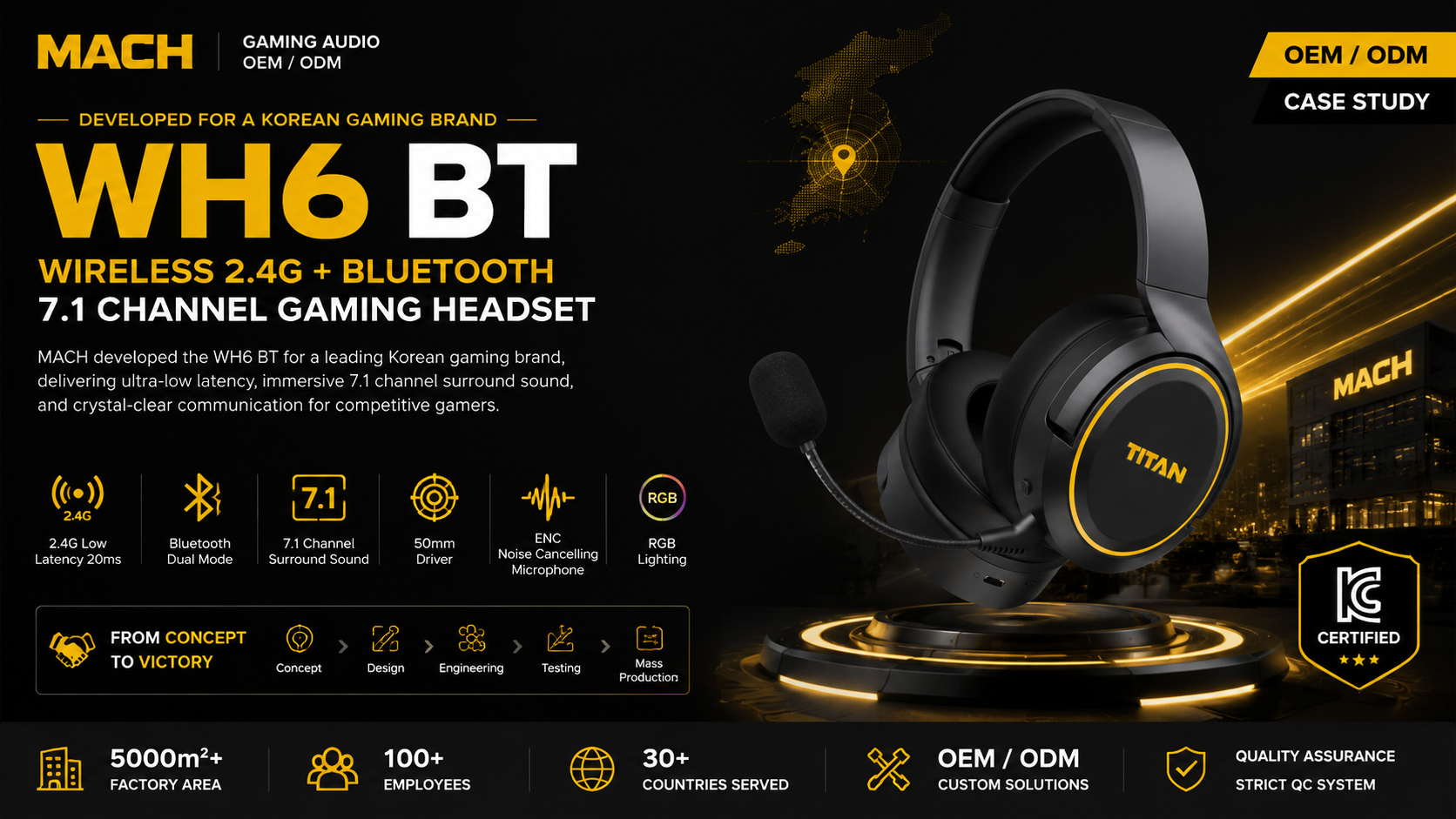
There is no universal compliance package that covers every 2.4GHz gaming headset in every market. Before selecting reports, markings or registrations, the buyer must define the target country, final wireless chipset and frequency, headset-transmitter combination, battery, charging interface, supplied charger, importer or responsible party, sales channel and product claims. The applicable scope follows that final configuration and commercial route.
This guide supports procurement and project planning; it is not legal advice. Regulations and official guidance can change, and final requirements depend on the destination and production version. Confirm the compliance plan with a qualified laboratory or local professional before mass production. Compliance support is available based on the final product configuration, target market and agreed project scope.
Separate Requirements, Reports, Certification and Declarations
A legal obligation, laboratory report, certification, declaration, registration and producer-responsibility duty are different items and should not be quoted as interchangeable 'certificates.'
A legal requirement comes from the rules that apply to the product and economic operator in a destination market. A laboratory report records testing against identified methods or standards. Product certification involves an approval scheme where required. A declaration of conformity is a formal statement by the responsible manufacturer or operator that the identified product meets listed legislation.
Registration may be required for radio equipment, producers, batteries, waste schemes or local business roles depending on the market. Producer responsibility concerns obligations such as financing or arranging collection and recycling, not simply passing a product test. Technical documentation brings together the design, risk assessment, reports, drawings, critical components, labels, instructions and declarations supporting the finished configuration.
For the European Union, CE marking should not be described as a generic third-party 'CE certificate.' Under the Radio Equipment Directive, the manufacturer completes the applicable conformity-assessment route, draws up the EU Declaration of Conformity, affixes CE marking and maintains technical documentation. A notified body is involved only where the selected route and circumstances require it.
| Term | What it means | Buyer question |
|---|---|---|
| Legal requirement | Obligation that applies in a market | Which rule and economic operator does it apply to? |
| Test report | Evidence of testing against named methods or standards | Does the report identify the final model and configuration? |
| Certification | Approval under a defined scheme where applicable | Who issues it, who holds it and what variants are covered? |
| Declaration of Conformity | Formal declaration by the responsible manufacturer or operator | Which legislation, product and standards are listed? |
| Registration | Filing with an authority or scheme | Is it product-, company-, producer- or market-specific? |
| Producer responsibility | Ongoing obligations for waste, batteries or packaging | Who is the producer in the destination country? |
| Technical documentation | Controlled evidence supporting conformity | Who maintains it and how are changes recorded? |
Freeze the Product Configuration
Compliance evidence belongs to an identified technical configuration, not merely to a marketing model name.
Freeze the wireless module or chipset, PCB, antenna, RF power, firmware, battery cell, charging circuit, transmitter, cable and any supplied power adapter before final assessment. Identify model variants and the technical basis for grouping them. The report and declaration should make clear what product and accessories are covered.
Firmware can affect RF behavior, power management, channel use and user information. A transmitter change can alter the radio and EMC scope. A replacement battery can affect safety evidence, transport documentation and labels. A different charger can introduce a separate electrical-safety item or change the supplied-product scope.
A color change does not automatically require a complete reassessment, but neither is every color change irrelevant. Different pigments, coatings, conductive finishes, labels or materials may affect RoHS, REACH information, flammability, antenna behavior or traceability. Use an impact review rather than a blanket rule.
- Headset model and variant list
- Wireless chipset or module
- PCB and antenna revision
- RF settings and firmware
- 2.4GHz transmitter model and firmware
- Battery cell and protection circuit
- Charging interface, cable and supplied charger
- Microphone and optional adapters
- Housing materials, coatings and labels
- Manual, packaging and product claims
Build a Target-Market Planning Matrix
Select the target market first, then map the final headset system to current official requirements and local economic-operator duties.
The following matrix is a planning prompt, not a fixed certification package. Confirm scope and current implementation with official sources, a qualified laboratory and local counsel or compliance specialists where needed.
European Union: a radio headset generally requires review under the Radio Equipment Directive for safety, electromagnetic compatibility and efficient spectrum use, together with other applicable legislation such as RoHS. WEEE and battery producer-responsibility obligations, labeling, the EU Declaration of Conformity, technical documentation and importer or responsible economic-operator information may apply. The EU common-charger requirements have applied to covered headphones and headsets since 28 December 2024, so the charging configuration and supplied-charger offer must be reviewed for the final product.
Great Britain: review the Radio Equipment Regulations 2017, UK RoHS, WEEE, importer information and technical documentation. Current UK government guidance recognizes CE marking indefinitely for many product sectors including radio equipment, while UKCA remains available under the applicable route. Do not rely on old statements that CE became universally invalid in Great Britain after a past deadline.
United States: determine the applicable FCC equipment-authorization route for the final intentional and unintentional RF functions. Review labeling, user information and responsible-party details. FCC authorization addresses radio-frequency compliance; it is not a general quality approval. Lithium-battery transport documentation and marketplace requests are separate planning items.
Korea: review the final radio equipment under the National Radio Research Agency conformity-assessment framework, together with applicable battery, labeling, importer and local requirements. Do not claim KC certification without a verified certificate or registration covering the final configuration.
Japan: review radio-equipment technical conformity requirements with the Ministry of Internal Affairs and Communications and evaluate whether the battery, charging equipment or supplied adapter falls within Electrical Appliances and Materials Safety Act scope administered by METI. Applicability depends on the product and supplied components; not every headset follows an identical PSE or radio route.
| Market | Planning areas | Questions to resolve before production |
|---|---|---|
| European Union | RED, RoHS, WEEE, batteries, labeling, DoC, technical file, economic operator, USB-C where applicable | Which directives and producer duties apply to the final headset, transmitter and charging package? |
| Great Britain | Radio Equipment Regulations 2017, RoHS, WEEE, CE/UKCA route, importer and technical records | Which marking route is selected and who is the GB importer? |
| United States | FCC authorization, labeling, user information, responsible party, battery transport records | Which RF functions and authorization procedures cover the final system? |
| Korea | Radio-equipment conformity assessment, battery scope, labels, importer and local filings | What is covered by verified RRA/KC evidence for the production version? |
| Japan | Radio technical conformity, electrical-safety scope where applicable, battery and labels | Which components are regulated and who is the Japanese importer or notifying supplier? |
Review the Headset as a Complete System
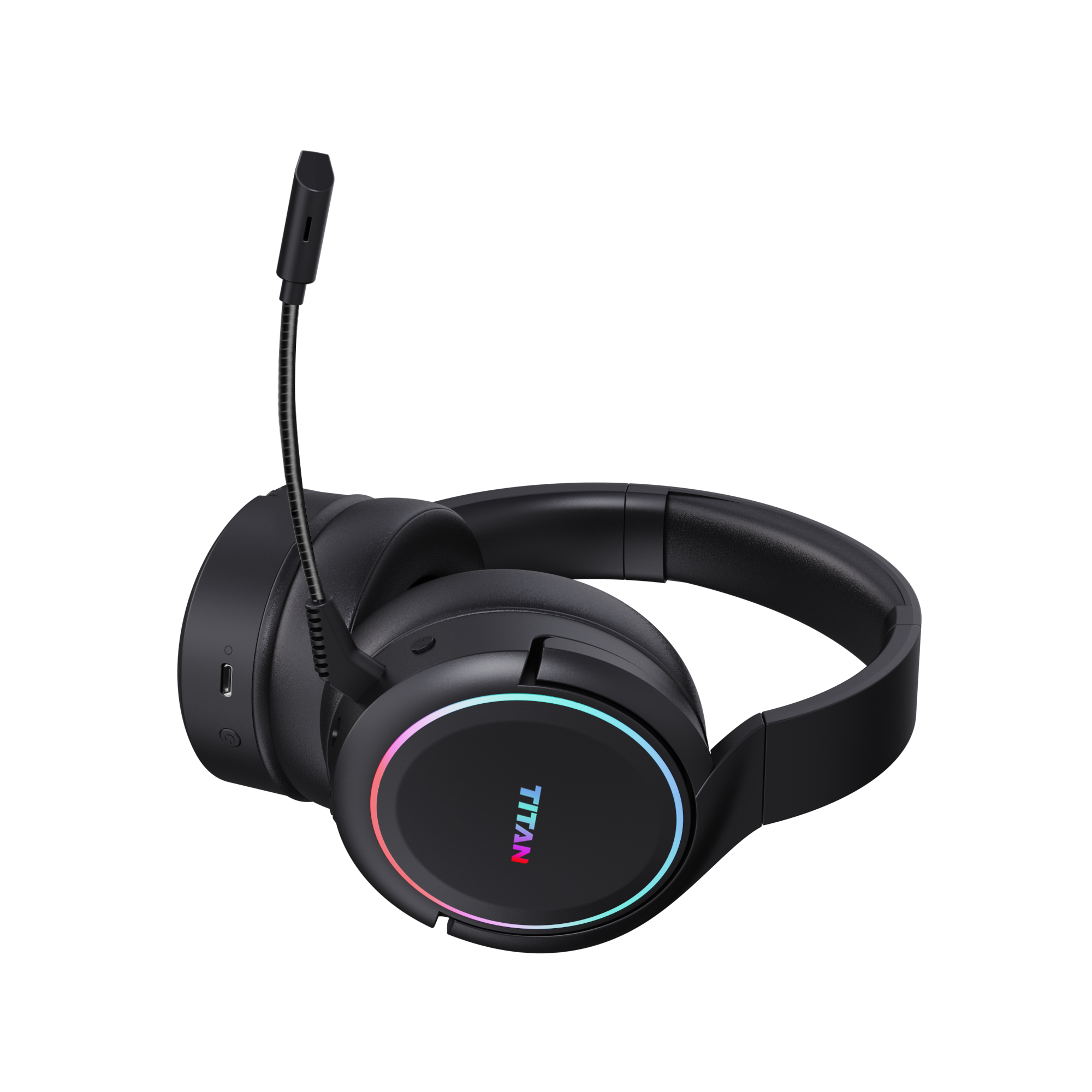
A 2.4GHz headset compliance plan must include the transmitter, battery, charging path, accessories, packaging, manual and firmware that make the product operate as intended.
The headset contains the radio, audio, microphone, battery and charging functions, but the transmitter is often essential to the intended 2.4GHz operation. Assess the defined headset and transmitter combination, including their firmware pairing and host connection. A test on one isolated component does not automatically cover the complete retail system.
Review the USB cable, battery and charging circuit. If a power adapter is supplied, identify its separate technical and market obligations. If no charger is supplied, confirm packaging and instructions accurately describe the charging input and any common-charger information that applies.
Packaging and manuals carry model identification, manufacturer or importer information, warnings, frequency information, regulatory marks, recycling information and declarations or links where required. Firmware and PC software may be listed as components that allow the radio equipment to operate as intended. Version control therefore belongs in the technical file.
| System element | Compliance planning role | Common gap |
|---|---|---|
| Headset | Radio, EMC, materials, battery, charging, labels and safety | Testing a different battery or PCB revision |
| 2.4GHz transmitter | Intentional radio, EMC, host interface, firmware and labeling | Treating the dongle as an unimportant accessory |
| USB cable | Charging and supplied-accessory identification | Substitution without documentation review |
| Battery | Safety evidence, transport file, rating and producer duties | Calling UN38.3 a complete headset approval |
| Charging circuit or adapter | Electrical and charging scope | Changing a supplied adapter after assessment |
| Packaging and manual | Mandatory information, marks, languages and claims | Copying labels from another market |
| Firmware and software | RF behavior, intended operation and version traceability | Updating code without compliance impact review |
Prepare the Documentation Checklist
The buyer should know which documents exist, which product revision they cover, who owns them and who must retain or present them.
A technical file may include risk analysis, design descriptions, drawings, PCB and antenna information, critical components, standards, reports, labels, instructions and the declaration. Exact contents depend on the market and conformity route. The article's checklist is a procurement control, not a claim that every item has the same legal status everywhere.
Battery data should identify the actual cell and pack. UN38.3 is a transport-related test framework for lithium cells and batteries, and the UN test summary contains defined battery, manufacturer, laboratory and result information. It should not be described as a finished-product market-access certificate.
Assign document holders early. The legal manufacturer, brand, importer, authorized representative or responsible party may have different obligations. The factory can coordinate evidence within the project, but the commercial operator cannot assume every market-access duty transfers automatically to the supplier.
- Applicable laboratory test reports
- Declaration of Conformity where applicable
- Technical file or technical documentation
- Product and transmitter labels
- Retail and logistics packaging labels
- User-manual statements and languages
- Battery specification and safety data
- UN38.3 report and test summary for transport planning
- Bill of materials and critical-component list
- Manufacturer, importer or responsible-party information
- Model and variant coverage list
- Registration or producer-responsibility records where applicable
Apply Compliance Change Control
Any design, component or software change that can affect the approved evidence should be reviewed before it enters production.
A PCB, antenna, RF component, wireless module, transmitter or firmware change may affect radio or EMC evidence. A battery replacement may affect safety, charging, runtime, transport records and labels. A charger change may alter electrical-safety scope. Expanding a model family may require a documented rationale and updated declarations or filings.
Use 'may require reassessment' rather than assuming every change needs complete retesting or no review. The responsible engineer or compliance specialist should identify the affected requirements, compare the new and approved versions, decide the evidence needed and record the result.
Link purchasing substitutions to this process. A commercially equivalent part is not automatically compliance-equivalent. Prevent production from using a replacement component until its documentation and technical impact have been approved.
| Change | Possible impact | Required control |
|---|---|---|
| PCB or RF component | Emissions, immunity, radio behavior and traceability | Engineering comparison and reassessment decision |
| Antenna | RF power, spectrum use and exposure considerations | RF review and test-scope decision |
| Firmware | Radio settings, power, channels and intended operation | Version impact review and regression evidence |
| Battery | Safety, charging, transport and labels | Cell-document review and affected retesting |
| Transmitter | Radio, EMC, pairing, host behavior and model coverage | System-level scope review |
| Charger | Electrical-safety and supplied-product obligations | Separate component and market review |
| Model-family expansion | Declarations, labels, reports and registrations | Coverage rationale and document updates |
WH6 Korea OEM Planning Example
The WH6 project shows that target-market and battery requirements should be defined before the final compliance scope is stated.
The WH6 OEM project targeted Korea and included coordination of KC-related battery requirements. The final scope depended on the selected 1200mAh battery, wireless platform, Type-C transmitter and production configuration.
This project reference does not state that the complete WH6 product is KC certified, that MACH owns a certificate or that every future WH6 variant is already approved. Those conclusions would require verified documentation for the exact model and holder.
The procurement lesson is to name the destination, battery and wireless system in the project brief, then agree which reports, registrations, labels and local responsibilities are required. A later battery or transmitter substitution should return to the same scope review.
Compliance RFQ Checklist
A compliance RFQ should define the market, technical configuration and responsible parties before asking for a list of certificates.
Send the final intended sales countries rather than the broad word 'global.' Identify the seller, importer, legal manufacturer and any authorized representative or responsible party. Attach the product BOM, wireless description, battery, charging package, model variants and draft claims.
Ask the laboratory or supplier to distinguish mandatory obligations, supporting reports, declarations, registrations, producer responsibilities and retailer requests. This makes the quotation and timeline easier to evaluate and reduces the risk of buying irrelevant reports.
Compliance support is available based on the final product configuration, target market and agreed project scope. This content is for planning and does not replace advice from a qualified laboratory or local professional.
- Target country or countries
- Seller, importer and legal-manufacturer roles
- Final headset and transmitter configuration
- Wireless modes, chipset, antenna and firmware
- Battery model and charging circuit
- Cable and supplied-charger decision
- Required reports, declarations and registrations
- Product, packaging and manual languages
- Regulatory, recycling and battery marks
- Responsible-party contact information
- Model and color variants
- Planned component or firmware changes
Avoid Misleading Compliance Statements
Precise compliance wording protects procurement decisions better than broad claims that cannot identify a market, document or product version.
Statements such as 'all certifications' or 'one report covers every country' hide the market and technical scope. A useful statement names the destination, product version, requirement, document holder and evidence. It also separates a battery transport file from finished-product market access.
The brand and importer retain legal responsibilities that cannot always be assigned to the factory. The manufacturing partner can support configuration review, samples, reports, labels and document coordination within the agreed scope, while the responsible economic operators confirm their own duties.
Review claims again before printing packaging or publishing marketplace listings. A product may have valid evidence for one configuration while the listing describes another transmitter, battery, charger or feature set.
| Misleading statement | Why it is incomplete | Better planning language |
|---|---|---|
| This product has all certifications. | No market, holder, model or document is identified | List verified documents for the named production configuration and destination |
| CE certification covers every country. | CE marking follows applicable EU rules and does not cover every global market | Confirm separate requirements for each sales country |
| The battery report covers the complete headset. | Battery safety or transport evidence has a different scope | Map battery, radio, EMC, materials and product documents separately |
| Changing the wireless module will not affect compliance. | RF, EMC, firmware and labels may change | Complete an impact review before substitution |
| One report automatically covers every model. | Variant coverage requires technical and documentary justification | Define the model family and covered differences |
| The factory is solely responsible for market access. | Brands, importers and responsible parties can have statutory duties | Assign each economic operator's responsibilities in writing |
Define the Market Before the Document List
Share the target country, final wireless system, battery, charging package, importer structure and intended claims so MACH industry can coordinate the agreed compliance-support scope.
Discuss Compliance PlanningFrequently Asked Questions
Does every 2.4GHz gaming headset require the same certifications?
No. Requirements depend on the target country, final wireless and battery configuration, transmitter, charging interface, supplied adapter, importer structure and sales channel. The scope must be confirmed for the production version.
Is CE a certificate issued for every gaming headset?
CE marking indicates that the manufacturer declares conformity with applicable EU legislation after completing the relevant assessment and technical documentation. A laboratory report or notified-body document may support the process where applicable, but CE should not be described simply as one universal third-party certificate.
Does the USB transmitter need to be included in compliance assessment?
The transmitter should be reviewed as part of the complete intended system. Its radio, EMC, labeling, firmware and host behavior can affect the scope, and the declaration or technical file should identify the accessories and components covered.
What happens if the battery or wireless module changes?
The change may require reassessment of test evidence, technical documentation, transport records, labels or market filings. The required scope depends on the affected design and destination, so the change should be reviewed before production.
Who should hold the compliance documents?
Responsibilities depend on the market and commercial roles. The brand, legal manufacturer, importer, authorized representative or responsible party may need access to declarations, reports and technical documentation. These roles should be assigned before mass production.
When should compliance planning begin?
Begin before the final PCB, antenna, wireless module, battery, transmitter, charger and packaging are frozen. Early planning lets the team choose the correct scope and avoids printing labels or ordering components that do not match the intended market.
Is FCC authorization a product quality certification?
No. FCC equipment authorization addresses applicable radio-frequency requirements for marketing or importing RF devices in the United States. It does not certify overall product quality, comfort, battery life or acoustic performance.
Does a UN38.3 document approve the whole headset for sale?
No. UN Manual of Tests and Criteria subsection 38.3 concerns lithium-cell and battery transport testing and its test summary. It is not a complete market-access approval for the finished gaming headset.
Can one report automatically cover every color and model variant?
Not automatically. Coverage depends on the technical differences, model-family rationale, report scope and applicable rules. A cosmetic change may have limited impact, but materials, labels, antennas, electronics or batteries can change the assessment.
Can MACH support compliance planning?
Compliance support is available based on the final product configuration, target market and agreed project scope. Final requirements should be confirmed with a qualified laboratory or local specialist before mass production.
Related Resources
Need OEM/ODM gaming audio solutions?
Contact MACH Industry to discuss your gaming headset, gaming earbuds, or private-label audio project.
Contact MACH Industry