Home > Resources > OEM Knowledge
How MACH Developed a 3.5mm + USB Wired Gaming Headset for a Belgian Gaming Brand
A buyer-focused guide to developing a cost-effective 3.5mm + USB wired gaming headset for European brands, using the G9000pro-CC Belgium OEM project to explain platform selection, 50mm driver positioning, single-color lighting, ENC microphone planning, compliance, and mass production control.
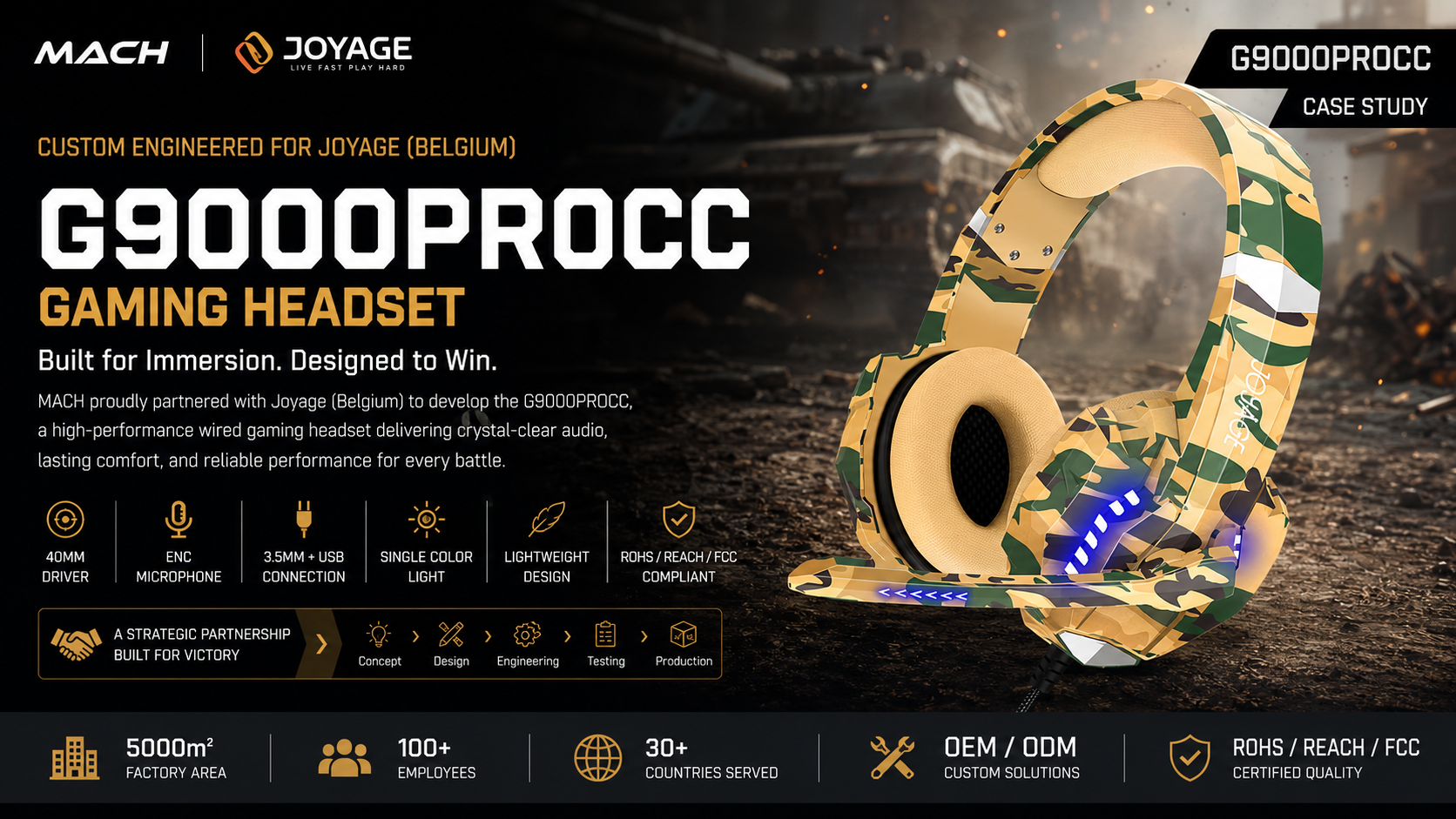
European gaming brands do not always need to start with wireless development to launch a competitive headset. For many product managers and sourcing teams, a mature 3.5mm + USB wired gaming headset platform can be a more practical path: broad device compatibility, no battery risk, simpler after-sales support, controlled cost, and a clear retail feature set.
This article uses the G9000pro-CC Belgium OEM project as an educational example. The goal is not to repeat the case study, but to explain how a European gaming accessories brand can use a wired gaming headset OEM platform to create a retail-ready private label product with 3.5mm audio, USB-powered lighting, a 50mm dynamic driver, ENC microphone planning, custom logo and packaging, and compliance preparation for RoHS, REACH, and FCC-related markets.
Project Snapshot
The G9000pro-CC project was positioned as a cost-effective, retail-ready wired gaming headset platform for a European gaming accessories brand that needed reliable differentiation without the risk profile of wireless development.
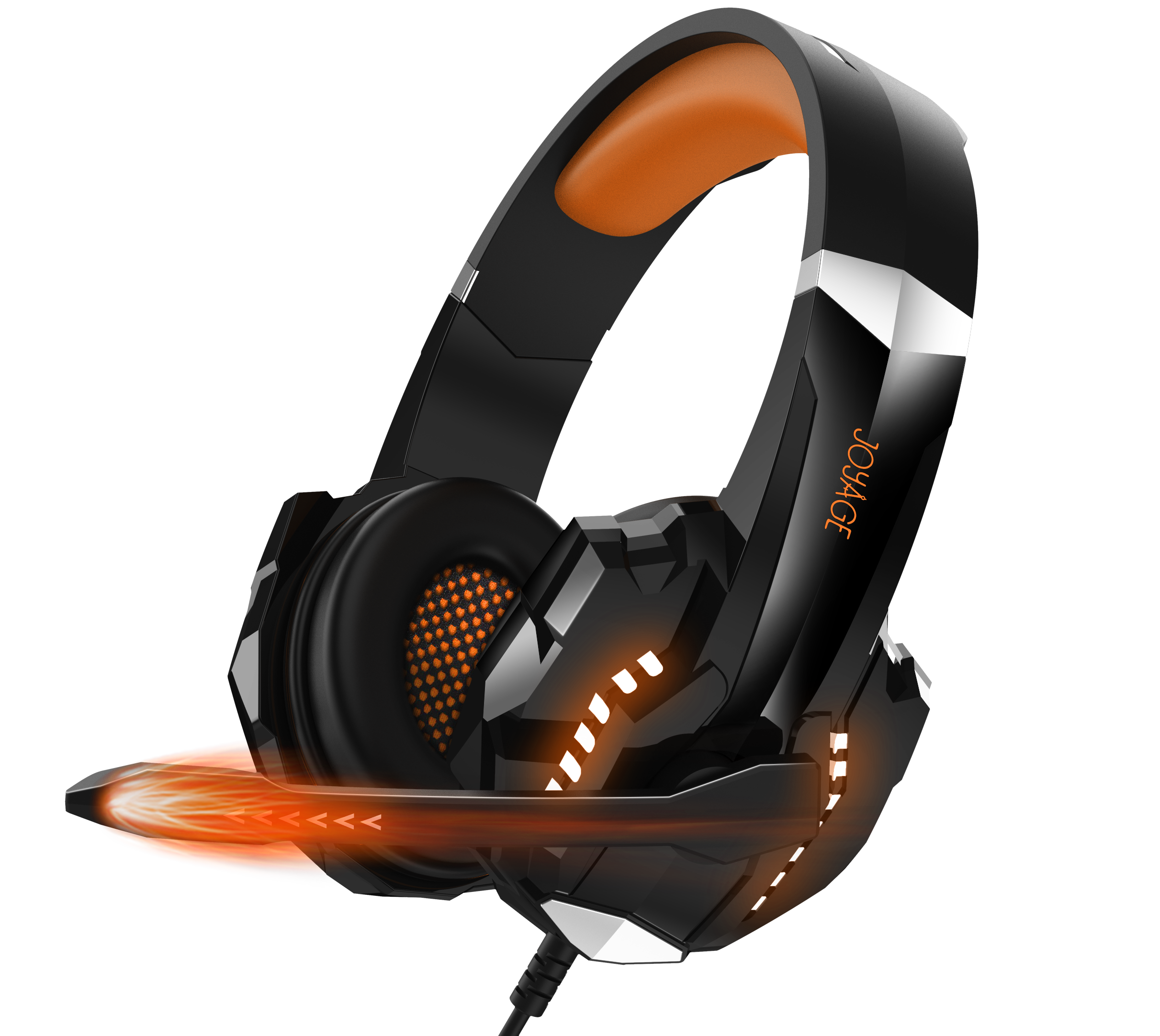
The project model was G9000pro-CC, developed for the Belgium market as an OEM wired gaming headset. The architecture combined 3.5mm audio with USB lighting support, single-color lighting, a 50mm dynamic driver, ENC microphone requirements, custom logo execution, color planning, retail packaging, and compliance support for RoHS, REACH, and FCC-related sales contexts.
This kind of product sits in a practical commercial position. It is not trying to be the most complex headset in the market. Instead, it gives European gaming brands a reliable platform for entry-to-mid range SKUs, promotional programs, retail channels, and private label gaming accessory lines where compatibility, cost control, visual identity, and mass production stability are more important than adding every possible feature.
The Buyer’s Product Brief
The buyer’s goal was not maximum feature complexity. The goal was a wired headset that could be branded, packaged, shipped, and supported with fewer technical variables than a wireless program.
For a European gaming accessories brand, a wired headset project can solve a specific market need: a product that looks like a gaming headset, works across common device categories when correctly configured, supports custom logo and packaging, and avoids the battery, RF, firmware, and charging issues that can complicate wireless headset development.
The sourcing brief therefore focused on platform maturity, connector definition, lighting architecture, microphone quality, mold stability, color consistency, packaging control, accessory confirmation, compliance preparation, and production repeatability. MACH industry’s role as a gaming headset manufacturer in China was to translate these commercial requirements into a factory-ready OEM plan.
Why 3.5mm Audio and USB Lighting Remain a Practical Architecture for European Gaming Headset Brands
A 3.5mm audio plus USB lighting architecture can give brands a strong balance of compatibility, gaming appearance, cost control, and lower development risk compared with full wireless or USB-audio systems.
In this architecture, the 3.5mm interface is responsible for audio. When the plug, wiring standard, and accessory plan are defined correctly, it can support a wide range of PCs, laptops, game controllers, and compatible devices. For European buyers, this matters because retail support teams need a simple compatibility story and fewer technical failure points after shipment.
USB can be used for lighting or auxiliary power, giving the headset a visible gaming identity without requiring a full USB audio system or a wireless RF architecture. This separation is important. A USB lighting gaming headset is not automatically the same as a USB audio headset. Product managers should confirm whether USB powers only the light, supports control functions, or carries audio before making packaging claims.
A wired architecture does not need a battery. That removes battery-aging concerns, charging failure risk, transport battery documentation, and many after-sales issues associated with wireless products. Compared with wireless development, a wired platform usually has lower engineering risk, more predictable mass production, and a faster path to launch when the brand uses a mature OEM headset factory platform.
The 50mm dynamic driver gives the brand a stronger sound-positioning message, but it should not be treated as a substitute for acoustic validation. Driver size, earcup volume, cushion seal, tuning direction, and production consistency all matter. Single-color lighting can also be a rational choice compared with complex RGB: it is easier to keep visually consistent, usually simpler to power, and helps control cost and system complexity.
ENC microphone planning adds value for team voice, online games, and everyday communication, but microphone pickup and compatibility should still be reviewed with actual target devices. Before launching, buyers should confirm whether the headset uses a single 3.5mm TRRS plug or dual 3.5mm plugs, what USB actually does, whether PC and console claims are accurate, whether a Y splitter is needed, and how microphone and inline control behavior changes across devices.
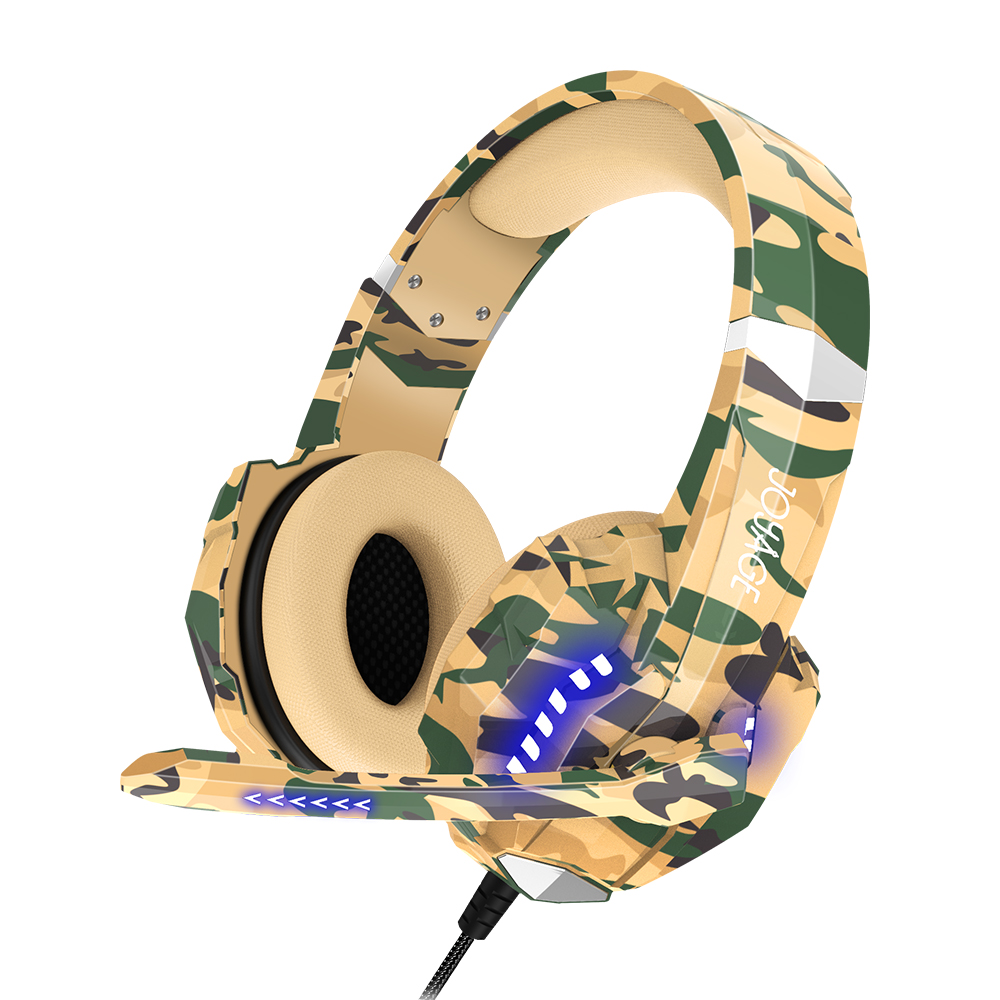
Engineering Decisions Behind the G9000pro-CC
The engineering work was less about inventing a new headset from zero and more about configuring a mature platform around the buyer’s retail, compatibility, and production requirements.
50mm Driver Integration: The G9000pro-CC uses a 50mm dynamic driver direction, which helps the brand communicate a stronger sound position. MACH still treats the driver as part of a complete acoustic system, where shell structure, cushion fit, cable, microphone placement, and production consistency all affect the final user experience.
Microphone and Voice Communication: ENC microphone planning is useful for gaming voice chat and daily communication, but practical validation is still required. Pickup, boom position, controller compatibility, and line-control behavior should be checked across PC, laptop, controller, and adapter scenarios.
Single-Color Lighting and USB Power: Single-color lighting gives the headset a visible gaming style while avoiding the higher complexity of multi-zone RGB systems. USB can power the lighting effect without turning the project into a wireless or full USB-audio headset, keeping the product easier to explain and produce.
Cable, Connector, Comfort and Structure: Buyers should confirm cable material, 3.5mm plug type, USB purpose, splitter requirements, inline controls, headband strength, cushion comfort, cable strain relief, mold stability, and color finish before production approval.
Wired vs Wireless for OEM Product Planning
Neither wired nor wireless is always better. The right architecture depends on the brand’s price tier, channel, support capacity, compliance scope, and launch schedule.
Development complexity: Wired 3.5mm + USB lighting projects usually require fewer RF, firmware, battery, and charging decisions. Wireless projects can provide stronger feature positioning, but they involve more validation points and more technical coordination.
Battery, RF and firmware risk: A wired platform avoids battery aging, charging failure, transport battery documentation, wireless range checks, antenna review, dongle compatibility, pairing behavior, and many firmware-related support questions.
Compatibility and after-sales exposure: A wired headset can be broadly compatible when the connector plan and adapter requirements are correct. Wireless compatibility depends on dongle type, platform support, drivers, and user setup. Wired projects can still create support questions around connector standards, microphone compatibility, and USB lighting behavior, so those items must be defined clearly.
Cost structure and retail position: Wired gaming headsets are often suitable for entry-to-mid range SKUs, promotional models, and high-value private-label lines. Wireless headsets may command a higher feature position but usually require higher development and validation investment.
MACH’s OEM Development Workflow
A structured workflow helps convert a buyer’s commercial idea into a production-ready wired gaming headset program.
Requirement Review: MACH clarifies target market, device compatibility, price tier, feature list, logo requirements, packaging, compliance needs, and forecast quantity. The goal is to confirm whether a mature wired gaming headset platform fits before samples are produced.
Platform Selection and Product Configuration: The team reviews the base headset structure, 3.5mm + USB architecture, 50mm driver direction, microphone requirements, cable material, lighting, accessory plan, and packaging scope. This stage reduces later changes that can delay launch.
Branding, Prototype Verification and Production Support: Logo placement, color versions, packaging, pre-production samples, audio and microphone checks, RoHS, REACH, FCC-related documentation, QC standards, and mass production readiness are coordinated before shipment.
Compliance Considerations for European Gaming Brands
Compliance planning should begin before production because documentation requirements depend on product configuration, target market, and sales channel.
For European gaming headset supplier evaluation, RoHS and REACH are commonly discussed because they relate to restricted substances and chemical compliance expectations. Buyers should confirm their exact obligations with the importer, distributor, testing partner, or compliance team responsible for the target market.
FCC can be relevant when the product is sold into markets such as the United States, but it should not be described as a mandatory European certification. For a wired 3.5mm + USB lighting headset, the actual testing scope may differ from a wireless headset or a full USB audio product, so the technical architecture should be confirmed before documents are requested.
Packaging and documentation also matter. Compliance marks, warnings, manuals, labels, and carton information should match the product configuration and destination requirements. This is why compliance planning belongs in the OEM development process rather than at the final shipping stage.
OEM Buyer Checklist Before Starting a Wired Gaming Headset Project
A clear checklist helps buyers reduce quotation errors, sample revisions, and compatibility problems before development starts.
Target price tier: define whether the product is entry-level, mid-range, promotional, retail-channel, or brand flagship. Target devices: confirm PC, laptop, PlayStation, Xbox controller, mobile, or other device expectations. Connector configuration: decide whether the headset uses a single 3.5mm TRRS plug, dual 3.5mm plugs, USB lighting, USB audio, or adapters.
Driver size, microphone type, lighting and cable: confirm 50mm dynamic driver positioning, ENC expectations, boom style, pickup requirements, single-color LED or RGB needs, cable length, braided material, strain relief, Y splitter, and inline controller design.
Logo, packaging, compliance and schedule: prepare logo files, color references, color box artwork, manuals, labels, barcode, carton requirements, RoHS, REACH, FCC or other target-market needs, forecast volume, and launch schedule. Planning a cost-effective wired gaming headset for your market? Send MACH your target market, connection type, feature list and expected quantity for an initial feasibility review.
Lessons from the G9000pro-CC Belgium OEM Project
The project shows that a mature wired platform can reduce development risk when the feature set, connector architecture, compliance plan, and retail positioning are defined early.
Feature complexity should match retail positioning. A cost-effective wired gaming headset does not need every advanced feature if the buyer’s goal is reliability, visual identity, and channel readiness. Connector definition must be confirmed early because 3.5mm, USB lighting, splitter accessories, and inline controls affect compatibility and packaging claims.
Lighting architecture affects cost and compatibility. Single-color lighting may be more suitable than complex RGB when the brand needs visual consistency and lower system complexity. A large 50mm driver can be a useful selling point, but it is not a substitute for acoustic validation and sample review.
Compliance planning should begin before production. RoHS, REACH, and FCC-related documents depend on the product architecture and target markets. Mature platforms can reduce development risk because the buyer can focus on brand, packaging, compatibility, and production control instead of building an entire headset system from zero.
Related Products and Related Case Studies
Buyers can compare related wired headset pages and case studies before deciding whether a 3.5mm + USB architecture is the right OEM path.
For product research, review the Wired Gaming Headset category and related wired products such as G935 USB Wired Gaming Headset or G700 USB + 3.5mm Wired Gaming Headset. These pages help buyers compare connector architecture, lighting direction, microphone structure, and private-label positioning.
For case comparison, the G9000pro China OEM case, G27 Australia OEM case, and G9000mix Finland ODM case show different wired headset development routes. The G9000pro-CC Belgium OEM case is especially useful for European buyers evaluating a cost-effective 3.5mm + USB wired platform with single-color lighting and retail packaging requirements.
Conclusion and CTA
A 3.5mm + USB wired headset remains a practical OEM architecture when a European brand needs compatibility, cost control, visual differentiation, and lower development risk.
The G9000pro-CC Belgium OEM project demonstrates that wired gaming headset development can still deliver strong commercial value when the architecture is chosen deliberately. 3.5mm audio supports broad compatibility, USB lighting adds gaming appearance, single-color LED keeps complexity under control, a 50mm dynamic driver supports a clear sound-positioning message, and ENC microphone planning improves communication value for gaming and daily use.
Discuss a wired gaming headset OEM project with MACH industry. Share your target market, connector requirements, lighting direction, microphone expectations, packaging files, compliance needs, and expected quantity so the team can evaluate a practical OEM or ODM path for your brand.
Frequently Asked Questions
What is the MOQ for a custom wired gaming headset?
MOQ depends on the selected platform, customization scope, packaging requirements, color plan, and component availability. A simple logo and packaging project usually has a different MOQ discussion than a project involving new tooling, custom cable control, or special materials. Buyers should share the target market, feature list, and expected quantity for feasibility review.
Can MACH customize the logo, color and packaging for a wired gaming headset?
Yes. MACH industry can support logo silkscreen placement, color version planning, custom retail packaging, user manuals, inserts, carton labels, and related packaging details for private label gaming headset programs. Final feasibility depends on the chosen platform and artwork requirements.
What is the difference between 3.5mm audio and USB audio on a gaming headset?
A 3.5mm headset usually sends analog audio through the headset jack and depends on the connected device for audio output and microphone input. USB audio uses a digital audio interface and may require a different controller or sound card architecture. In a 3.5mm plus USB lighting headset, USB may be used only for lighting or auxiliary power, not full USB audio.
What is the USB connector used for on a 3.5mm plus USB wired gaming headset?
In many wired gaming headset architectures, the 3.5mm jack handles audio while USB powers lighting or auxiliary visual effects. Buyers should confirm the exact USB function early because USB lighting, USB audio, and USB control functions require different product designs and compatibility assumptions.
Is a 50mm driver always better than a 40mm driver?
No. A 50mm dynamic driver can support a stronger sound-positioning message, but driver size alone does not guarantee better audio. Acoustic chamber design, tuning direction, ear cushion fit, component consistency, and sample validation all affect the final listening experience.
Can a wired gaming headset work with PC, PlayStation, Xbox and mobile devices?
Compatibility depends on the connector configuration, device audio jack standard, controller support, adapter needs, microphone wiring, and any USB lighting requirement. Buyers should confirm whether the product uses a single 3.5mm TRRS plug, dual 3.5mm plugs, USB power, or included adapters before making channel claims.
What certifications are required for selling gaming headsets in Europe?
Requirements depend on the target market, product configuration, materials, packaging, and sales channel. RoHS and REACH are commonly discussed for European distribution. FCC is relevant for certain markets such as the United States, but it should not be treated as an EU mandatory certification. Buyers should confirm requirements with their compliance team or importer.
Can MACH customize the microphone and cable controller?
MACH can review microphone type, pickup expectations, ENC-related requirements, cable material, braided cable options, inline control layout, splitter accessories, and compatibility needs. Feasibility depends on the base platform, tooling, cable structure, and target device requirements.
How long does a wired gaming headset OEM project take?
Project timing depends on customization depth, sample revision needs, packaging artwork, compliance documents, material availability, and production schedule. A mature platform can usually reduce development risk compared with a fully custom project, but buyers should avoid assuming a fixed timeline without a project review.
Is private tooling required for a custom gaming headset?
Private tooling is not always required. Many OEM projects use a mature platform with customized logo, color, cable, accessories, and packaging. Private tooling may be needed if the buyer changes the shell, structure, microphone mechanism, control layout, or other mechanical parts.
Related Resources
Need OEM/ODM gaming audio solutions?
Contact MACH Industry to discuss your gaming headset, gaming earbuds, or private-label audio project.
Contact MACH Industry